


Antique English Jasperware
Antique English jasperware brings Neoclassical relief decoration to tea sets, jardinières and small boxes.
Antique English Jasperware
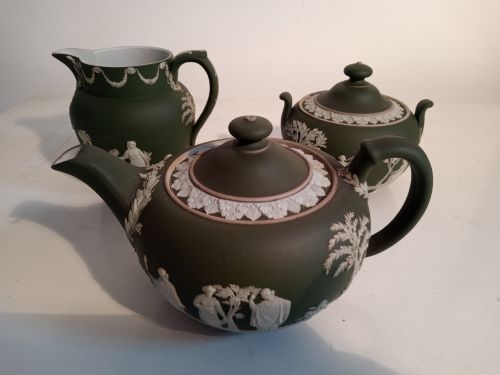
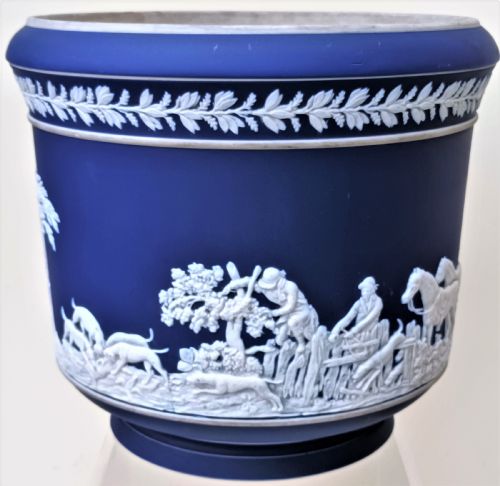
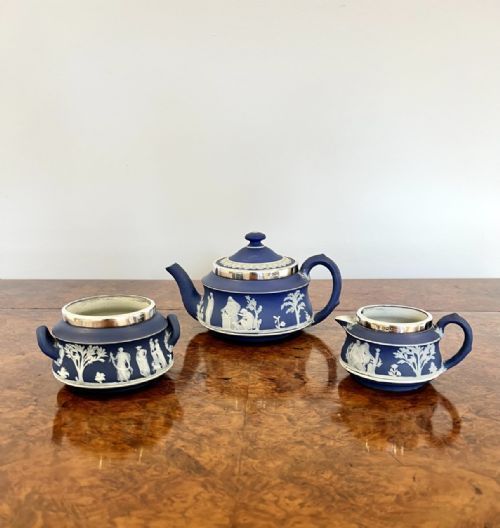
Antique English jasperware comprises unglazed stoneware vessels and decorative items ornamented with moulded white clay reliefs against contrasting coloured bodies. The blue ground is the most commonly encountered version across tea sets, biscuit barrels and jardinieres.
Pieces span the nineteenth century into the early twentieth century, showing Victorian and Edwardian periods alongside earlier Neoclassical and Grand Regency styles. Forms range from utilitarian tea services to commemorative teapots and fitted boxes.
Materials and construction
Potters formed the body using stoneware, earthenware or clay, often integrating silver mounts, brass fittings or silver collars into the finished objects. Olive green and blue bodies provide the matte backdrop for applied white ceramic reliefs.
Makers utilised specialised moulding techniques to create crisp classical figures and foliage, which were then applied by hand to the damp clay body before firing. Certain examples incorporate wooden cabinetry or precious metals alongside the ceramic components.
Listings feature stoneware, earthenware and ceramic materials alongside silver, brass and clay components across the nineteenth and twentieth centuries.
Assessing quality
Quality rests in the crispness of the moulded relief work and the precision with which applied figures adhere to the curved stoneware surface. Sharply defined details in the white clay indicate superior craftsmanship.
The integration of precious metal mounts, such as silver collars or silver plating on tea sets and biscuit barrels, elevates the standing of a piece. Finer examples balance the matte texture of the ceramic body with robust metalwork.
Wedgwood·William Adams and Sons·Copeland Spode·Lamb of Manchester·Adams
The Antique English Jasperware Glossary
- Jasperware
- A type of fine stoneware developed in England, characterised by a matte finish and contrasting white relief decorations. It appears primarily in blue and olive green variations.
- Stoneware
- A sturdy ceramic material fired at high temperatures until vitrified, making it impermeable to liquids and durable for daily use. It forms the dense body of these vessels.
- Neoclassical
- An artistic style drawing inspiration from the classical art and culture of ancient Greece and Rome. This aesthetic dictates the mythological and figural motifs seen on the reliefs.
- Jardiñiere
- A large ornamental pot or planter designed to hold growing plants. These objects often display extensive blue jasperware bodies with classical figures.
- Biscuit barrel
- A covered container traditionally used for storing dry biscuits at the dining table. Many surviving examples pair ceramic bodies with metal mounts and lids.
Antique English Jasperware: Frequently Asked Questions
What is jasperware made of?
Jasperware is a fine-grained, unglazed ceramic stoneware developed in England during the eighteenth century. The body is dyed through with metallic oxides to create colours like blue or olive green.
Applied white clay reliefs are pressed into moulds and attached by hand to the surface before the single firing process. This combination produces a durable object with a distinctive matte texture.
How do I date antique jasperware?
Dating relies on stylistic markers, potter marks stamped into the base, and accompanying metal mounts. Victorian pieces often incorporate silver collars or brass hardware characteristic of the nineteenth century.
Neoclassical motifs persisted across multiple decades, so examining the clarity of the makers marks and the specific shade of the stoneware body helps narrow the period of production.
Can I use jasperware for tea service?
Many surviving pieces include complete tea sets, teapots and biscuit barrels intended for dining and entertaining. These vessels combine functional ceramic bodies with fitted metal lids and collars.
Careful handling is required due to the delicate applied reliefs and age of the materials. Most collectors display them rather than putting them into active service.
Where were these items produced?
Production centred in England, driven by notable potteries operating through the Victorian and Edwardian eras. Factories utilised local clay and specialised stoneware bodies to shape these wares.
Collaborations with metalworkers produced pieces featuring silver mounts and coromandel or walnut wooden cabinets.