
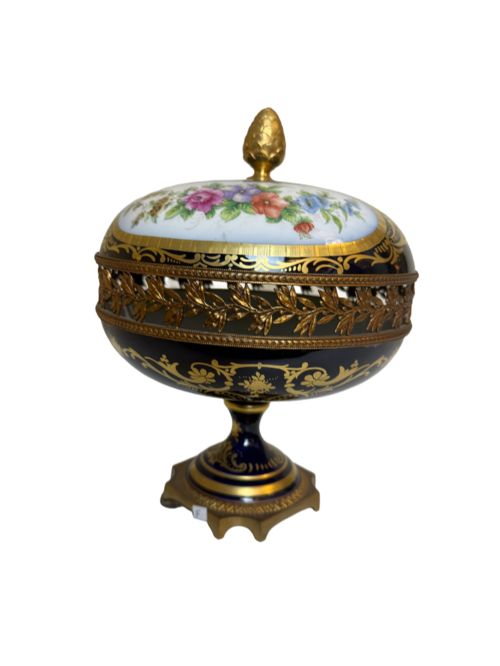


Blue Ceramic Trinket Box
A blue ceramic trinket box brings small-scale colour and utility to a dressing table.
Blue Ceramic Trinket Box
A blue ceramic trinket box encompasses small lidded vessels designed for dressing tables and desks, spanning periods from the seventeenth century to the Art Deco era. Buyers examining this category encounter diverse forms including round boxes, patch boxes, snuff boxes, powder jars, and pen boxes.
The pieces appearing most frequently reflect French production from the late nineteenth and early twentieth centuries, alongside English stonewares and earthenwares. European factories and Asian export traditions both contribute to the styles available, ranging from Dutch Baroque and French Rococo Revival to Japanese Imari and Chinese Qing Dynasty motifs.
Vessels take various shapes beyond standard rectangles and circles, including boat-shaped dishes and figural compositions featuring half doll flapper girls. Each item serves to contain small personal items while displaying cobalt or lighter blue grounds decorated with gilt detailing, hand painting, or enamels.
How they were made
Ceramic bodies range from dense stoneware and robust ironstone to refined porcelain and earthenware. Potters shaped these materials by hand or mould before applying glazes that established the foundational blue colouration, sometimes using specialised techniques like jasper dip.
Decoration relied on hand painting, enamel application, and the addition of gold leaf highlights. Craftsmen frequently incorporated metal mounts or hinged closures to secure lids on boxes intended for snuff, patches, or trinkets.
Listings feature pieces spanning from the 17th century to the Art Deco period of the 1930s, utilising porcelain, earthenware, stoneware, and jasperware.
What varies in quality
Quality rests upon the precision of the ceramic modelling and the clarity of the blue glaze. Finer examples display crisp detail in moulded reliefs and steady control in hand-painted motifs.
The refinement of secondary elements such as gilt detailing, enamel work, and metal mountings distinguishes superior pieces. Earlier examples, such as seventeenth-century Dutch Delft, derive distinction from the authenticity of their period manufacture and tin-glazed surfaces.
Wedgwood·Limoges
The Blue Ceramic Trinket Box Glossary
- Jasperware
- A type of fine stoneware developed in the eighteenth century, characterised by a matte surface and contrasting white moulded reliefs against a coloured ground, most commonly blue.
- Patch box
- A small container originally used to hold cosmetic patches made of silk or velvet, popular during the seventeenth and eighteenth centuries.
- Powder box
- A lidded vessel designed to hold face powder on a dressing table, frequently featuring ceramic figural decoration or painted motifs during the Art Deco period.
- Imari
- A style of Japanese export porcelain featuring deep cobalt blue underglaze combined with iron red and gilt highlights, widely imitated in European ceramics.
- Limoges
- A designation for porcelain produced in the French region of Limoges, known for fine bodies and sophisticated painted decoration.
Blue Ceramic Trinket Box: Frequently Asked Questions
What were small blue boxes used for?
These small containers served various personal functions on dressing tables and writing desks. They held items such as cosmetic patches, snuff, pins, and powder.
Over time, owners also utilised them to store rings and small keepsakes out of sight.
How do I date a blue ceramic box?
Dating relies on observing stylistic markers, manufacturing marks, and material types. Art Deco pieces from the 1930s often feature geometric shapes or flapper figures, while nineteenth-century items display revivalist ornamentation.
Examining the base and interior unglazed surfaces reveals clues about the period of manufacture.
Are all blue ceramic boxes French?
Origin varies considerably across the selection. While French factories produced many porcelain powder boxes and dishes, English potteries contributed significant quantities of stoneware and ironstone.
Asian export pieces and Dutch workshops also manufactured blue ceramics found in this category.
How should I clean an antique ceramic box?
Cleaning requires gentle handling, particularly with pieces featuring gilt detailing, enamel work, or gold leaf. A soft, dry cloth removes dust effectively.
Moisture should be avoided if metal mounts or old adhesives are present on the container.