

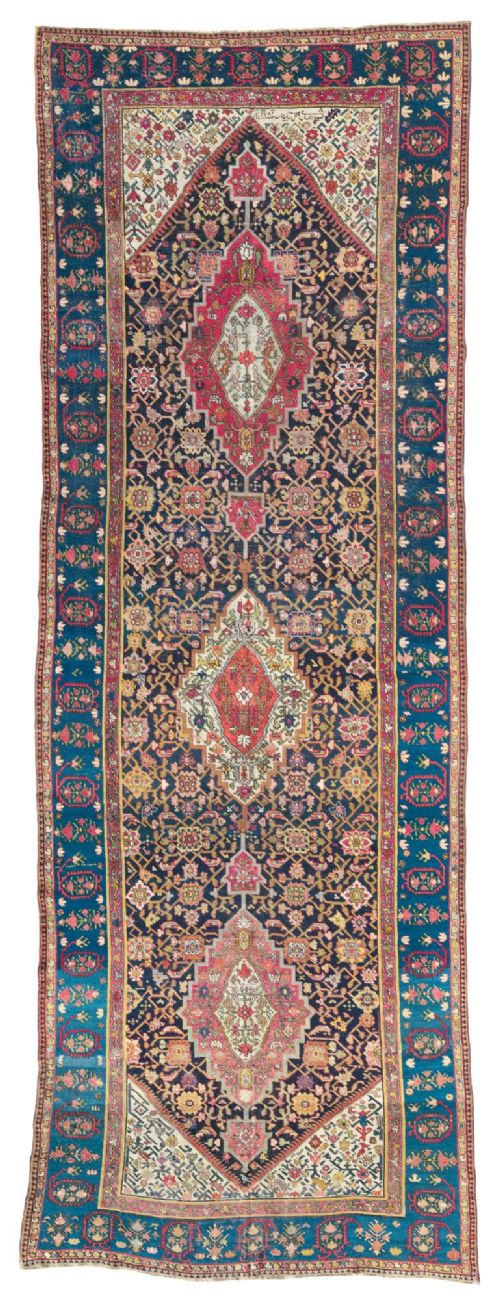
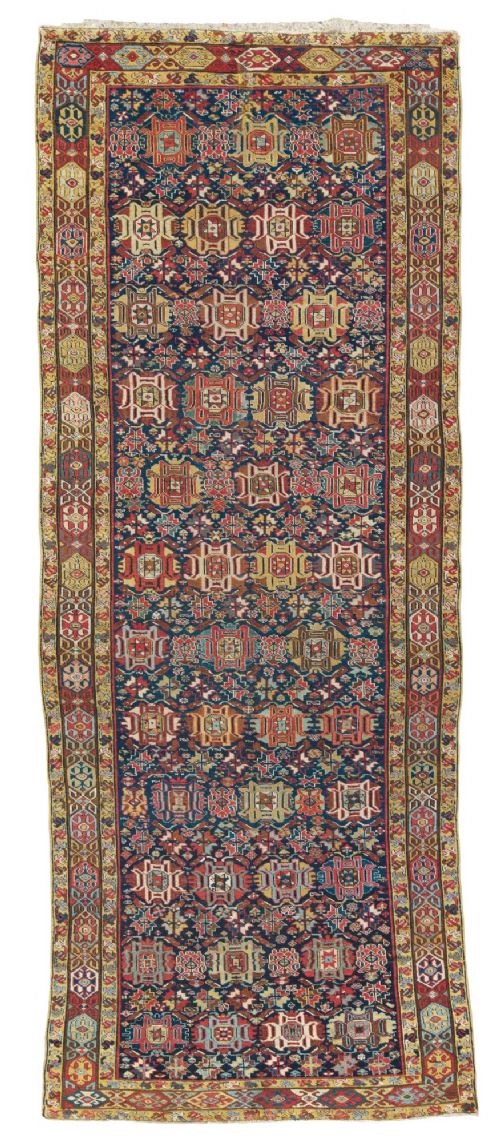


Antique Tribal Kelleh Rug
An antique tribal kelleh rug is a large-format floor covering woven in nomadic and village workshops, prized for robust scale and bold geometric motifs.
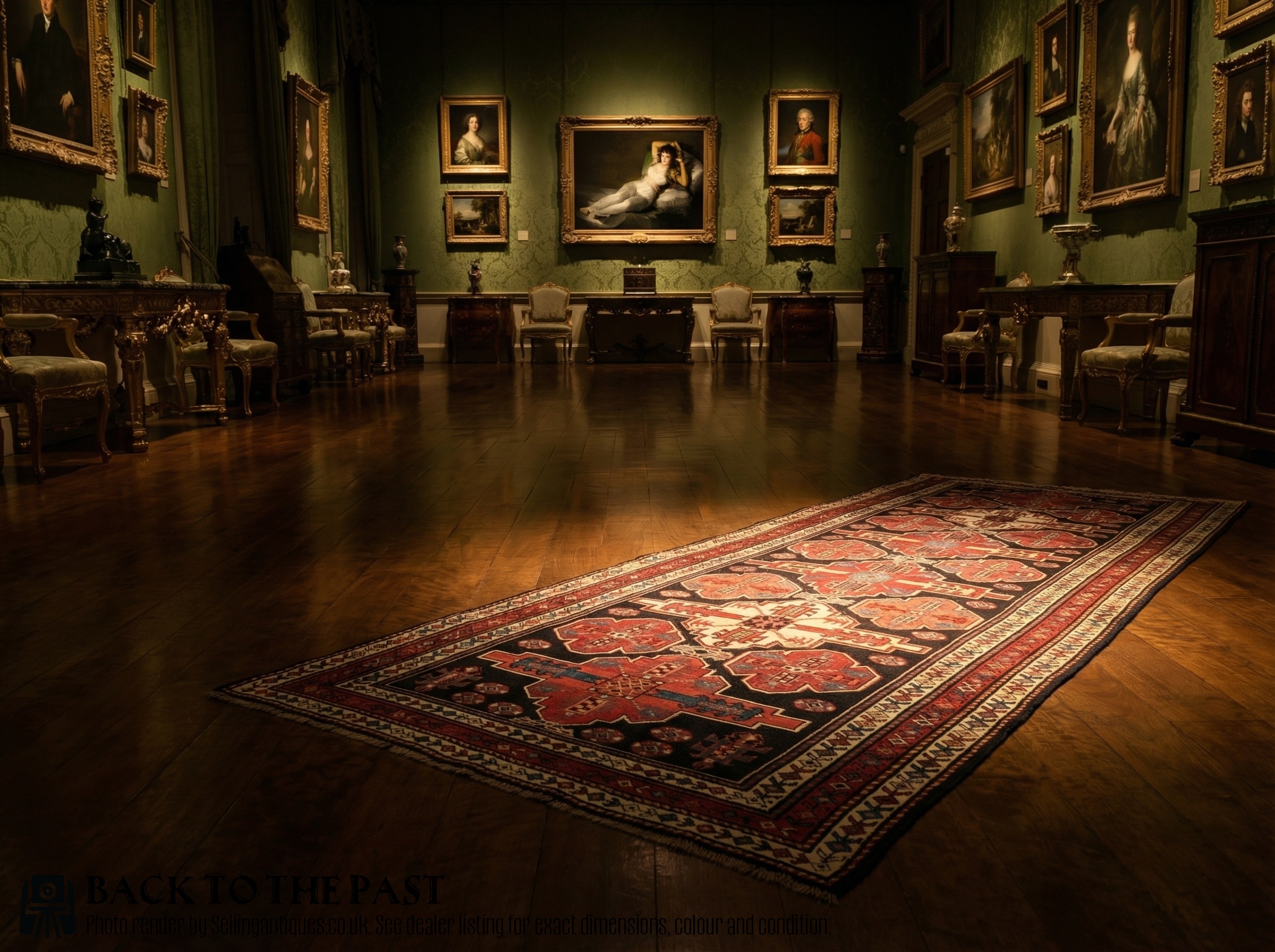
Antique Tribal Kelleh Rug
An antique tribal kelleh rug is a room-sized or long-format floor covering that originates from village and nomadic weaving traditions. When you search for this phrase, you encounter large formats that typically measure significantly longer than they are wide, serving as central carpets for substantial spaces.
The pieces listed here span regional traditions such as Persian Kurdish, Caucasian, Ersari Turkmen, and Northwest Persian tribal styles. You are most likely to meet Kurdish and Northwest Persian interpretations featuring traditional large-scale geometry and repeating motifs.
Dating across the listings ranges from the mid-nineteenth century through to the early decades of the twentieth century. These textiles carry the distinct visual vocabulary of weavers working in communities such as Bidjar, Karabagh, and Khamseh.
How they were made
These floor coverings rely on natural materials, predominantly utilising wool for the pile and cotton or hand-spun wool for the foundations. The choice of resilient animal fibres ensures that the heavy wear of daily use is met with natural elasticity and durability.
Weavers employed traditional hand-knotting techniques alongside hand-spun yarns, which absorbed natural dye stuffs with varied saturation. This method produced the rich tonal shifts and depth seen across the field and border patterns of each carpet.
Antique Tribal Kelleh Rug Retail Price Guide 2026
Typical asking prices for tribal kelleh rug among the pieces listed under this phrase on Sellingantiques today, from the lower quarter to the upper quarter. They describe what is for sale here now, not the wider market.
Several carpets feature spirited crab patterns and floating cloud bands, proving that village weavers enjoyed letting mythical creatures roam beneath our feet.
What varies in quality
The refinement of the drawing and the clarity of motifs distinguish different grades of these carpets. Superior examples display precise execution in complex borders, such as crab patterns, cloud bands, or dragon motifs, executed with disciplined geometry.
The integrity of the weave and the quality of the wool stock determine the handle and longevity of the piece. Denser knotting and expertly prepared hand-spun wool create a heavier, more stable textile that maintains its structural form over generations.
The Antique Tribal Kelleh Rug Glossary
- Kelleh
- A format descriptor for a large carpet that is longer than a standard room rug but narrower than a full palace carpet, traditionally suited to the proportions of Middle Eastern reception rooms.
- Boteh
- A stylised almond or paisley motif representing a floral shoot or cypress tree, frequently repeated in rows across the field of Kurdish and Persian tribal floor coverings.
- Harshang
- A traditional crab-like geometric border pattern often found in Northwest Persian weaving traditions, surrounding the central field with repeating hooked appendages.
- Cloud band
- A decorative band motif derived from Chinese art, depicting stylised floating clouds within the borders or field of Caucasian and Persian carpets.
- Tree of life
- A symbolic pictorial motif depicting a rising tree that connects earth and heaven, frequently rendered in the central field of tribal rugs.
Antique Tribal Kelleh Rug: Frequently Asked Questions
Where were antique tribal kelleh rugs placed?
These large formats were traditionally laid along the sides or the central axis of a reception room in traditional homes. Their elongated proportions accommodated the specific architecture of Persian and regional dwellings.
Today, their dimensions make them well-suited for long hallways, spacious corridors, or anchoring furniture arrangements in contemporary living spaces.
How do I identify a Kurdish kelleh?
Kurdish examples often display heavy foundational structures and robust wool, reflecting the cottage industry traditions of the region. Look for dense knotting and characteristic motifs such as boteh designs or dragon borders.
Regional palette choices and specific structural stiffness frequently separate these pieces from lighter Caucasian or Turkmen productions.
What materials make up these carpets?
The pile is consistently woven from wool, sometimes utilising hand-spun variations that yield irregular absorption of natural dyes. Foundations are constructed from cotton or wool yarns.
These organic materials contribute to the tactile warmth and structural resilience characteristic of nineteenth and early twentieth-century village weaving.
How do I care for a large antique rug?
Gentle vacuuming without a rotating power brush helps remove embedded dust without stressing the historic wool fibres. Professional cleaning tailored to antique textiles preserves the integrity of natural dye stuffs.
Placing a breathable rug underlay beneath the carpet prevents slippage and reduces friction against hard flooring during daily use.