

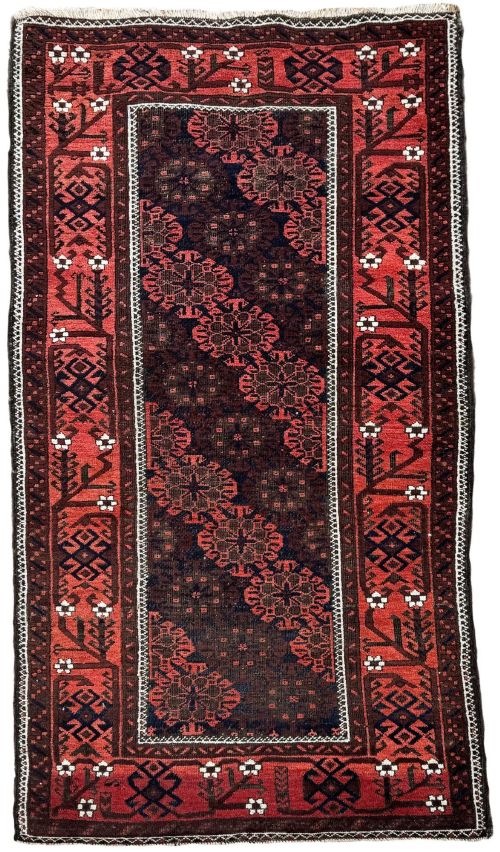
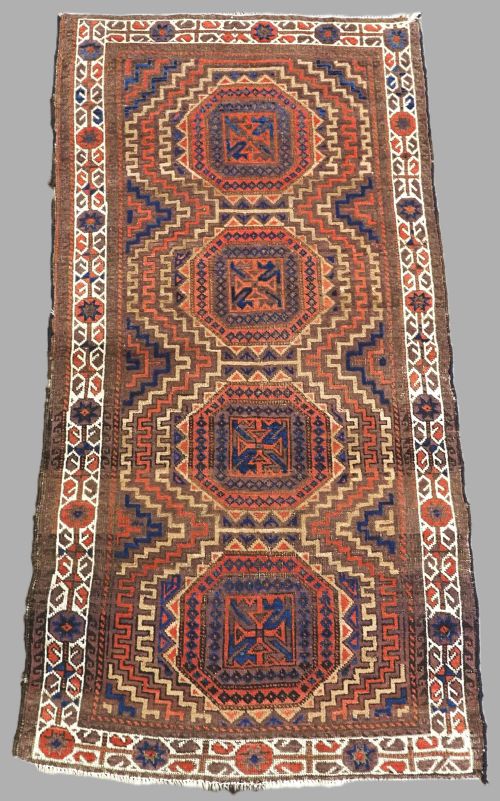
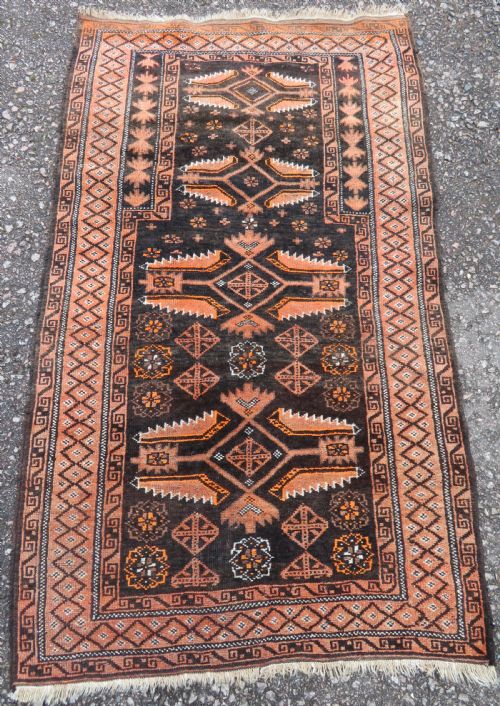


Dark Brown Wool Runner
These pieces sold as a dark brown wool runner bring enduring tribal craftsmanship into hallways and narrow spaces with deep earthy tones.
Dark Brown Wool Runner
A dark brown wool runner typically takes the form of a long, narrow floor covering originating from tribal and nomadic weaving traditions across Persia, the Caucasus and Afghanistan. These pieces are chosen to anchor long corridors and narrow rooms with rich, saturated palettes and intricate geometric motifs.
The selection on this page leans heavily into nineteenth and early twentieth-century tribal pieces, including Baluch, Kurdish and Afghan varieties. Buyers encounter narrow formats featuring traditional gul medallions, lattice patterns and latch hook designs worked in deep, dark wool grounds.
Materials and construction
Construction relies primarily on wool and hand-spun wool, frequently paired with cotton foundations and occasional additions of goat hair for structural durability along the edges. Artisans utilised natural dyes to achieve the deep brown, ivory and secondary hues that characterise these historic tribal textiles.
Weaving techniques vary across tribal groups, encompassing pile-woven rugs alongside embroidered kilims and flatweaves. The integration of hand-spun yarn introduces subtle tonal variations across the dark fields, reflecting the organic nature of traditional dyeing methods.
Dark Brown Wool Runner Retail Price Guide 2026
Typical asking prices for dark brown wool runner among the pieces listed under this phrase on Sellingantiques today, from the lower quarter to the upper quarter. They describe what is for sale here now, not the wider market.
The design vocabulary includes Persian Tribal, Afghan Tribal, Caucasian and Baluch traditions, featuring lattice patterns, prayer formats and large guls.
Assessing quality and character
Quality in these runners is defined by the fineness of the wool, the crispness of the tribal motifs such as guls or lattice patterns, and the depth achieved through natural dyes. Tighter knotting and precise execution of complex border designs distinguish finer examples from standard tribal production.
The handle and suppleness of the textile reveal much about the quality of the materials and the skill of the weaver. Pieces retaining dense, resilient pile and intact original side cordings demonstrate superior preservation.
The Dark Brown Wool Runner Glossary
- Gul
- A medallion motif frequently found in tribal weavings, often octagonal in shape and repeated across the field. These symbols historically denoted specific tribal lineages.
- Pushti
- A small mat or rug format traditionally used for sitting or leaning against in nomadic dwellings. They share the same robust wool construction as larger floor coverings.
- Kelim
- A flatwoven textile produced without a pile, creating a lightweight reversible fabric. They often feature sharp geometric designs created through slit-weave techniques.
- Kelleh
- A large, majestic format of Persian carpet that is noticeably longer than it is wide. These pieces served specific architectural proportions in traditional interiors.
Dark Brown Wool Runner: Frequently Asked Questions
Where should I place a runner?
These narrow floor coverings suit high-traffic transit areas such as long hallways, corridors and entryways where their durable wool pile absorbs daily wear.
They also work effectively in narrow kitchens or alongside beds, adding warmth and grounding long, narrow spatial dimensions with historic character.
How do I care for antique wool?
Regular gentle vacuuming without a rotating brush roll prevents dust accumulation within the dense wool pile. Professional cleaning by specialists in historic textiles ensures the natural dyes remain stable.
Keep these runners out of direct, prolonged sunlight to preserve the rich dark brown tones and natural dye integrity over time.
What is a tribal design?
Tribal designs stem from nomadic and village weaving traditions where patterns were passed down through generations rather than copied from written cartoons. These motifs reflect regional identity and cultural symbolism.
Common elements include repeating guls, latch hooks, lattice frameworks and stylized birds or trees worked by weavers in Persia, the Caucasus and Afghanistan.
How do I read runner dimensions?
Dimensions are provided in centimetres or metres, measuring the total length and width excluding any protruding fringe ends unless stated otherwise. Measuring your hallway floor space before browsing ensures the narrow proportions fit your interior.
Pay attention to both the length and the specific width, as narrow tribal runners vary considerably to accommodate different architectural layouts.