
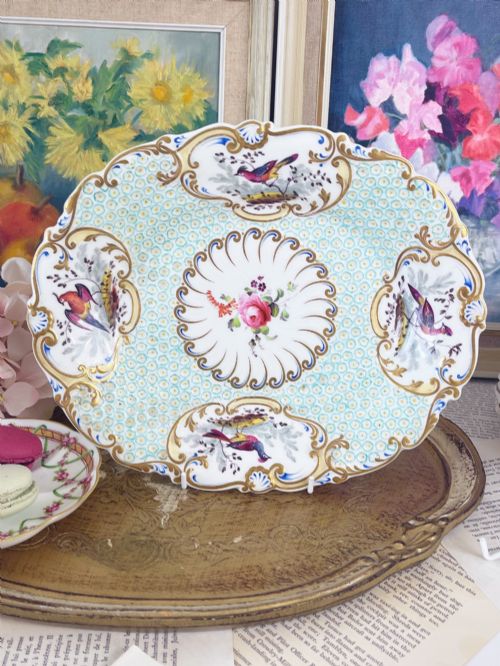

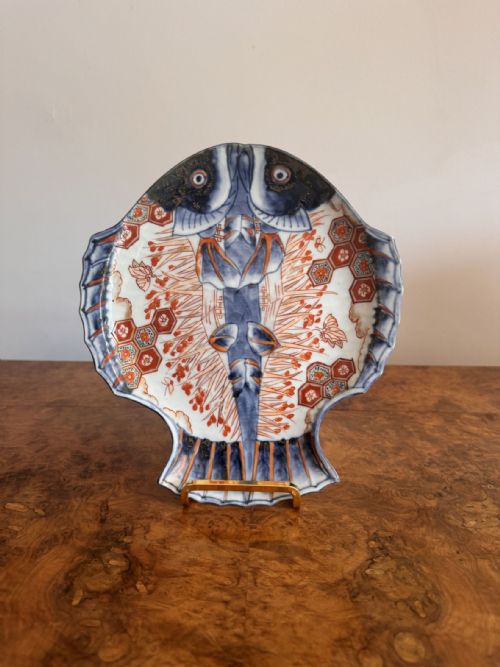
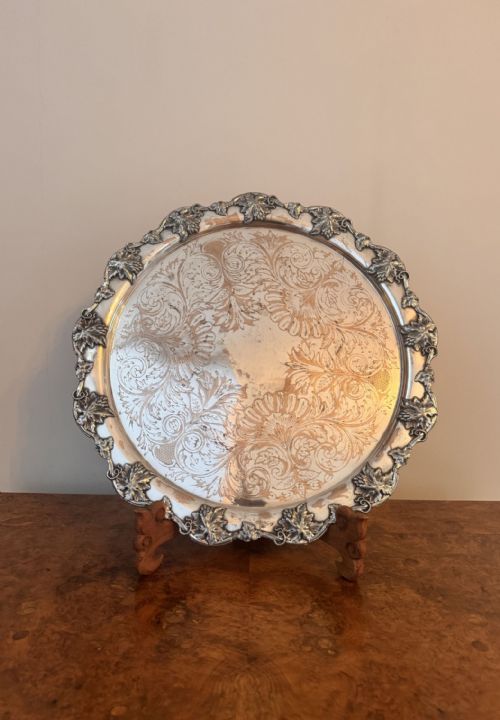
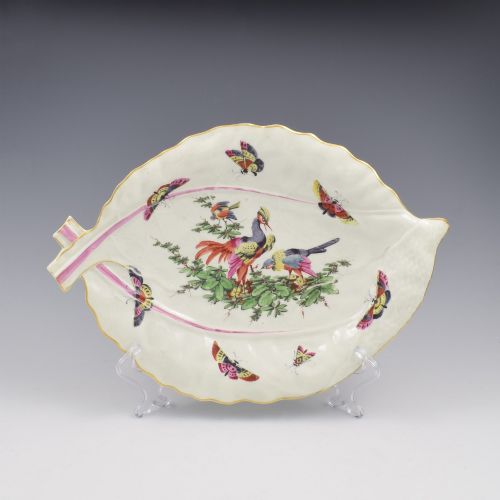
Antique Serving Plates
These antique serving plates span porcelain, earthenware and silver plate across the eighteenth, nineteenth and twentieth centuries.
Antique Serving Plates
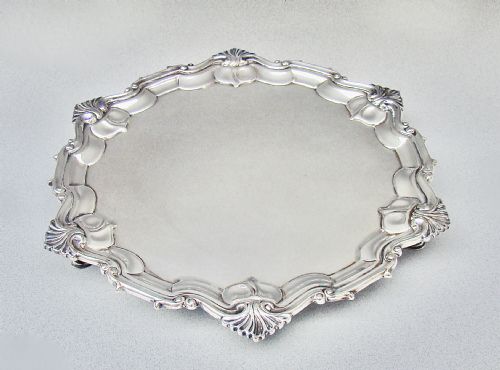
When you search for antique serving plates, you encounter a varied selection of platters, chargers, salvers and trays designed for presenting food and drink. The material ranges from early porcelain and earthenware bodies to silver plate and electroplated nickel silver.
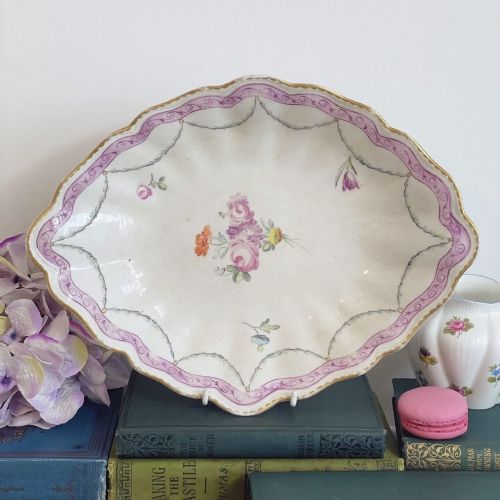
The nineteenth and early twentieth centuries provide many of the silver plated tea trays, gallery trays and fruit baskets on this page, often bearing detailed engraving. Earlier eighteenth-century examples lean towards tin-glazed earthenware chargers and porcelain leaf dishes.
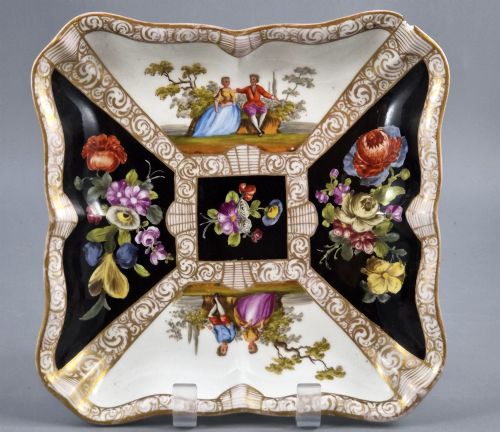
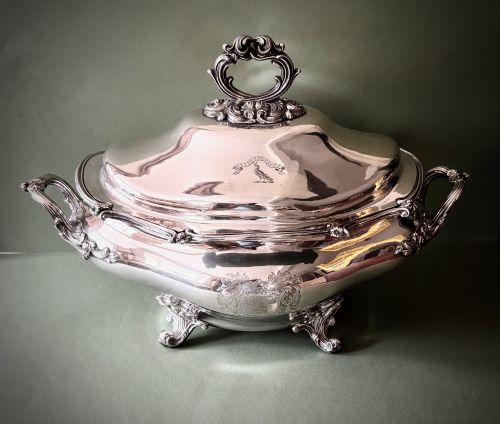
Serving platters and tureens also appear alongside decorative dishes, spanning stylistic influences from Georgian and Victorian periods to Art Deco and Japanese Meiji designs.
How they were made
Ceramic pieces utilise bodies like porcelain, earthenware and salt-glazed pottery, shaped on wheels or in moulds before hand-painting or transfer printing. Glazes provide the protective glassy surface, sometimes enhanced with polychrome enamels or blue and white pigments.
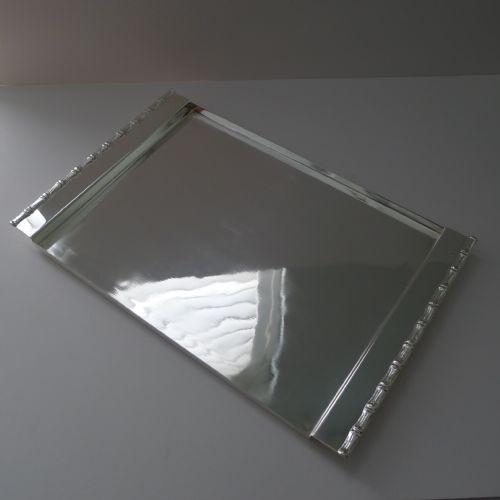
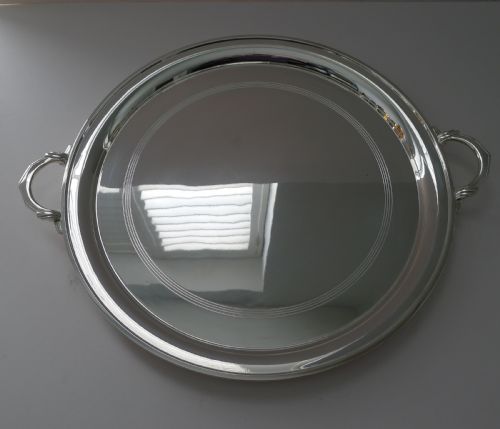
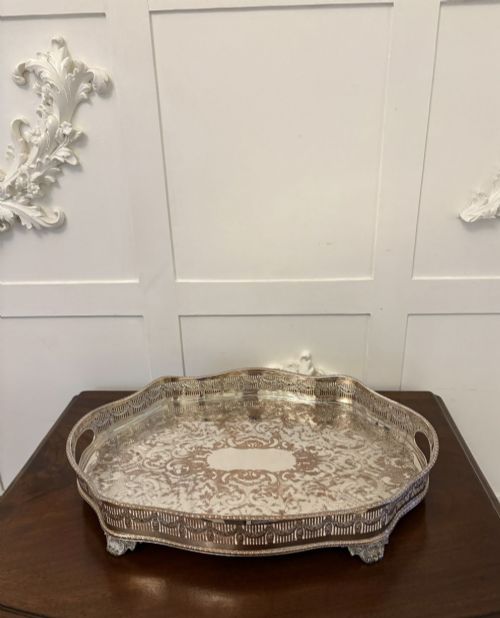
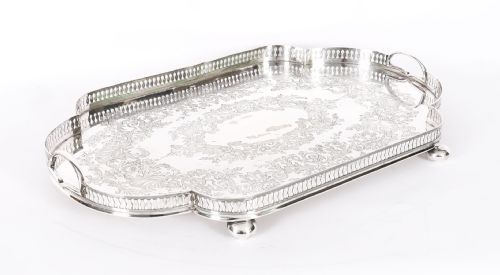
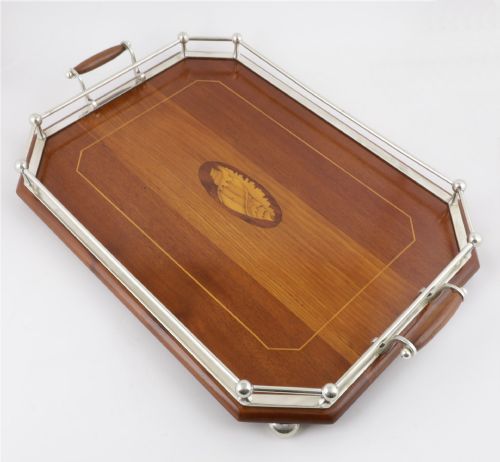
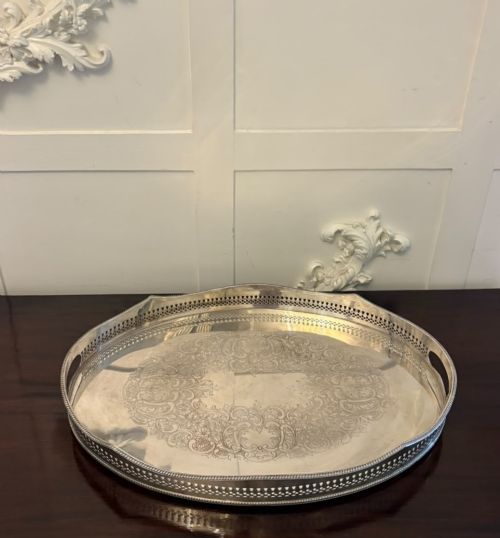
Metal items employ silver plate and electroplated nickel silver over base metals, often utilising old Sheffield plate techniques or applied silver layers. Pierced galleries, engraved patterns and cast handles add sculptural detail to the trays and salvers.
What varies in quality
The crispness of the hand-painted decoration on porcelain and earthenware dictates the distinction between standard production and superior artistic output. Makers who employed delicate polychrome enamels or fine transfer printing achieve greater visual depth on chargers and platters.
In silver plate, the weight of the metal base and the precision of the pierced gallery or engraved detailing set the standard. Substantial metal thickness and well-preserved plating distinguish finer salvers and tea trays.
Mappin & Webb·James Deakin·H & R Daniel·William Hutton & Sons·Christofle·Davenport·Hicks & Meigh·Thomas Bradbury & Sons·Elkington
The Antique Serving Plates Glossary
- Charger
- A large decorative plate or platter, typically used for formal dining or display. These broad ceramic vessels often feature tin glazing or detailed blue and white transfer printing.
- Salver
- A tray, usually made of silver or silver plate, used for presenting food, drinks or documents. They frequently stand on small feet and possess engraved surfaces.
- Gallery tray
- A tray featuring an upright pierced metal border around the edge, resembling a balcony. This architectural rim kept items secure during service.
- Transferware
- Pottery decorated by applying a printed design from an engraved copper plate onto tissue paper, which is then transferred onto the ceramic body. Blue and white examples remain common in nineteenth-century wares.
- EPNS
- Electroplated nickel silver, a common base metal alloy coated with a layer of pure silver through electrolysis. This technique became widespread during the Victorian era for serving wares.
Antique Serving Plates: Frequently Asked Questions
What is an antique serving plate?
These items encompass chargers, platters, trays and tureens created for dining and hospitality over the past three centuries. They combine practical utility with decorative craftsmanship.
Materials range from porcelain and earthenware to silver-plated metal, reflecting the shifting domestic fashions of the Georgian, Victorian and Edwardian eras.
How were antique trays used?
Serving trays and salvers transported tea sets, wine decanters and dishes between rooms or presented food directly at the table. Gallery edges prevented items from sliding off during transit.
Larger chargers and platters served meats or displayed decorative arrangements in formal dining rooms.
How do I date an antique serving dish?
Dating relies on maker marks, ceramic bodies, decorative styles and manufacturing techniques. Early pieces often show hand-painted motifs on tin-glazed earthenware or soft-paste porcelain.
Later Victorian and Edwardian items frequently utilise silver plate over nickel bases, alongside transfer-printed patterns characteristic of nineteenth-century industrial output.
How do I care for antique porcelain?
Antique ceramics require gentle hand washing in lukewarm water with mild detergent. Avoid abrasive sponges or dishwasher cycles that damage historic glazes and enamel painting.
Metal serving items benefit from specialised silver cloths to maintain the finish without removing the underlying plating.