


Edwardian Glass Tableware
Edwardian glass tableware brings polished silver mountings and cut crystal together for the dining table.
Edwardian Glass Tableware
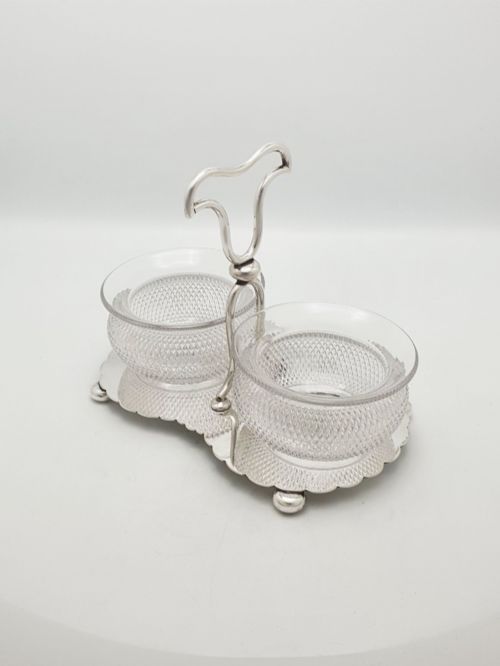
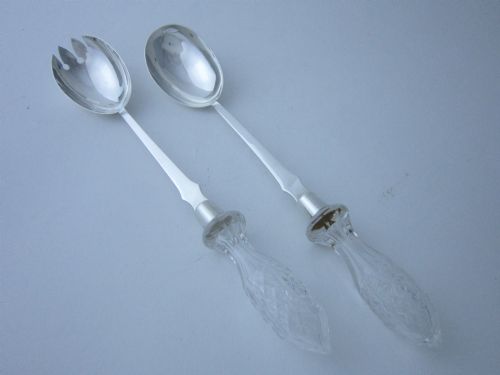
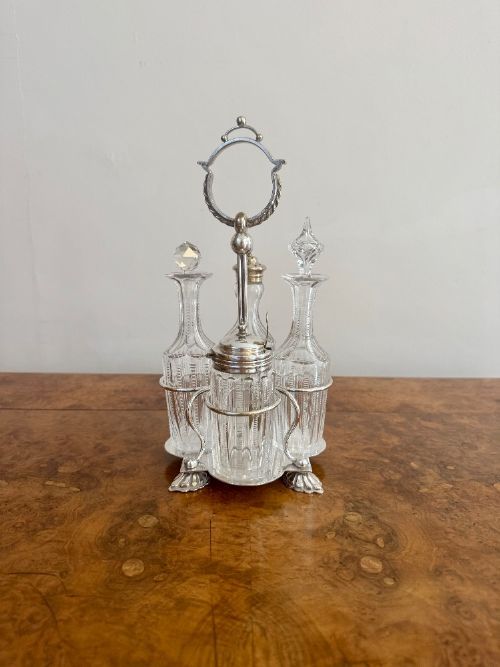
Edwardian glass tableware comprises dining accessories made primarily during the early twentieth century, combining glass bodies with sterling silver or silver plated mounts. The pieces found here range from cruet sets, condiment stands, and salt cellars to biscuit barrels, preserve pots, and fruit bowls.
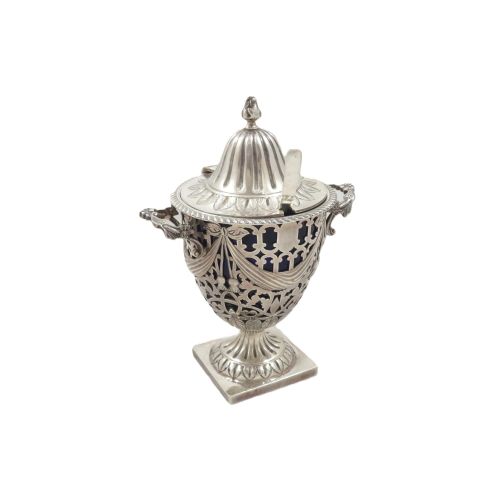
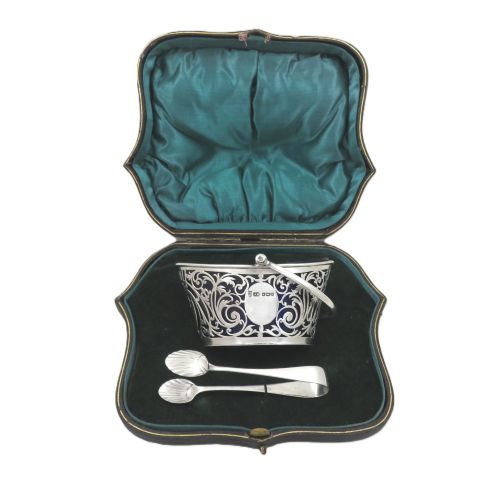
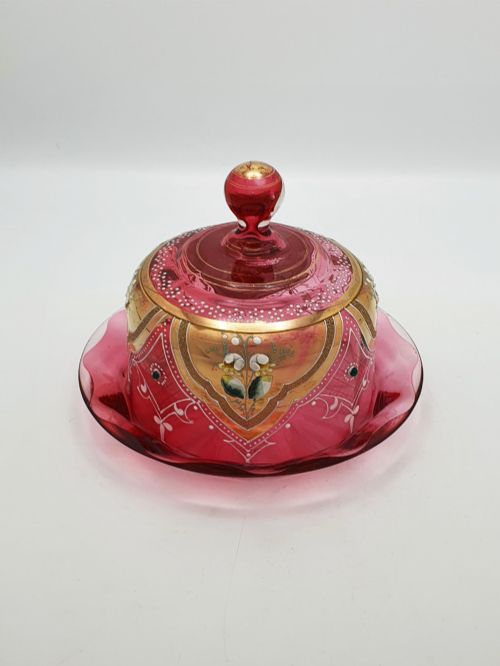
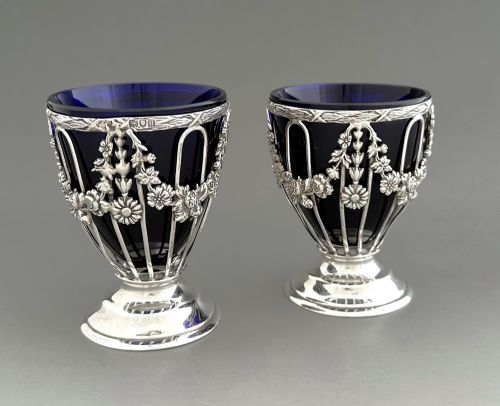
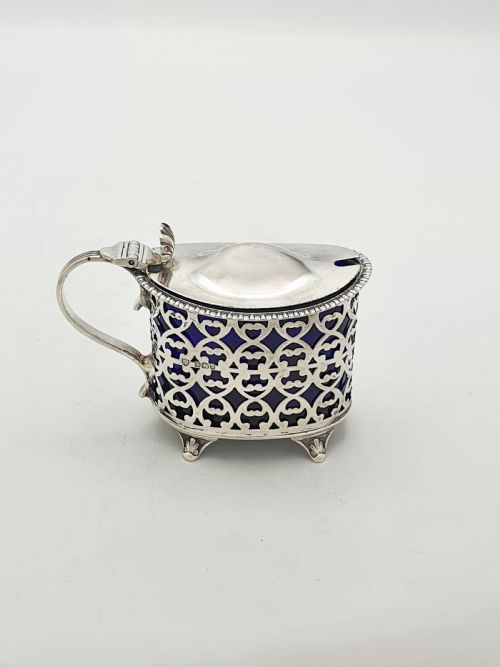
The selection leans heavily toward matching sets and fitted containers intended for serving condiments, sugar, and preserves at the table. Many items incorporate contrasting elements such as cobalt blue glass liners or cranberry glass bodies housed within pierced metal frameworks.
While the dominant period is the Edwardian era and surrounding decades, related items from the late Victorian period and the early twentieth century also appear. These domestic accessories reflect formal dining customs that favoured coordinated silver and crystal presentation.
Materials and Construction
Makers combined heavy lead crystal and cut glass with sterling silver and silver plate, frequently employing mould blown or faceted techniques for the glass bodies. Piercing, chasing, and wirework methods shaped the metal frames, mounts, and hinged lids that secure the glass components.
Specialised glass types such as cranberry glass and cobalt glass provide intense colour contrasts against bright metal surfaces. Mounts are often engineered to fit removable glass inserts precisely, such as salt cellars fitted with blue liners or biscuit barrels set inside pierced silver plated frames.
Listings feature items spanning the Victorian era, the Edwardian period, and the 1920s, utilising cut glass, cranberry glass, and sterling silver.
Evaluating Quality and Craftsmanship
Quality rests upon the crispness of the glass cutting, the weight of the lead crystal, and the substance of the silver or silver plate used for the mounts. Heavy, sharp facets catch the light cleanly, while thinner glass vessels lack the same substantial hand feel.
The refinement of the metalwork distinguishes standard production from finer pieces, particularly where hand piercing, engraved detailing, or maker marks are present. Fitted cases and original matching spoons or liners also elevate the integrity of a set.
Harrods Ltd·Hukin and Heath
The Edwardian Glass Tableware Glossary
- Cruet set
- A matched collection of glass bottles or jars for oil, vinegar, salt, and mustard, held within a metal stand. These sets sat centrally on the dining table for individual seasoning.
- Cranberry glass
- A rich red glass coloured with gold chloride during the melting process. It is frequently seen in Edwardian jam dishes, biscuit barrels, and covered cheese dishes.
- Cobalt glass
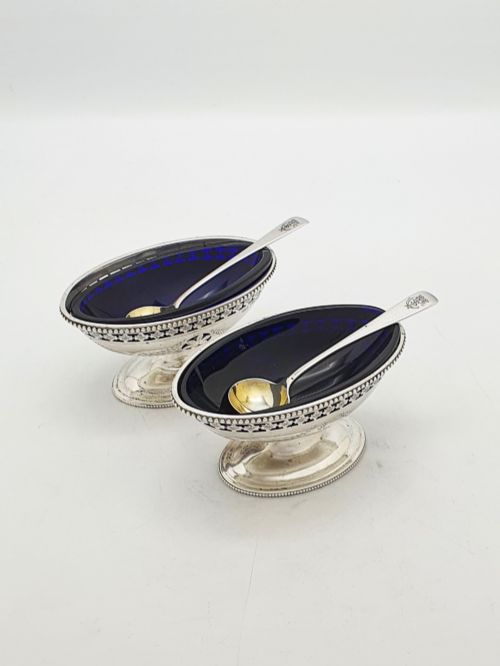
- A deep blue glass produced by adding cobalt oxide to the batch. It is commonly utilised for small liners inside open salt cellars and condiment pots.
- Biscuit barrel
- A covered container designed for storing dry biscuits or crackers on the sideboard. They often feature silver plated wirework, swing handles, and glass bodies.
- Knife rest
- A small horizontal support placed on the tablecloth between courses to keep carving or dining knives raised. Pairs were often formed from cut glass terminals joined by a central silver rod.
Edwardian Glass Tableware: Frequently Asked Questions
What pieces are included in edwardian glass tableware?
This category encompasses functional dining table accessories made from glass combined with silver or silver plate. Common forms include cruet sets, biscuit barrels, sugar baskets, salt cellars, and preserve pots.
Many pieces feature removable glass liners in cobalt blue or cranberry hues held within pierced metal frames. They reflect the formal dining practices of the early twentieth century.
How were condiment sets used?
Condiment sets held essential seasonings like salt, mustard, pepper, vinegar, and oil during meals. They allowed diners to adjust flavours directly at the table.
Sets were typically arranged in small stands with dedicated spoons or shakers for each ingredient. Elaborate silver frames made them suitable for display on the dining table or sideboard.
How do I care for silver mounted glass?
Wash glass components gently in warm soapy water, avoiding harsh abrasives that can scratch the surface. Remove glass liners from metal mounts before cleaning to prevent moisture trapping.
Polish the silver or silver plate sections separately using a dedicated cloth, taking care not to get polish residue onto the glass or into internal crevices.
Are these items suitable for daily use?
These pieces can certainly be used for dining, provided they are handled with reasonable care. Sturdy cut glass bowls, cruet sets, and knife rests function just as well today as they did a century ago.
Antique silver plate and thin blown glass require hand washing rather than dishwasher cleaning. Treating them with everyday consideration preserves both the metal plating and the glass.