




Antique Glass Chargers
These antique glass chargers bring striking texture and presence to a room, offering the collector exceptional display pieces from the early twentieth century.
Antique Glass Chargers
When you search for antique glass chargers, you are looking at substantial decorative plates and shallow bowls designed primarily for display rather than everyday dining. The examples you encounter on this page span the Edwardian period through the Art Deco era, encompassing both British cut glass and significant French production.
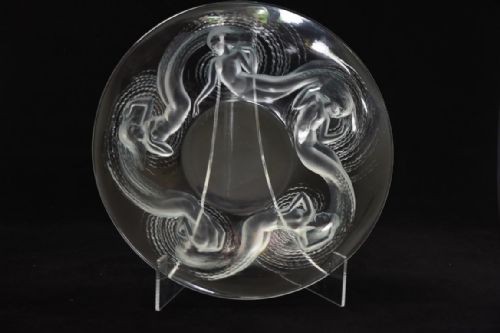
You are most likely to meet pieces originating from the 1920s and 1930s, particularly moulded and opalescent works that demonstrate the period's fascination with decorative glass surfaces. These larger plates and chargers serve as focal points on a table or wall, bridging the gap between utilitarian serveware and pure decorative art.
How they were made
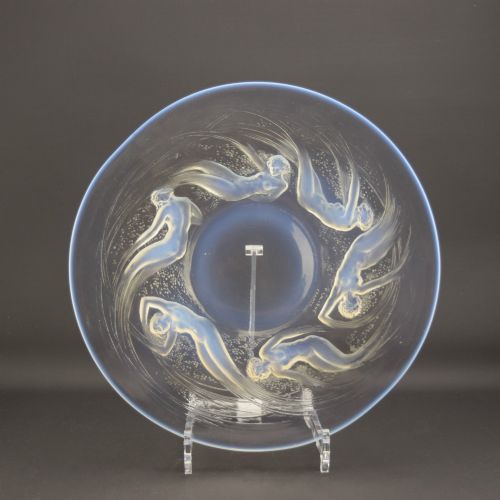
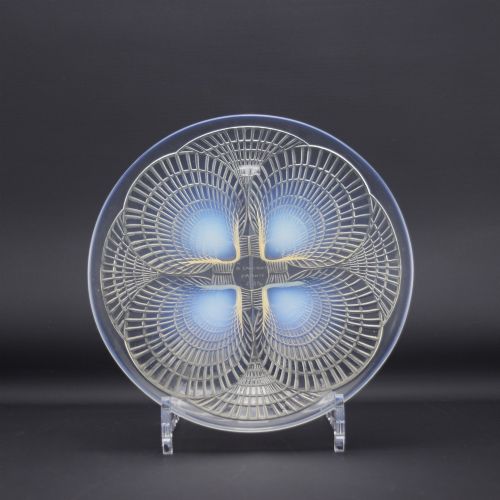
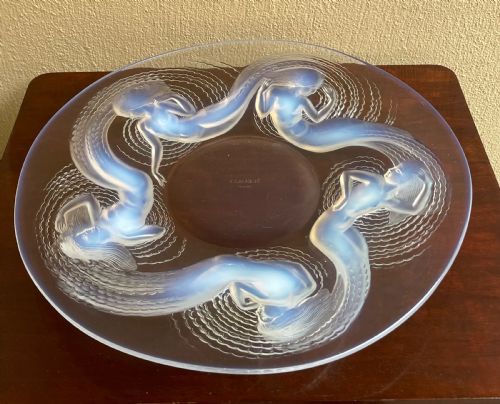
Makers utilised heavy moulding techniques to shape thick glass into deep relief patterns, capturing light across textured surfaces. Opalescent glass creates a milky blue glow when lit from the front and turns amber against the light, achieved through specific chemical additions during the cooling process.
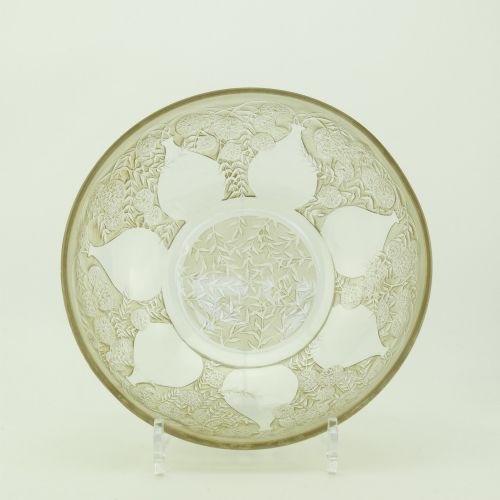
Clear glass and lead crystal pieces rely on precision cutting to carve geometric or floral motifs into the thick material, producing sharp facets that refract light. Sepia staining was also applied to accent specific design elements, adding contrast and depth to the moulded relief.
Listings feature items spanning from the Edwardian era through the Art Deco period, highlighting materials such as lead crystal, opalescent glass, and sepia stain.
What varies in quality
The distinction between standard production and the finest work lies in the crispness of the moulded detail and the depth of the opalescent effect. Superior pieces display sharp, clean lines in the relief work without blurring, and the play of light across the glass is visibly richer.
Weight and balance also separate the grades of work, as thicker lead crystal and heavier moulded chargers require greater technical control during production. The subtlety of the sepia stain or the evenness of the frosted finish dictates how successfully the decorative motif holds the eye.
Rene Lalique
The Antique Glass Chargers Glossary
- Opalescent Glass
- Glass that appears milky bluish-white by reflected light and amber or yellowish by transmitted light. This optical effect gives moulded plates and chargers a distinctive luminous quality.
- Moulded Glass
- Glass formed by pressing molten material into a metal or wooden mould to create raised patterns. This technique allowed makers to produce intricate, high-relief designs on heavy plates.
- Lead Crystal
- Heavy glass containing metallic oxide that increases brilliance, weight, and the refractive index. It allows for deep, sharp cutting across decorative dishes and chargers.
- Sepia Stain
- A warm brown pigment applied to specific recessed areas of moulded glass to highlight the design. It creates dramatic tonal contrast against clear or frosted backgrounds.
- Cut Glass
- Glass decorated by hand with grinding wheels to produce faceted patterns. The process results in sharp edges that catch and reflect light from multiple angles.
Antique Glass Chargers: Frequently Asked Questions
What is an antique glass charger?
An antique glass charger is a large decorative plate or shallow bowl used primarily for display or as a base setting rather than for holding food. They offer substantial weight and intricate surface decoration.
These pieces often feature heavy moulding, cut crystal patterns, or opalescent finishes that make them standout decorative objects in any room.
How do I date an antique glass charger?
Dating relies on identifying the stylistic markers of periods such as Edwardian, Art Nouveau, and Art Deco. Edwardian pieces often show traditional cut glass, while 1920s and 1930s pieces lean towards moulded opalescent designs.
Examining the manufacturing technique and stylistic motifs provides a reliable guide to the era in which the piece was produced.
How should I display a glass charger?
Glass chargers work best where light can pass through or reflect off their surfaces. Placing them on plate stands near a light source enhances the opalescent glow or the deep cuts in the crystal.
They add texture and visual weight when arranged on sideboards, mantelpieces, or displayed securely on walls.
What is the difference between opalescent and frosted glass?
Frosted glass is treated mechanically or with acid to create a matte, opaque surface that diffuses light uniformly. Opalescent glass is a specialised type that shifts in colour depending on the angle of the light.
Opalescent pieces display milky blue tones under reflected light and turn warm amber when viewed with light passing directly through them.