


Etched Clear Glass
These pieces of etched clear glass range from delicate Victorian tableware to bold Art Deco vessels, prized for the way decorative motifs catch the light.
Etched Clear Glass
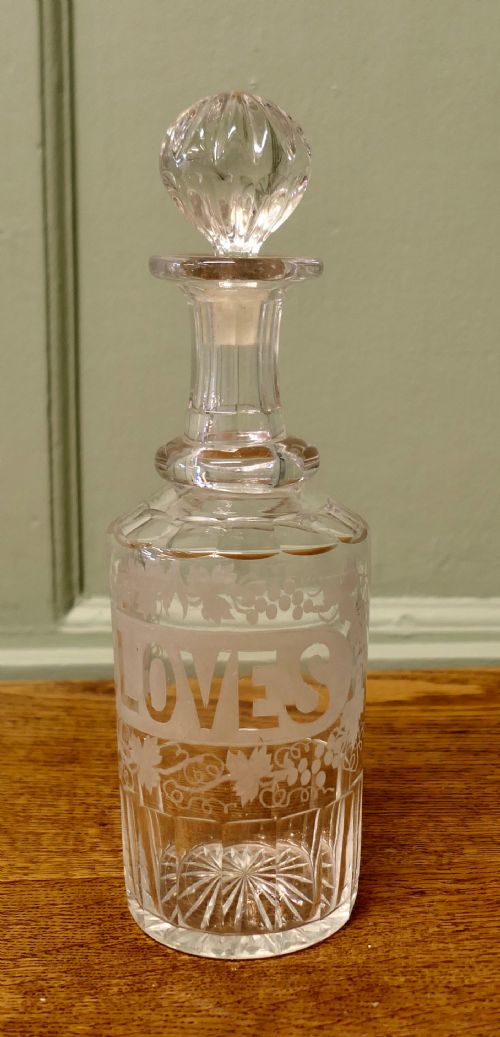
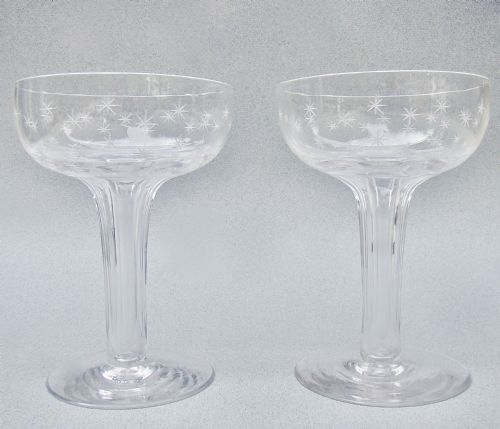
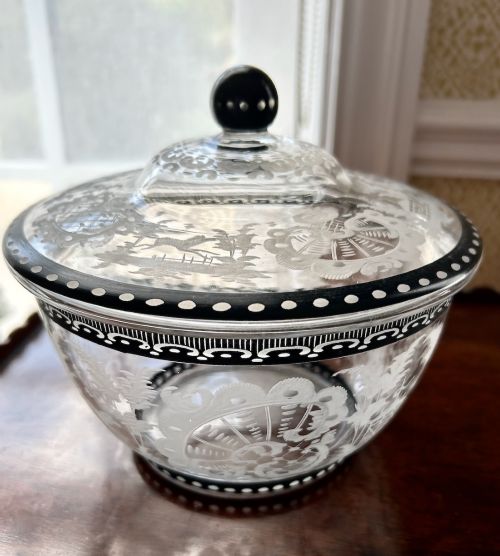
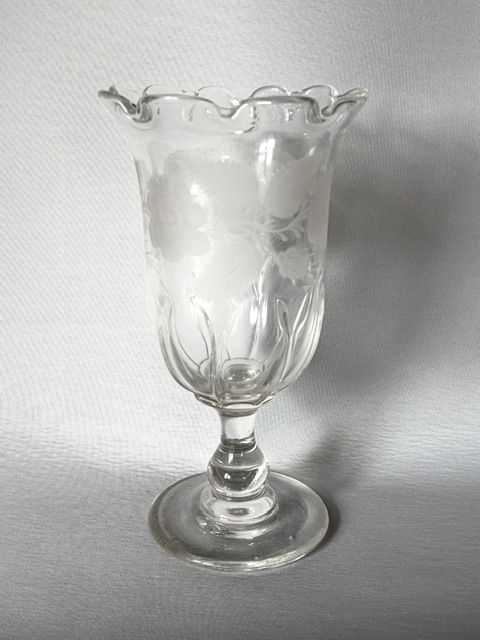
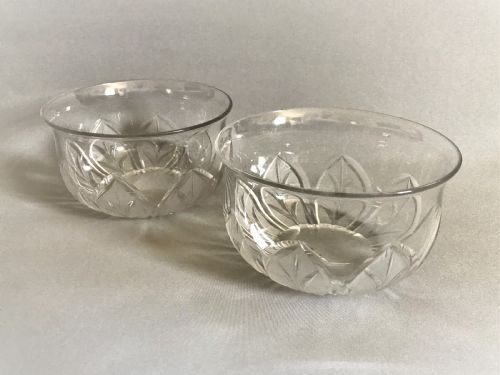
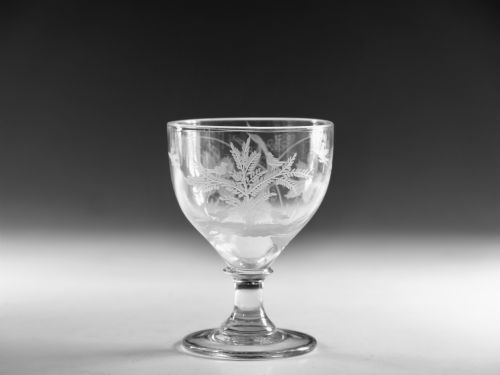
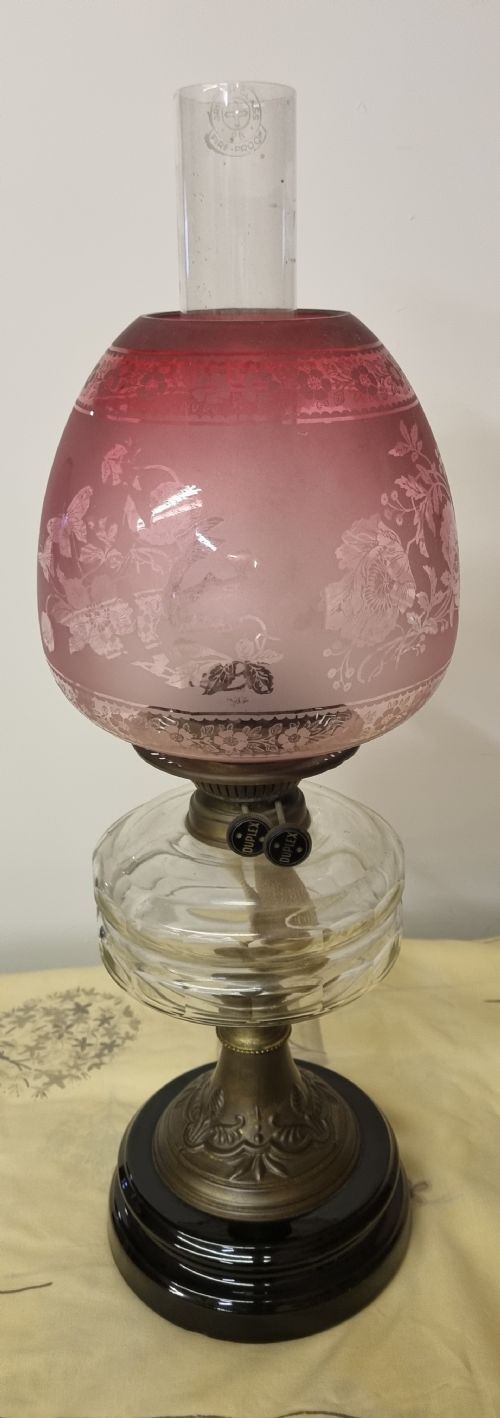
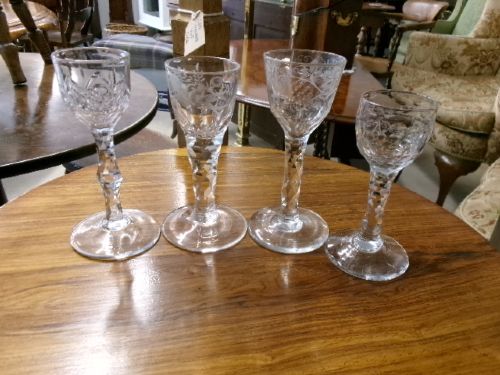
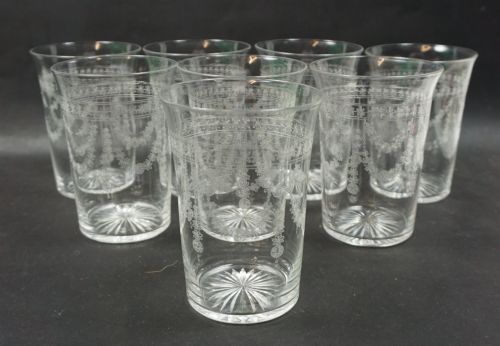
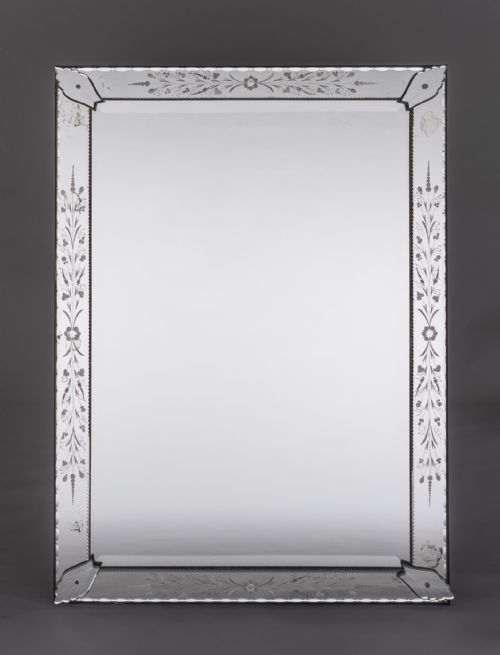
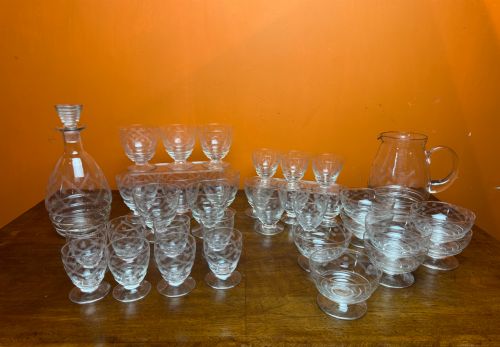
Etched clear glass covers a broad spectrum of functional and decorative items, spanning tableware, lighting, and mirrors from the eighteenth century through the art deco era. Drinking vessels, decanters, and vases dominate the selection, often produced in matching suites or distinct pairs.
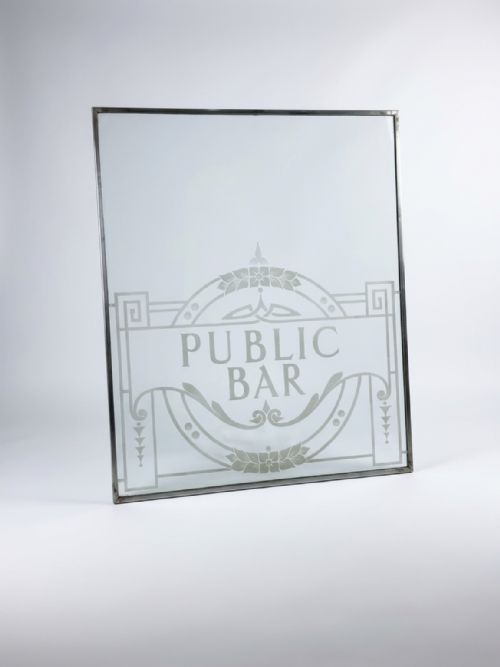
Victorian examples tend towards ornate floral motifs and panel cuttings, whilst later twentieth century pieces embrace geometric styling and modernist silhouettes. Buyers encounter everything from tavern rummers to French dressing table bottles and large architectural mirrors.
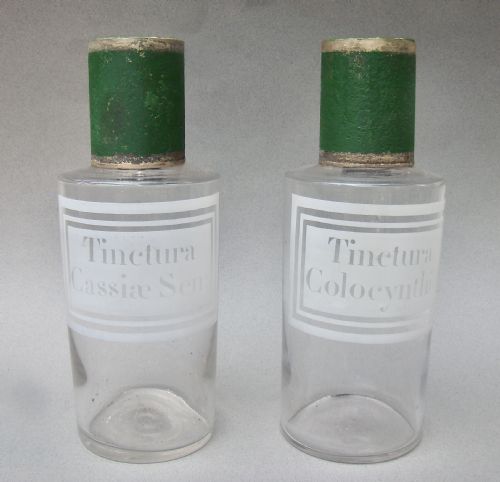
Origins vary widely across British, French, Venetian, and Bohemian workshops, reflecting the international reach of decorative glassware production. Pieces range from modest domestic items to substantial display pieces and specialised apothecary jars.
How They Were Made
Makers utilised lead crystal and standard clear glass, frequently combining wheel cutting and engraving with acid etching to achieve contrasting textures. Surface decoration was often heightened through frosting, enamelling, or the addition of silver and brass mounts.
Vessels were typically mouth blown into moulds or free blown before undergoing meticulous cold work by skilled hands. The application of patterns required steady precision, whether executing delicate Greek key borders or deep modernist incisions.
Listings feature items spanning the eighteenth century through the art deco period, including lighting, mirrors, and tableware.
What Varies in Quality
The clarity of the material and the crispness of the decorative lines dictate the standard of execution. Superior items display sharp, purposeful incisions and evenly distributed frosting without blurring or accidental scratching.
Proportion and weight distinguish finer glassware from standard utility pieces, with well balanced handles, stems, and bases showing careful control during manufacture. The integration of metal mounts, such as brass or silver, points to higher production budgets.
Hinks of Birmingham·Rene Lalique·Daum·Karl Palda·Jean Luce
The Etched Clear Glass Glossary
- Acid etching
- A technique using acid to eat into the glass surface, creating smooth frosted designs.
- Rummer
- A heavy, short stemmed drinking glass popular in Britain during the eighteenth and nineteenth centuries.
- Lead crystal
- Glass containing lead oxide, known for its high refractive index and heavier weight.
- Overmantle mirror
- A large decorative mirror designed specifically to hang above a fireplace mantel.
- Engraving
- The process of cutting shallow lines into glass using a small rotating copper wheel.
Etched Clear Glass: Frequently Asked Questions
How do I clean antique glass safely?
Wash pieces by hand in warm water using a mild detergent, avoiding harsh scrubbing brushes and sudden temperature changes.
Place a towel in the bottom of the sink to cushion delicate stems and rims during the process.
Were these decanters meant for daily use?
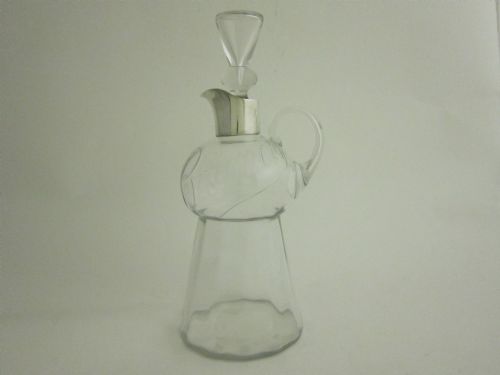
Many Victorian and Edwardian decanters were built for regular dining service, housing spirits, wines, or cordials.
Thicker walled examples handled frequent handling well, though decorative pieces require careful placement.
How do I tell Victorian glass from Art Deco?
Victorian items favour naturalistic floral motifs, heavy cutting, and rounded bulbous forms.
Art Deco pieces shift towards stylised geometry, streamlined silhouettes, and acid etched modernist patterns.
Can I use antique oil lamps today?
Most antique lamps are collected for their decorative brass columns and etched shades rather than functional lighting.
Conversion to electricity is common, though traditional burners remain intact on untouched examples.