
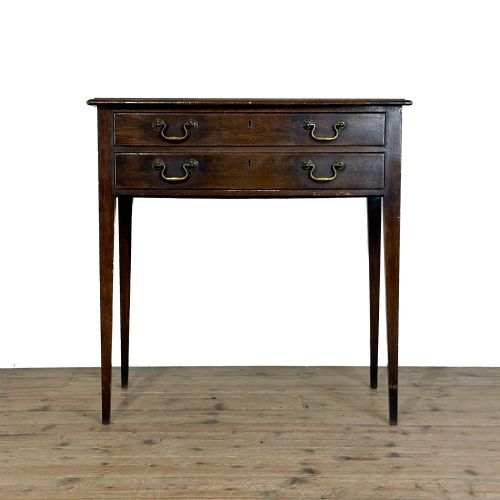
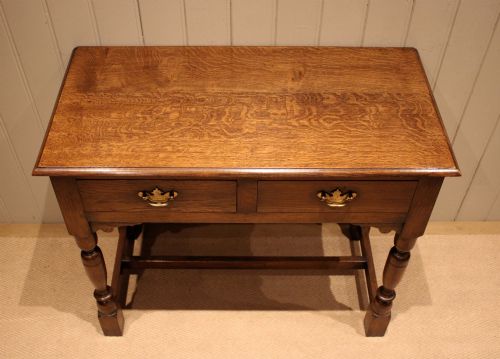
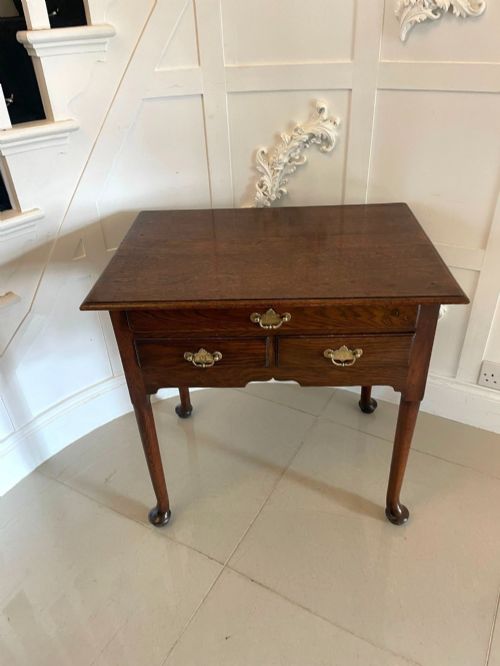
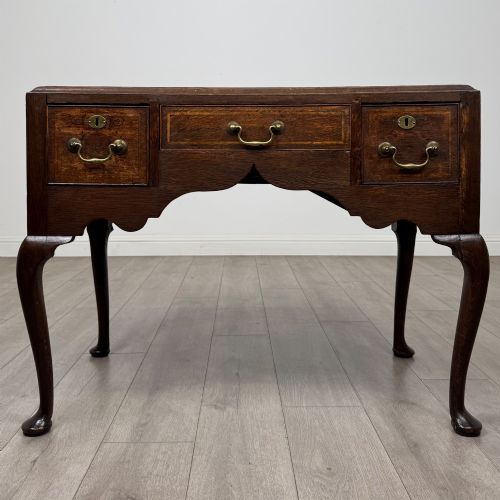
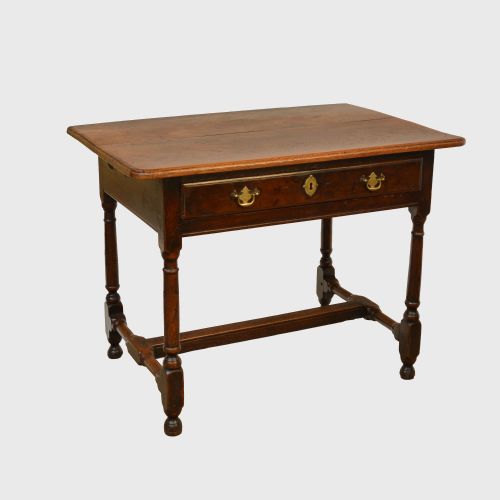
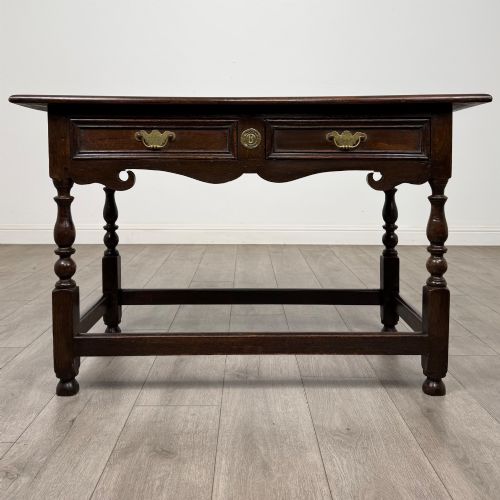
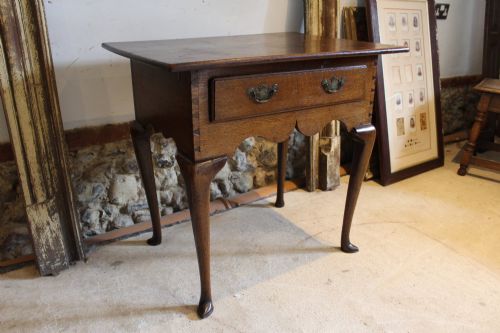
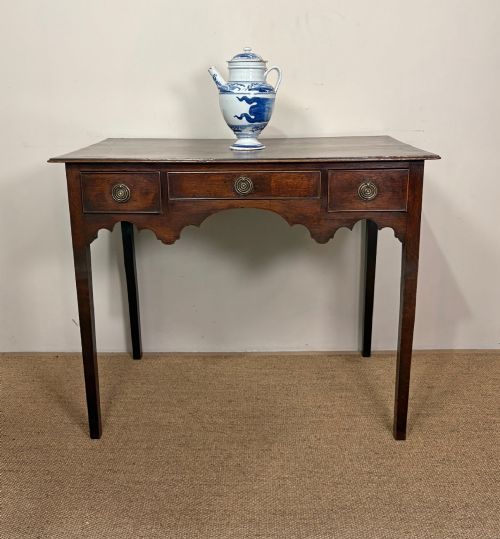
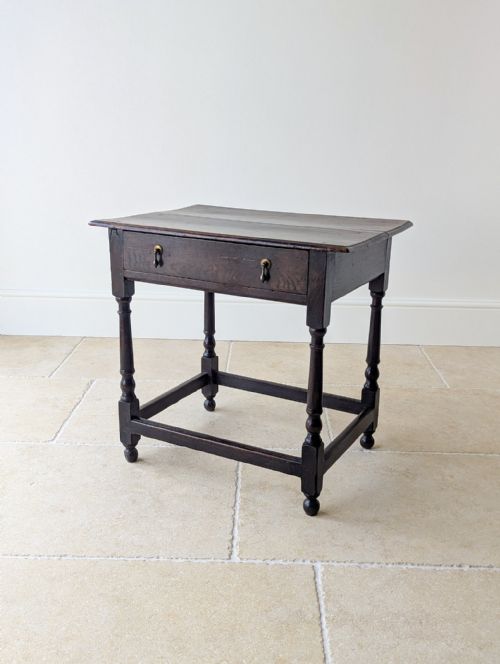
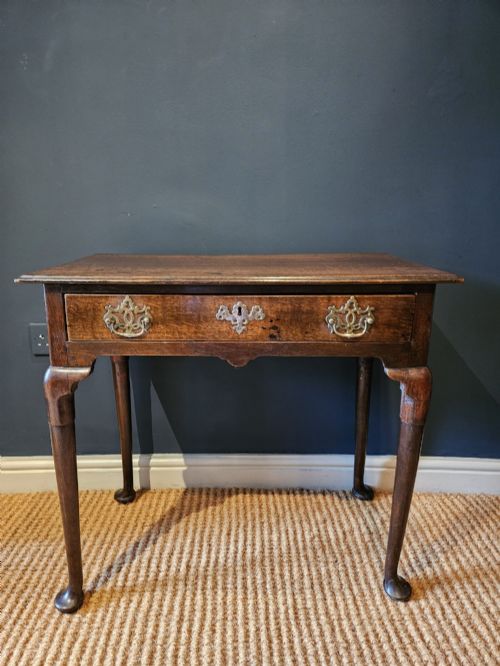
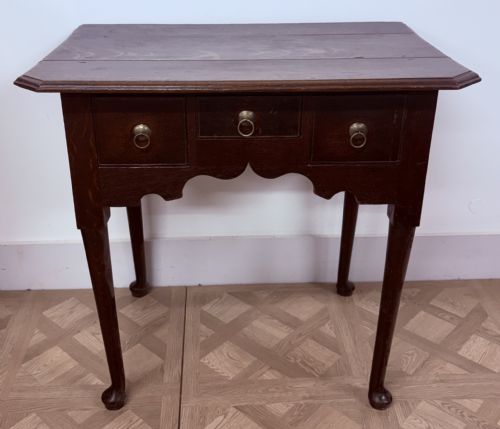
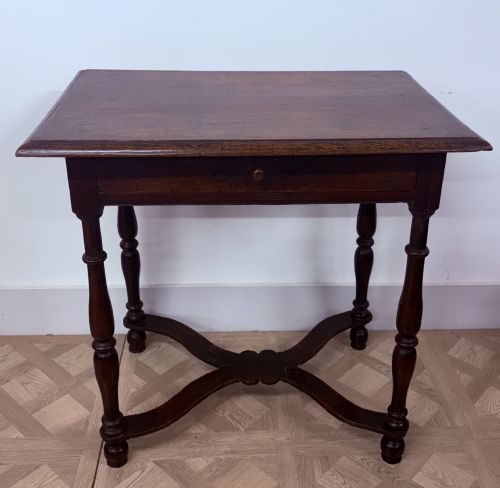
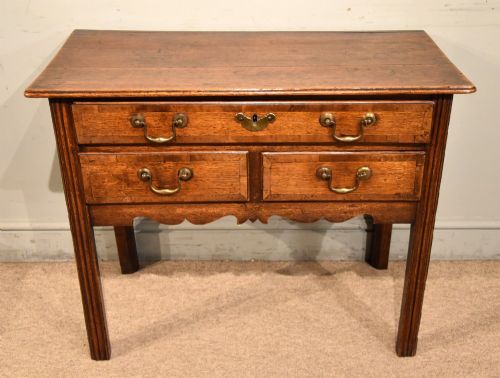
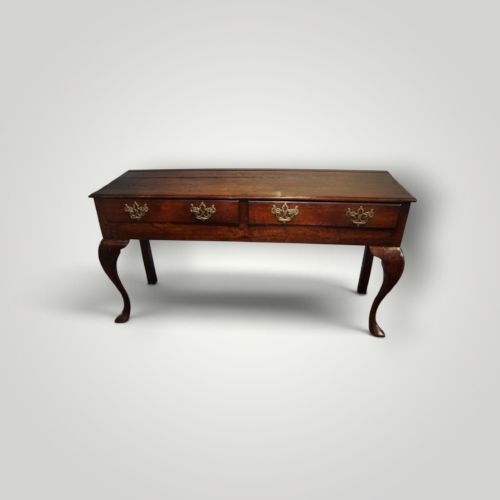
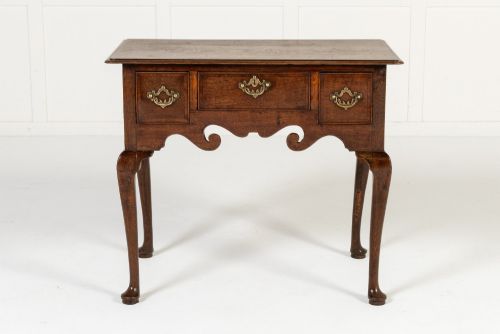
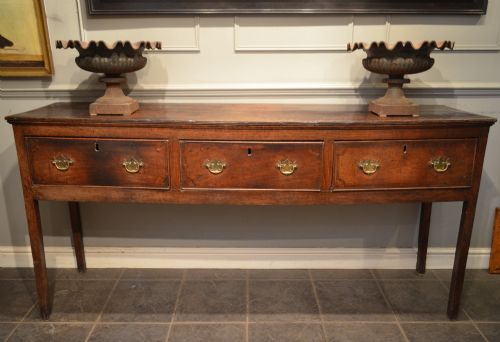
Antique Oak Lowboy Table
An antique oak lowboy table brings compact utility and timeless timber character to a hallway or drawing room.
Understanding the antique oak lowboy table
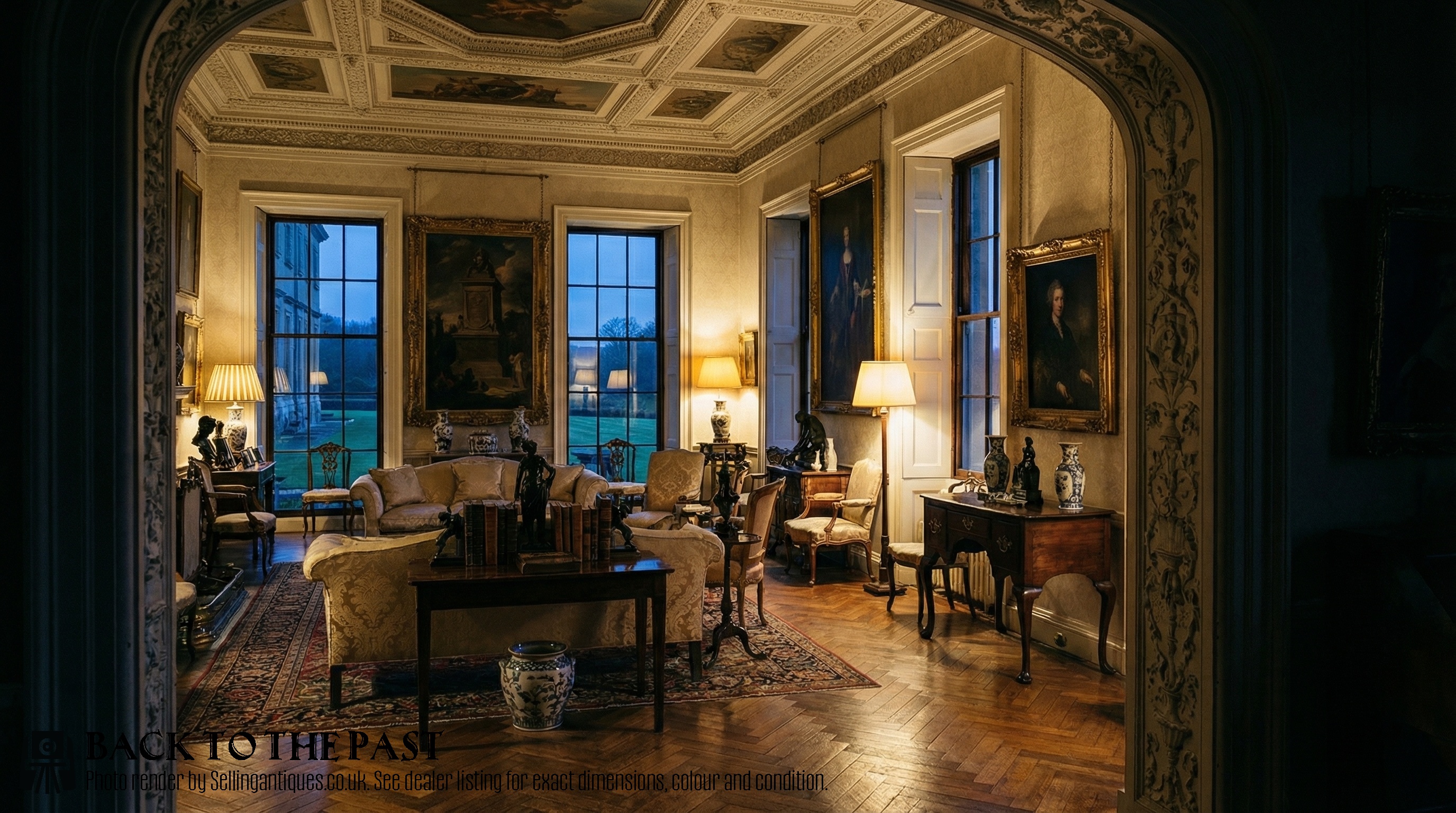
The antique oak lowboy table is a compact side or occasional table traditionally fitted with one or more drawers beneath the surface. Buyers typically encounter 18th-century pieces, including Georgian and country-made examples, alongside later 19th-century and Edwardian revivals.
These tables serve flexibly as lamp tables, hall writing desks, or console tables. The forms range from strict formal Georgian proportions to regional English and Welsh country pieces.
Surviving examples span the late 17th century through to the early 20th century, retaining the fundamental low-built stance that distinguishes them from taller tallboys and chests.
Materials and construction methods
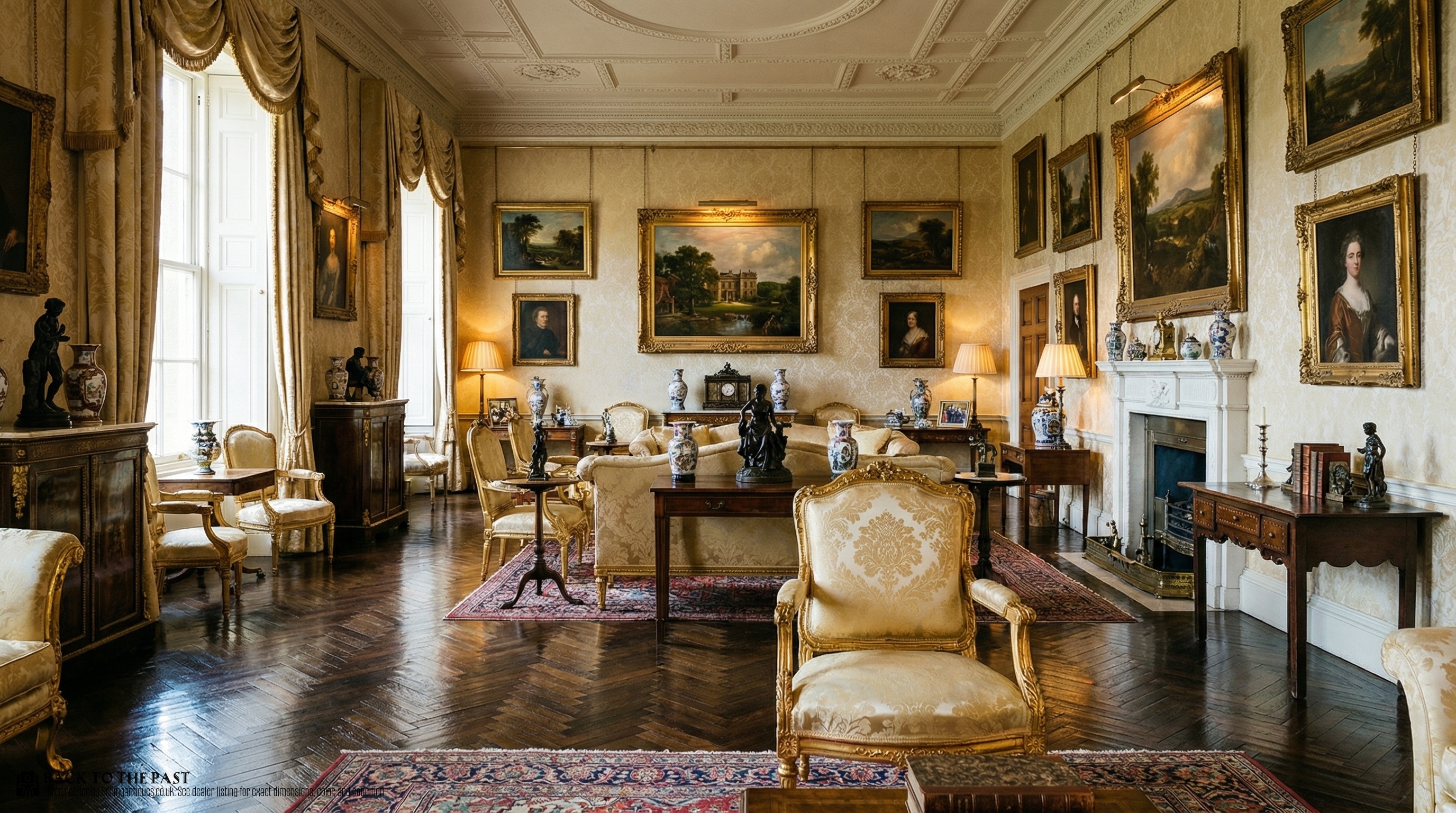
Makers constructed these tables primarily from solid timber oak, frequently incorporating ash details and brass hardware for drawer pulls and escutcheons. Timber inlay occasionally appears on selected panels and surfaces.
Cabinetmakers utilised traditional joinery to build frames that supported regular domestic use as writing surfaces and side tables. Regional workshops applied provincial turning and carving techniques suited to local timber stocks.
Retail Price Guide 2026
Typical UK retail prices for oak lowboy table, calculated from the Sellingantiques database of over a million retail prices indexed since 2003. This retail price guide relies exclusively on Sellingantiques data; no external sources or auction records are used, so the figures do not describe the wider market.
Country carpenters frequently improvised drawer layouts, leaving irregular side clearances that prove human hands built the table.
Distinctions in quality and finish
Superior examples display crisp proportions, fine timber figuring, and original brass fittings that match the period of manufacture. Lesser pieces often exhibit heavier replacement elements or compromised structural timber over time.
The refinement of the legs, whether cabriole in the Queen Anne style or straight-cut Georgian, determines the aesthetic standard of the individual table.
The Antique Oak Lowboy Table Glossary
- Lowboy
- A small table with drawers, built at a height convenient for domestic tasks or writing. It functions primarily as a side or occasional table.
- Occasional table
- A small piece designed to be moved around a room as needed. These items support lamps or small decorative objects.
- Dresser base
- A substantial low storage unit fitted with drawers or cupboards. It shares construction methods with related side furniture.
- Escutcheon
- A protective plate surrounding a keyhole. This hardware component is frequently made of brass on period furniture.
- Cabriole leg
- A furniture leg that curves outward and then tapers inward. This style is frequently associated with Queen Anne and early Georgian pieces.
Frequently Asked Questions
Where should I place a lowboy table?
These compact tables fit well in narrow hallways, beside sofas, or as small writing desks in studies.
Their shallow depth allows them to occupy minimal floor space while offering functional drawer storage.
How do I identify a Georgian lowboy?
Examine the leg profiles, drawer arrangement, and overall proportions of the timber frame. Georgian pieces often feature refined lines and regional British construction details.
Look for honest patination and traditional joinery methods that confirm the era of manufacture.
Did these tables have drawers originally?
Most traditional lowboys feature one, two, or three small drawers beneath the main surface. These compartments were designed for small writing materials or household documents.
Inspect the drawer runners and internal linings to assess original construction.
Can I use an antique lowboy for writing?
Their height and proportions make them suitable for occasional correspondence or laptop use. Ensure your chair matches the height of the specific drawer rail.
Many period listings specifically note hall writing use due to this historical function.