


Antique Lustre Dish
An antique lustre dish brings a distinct metallic sheen to a room, catching the light across periods from the twelfth century to the twentieth.
Antique Lustre Dish
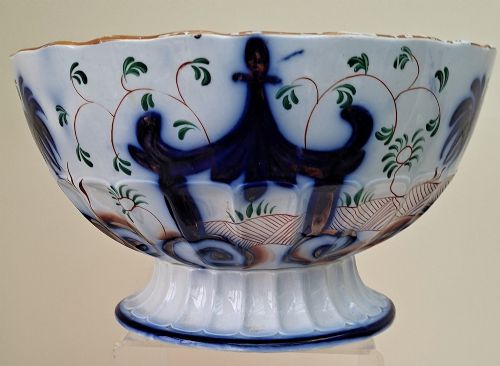
When searching for an antique lustre dish, you encounter footed bowls, decorative bowls, and serving dishes finished with metallic and iridescent glazes. These pieces range from early medieval Persian pottery to twentieth-century English earthenware and bone china.
Forms vary from miniature bowls and octagonal vessels to large decorative bowls and butter dishes. The unifying element across all these eras is the application of a lustre glaze that creates a reflective, iridescent surface finish.
How they were made
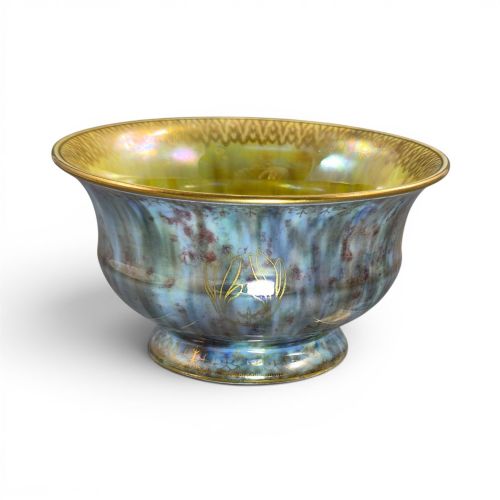
Potters achieved the characteristic metallic sheen of an antique lustre dish by applying metallic compounds such as copper or silver over a fired glaze and subjecting the piece to a secondary reducing kiln firing. This process left a thin, shimmering metallic film on the ceramic surface.
Makers utilised earthenware, bone china, and porcelain bodies as the foundation for these finishes, often combining standard glazes with gold leaf, gilt highlights, and intricate transfer-printed or hand-painted patterns like dragons, butterflies, and abstract motifs.
Celestial dragons and tiny painted butterflies share shelf space across these decades, proving that Edwardian imagination knew no bounds.
What varies in quality
The distinction between standard production and exceptional quality lies in the complexity of the design and the precision of the glaze application. Elaborate pictorial subjects such as the Fairyland series display meticulous hand-painted details and rich colour layering that demand superior technical skill.
The depth and uniformity of the iridescent sheen also determine the grade of the piece, with richer metallic effects and well-preserved gilding marking out the finest examples from simpler commercial wares.
Wedgwood·James Hodgkiss·Daisy Makeig-Jones·Maling
The Antique Lustre Dish Glossary
- Lustre glaze
- A type of ceramic glaze containing metallic salts that produce an iridescent, metallic surface appearance upon firing. This technique dates back centuries and defines the entire category.
- Bone china
- A type of soft-paste porcelain composed of bone ash, feldspathic material, and kaolin. It provides a strong, translucent white body suitable for detailed painting.
- Earthenware
- Porous pottery fired at lower temperatures, commonly used for nineteenth-century and twentieth-century decorative bowls and serving dishes. It requires glazing to become impermeable.
- Gilt
- A thin layer of gold applied to the surface of ceramics for decorative embellishment. It often outlines patterns or frames the rims of bowls.
- Footed bowl
- A bowl raised upon a distinct pedestal or base ring. Many examples in this category utilise this form to elevate the decorative surface.
Antique Lustre Dish: Frequently Asked Questions
Are these dishes safe for food use?
Most antique lustre pieces are intended for display rather than dining. The metallic glazes on older ceramics can contain compounds unsuited for modern culinary contact.
Treat them as decorative bowls and serving dishes for dry use or visual appreciation rather than everyday tableware.
What is Fairyland lustre?
Fairyland lustre is a complex decorative line developed in the early twentieth century featuring fantastical subjects like dragons, elves, and intricate landscapes. These designs involved multiple firings and rich colour palettes.
They represent some of the most intricate work produced by major English potteries during the 1910s and 1920s.
How do I date an early Persian lustre bowl?
Early Persian pieces from centres such as Kashan typically date to the pre-sixteenth century, often featuring characteristic Islamic and Seljuk artistic motifs, horse and rider scenes, and coarse earthenware bodies.
Expert analysis of the clay paste, glaze craquelure, and pigment degradation helps distinguish these medieval artefacts from later European revivals.