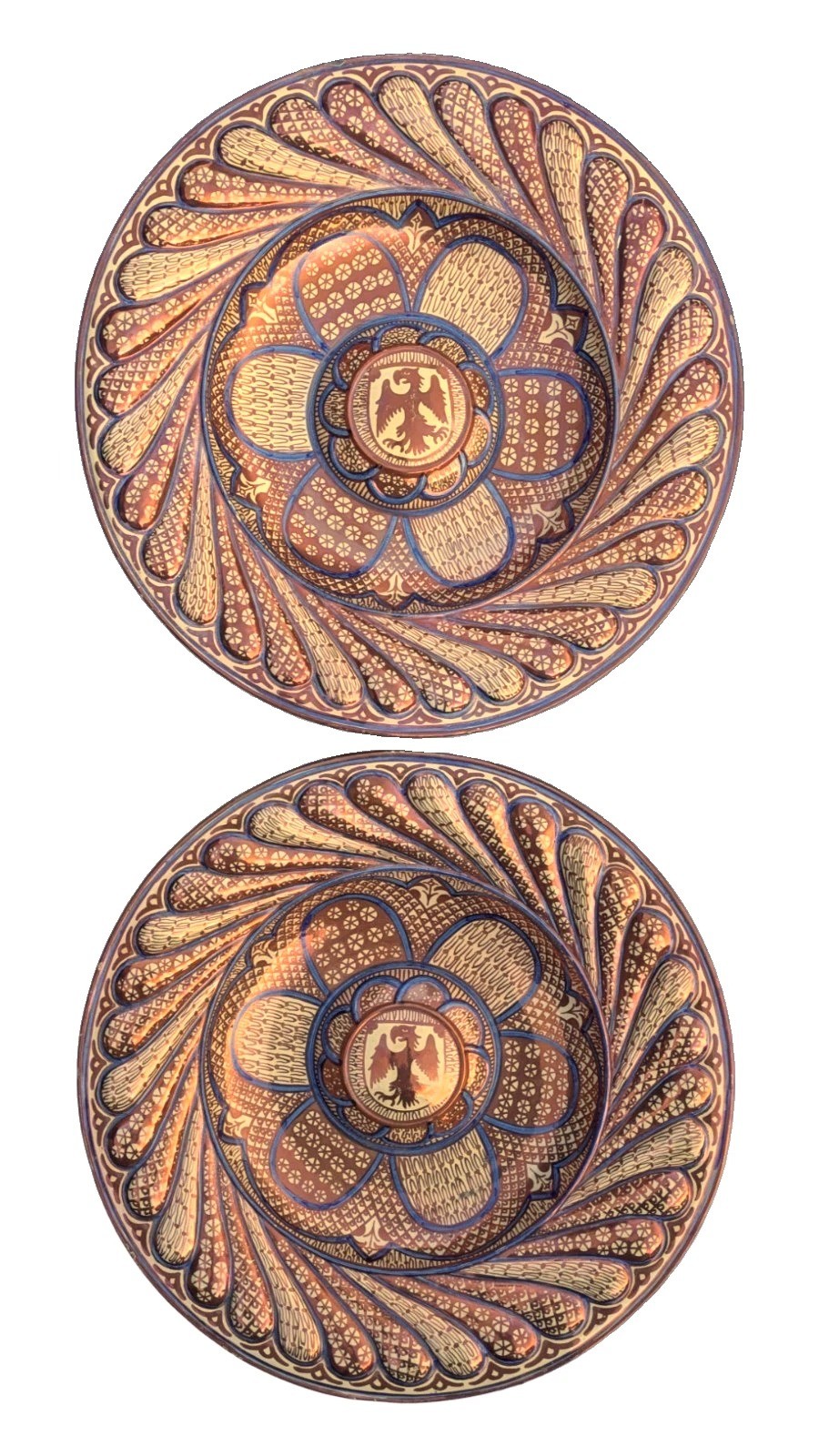
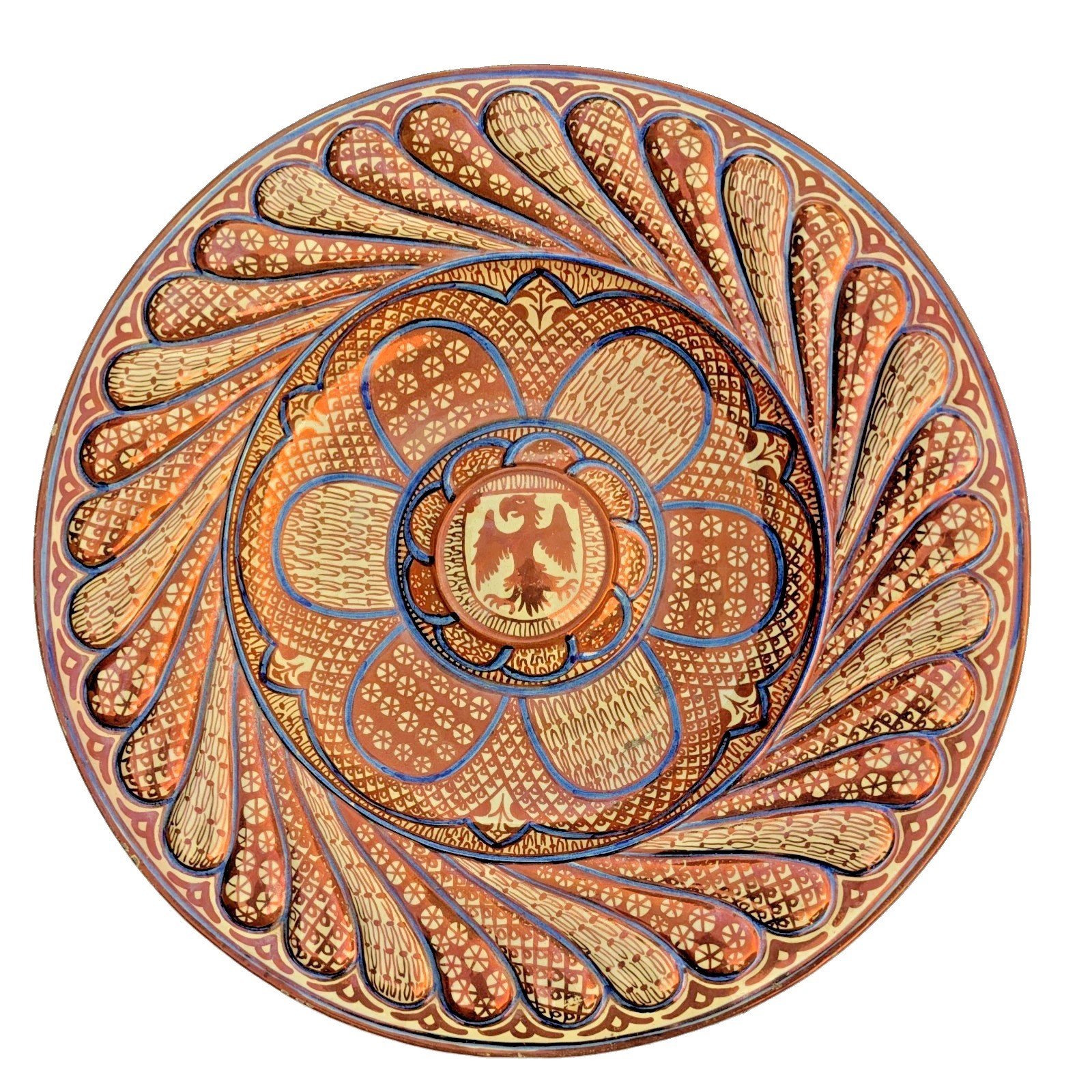
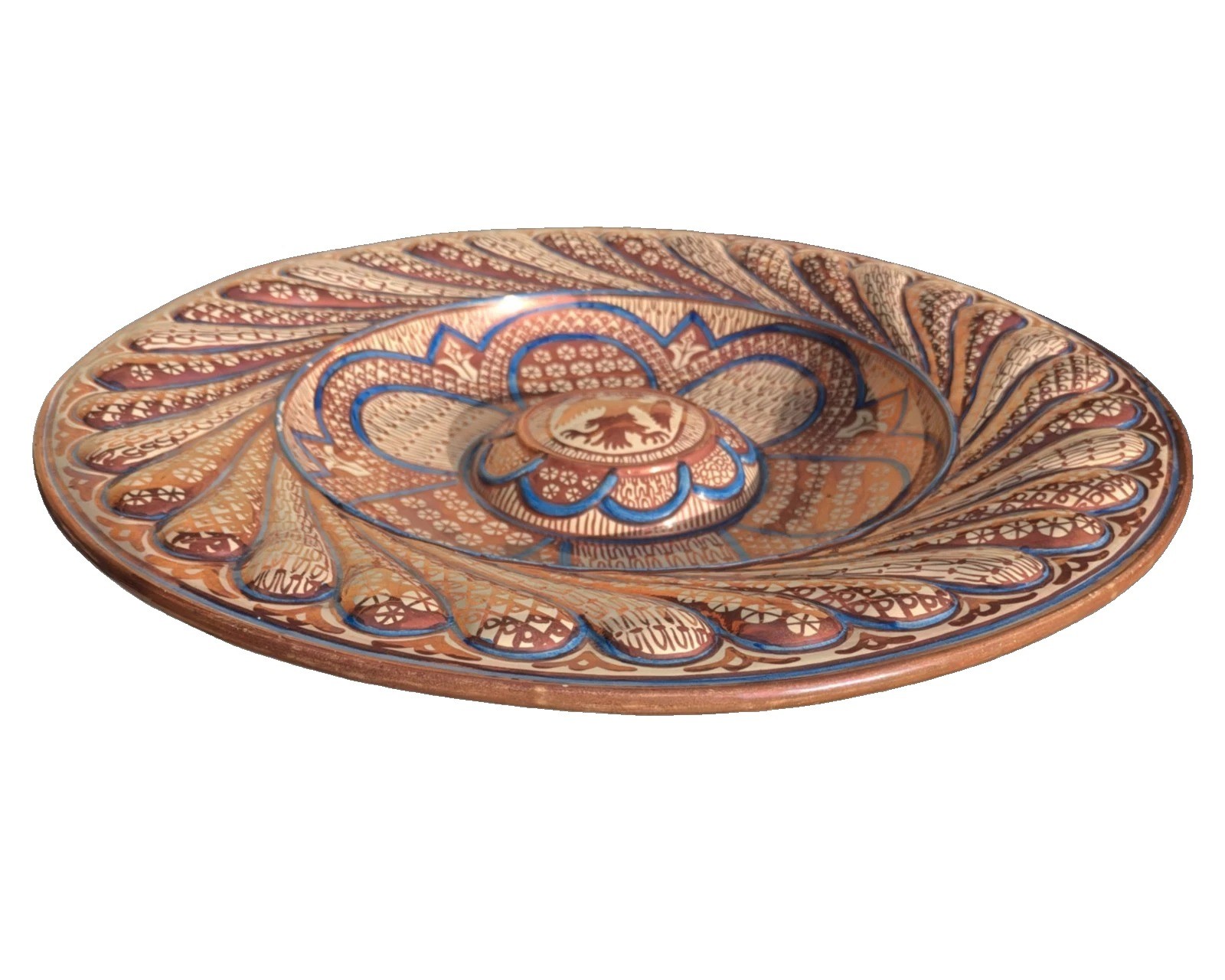
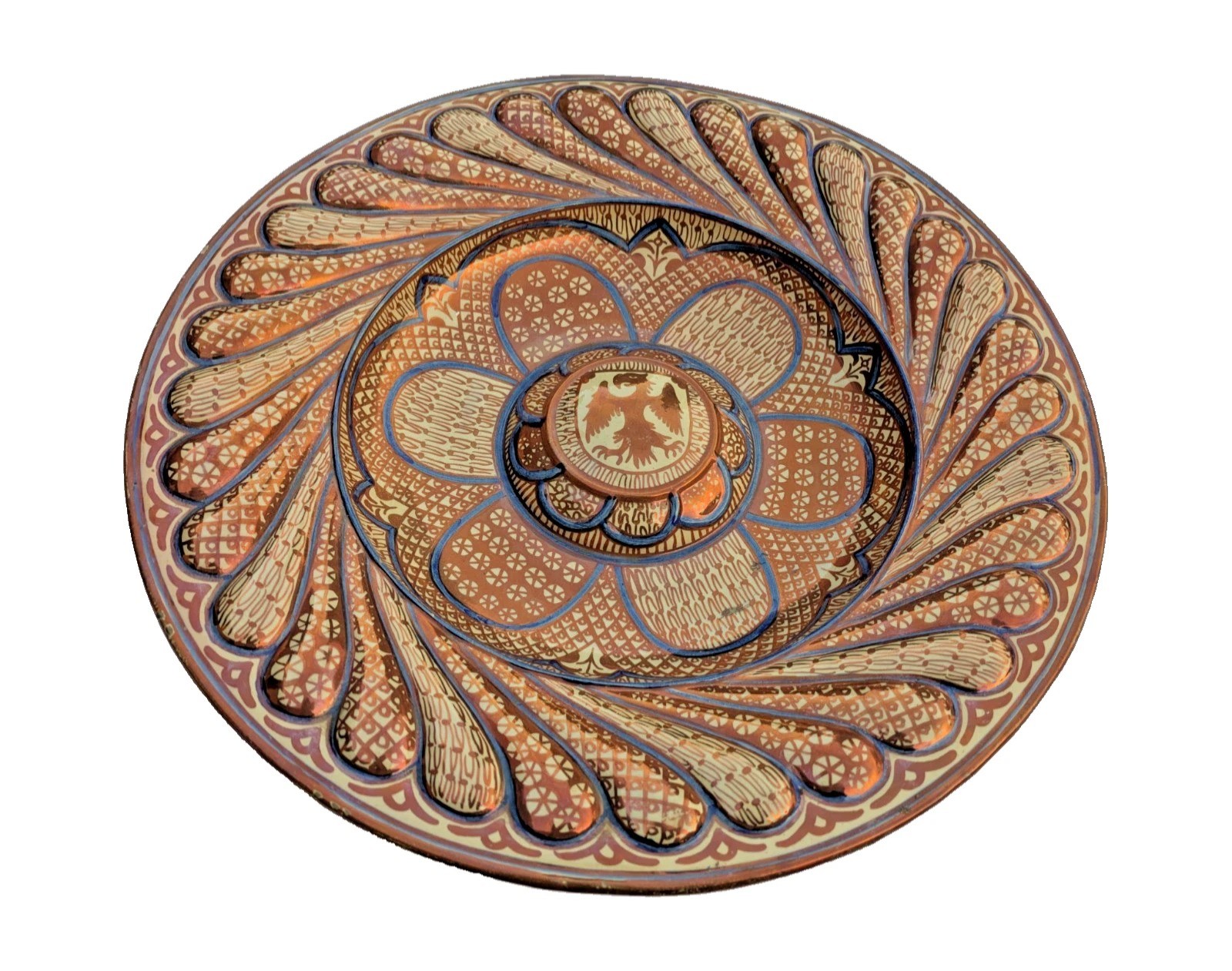
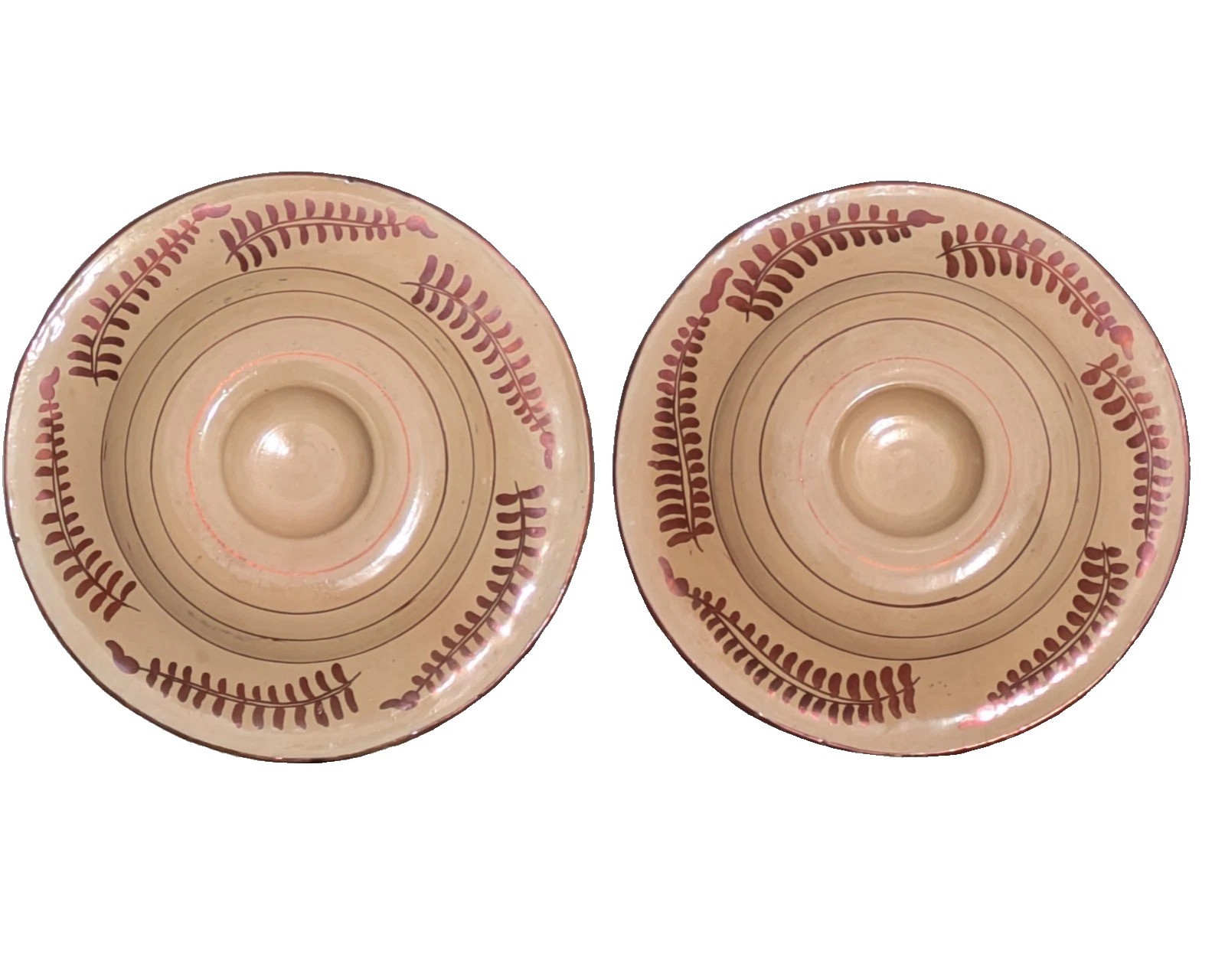
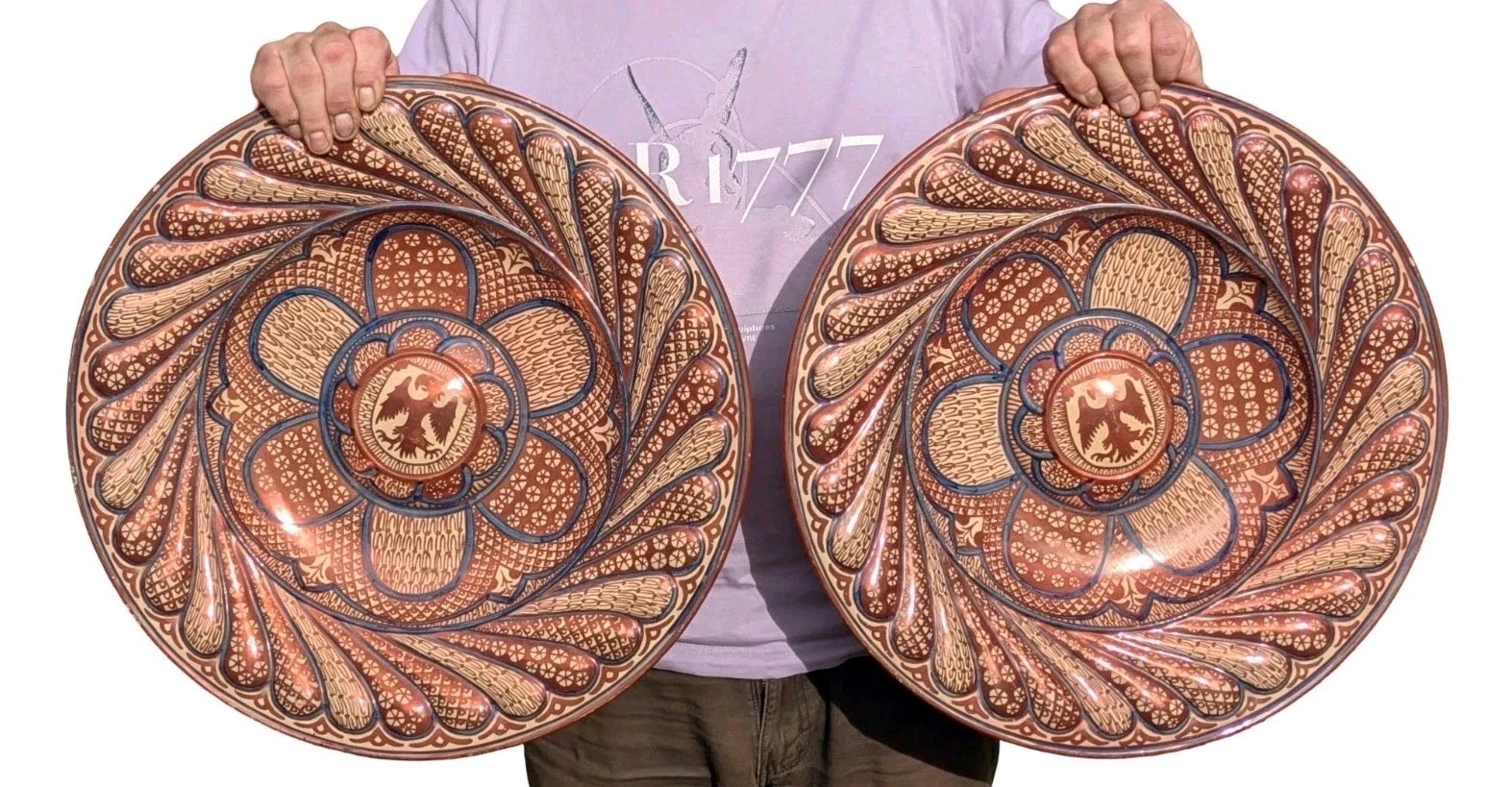
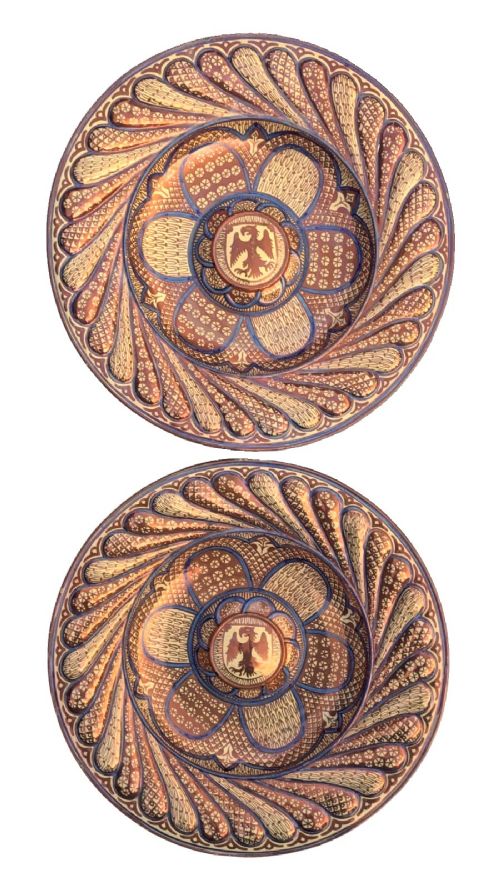
Rams Head Antiques has dated these Hispano Moresque Lustre Chargers to the 1750s.
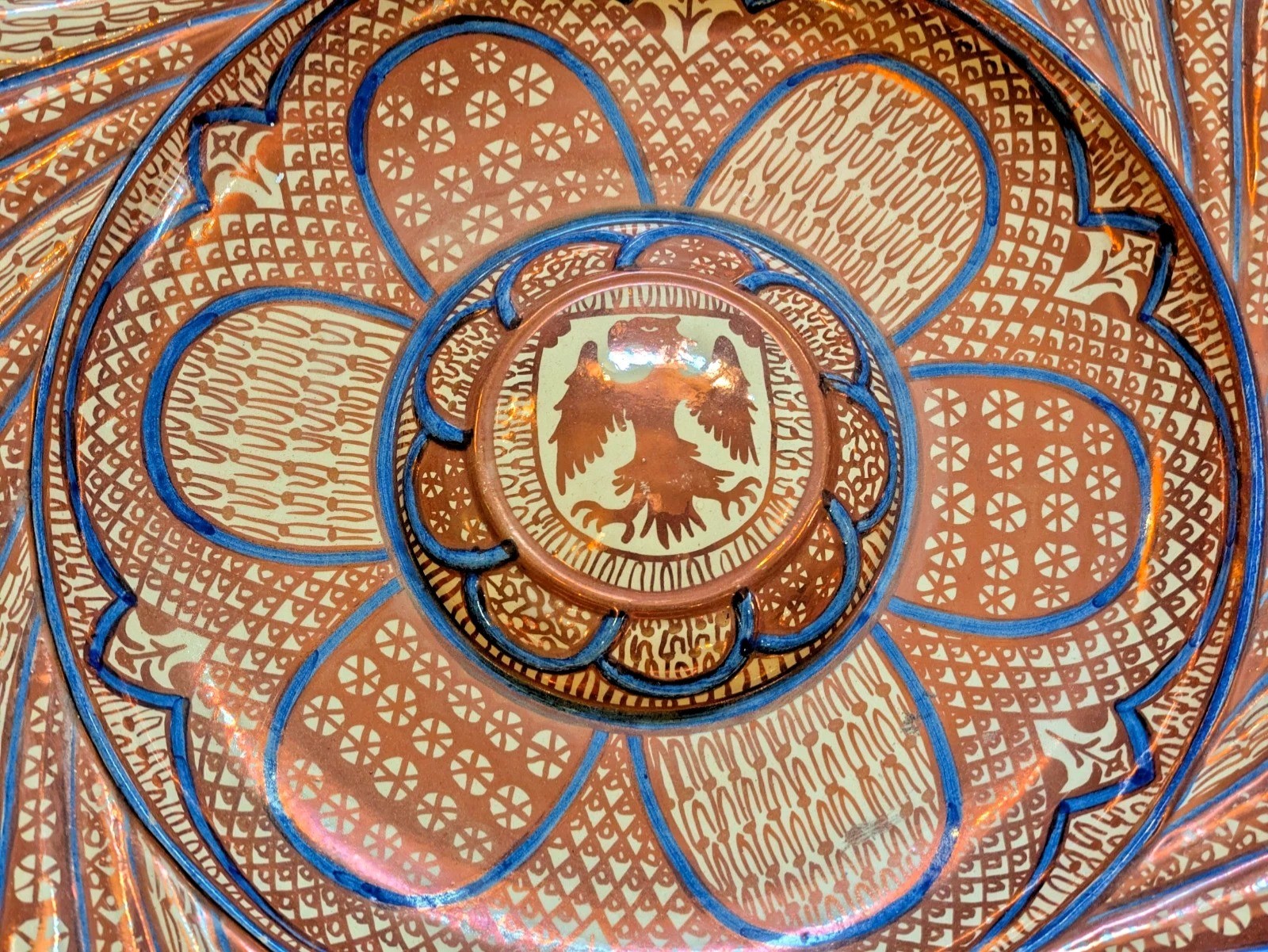
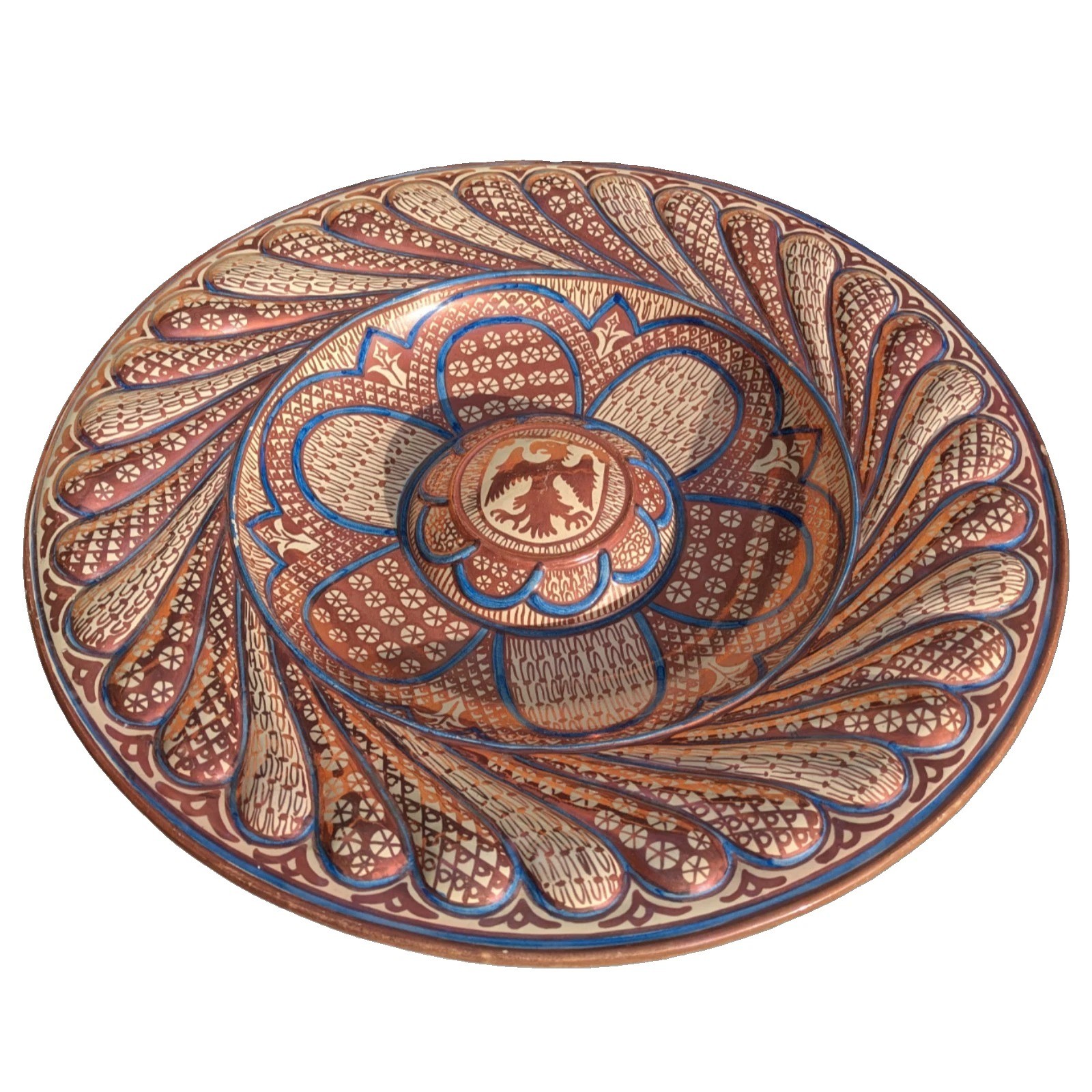
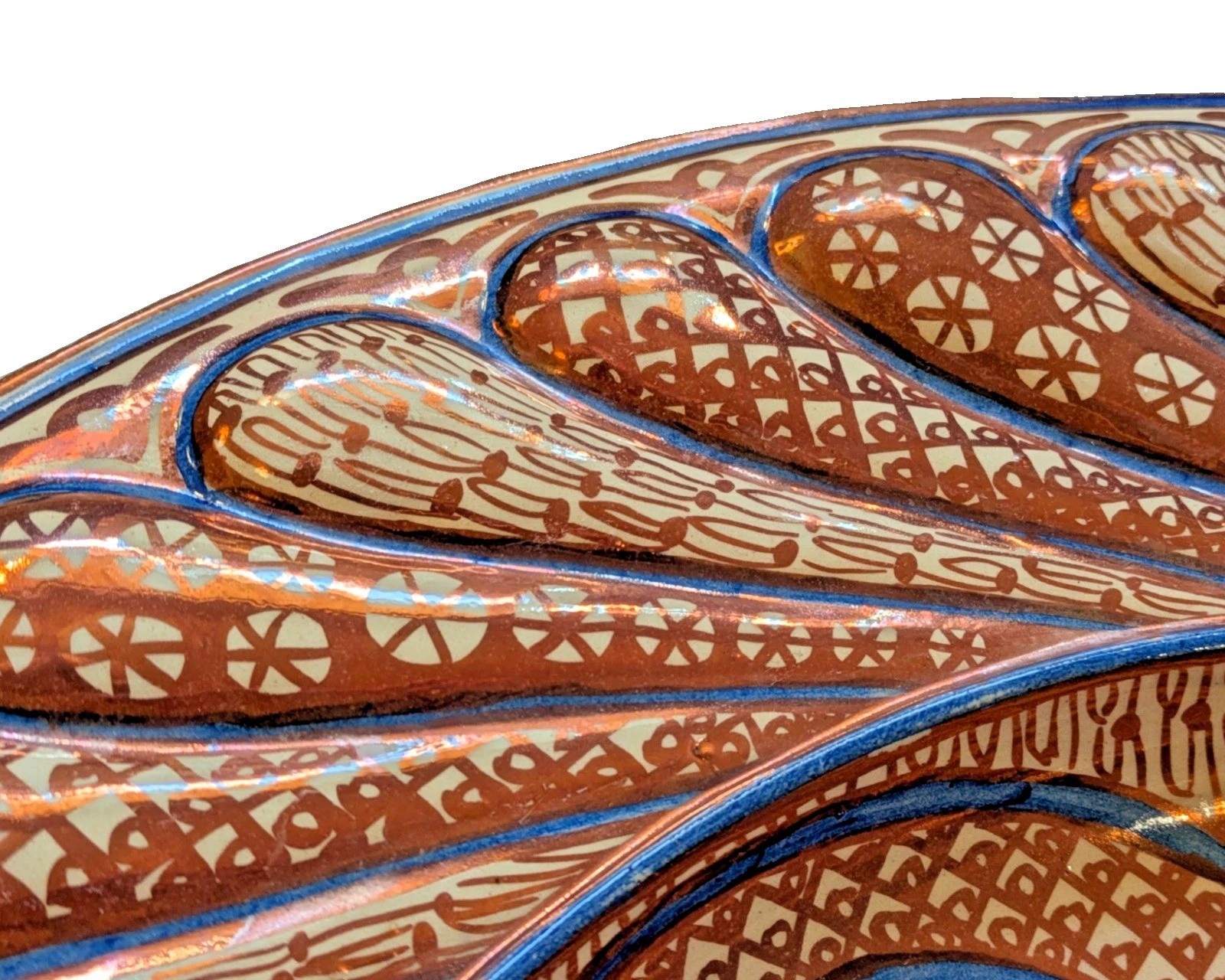
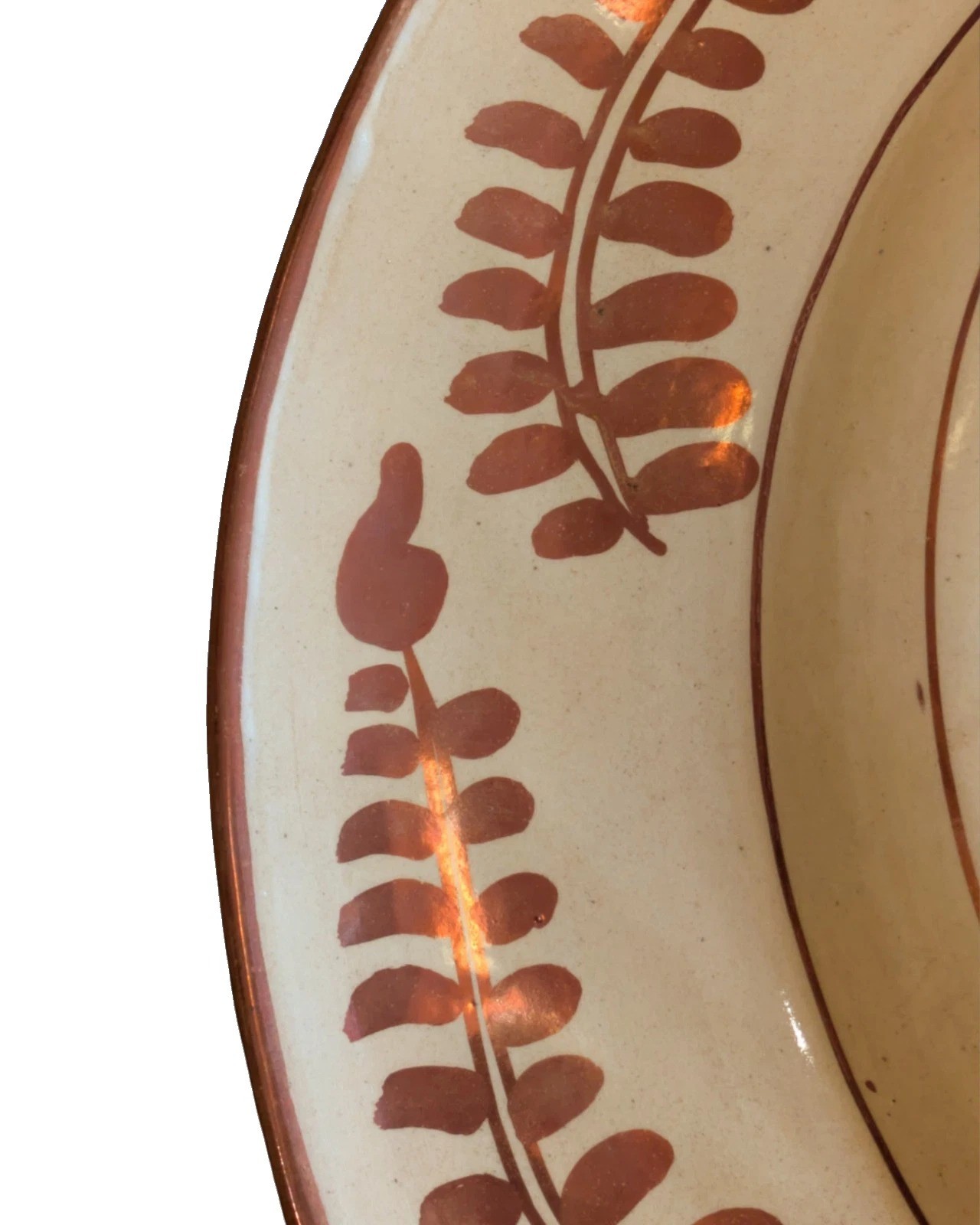
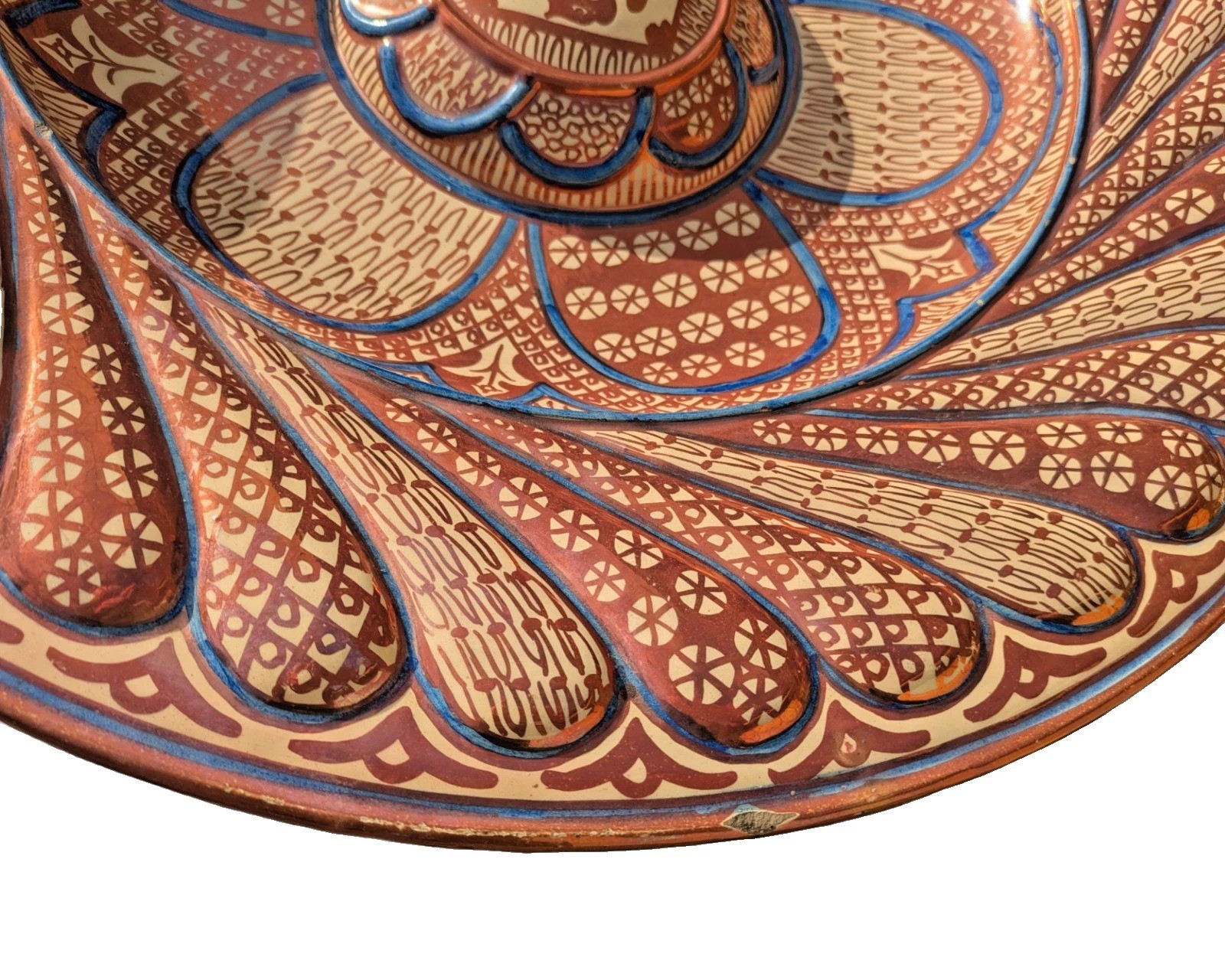
The dishes are beautifully decorated with brown copper lustre with cobalt blue highlights against a creamy-white tin glaze.
The technique of lustreware, the glazing of ceramics with metal oxides to create an iridescent finish, was first developed under the Abbasid Caliphate in present-day Iraq. The technique arrived in Spain by the twelfth century while under Islamic rule. By the 15th century, Valencia had become the centre of production in Spain. Wealthy families, particularly from Italy, frequently commissioned Hispano-moresque dishes with their own arms.
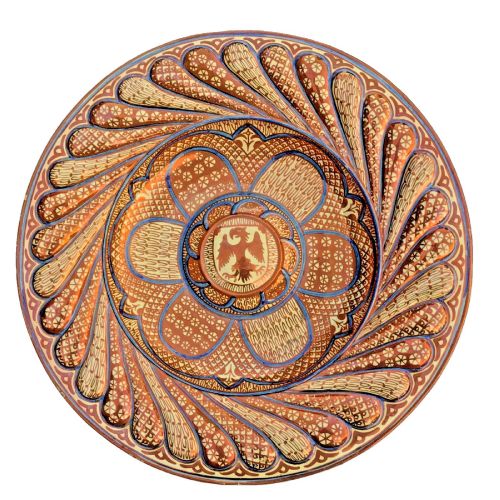
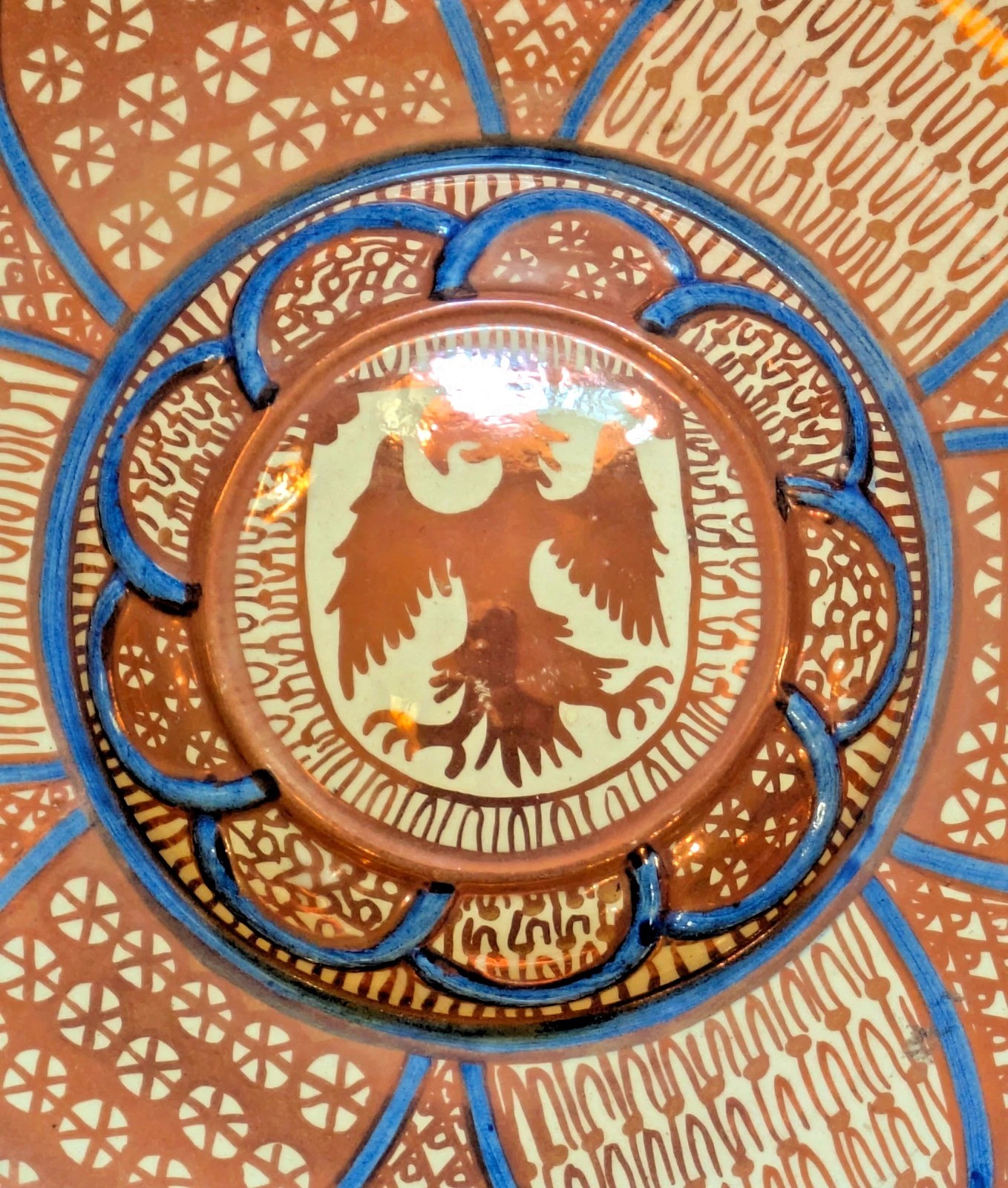
A central raised boss in the chargers features a heraldic eagle, sinister, rising, wings displayed and inverted. This emblem is likely to be the Eagle of St John, a Spanish heraldic emblem associated with the Catholic kings and adopted by the nobility. The raised part of the boss is moulded with radiating lines.
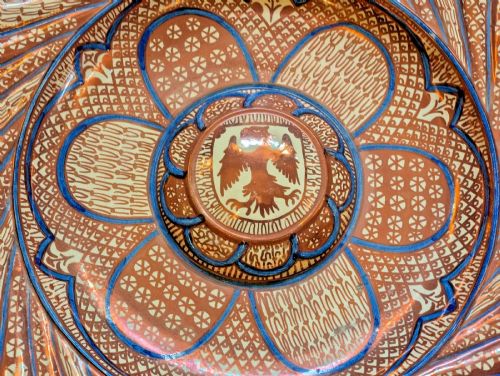
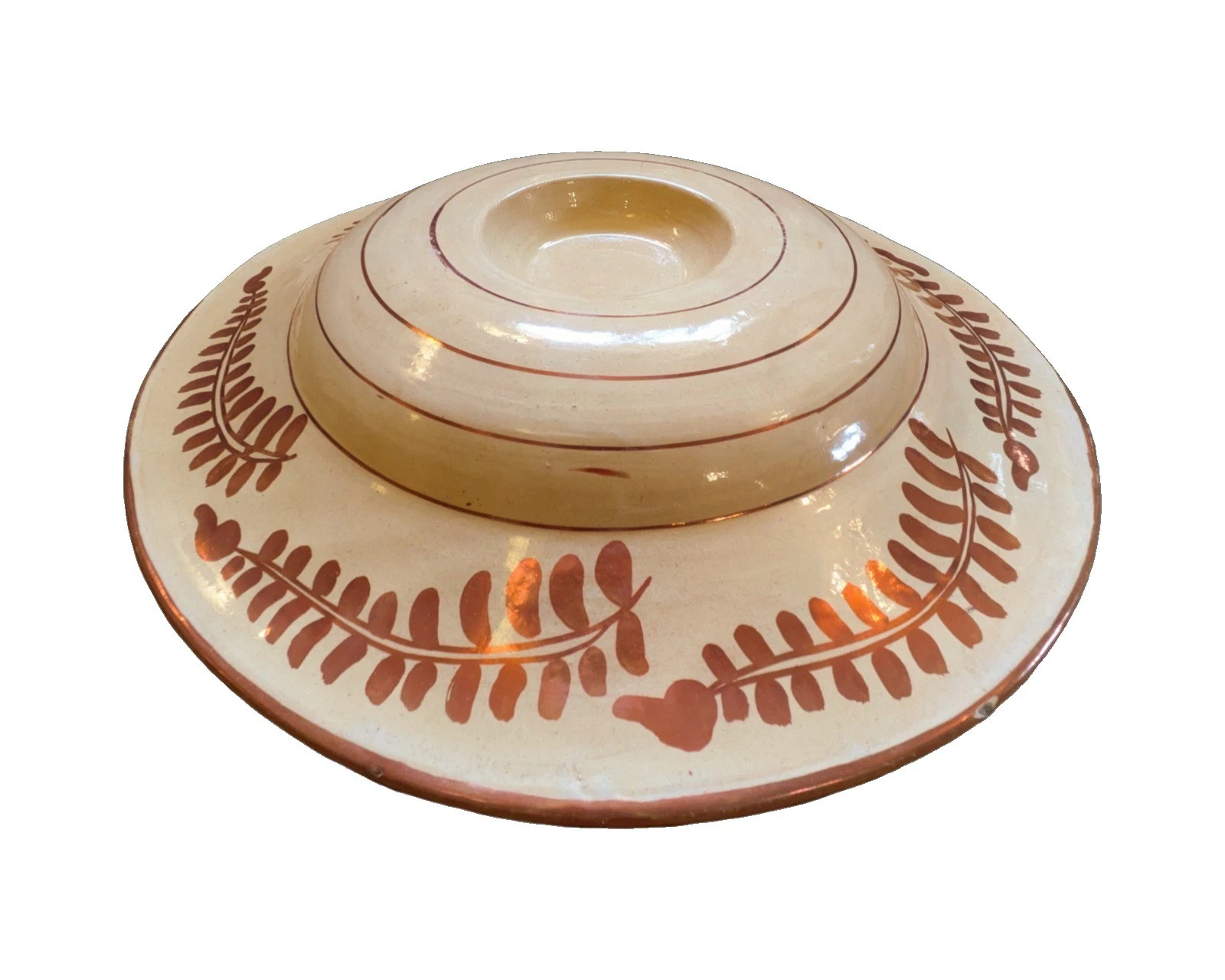
These beautiful dishes date from the middle of the 18th Century and are in excellent condition with no damage or restoration.
Very minor abrasions to the edges but nothing major.
Remarkable condition bearing in mind the great age of these fine chargers.
They are a good size, each measures 50 cms in diameter by 7 cms deep.
UK insured packing and delivery is £20
Rams Head Antiques has dated these Hispano Moresque Lustre Chargers to the 1750s.

You can view the stock and full dealer information on the Rams Head Antiques Profile Page
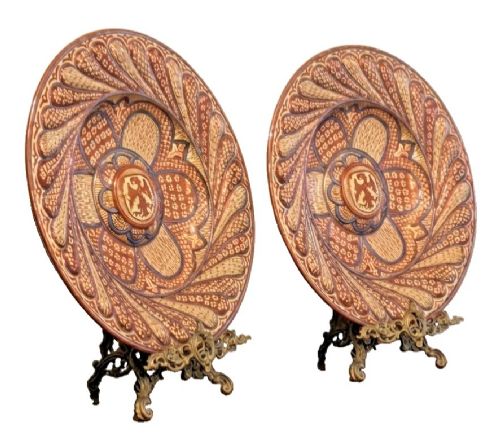
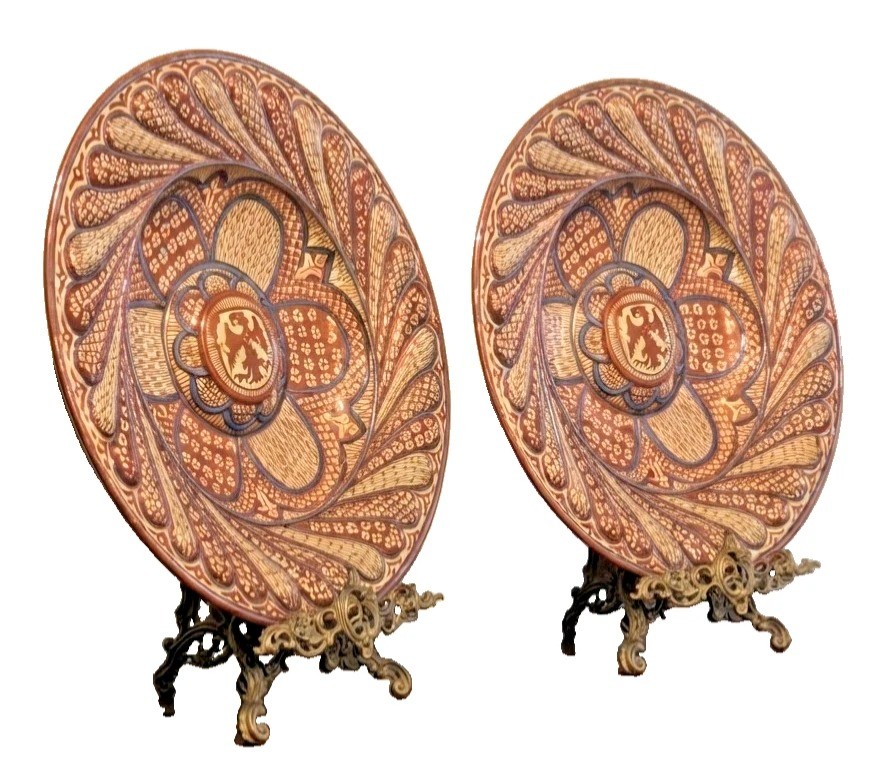
A Superb Pair of Hispano Moresque Chargers