


Blue Lustreware Bowl
A blue lustreware bowl brings an iridescent metallic sheen to your table, catching the light with rich glazed surfaces.
Blue Lustreware Bowl
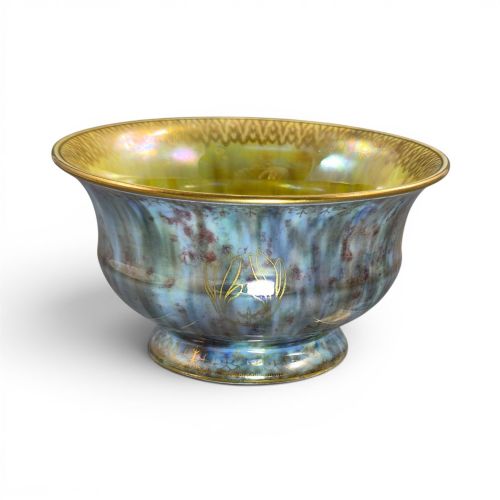
A blue lustreware bowl is a ceramic vessel finished with a metallic glaze that creates a rainbow or iridescent effect over a blue ground. When you search for a blue lustreware bowl, you encounter decorative pieces ranging from large octagonal display bowls to miniature cups originating primarily from the Edwardian era and the 1920s.
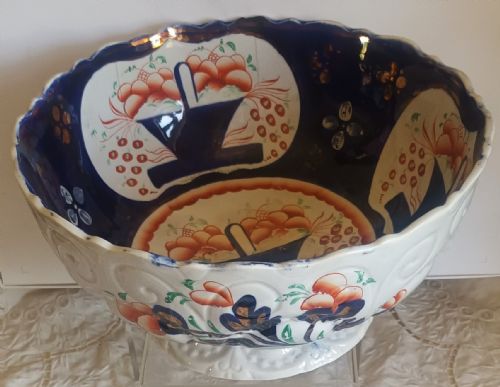
The selection on this page demonstrates strong representation from the early twentieth century, alongside nineteenth-century Victorian examples such as Gaudy Welsh earthenware. Makers like Wedgwood dominate the offerings, utilising distinctive patterns such as Fairyland Lustre and celestial dragons.
Forms vary from standard circular decorative bowls to complex octagonal shapes and miniature versions. These pieces serve primarily as decorative focal points rather than utilitarian tableware, appealing to collectors of distinctive ceramic finishes.
Assessing quality and craftsmanship
Quality rests heavily on the complexity and crispness of the painted design, particularly in pieces featuring elaborate mythological scenes like Fairyland Lustre. Superior examples exhibit precise application of gold leaf and enamel without blurring or pooling in the metallic glaze.
The precision of the ceramic moulding also dictates standard, with cleanly struck octagonal edges and well-balanced footed bases commanding greater attention. The depth and multi-tonal shift of the lustre glaze determine the visual success of the finished piece.
Tiny mythical dragons coil around miniature bowls, watching over your mantlepiece with small gilded expressions.
Wedgwood·Daisy Makeig-Jones·James Hodgkiss·Maling
The Blue Lustreware Bowl Glossary
- Lustre glaze
- A ceramic finish incorporating metallic salts that produce an iridescent, reflective surface upon firing. This technique creates the signature sheen seen across the pieces on this page.
- Fairyland Lustre
- A specific line of fantastical and highly detailed decorative wares designed for Wedgwood. These patterns often incorporate goblins, fairies, and mythical beasts rendered in vibrant enamels and gold.
- Octagonal bowl
- A vessel possessing eight distinct geometric sides rather than a standard circular profile. This form appears frequently in twentieth-century lustre designs.
- Bone china
- A type of soft-paste porcelain strengthened with bone ash, yielding a bright white and translucent body. It serves as a fine canvas for intricate enamel work.
Blue Lustreware Bowl: Frequently Asked Questions
Can I use these bowls for serving food?
These decorative bowls are intended strictly for display rather than culinary use. The metallic lustre glazes and heavy gold leaf applications contain materials unsuited for modern food contact.
Display the bowl on a secure sideboard or within a cabinet where its iridescent surface catches natural room light.
What period do most blue lustre bowls come from?
The vast majority of pieces originate from the Edwardian period and the 1920s, driven largely by the innovative output of designers working during those decades. You will also find occasional nineteenth-century Victorian examples such as Gaudy Welsh pottery.
Art Deco and Art Nouveau styling heavily influence the geometric shapes and decorative motifs of the twentieth-century pieces.
Are miniature lustre bowls rare?
Miniature cups and small bowls appear alongside larger decorative centerpieces in the historical record. While smaller in scale, they receive the same level of detailed hand-painting and gold leaf embellishment as their larger counterparts.
Collectors often group miniatures together to showcase different lustre glazes and motifs side by side.