



Gold Gilded China Bowl
A gold gilded china bowl brings cabinet-level refinement to a table, combining lustrous metallic decoration with fine ceramic bodies.
Gold Gilded China Bowl
A gold gilded china bowl encompasses a variety of decorative and functional vessels finished with metallic highlights. These pieces span centuries of ceramic production, from Georgian earthenware and Regency porcelain to Edwardian and Art Deco tableware.
The selections on this page lean heavily towards refined porcelain and bone china forms. Buyers will encounter sugar bowls, cabinet dishes, and elaborate lustre bowls alongside serving dishes and tea bowls.
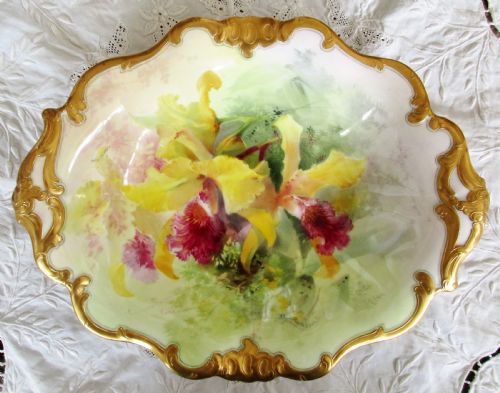
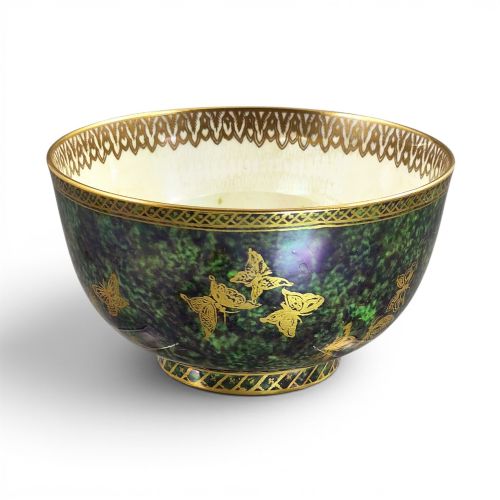
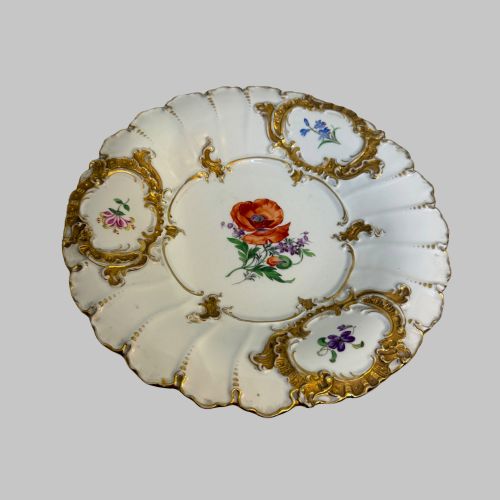
Origins range widely across English potteries such as Royal Worcester, Wedgwood, and Coalport, alongside continental works from Meissen. The decorative schemes vary from botanical painting to intricate dragon and butterfly lustre designs.
Materials and technique
Makers utilised fine porcelain, bone china, and ironstone as the foundation for these vessels. These ceramic bodies were shaped and fired before receiving hand-painted or transferred underglaze designs.
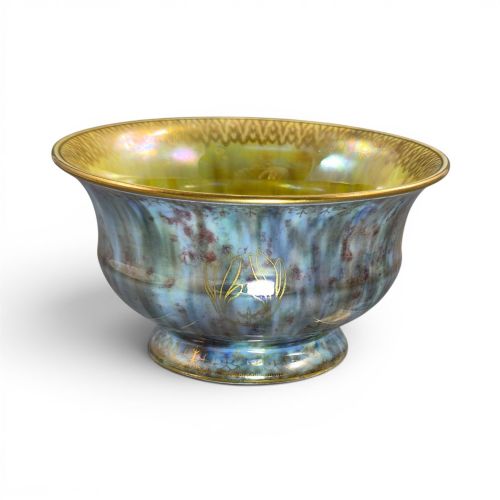
Gold leaf, gilding, and enamel work were then applied to the surface to create metallic borders and highlights. Lustre glazes were utilised on specific Edwardian pieces to produce iridescent, light-catching finishes.
Fairyland lustre bowls transport everyday tea tables into mythical realms populated by tiny flying dragons and hidden woodland creatures.
Quality factors
The standard of hand-painting separates ordinary production pieces from exceptional works of art. Precision in floral, fruit, or figural illustration dictates the overall refinement of the dish.
The richness and preservation of the gold leaf or gilding indicate the initial tier of manufacture. Intricate techniques such as Fairyland lustre require advanced kiln control, altering the depth and complexity of the final glaze.
Royal Doulton·Wedgwood·Spode·Meissen·Doulton Burslem·Coalport·Royal Worcester·Barr, Flight and Barr
The Gold Gilded China Bowl Glossary
- Bone china
- A type of soft-paste porcelain incorporating bone ash, known for its high strength, chip resistance, and translucent body. It forms the base of many British tablewares.
- Lustre glaze
- A metallic glaze technique that creates an iridescent sheen on the ceramic surface. It gained particular popularity during the Edwardian period on Wedgwood wares.
- Sucrier
- A small covered vessel designed specifically to hold table sugar. These often match tea bowls and cream jugs in Georgian and Regency services.
- Cabinet dish
- A decorative ceramic plate or bowl intended primarily for display in a cabinet rather than for functional dining use. These pieces often feature elaborate painted scenes.
- Ironstone
- A heavy, durable type of earthenware patented in the nineteenth century as a robust alternative to porcelain. It offered high strength for daily utility.
Gold Gilded China Bowl: Frequently Asked Questions
Can I use these bowls for daily dining?
While robust china and ironstone were originally built for practical use, antique gilded pieces are best treated with care. Heavy cutlery can scratch the enamel and wear down the surface gilding over time.
Reserve these items for light service or display purposes to preserve their historic decoration. Modern alternatives are more suitable for rigorous daily use.
How do I identify the period of a bowl?
Examine the maker marks stamped or painted on the underside of the ceramic base. Reference guides connect these symbols and registration numbers to specific decades of production.
Stylistic clues such as Rococo revival scrolls, Aesthetic movement motifs, or Art Deco geometric lines also point toward specific manufacturing eras.
What is the difference between porcelain and bone china?
Traditional porcelain relies on hard-paste ceramic materials fired at extremely high temperatures to achieve a vitrified, glassy body. It has a bright white appearance and high density.
Bone china incorporates animal bone ash into the clay mixture, producing a warmer tone and notable translucency when held to the light.