
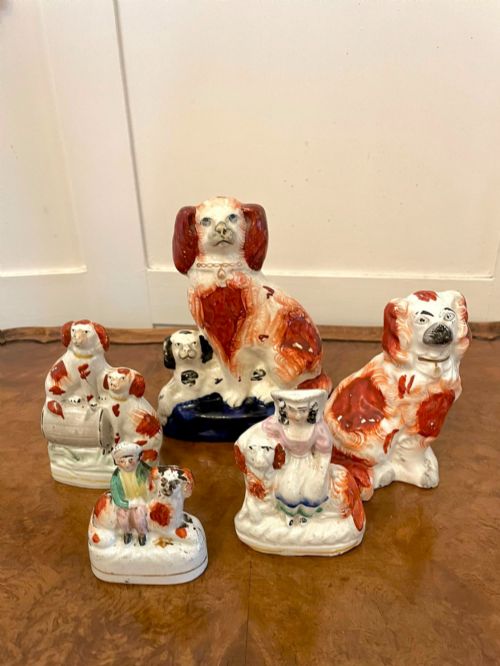

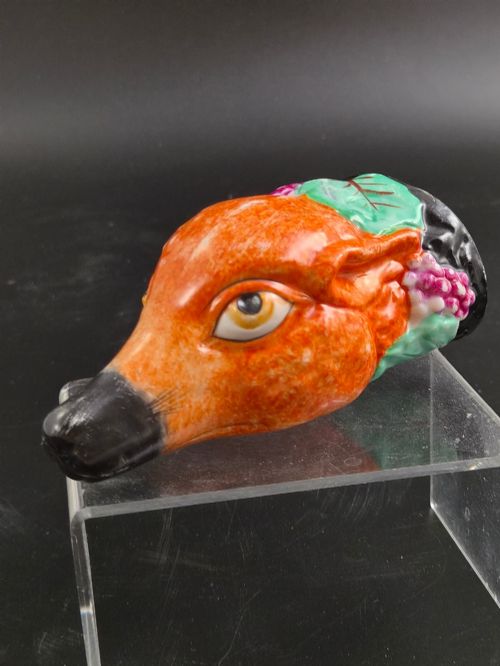
Antique Country Pottery
These antique country pottery pieces bring utilitarian craft into modern rooms, offering tactile glazes and historic earthenware forms from domestic kitchens and dairies.
Antique Country Pottery
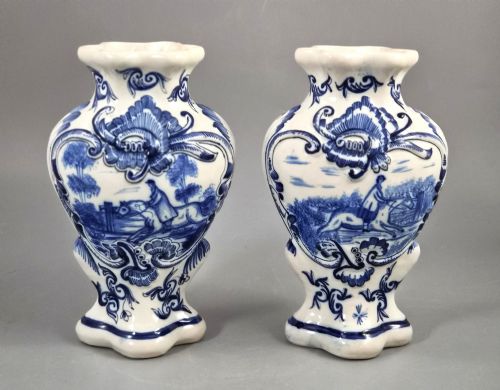
When you search for antique country pottery, you encounter a diverse range of utilitarian vessels, dairy bowls, and storage jars originating from regional workshops across Britain and continental Europe. These domestic objects span the eighteenth and nineteenth centuries, reflecting the everyday domestic needs of rural households through simple, functional forms.
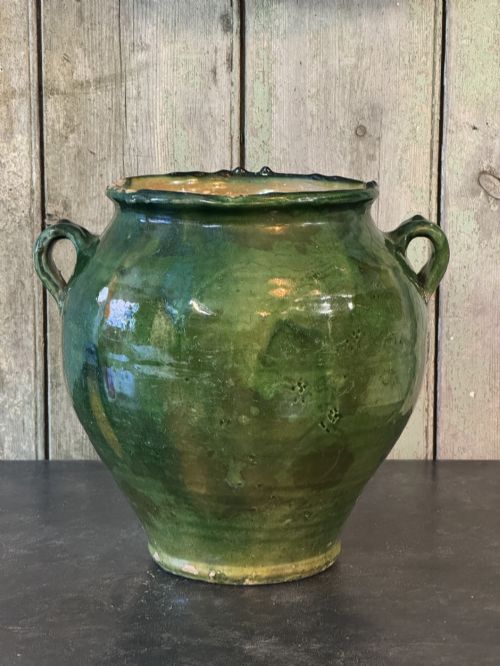
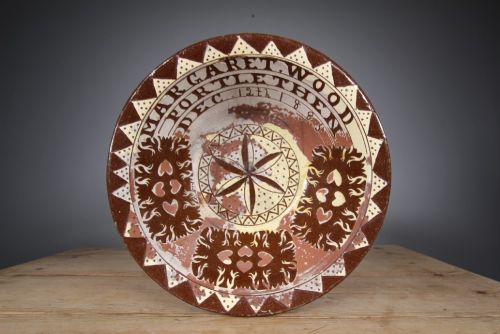
You are most likely to meet French confit pots, slipware bowls, and salt-glazed stoneware pitchers alongside English earthenware jugs and dairy vessels. These pieces were thrown or moulded for practical use in kitchens, dairies, and cellars rather than formal display, carrying the marks of their working origins.
The selection encompasses regional styles from French provincial potteries to North Devon and Scottish kilns, showing how local clays dictated the character of each piece. Collectors value these items for their honest construction and the direct connection they provide to historical domestic life.
Materials and construction methods
Potters utilised local earthenware, terracotta, and stoneware clays, throwing vessels on wheels or shaping them by hand to create thick, durable walls suited to heavy domestic service. These bodies were often porous, requiring interior or full surface coatings to hold liquids safely.
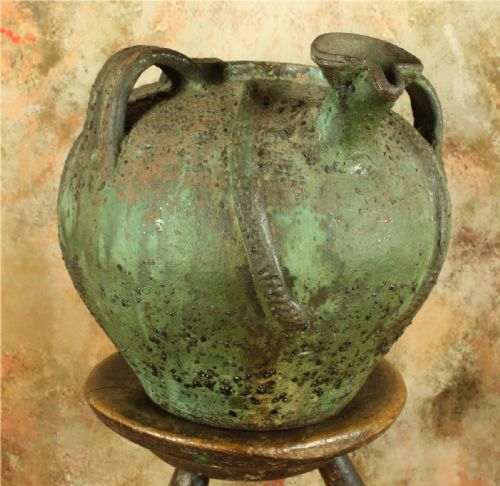
Lead glazes, salt glazes, and slip applications provided both waterproofing and decoration, resulting in characteristic drippy surfaces, rich greens, and warm amber tones. Firing took place in traditional kilns where fluctuating temperatures produced natural variations in colour and finish across each batch.
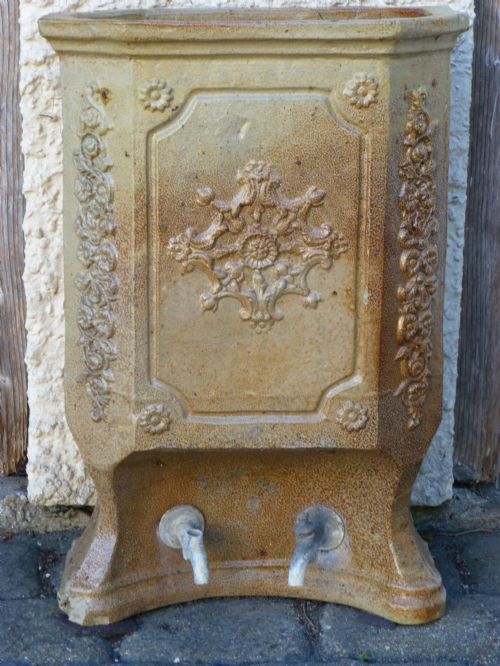
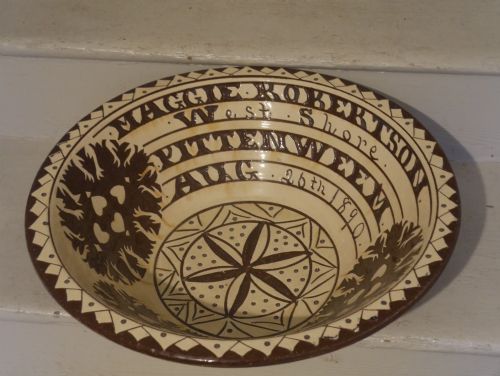
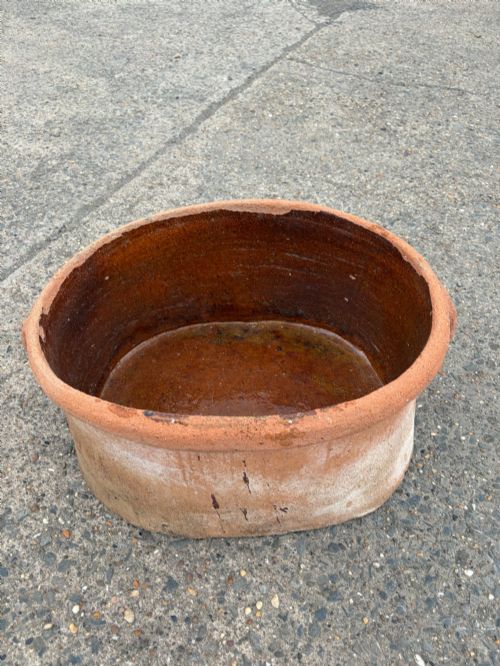
The inventory records regional varieties including salt-glazed filtration fountains, dairy bowls, confit pots, and slipware jugs.
Judging quality in rural ceramics
Quality rests upon the balance and weight of the vessel, where a well-thrown body shows harmonious proportions even in purely utilitarian forms intended for the dairy or larder. The distribution of slip and the depth of the glaze layer create visual richness that elevates a simple utilitarian jar into a piece of folk art.
The degree of handling wear and the preservation of original glaze surfaces distinguish superior examples from heavily damaged wares. Pieces that retain their structural integrity while showing honest signs of age and kiln imperfections command greater appreciation among collectors.
Seaton Pottery·Fourmaintraux-Courquin·J. & R. Clews·Mann & Co·Doulton Lambeth
The Antique Country Pottery Glossary
- Slipware
- Pottery decorated with a thin mixture of clay and water applied before firing. This technique creates fluid lines and contrasting surface patterns.
- Confit pot
- A heavy earthenware jar used for preserving and storing meats or fats. These French vessels typically feature glazed upper sections and unglazed bases.
- Salt glaze
- A glassy, textured finish achieved by throwing common salt into the kiln during high-temperature firing. It produces a distinctive orange-peel surface texture.
- Terracotta
- Unglazed or clear-glazed fired brownish-red clay. This porous material was widely used for garden vessels and kitchen storage.
- Ironstone
- A durable type of heavy earthenware patented in the nineteenth century. It bridges the gap between common pottery and fine porcelain.
Antique Country Pottery: Frequently Asked Questions
What was a confit pot used for?
These large earthenware jars served to store preserved meats, particularly duck or goose confit, keeping food sealed in fat beneath cellar floors.
Their heavy walls helped maintain stable internal temperatures during long periods of storage in rural French households.
Are these pots waterproof?
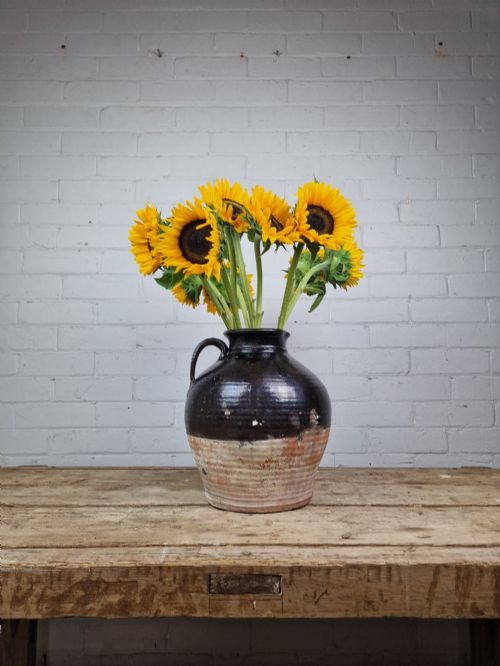
Many fully glazed stoneware and earthenware vessels will hold water safely for display as flower holders or pitchers.
Pots with partial glazing or porous terracotta bodies may seep moisture, requiring a protective saucer underneath.
How do I date slipware bowls?
Dating relies on stylistic clues, potting techniques, and the composition of the clay body relative to known regional workshops.
Early pieces often display looser slip trailing and deeper, warmer lead glazes compared to later nineteenth-century equivalents.