




19th Century Ceramic Mug
These 19th century ceramic mugs include sturdy earthenware drinking vessels and fine porcelain cabinet cups designed for everyday use and commemoration.
19th Century Ceramic Mug
A 19th century ceramic mug encompasses robust drinking vessels alongside finer porcelain cabinet cups and tankards. The selection spans utilitarian country pottery and decorative cabinet pieces.
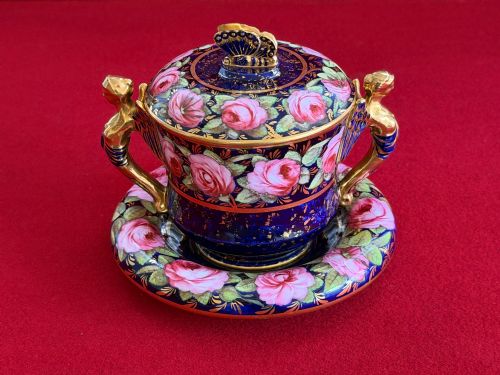
The most common forms on this page include two-handled loving cups, transfer-printed frog mugs, and sturdy stoneware tankards. These items reflect both domestic drinking habits and commemorative traditions of the period.
Periods represented range from the Georgian and Regency eras through to the Victorian age. Makers utilised diverse regional styles, from English pearlware to German faience.
Materials and production methods
Potters shaped these vessels from earthenware, stoneware, and porcelain, applying lead or salt glazes for a protective surface. Ironstone and pearlware provided durable alternatives for heavier utilitarian mugs.
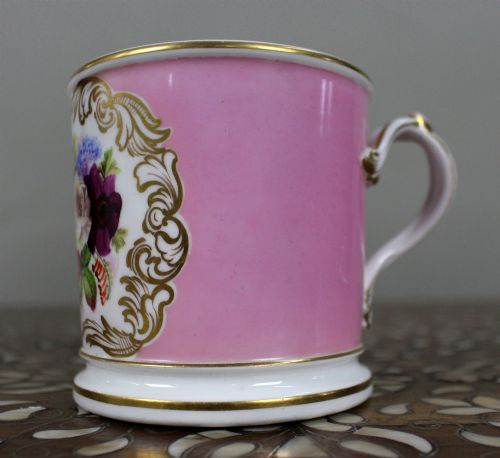
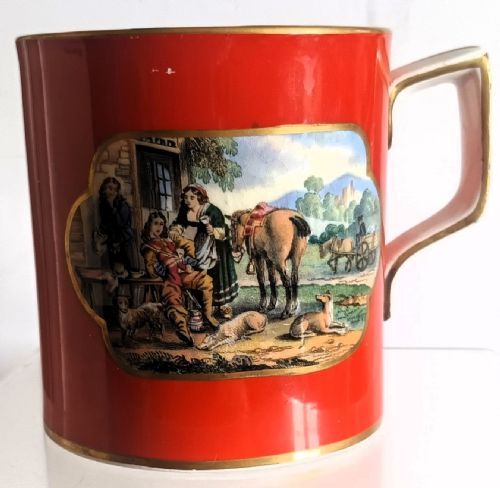
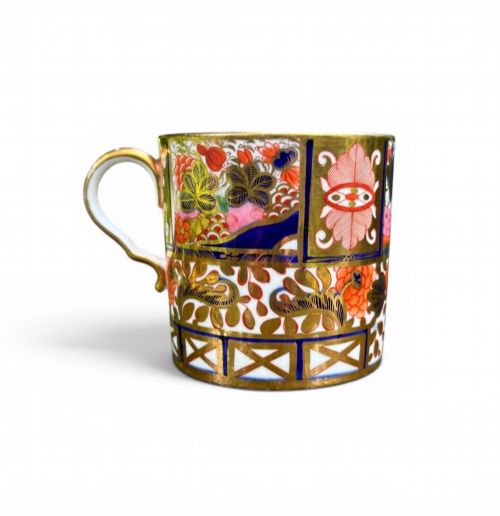
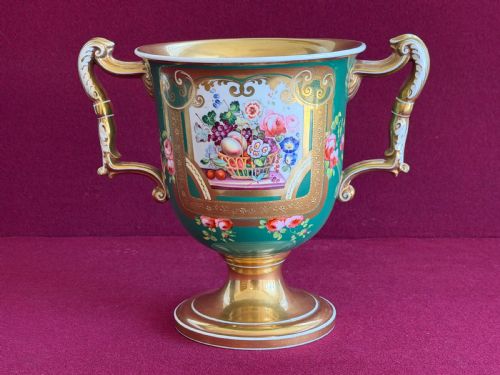
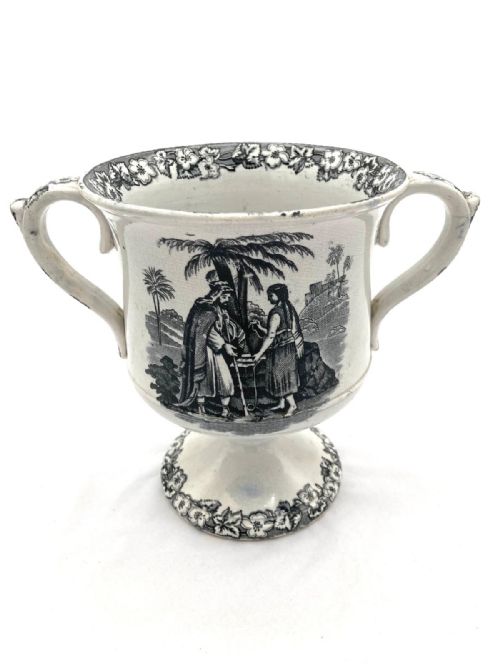
Decoration relied on hand-painting, polychrome enamels, and transfer printing in black or mulberry. Many pieces feature gilding, gold leaf, and silver rims to elevate their status.
Several mugs feature miniature ceramic amphibians peering out from the bottom to startle thirsty drinkers.
Factors influencing quality
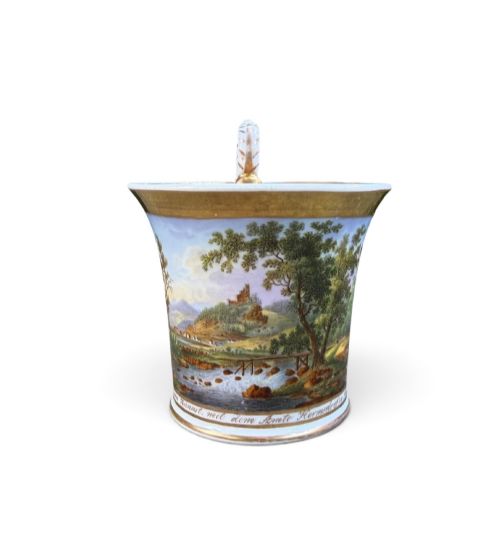
Quality rests on the fineness of the ceramic body and the precision of the glaze application. Delicate porcelain cabinet cups demand intricate hand-painted topographical or allegorical scenes, whereas utilitarian mugs rely on robust stoneware bodies.
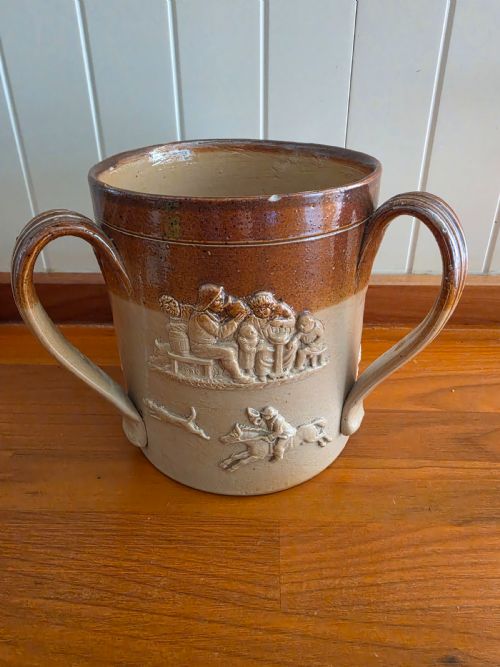
The sophistication of the transfer printing or polychrome hand-painting dictates the visual success of the piece. Crisp details in hunting scenes or well-defined moulded handles distinguish superior examples.
Spode·Grainger Worcester·H & R Daniel·Copeland·Sarreguemines·Royal Vienna·Stevenson and Hancock Derby·Mason
The 19th Century Ceramic Mug Glossary
- Pearlware
- A refined earthenware developed in the late eighteenth century with a bluish-white glaze that pooled in crevices. It served as a popular canvas for hand-painted and transfer-printed designs.
- Frog mug
- A drinking vessel featuring a ceramic frog modeled on the interior base or climbing the side. These surprise elements frequently appeared in nineteenth-century drinking culture.
- Transfer printing
- A technique for applying intricate decorative patterns to ceramics via an engraved copper plate and tissue paper. It allowed consistent reproduction of complex hunting scenes and topographical views.
- Loving cup
- A large drinking vessel typically fitted with two or three handles to facilitate passing among company. They often marked specific dates, names, or institutional occasions.
- Tyg
- A tall, multi-handled drinking vessel intended for communal use. These sturdy stoneware or earthenware mugs date back centuries but continued in production through the nineteenth period.
19th Century Ceramic Mug: Frequently Asked Questions
What is a frog mug used for?
A frog mug served as a drinking vessel designed to surprise the drinker as the liquid lowered and revealed a small ceramic frog inside. They often appeared at social gatherings and public houses during the nineteenth century.
Many examples feature handles and inscriptions or poems intended to amuse company. The hidden amphibian added a playful element to communal drinking customs.
How do I identify a Regency period mug?
Regency period mugs often display neoclassical motifs, refined porcelain bodies, and hand-painted gilt accents. Makers during this era between roughly eleven hundred and eighteen thirty favoured elegant forms such as cabinet cups and porter mugs.
Look for distinctive porcelain bodies and specific pattern numbers recorded in the ceramic body. Stylistic markers align with the broader decorative arts of the early nineteenth century.
What is the difference between earthenware and stoneware?
Earthenware is a porous, lower-fired ceramic that requires a glaze to hold liquids and appears commonly in pearlware mugs. Stoneware is fired at a higher temperature, resulting in a dense, vitrified body that remains impermeable without glaze.
Stoneware suited heavy-duty tankards and utilitarian vessels intended for everyday service. Earthenware provided a finer surface for colourful painted or transfer-printed decoration.
Why do some loving cups have three handles?
Three-handled loving cups allowed multiple people to share the vessel securely during toasts and communal gatherings. Each drinker could hold a handle with both hands while passing the cup to the next person.
This design facilitated social sharing at celebrations, weddings, and institutional events. The extra handles provided stability for large, heavy ceramic bodies.