




Glazed Terracotta Bowl
A glazed terracotta bowl brings earthy texture and practical history into a modern room, offering centuries of utilitarian craft.
Glazed Terracotta Bowl
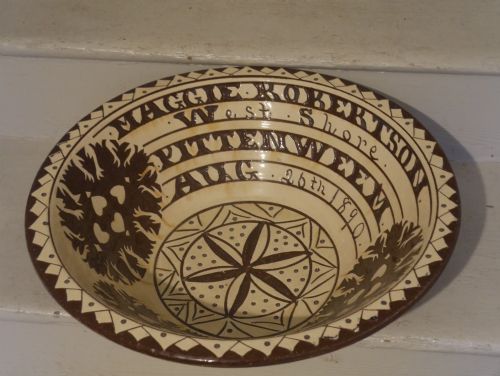
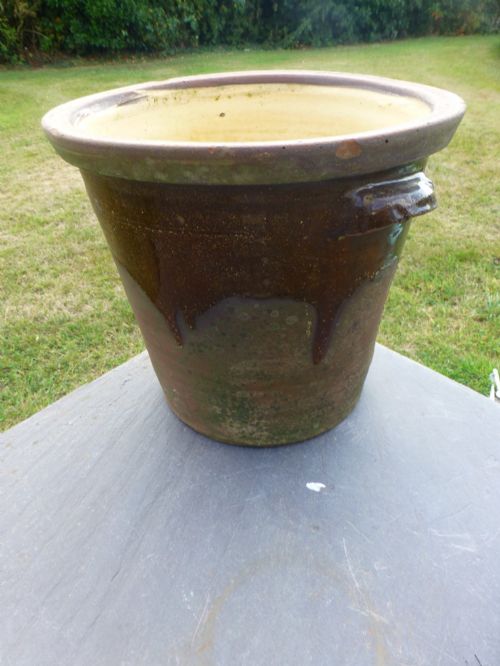
A glazed terracotta bowl encompasses robust domestic vessels, large dairy bowls, and decorative planters spanning multiple centuries and global traditions.
Buyers seeking a glazed terracotta bowl will frequently encounter nineteenth-century English and French examples, alongside earlier earthenware pieces and regional vernacular styles.
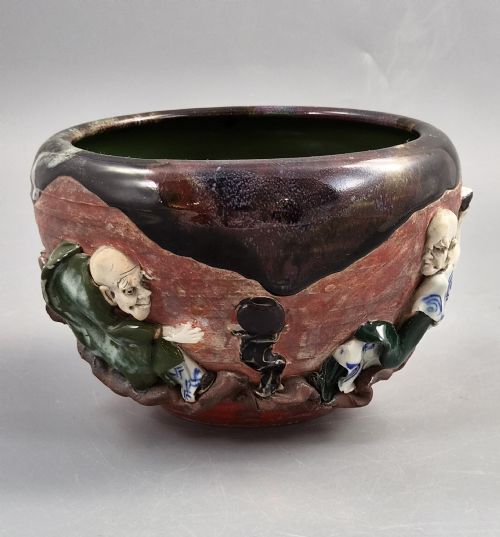
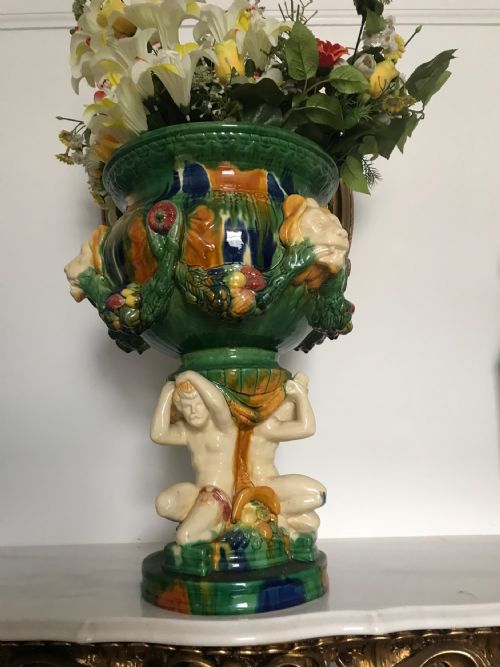
These vessels range from simple utilitarian dairy pans with glazed interiors to elaborate Italian majolica planters and Japanese figural bowls.
How they were made
Potters shaped terracotta and earthenware on the wheel or in moulds, prioritising durability for agricultural and domestic tasks.
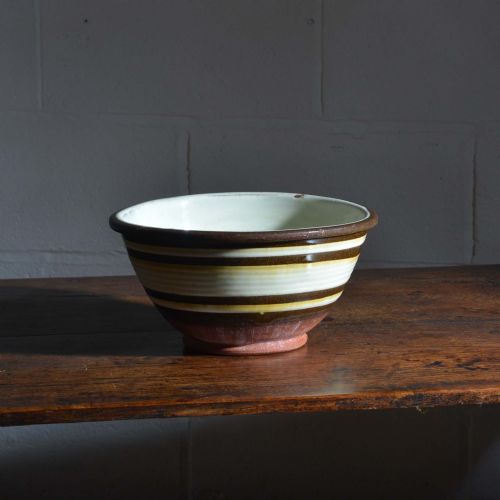
Surfaces received lead glazes, slip glazes, or colourful majolica enamels to seal the porous clay body and add decorative appeal.
What varies in quality
Quality rests in the harmony of the thrown form, the depth and richness of the glaze, and the preservation of the surface.
Simpler vernacular pieces rely on honest potting and generous proportions, whereas decorative works depend on crisp relief modelling and controlled firing.
Inoue Ryōsai·Royal Dux
The Glazed Terracotta Bowl Glossary
- Terracotta
- A porous, unglazed or glazed red earthenware fired at relatively low temperatures. It forms the structural base for many historic vessels and garden ornaments.
- Slip Glaze
- A liquid clay mixture applied to the surface of pottery before firing to provide colour and a smoother finish. It often creates rich, variegated tones on utilitarian kitchenware.
- Majolica
- A type of earthenware decorated with opaque coloured glazes over a white tin-glaze ground. This technique allows for vibrant pictorial and sculptural surfaces.
- Dairy Bowl
- A wide, shallow vessel historically used in farming dairies for separating cream from milk. Their interiors typically feature protective glazes to withstand daily scrubbing.
Glazed Terracotta Bowl: Frequently Asked Questions
What were glazed terracotta bowls used for?
Historic glazed terracotta bowls served primarily functional roles in rural and domestic life, ranging from dairy processing to washing and food preparation.
Larger vessels managed heavy farm tasks like setting milk or salting provisions, while smaller basins handled household washing and personal care.
How do I date a terracotta bowl?
Dating relies on observing potting techniques, tool marks, glaze composition, and regional stylistic markers visible across the body.
Earlier examples often display heavier thrown walls and simple slip applications, whereas nineteenth-century pieces frequently show more standardised manufacturing and diverse glaze recipes.
Are these bowls waterproof?
Most glazed terracotta bowls feature a vitreous coating on the interior surface designed to hold liquids safely during their working life.
However, historic earthenware bodies remain porous beneath the glaze, meaning moisture can occasionally seep through unglazed exterior areas over extended periods.
How do I style a large dairy bowl?
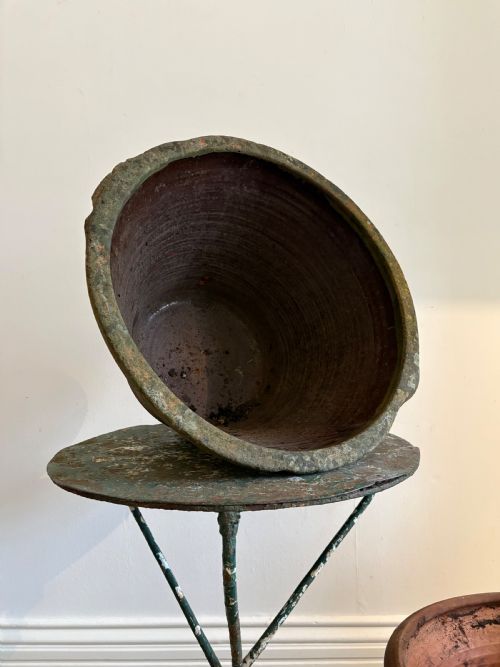
Large dairy bowls work effectively as table centrepieces, standalone floor displays, or shallow planters for indoor greenery.
Their generous diameters and weathered terracotta surfaces provide strong visual contrast against modern architectural backgrounds.