


Scottish Folk Art
These pieces of scottish folk art bring home the unpretentious character of nineteenth-century and early twentieth-century domestic life.
Scottish Folk Art
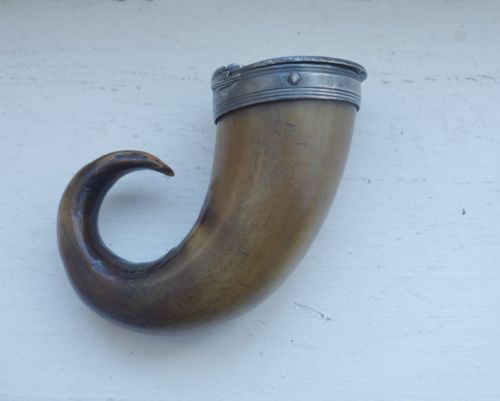
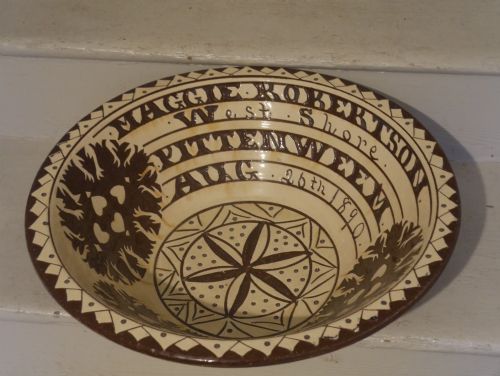
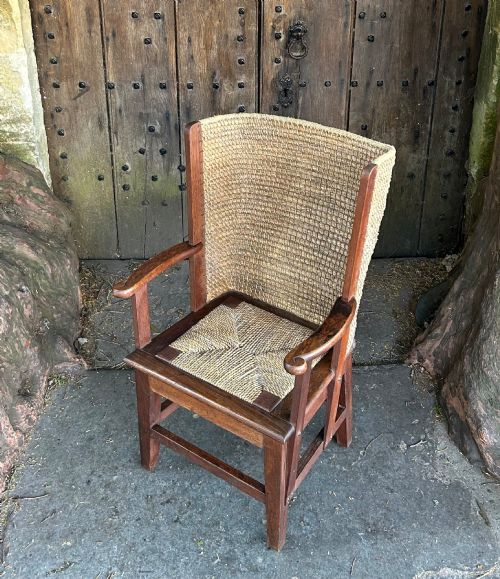
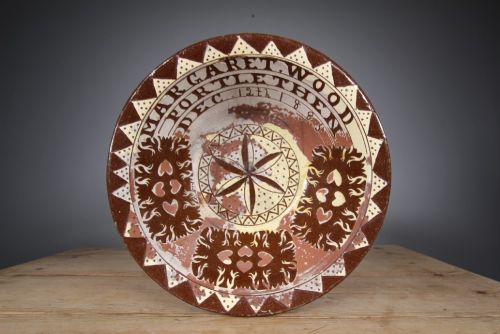
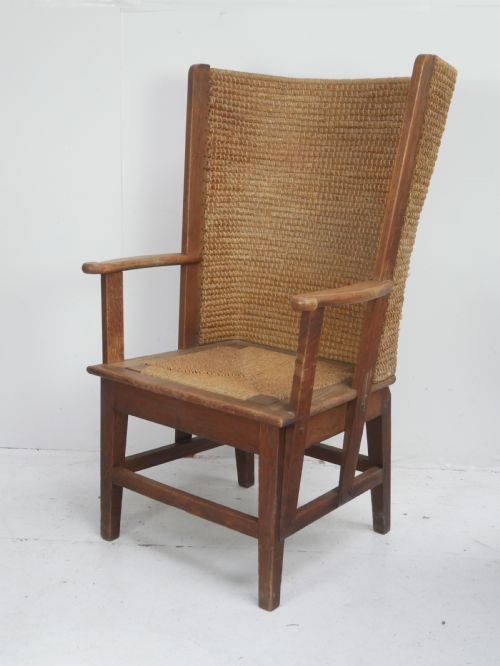
When you search for scottish folk art, you enter a diverse category of handmade domestic items, from traditional Orkney chairs and Seaton pottery dairy bowls to horn snuff mulls. These pieces reflect regional trades and everyday country pursuits rather than metropolitan polish.
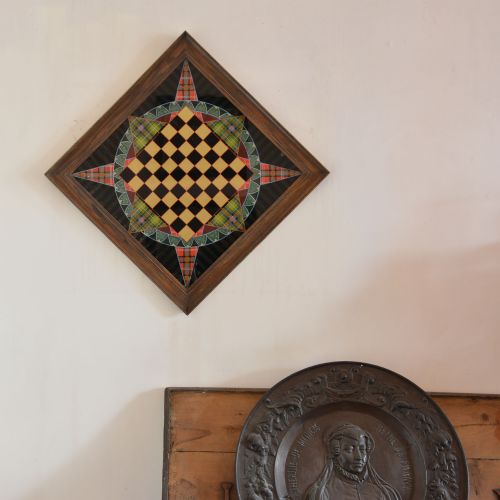
The pieces on this page lean heavily towards nineteenth-century and Victorian examples, including turned wooden bannock turners, slipware bowls, and reverse glass painted games boards. Such objects were made for practical use in farmhouses, fishing communities, and village homes across Scotland.
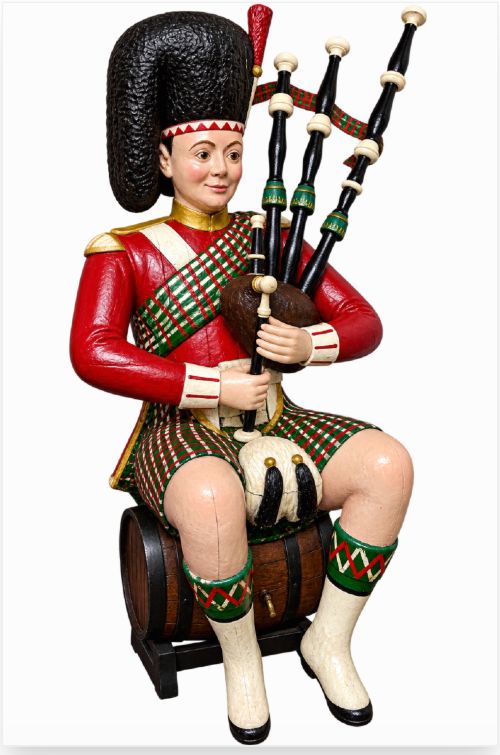
You will also find figurative works and utilitarian items, such as Portobello plaques, pokerwork stools, and stag horn cribbage boards. Each form carries the distinct material habits and domestic traditions of its specific Scottish district.
Materials and construction
Makers relied on locally gathered materials like straw, rush, oak, and beech to construct functional furniture such as the iconic Orkney chairs. Horn and staghorn were shaped and mounted with silver or pewter for pocket-sized snuff mulls and cribbage boards.
Earthenware pieces received straightforward lead glazes, while potteries like Seaton and Portobello produced slipware bowls and decorative plaques using traditional kilns. Woodworkers utilised simple joinery, pokerwork, and reverse glass painting to finish everyday items.
A nineteenth-century pokerwork stool bears the defiant Scottish inscription 'Touch me wha daur'.
Judging quality
Quality rests upon the integrity of the materials and the honesty of the handwork. A horn snuff mull mounted cleanly in silver displays a higher degree of artisan care than a plain utilitarian vessel.
In furniture and treen, the tightness of the straw work in an Orkney chair or the crispness of the carving on a tradesman's figure dictates the piece's standing. Original surfaces and unaltered patination separate enduring examples from later restorations.
Seaton Pottery·Portobello·James G Faulds
The Scottish Folk Art Glossary
- Snuff mull
- A pocket container used for holding snuff, typically fashioned from animal horn or staghorn in Scotland. Many examples feature metal mounts and hinged lids.
- Orkney chair
- A traditional high-backed armchair constructed with a wooden frame and a woven straw back. These chairs evolved to protect sitters from drafts in northern coastal cottages.
- Slipware
- Pottery decorated by applying liquid clay over a different coloured clay body before firing. Seaton pottery examples illustrate this technique.
- Portobello
- A pottery district near Edinburgh known for producing earthenware figures, plaques, and household vessels during the nineteenth century. These items often carry vernacular inscriptions.
- Bannock turner
- A wooden kitchen utensil shaped for flipping oatcakes on a griddle. They appear in collections as grouped examples of domestic treen.
- Treen
- Small handmade wooden objects designed for everyday household use. The category includes boxes, turnery, and small games boards.
Scottish Folk Art: Frequently Asked Questions
What is an Orkney chair?
An Orkney chair is a distinct regional armchair featuring a low wooden frame and a tightly woven oat straw back. They were built by local makers to shield inhabitants from cold Atlantic drafts.
Over time, designs evolved to include wooden hoods and drawers beneath the seat. Their survival depends on the stable preservation of both the timber frame and the fragile straw work.
What distinguishes Seaton pottery?
Seaton pottery encompasses utilitarian earthenware items like slipware dairy bowls and kitchen vessels produced during the nineteenth century. These pieces utilised local clays and straightforward lead glazes for daily agricultural work.
Their appeal lies in the spontaneous slip decoration and robust, heavy potting. Collectors value them as records of regional Scottish domestic industry.
Where were Portobello plaques made?
Portobello plaques originated from the potteries operating near Edinburgh in the nineteenth century. They frequently featured sentimental inscriptions, such as Auld Lang Syne, alongside moulded figures.
Potters painted these earthenware pieces by hand before firing them in regional kilns. They hung in Scottish homes as decorative markers of local identity.