


Victorian Presentation Ceramics
Victorian presentation ceramics are tangible pieces of history, made to mark a life event or civic milestone and cherished for their personal stories.
Victorian Presentation Ceramics
Victorian presentation ceramics encompass commemorative vessels, marriage jugs, and loving cups created during the nineteenth century to mark specific people and notable dates. These items range from sturdy earthenware dairy bowls to delicate hand-painted porcelain jugs, reflecting the varied tastes of the period.
You are most likely to encounter utilitarian forms elevated by inscriptions, dates, and decorative glazes, such as large slipware bowls or cobalt blue pitchers. Many of these pieces survive from regional potteries and individual makers who specialised in bespoke celebratory wares.
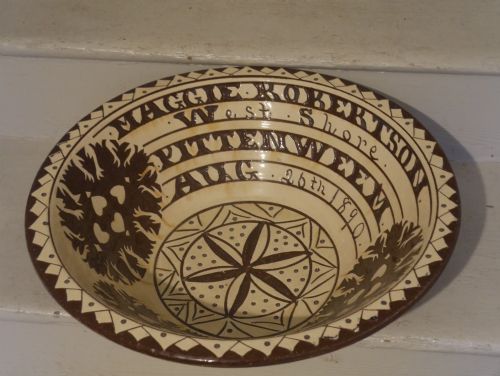
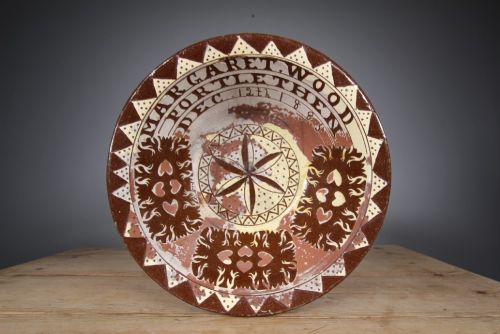
The assortment on this page draws together diverse utilitarian and commemorative objects from the nineteenth century, including pieces dated to specific years like 1837, 1839, and 1890. Each piece carries the distinct character of its maker, whether through folk art traditions or refined Victorian porcelain painting.
How they were made
Potters shaped these vessels from earthenware, porcelain, and Staffordshire china, utilising traditional throwing and moulding techniques suited to each body. Slip glazes, lead glazes, and rich cobalt blue pigment provided durable and striking surface finishes before final firing.
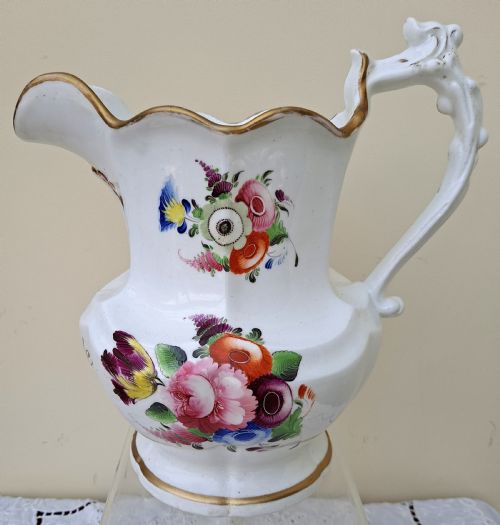
Decoration often involved meticulous hand painting, sometimes enhanced with gold leaf and gilt highlights to emphasise commemorative inscriptions and names. Bargeware pieces display distinct applied clay motifs and colourful enamel details characteristic of specific regional folk traditions.
Seventeen-century dairy bowls found a second life as nineteenth-century presentation pieces when potters added inscriptions and dates to mark family milestones.
What varies in quality
The clarity and ambition of the hand-painted decoration set the finer examples apart, particularly on porcelain jugs where intricate brushwork defines portraits or floral motifs. Stronger pieces combine a well-balanced form with crisp, legible commemorative lettering that remains bold across the body.
The presence of precious materials like gold leaf and gilt elevates the status of a vessel, distinguishing standard utility wares from significant presentation pieces. Surface preservation also plays a part, with intact lead glazes and vibrant enamels maintaining the visual impact intended by the original maker.
Seaton Pottery·John Baley·Royal Worcester·Mountford Staffordshire
The Victorian Presentation Ceramics Glossary
- Loving cup
- A large ceramic vessel with two or more handles, traditionally passed around a gathering for shared toasts at weddings or celebrations. These pieces often feature specific names and dates.
- Slipware
- Pottery decorated with slip, which is a liquid clay mixture applied before firing to create patterns, inscriptions, or contrasting backgrounds. This technique appears frequently on nineteenth-century bowls and jugs.
- Commemorative jug
- A pitcher created to mark a public event, a reign, or a private milestone such as a marriage or retirement. They frequently bear the name of the recipient alongside a precise date.
- Bargeware
- A style of folk art pottery associated with canal boat people, typically characterised by colourful applied motifs, teapots, and jugs. These items display distinctive raised clay decorations and bright enamels.
- Lead glaze
- A glossy coating containing lead compounds applied to earthenware to render it watertight and impart a smooth sheen. It was widely utilised on nineteenth-century regional pottery.
Victorian Presentation Ceramics: Frequently Asked Questions
What is a loving cup?
A loving cup is a communal drinking vessel featuring multiple handles, designed to be passed between guests during celebrations and toasts. These vessels often bear specific names, dates, or personal inscriptions.
In the nineteenth century, they served as important presentation pieces for weddings, civic events, and familial milestones, combining utility with commemorative artistry.
How are marriage jugs identified?
Marriage jugs usually display the names of the couple alongside a precise year, such as 1839, painted or inscribed directly onto the ceramic body. They often incorporate decorative motifs symbolising union and prosperity.
Potters in regions like Staffordshire frequently produced these substantial vessels to order, ensuring each piece recorded the specific details of the event.
What is bargeware pottery?
Bargeware pottery is a distinct form of folk art created for and by canal boat families during the nineteenth century. These items typically include teapots and jugs featuring exuberant applied clay flowers and bright enamel colours.
They stand out from standard domestic wares due to their heavy, sculptural surface decoration and folk aesthetic.
How do I care for antique ceramics?
Antique ceramics require gentle handling and should be kept away from direct sunlight and areas prone to rapid temperature fluctuations. Dust them softly with a dry, lint-free cloth rather than using liquid cleaners.
Because many nineteenth-century pieces feature delicate hand painting or gold leaf, washing is generally discouraged to protect the original surface.
What distinguishes Victorian porcelain?
Victorian porcelain offers a finer, more refined body compared to earthenware, often featuring smooth white surfaces suited to detailed hand-painted scenes. Makers utilised these pieces for commemorative jugs and decorative items.
The inclusion of gilt and gold leaf further separates these finer porcelain pieces from everyday utilitarian kitchenware.