
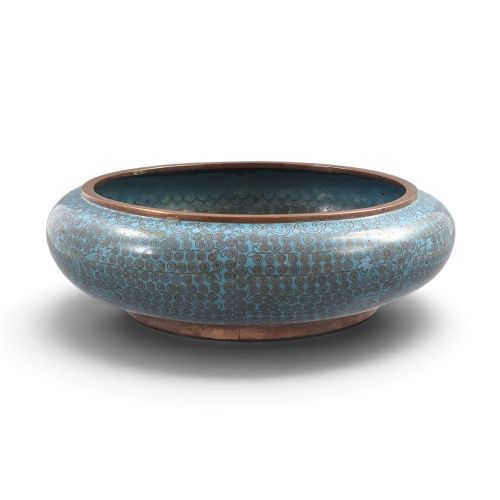
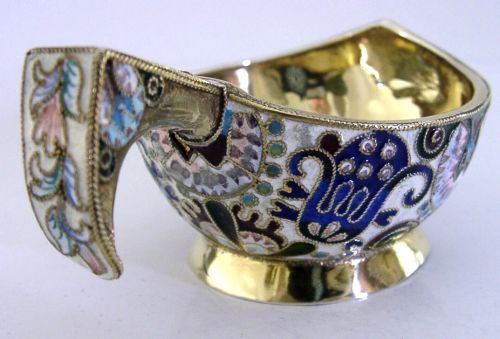


Antique Cloisonne Bowl
An antique cloisonne bowl brings vibrant colour and meticulous wirework into a room, offering centuries of craftsmanship in a single vessel.
Antique Cloisonne Bowl
An antique cloisonne bowl represents a tradition of metalworking and enamelling found across multiple regions and eras. Buyers searching this phrase encounter decorative vessels, chargers, jardinieres, and lidded pedestal bowls originating from Chinese Qing Dynasty workshops, Japanese Meiji and Edo periods, Imperial Russia, and Victorian Siamese production.
The objects take many forms, from scholar's brush washers and heavy bronze planters to footed tazzas and large chargers spanning up to forty centimetres. Japanese Meiji examples often feature detailed depictions of dragons, birds, and peonies, while Chinese Qing pieces display formal symmetry and intricate wire cell work.
Vessels from the nineteenth century predominate among these items, with specific dates stretching from the eighteen-sixties through to nineteen-hundred. Pieces range from modest ashtrays to heavy bronze and copper alloy bowls weighing over a kilogram.
Materials and construction
The foundation of an antique cloisonne bowl typically consists of hammered or cast copper, brass, bronze, or solid silver-gilt. Artisans solder thin flat metal wires onto this base to form raised compartments, known as cloisons, which outline the intended decorative motifs.
Once the wire grid is secured, workers fill the individual cells with coloured enamel paste made from powdered glass. The vessel undergoes multiple firings in a kiln, causing the enamel to vitrify and shrink, requiring further layers of paste to level the surface with the wire tops.
The final stage involves grinding and polishing the entire surface until the metal wires and hardened enamel meet in a smooth, unified plane. Certain variations employ translucent enamel without a solid base metal backing, a delicate technique known as plique-a-jour.
Object forms range from heavy bronze jardiniere pots and scholar's brush washers to delicate silver-gilt kovsh cups and broad decorative chargers.
Distinctions in quality
The refinement of the wirework dictates much of the visual success of an antique cloisonne bowl. Finer, thinner wires demand greater dexterity from the artisan and allow for intricate, highly detailed pictorial scenes rather than bold, simplified patterns.
The consistency and depth of the coloured enamel provide another measure of standard. Superior examples display an even vitrification free from excessive pitting, cloudiness, or irregular shrinkage between the metal partitions.
The weight and substance of the underlying metal chassis contribute to the durability and perceived solidity of the vessel. Heavy bronze or solid silver-gilt frames support the expansive enamel surfaces of large chargers and jardinieres without flexing.
The Antique Cloisonne Bowl Glossary
- Cloison
- A thin metal wire soldered to a metal base to create partitioned cells for enamel paste. This wire framework forms the distinct outlines of the decorative design.
- Totai Shippo
- A Japanese technique where enamel is applied directly to a translucent or wire-framed body, sometimes creating effects that resemble tree bark or translucent glass.
- Plique-a-jour
- An enamelling method resembling stained glass where the enamel has no metal backing, allowing light to pass through the transparent coloured cells.
- Jardiniere
- A large ornamental pot or bowl designed to hold plants or floral arrangements, often cast in heavy bronze or copper alloy.
- Kovsh
- A traditional Russian drinking vessel featuring a boat-shaped body and a single flat handle, frequently executed in solid silver-gilt and enamel.
Antique Cloisonne Bowl: Frequently Asked Questions
What is an antique cloisonne bowl made from?
These vessels are built upon a metal base of copper, brass, bronze, or silver-gilt. Fine metal wires are soldered to this chassis to create compartments filled with coloured vitreous enamel.
After repeated firings in a kiln, the surface is ground and polished until the metal wires and the hardened glass paste form a smooth plane.
How do I clean an antique cloisonne bowl?
Dust the surface gently with a soft, dry cloth to prevent the accumulation of particles in the recessed wire joints. Avoid harsh chemical cleaners, abrasive cloths, or immersion in water, which can damage the old metal and enamel.
Display the vessel away from direct sunlight and areas of high humidity to protect the integrity of the vitreous paste over time.
How do I distinguish Japanese from Chinese pieces?
Japanese Meiji and Edo period vessels often focus on naturalistic motifs like birds, flowers, and single dragons executed with extreme wire precision. Chinese Qing Dynasty pieces frequently utilise heavier bronze bases and formal, symmetrical decorative arrangements.
Signatures or artist marks frequently appear on Japanese works from the later nineteenth century, while Chinese pieces more commonly rely on period style markers.
Were these bowls used for food?
Most surviving examples served decorative or scholarly functions rather than utilitarian dining purposes. Forms such as brush washers, large chargers, tazzas, and heavy jardinieres were designed for display in interiors.
Smaller vessels like ashtrays or sugar bowls indicate more domestic handling, but the delicate nature of the enamel means they functioned primarily as ornamental objects.