
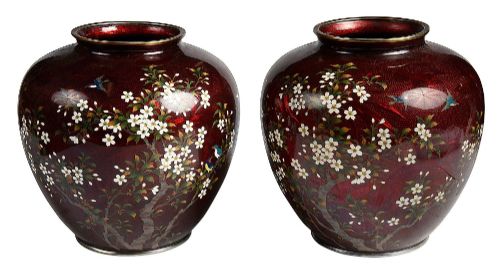
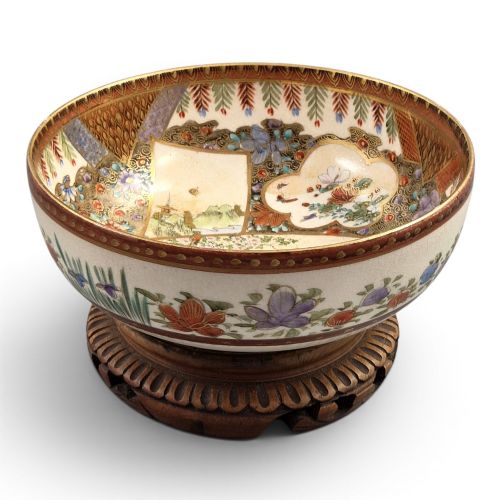


Japanese Enamel Vessel
These pieces of Japanese enamel vessel embody centuries of meticulous metalwork and ceramic tradition, offering striking focal points for a room.
Japanese Enamel Vessel
When searching for a Japanese enamel vessel, you encounter a diverse array of forms ranging from vases and decorative bowls to incense burners, sake kettles, and temple water dispensers. These functional and decorative objects originate across various periods, most notably the Edo and Meiji eras, alongside twentieth-century examples.
The selections available here frequently include cloisonné and champlevé enamel works, often paired with copper, bronze, or brass bodies. Alongside metal vessels, you will find earthenware, stoneware, and porcelain pieces that integrate enamel work or hand-painted details typical of Satsuma, Kutani, and Arita traditions.
Many items serve specific cultural roles, such as hanging boat koro incense burners, lidded pedestal bowls, and temple dispensers featuring dragon or koi decoration. Others function purely as ornamental vases, ginger jars, and table lamps adapted for modern interiors.
How they were made
Craftsmen built these vessels using metal foundations of bronze, copper, or brass, upon which they applied intricate wirework for cloisonné or carved recesses for champlevé enamel. Artisans then filled these cells with coloured glass pastes before firing and polishing the surfaces to a smooth, lustrous finish.
Ceramic vessels incorporate earthenware, stoneware, or porcelain bases finished with hand-painted glazes, moriage relief details, and occasional applications of gold leaf. Skilled potters and enamelers worked within established regional centres, utilising techniques refined over generations.
Several vessels take the unexpected form of a treasure ship, ready to sail across your sideboard bearing good fortune.
What varies in quality
The calibre of a Japanese enamel vessel rests on the precision of its wirework, the evenness of the vitreous enamel filling, and the complexity of the rendered motifs such as birds, dragons, or landscapes. Superior examples demonstrate exceptional fineness in detail and harmonious colour palettes across large surface areas.
In ceramic and metal combinations, the weight of the bronze or copper body, the depth of the carved or applied decoration, and the presence of artist signatures elevate certain pieces above standard production. Masterworks exhibit a distinct ambition in scale and sculptural execution.
Makuzu Kozan II·Kozan·Tamura Yukio·Kinkozan·François-Eugène Rousseau
The Japanese Enamel Vessel Glossary
- Cloisonné
- Enamelling technique where thin metal wires form raised barriers on a metal body to create compartments filled with coloured paste. These wires define the intricate patterns seen on vases and bowls.
- Champlevé
- Enamelling method involving troughs or cells carved directly into a thick metal surface to hold coloured glass paste. The surrounding metal remains visible as part of the design.
- Koro
- Traditional Japanese incense burner, frequently fitted with a lid and utilised in domestic or ceremonial settings. They appear in forms such as hanging boats or standard pedestal bowls.
- Satsuma
- A style of Japanese earthenware featuring a crackled ivory glaze decorated with polychrome enamels and rich gilding. These pieces often depict figures, landscapes, and religious panels.
- Meiji
- The historical period spanning from eighteen sixty-eight to nineteen twelve, characterised by a flourishing of decorative arts and international exports. Pieces from this era often display supreme technical mastery.
Japanese Enamel Vessel: Frequently Asked Questions
How do I date a Meiji piece?
Meiji pieces date from the period between eighteen sixty-eight and nineteen twelve, aligning with the reign of the Emperor Meiji.
Look for distinctive stylistic markers, technical refinement in the cloisonné wires, and signatures associated with prominent workshops of that era.
Where were Satsuma vessels made?
Satsuma pottery originated in Satsuma Province on the southern island of Kyushu, though production later expanded to Kyoto and other major artistic centres.
These ceramics are instantly recognisable by their characteristic crackled cream glaze and elaborate polychrome and gilt decorations.
How do I display these vessels?
These decorative objects work well as standalone focal points on tables, consoles, or within dedicated display cabinets where their surface details can catch the light.
Ensure they are placed away from direct foot traffic to protect delicate enamel surfaces and protruding decorative elements.