

Decorative Footed Bowl
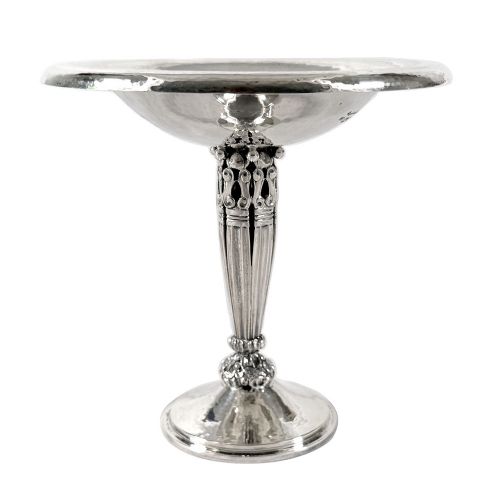
A decorative footed bowl sits above the table surface, lifting flowers, fruit or simply its own form into the light.
Decorative Footed Bowl
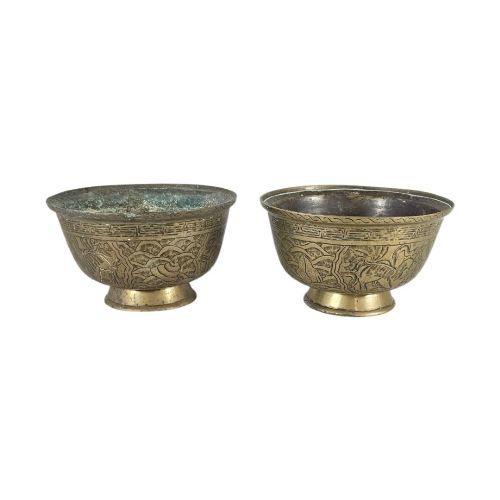
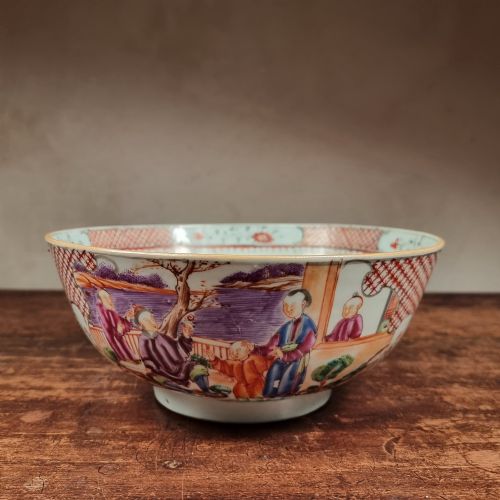
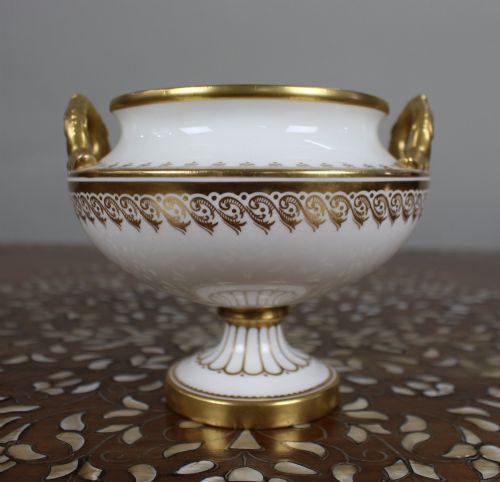
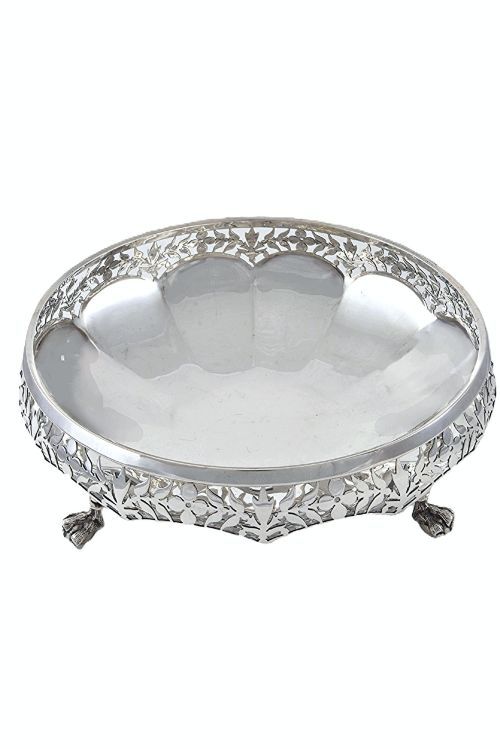
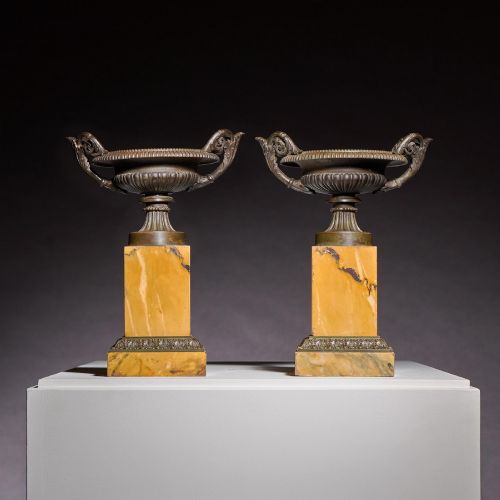
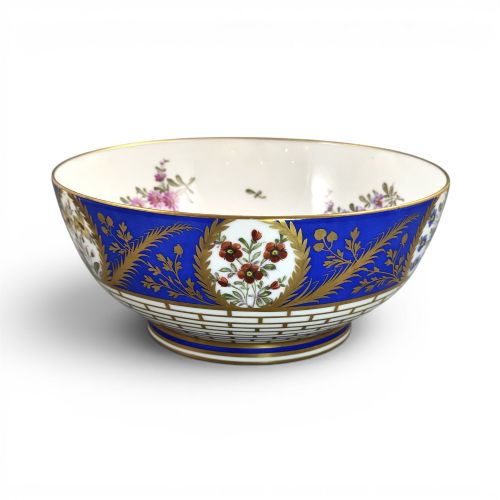
A decorative footed bowl elevates its contents on a pedestal, base or short supports, appearing across nineteenth-century Victorian earthenware, porcelain and metalwork. These pieces take the shape of tazzas, comports, urns and pedestal dishes intended for display or service on tables and sideboards.
Makers from the late nineteenth and early twentieth centuries also produced these vessels in Art Nouveau glass, Art Deco silver and various orientalist styles influenced by Japanese and Chinese design. English pottery and French bronze examples appear frequently alongside pieces from Austrian and Bohemian glasshouses.
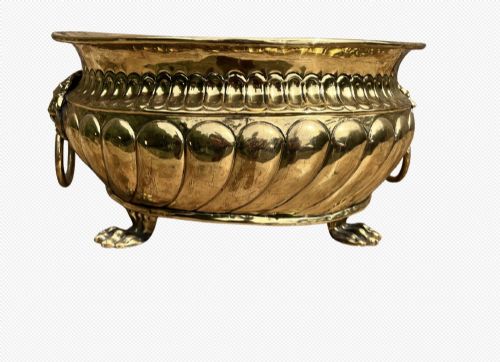
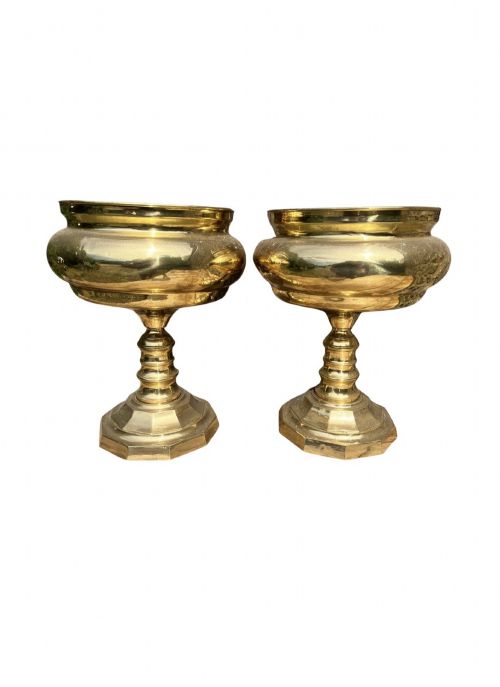
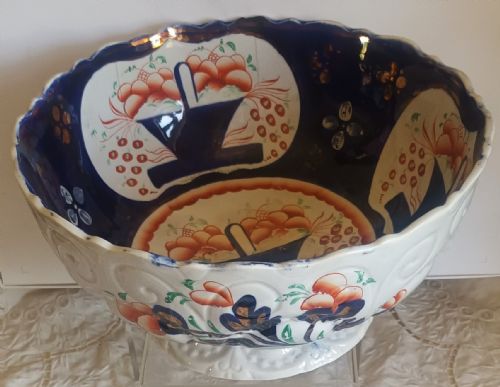
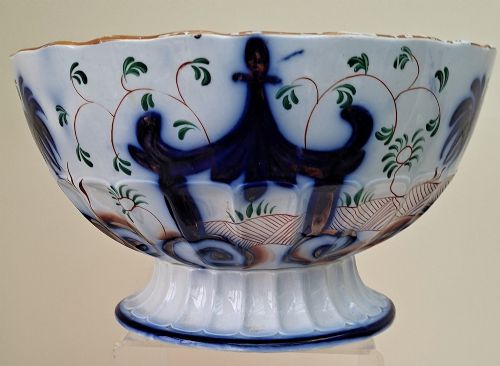
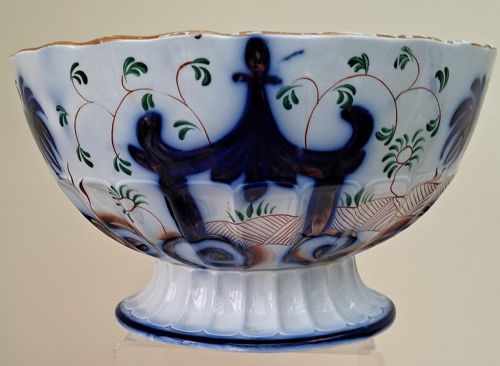
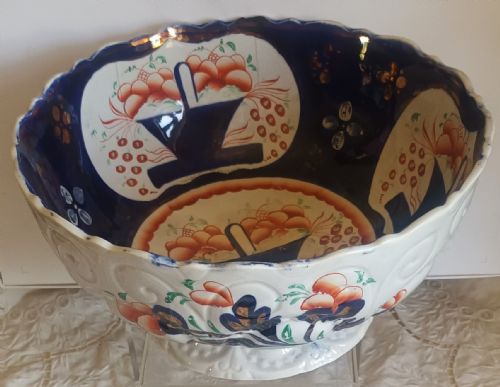
The assortment on this page ranges from heavy Grand Tour souvenirs in marble and bronze to domestic Gaudy Welsh earthenware and iridescent art glass. Each design lifts the bowl body above its immediate surface, creating a distinct silhouette against the room.
Materials and construction
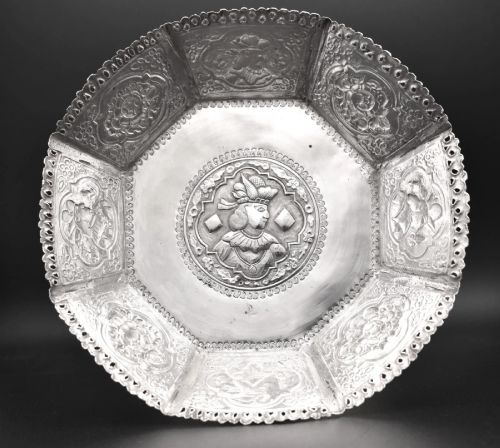
Pottery and porcelain versions rely on moulded or thrown earthenware and hard-paste clay, finished with hand-painted glazes, transfer printing or lustrous metallic films. Metal pieces combine cast bronze, brass and silver with repoussé hammering, chasing and gilding to achieve textured surfaces.
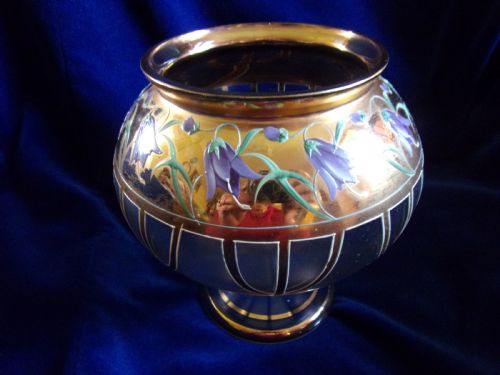
Glass vessels utilise blown or moulded techniques, incorporating enamel painting, acid etching or plique-a-jour wirework to catch and refract light through coloured crystal. Marble and alabaster components are carved and turned on lathes before being mounted with cast brass or bronze fittings.
Judging execution and finish
Quality rests in the crispness of the casting, the depth of the hand-applied glaze and the precision of any metal chasing. Superior porcelain and pottery show clean painted lines without blurring, whilst finer metalwork displays sharp detail in relief decoration and secure joints between the bowl and its foot.
The weight of the material and the balance of the pedestal relative to the bowl basin indicate the care taken during production. Pieces featuring complex enamel work, intricate repoussé or signed mounts by notable designers demonstrate greater artistic ambition than standard factory output.
Samson Paris·Charles Boyton·Maling·Wedgwood·Loetz·François-Eugène Rousseau·Baccarat·Louis Pierre Malpass
The Decorative Footed Bowl Glossary
- Tazza
- A shallow bowl or cup mounted on a stem and foot, originating from Renaissance Italian silver and ceramic forms. These vessels often serve as centrepieces or display dishes.
- Comport
- A large standing dish used for serving fruit or sweets at the end of a meal. They share a raised foot similar to a tazza but typically feature a deeper basin.
- Jardiniere
- An ornamental pot or stand designed to hold growing plants or flowers. They appear in brass, ceramic and copper, frequently taking pride of place on tables or hearths.
- Repoussé
- A metalworking technique where the artisan hammers the design from the reverse side to create a raised pattern in relief. Fine examples show crisp definition on the front face.
- Plique-a-jour
- An enamelling technique resembling miniature stained glass, where transparent enamel is fired in open wire cells without a backing. This lets light pass directly through the coloured sections.
Decorative Footed Bowl: Frequently Asked Questions
What is a footed bowl used for?
These vessels historically held fruit, flowers or sweetmeats, serving as decorative centrepieces on dining tables and sideboards. Their elevated bases helped draw the eye upward and keep arrangements visible above tableware.
Today, they function as standalone decorative objects or catchalls in living spaces, requiring no contents to command attention.
How do I date a metal tazza?
Dating relies on stylistic markers such as the flowing organic lines of Art Nouveau or the geometric abstraction of Art Deco. Maker marks, registry numbers and the specific composition of alloys also provide clues.
Heavier cast bronze and marble examples often point to nineteenth-century Grand Tour souvenirs, whereas lighter silver items frequently carry hallmarks indicating exact years of assay.
How should I clean antique glass bowls?
Dusting with a soft, dry cloth removes everyday accumulation without risking fragile surfaces. If washing is necessary, use lukewarm water and mild soap, avoiding harsh scrubbing.
Enamelled or gilded glass requires particular caution, as aggressive cleaning agents can lift delicate surface decorations applied over the original crystal.
What distinguishes Wedgwood lustre ware?
Wedgwood lustre pieces feature iridescent metallic glazes developed by fusing thin layers of metallic oxides onto ceramic bodies. These glazes create shimmering, rainbow-like effects across designs of dragons, butterflies or abstract patterns.
The technique gained popularity in the early twentieth century, producing vibrant surfaces that change colour depending on the angle of the light.