



Asian Display Bowl
An asian display bowl brings centuries of intricate ceramic and metal craftsmanship into a room, offering a focal point for tables and cabinets.
Asian Display Bowl
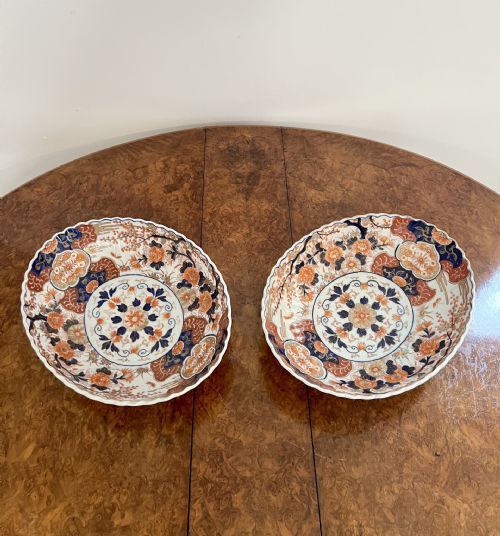
When you search for an asian display bowl, you encounter a variety of decorative vessels originating from Japanese and Chinese traditions. These pieces include large chargers, scalloped plates, and deep porcelain or bronze vessels designed primarily for visual appreciation.
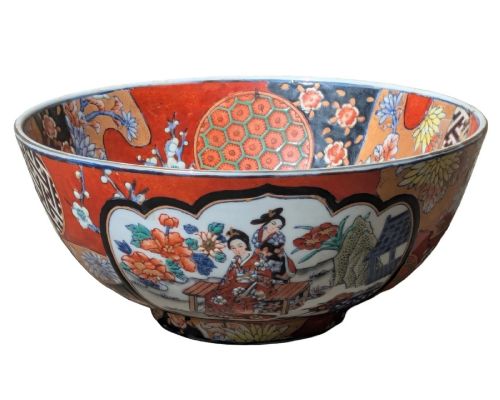
The selections available here span from seventeenth-century Arita wares and Edo period cloisonne enamel to nineteenth-century Meiji period Imari and Satsuma productions. You are most likely to meet Japanese Imari porcelain bowls featuring traditional cobalt blue and iron red palettes.
Beyond ceramics, the selection incorporates carved hardwood stands and heavy bronze vessels that complement the display pieces. Each item reflects distinct regional styles, from traditional Chinese motifs to elaborate Japanese export designs.
Materials and construction
Potters and artisans shaped these pieces using porcelain, earthenware, bronze, and copper as foundational materials. Artisans applied glazes such as Qingbai, alongside rich enamel, gold leaf, and intricate cloisonne wirework to enrich the surfaces.
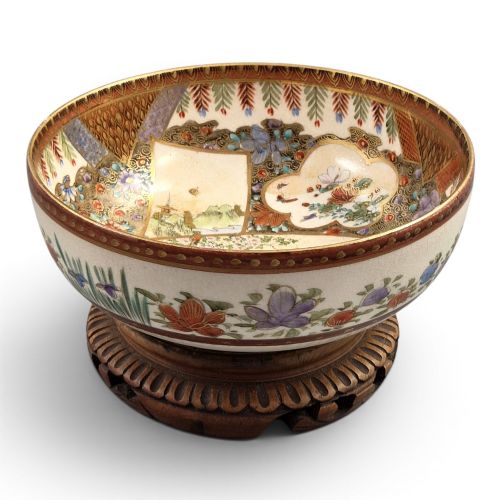
Makers utilised traditional techniques including hand-painting floral and animal motifs, incising phoenix and peony designs into clay, and mounting vessels on carved hardwood stands embellished with mother of pearl.
Some resilient bowls survive with historic restoration marks, proving that even antique disasters occasionally warrant a second chance at glory.
Assessing quality in display bowls
Quality rests upon the precision of the hand-painting, the clarity of the glaze, and the intricacy of the enamel or gold leaf application. Finer pieces demonstrate superior control over kiln temperatures and pigment saturation.
The complexity of the form, such as scalloped edges, hexagonal shapes, or paired hardwood stands, further distinguishes standard production wares from exceptional examples created by recognised makers.
Gyokkō·Kozan
The Asian Display Bowl Glossary
- Imari
- A style of Japanese porcelain featuring a distinct palette of underglaze blue, iron red, and gilt highlights. It originated in the Hizen province and was extensively exported.
- Satsuma
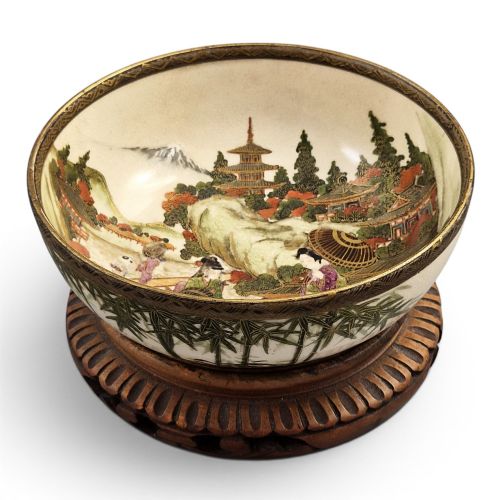
- A type of Japanese earthenware characterised by a pale, ivory-coloured cracked glaze decorated with polychrome enamels and gilding. These pieces frequently bear artist signatures.
- Cloisonne
- A metalwork technique where compartments are created on a copper or brass body by soldering flat metal wire, then filled with enamel paste and fired.
- Charger
- A large decorative plate or shallow bowl traditionally used for presentation rather than dining. They form striking centrepieces on tables and walls.
- Arita
- A Japanese town and production centre renowned for pioneering porcelain manufacture in the seventeenth century. Arita wares include early blue and white export pieces.
Asian Display Bowl: Frequently Asked Questions
What is an asian display bowl used for?
These vessels serve primarily as decorative objects for tabletops, cabinets, and display stands rather than for practical dining use. Their intricate designs and painted motifs are intended to be admired from a distance.
Collectors often pair bowls with carved hardwood stands to elevate the pieces and showcase them securely in domestic interiors.
How do I identify Imari porcelain?
Imari porcelain typically displays a combination of underglaze cobalt blue, vibrant iron red, and supplementary gold leaf accents. The patterns frequently incorporate floral motifs, landscapes, and rich geometric borders.
Most examples found in trade date from the Meiji period or the early twentieth century, reflecting enduring export traditions.
What is the difference between Satsuma and Imari?
Satsuma ware consists of earthenware with a characteristic ivory crackle glaze, painted finely with polychrome enamels and heavy gilding. It often includes artist signatures on the base.
Imari is a true porcelain characterised by its heavier body and rigid palette of cobalt blue and iron red, lacking the porous crackle glaze of Satsuma.
How should I display a heavy bronze or ceramic bowl?
Due to their substantial weight, particularly with bronze vessels or large porcelain chargers, ensure the supporting surface is stable and level. Using dedicated hardwood stands provides both aesthetic enhancement and physical stability.
Position pieces away from heavy foot traffic to prevent accidental movement or knocks.