





Japanese Export Ware
Japanese export ware brings together decorative plates, vases and bowls created for overseas markets during the Edo and Meiji periods.
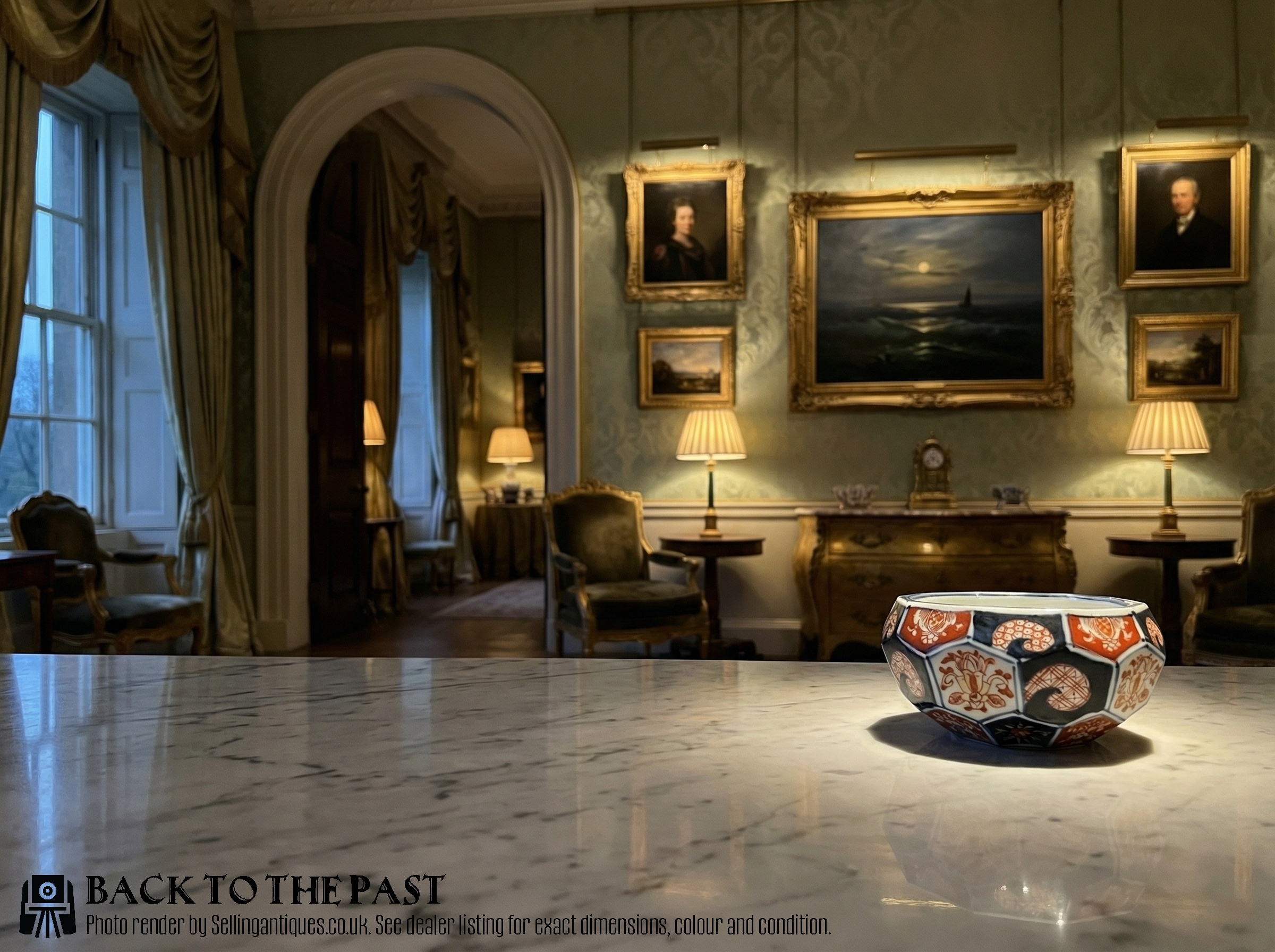
Japanese Export Ware
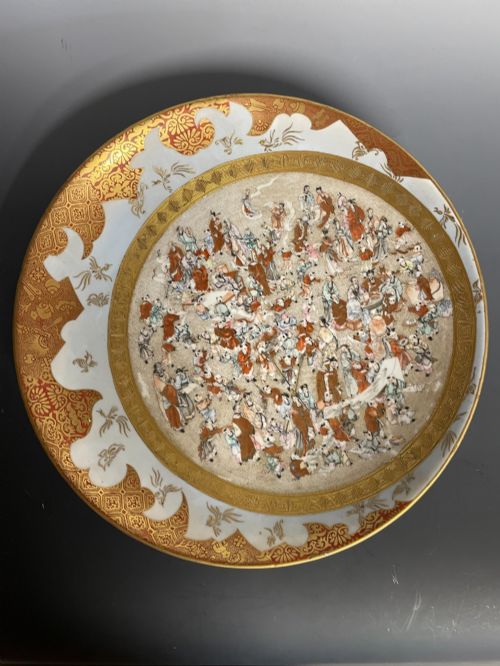
The most common pieces met here are Imari plates and vases decorated in characteristic palettes, alongside Satsuma earthenware and Kutani porcelain. These items reflect the shifting artistic production of historical Japan tailored for international collectors and households.
Materials and construction
Maker workshops utilised fine porcelain clay and earthenware bodies, shaping them into bowls, ewers, and hexagonal vessels. Artisans applied glazes, overglaze enamel, and gold leaf to decorate the surfaces.
Techniques combined hand-painting with intricate detailing, incorporating gilding and rich pigments such as those seen on Arita and Kutani wares. Papier-mâché lacquer trays also appear among the material record.
Listings span multiple eras from the seventeenth-century Edo period through to Edwardian production, utilising porcelain, earthenware, and lacquer.
Assessing quality
Quality rests upon the precision of the hand-painting, the complexity of the decorative palette, and the refinement of the porcelain or earthenware body. Pieces bearing identifiable studio signatures or mon symbols often display superior artistic execution.
Larger scale items, such as monumental bowls and exhibition-quality vases, demonstrate greater ambition in design and execution than standard domestic wares.
Hododa·Kinkozan Kyoto·Hattori·Taniguchi
The Japanese Export Ware Glossary
- Imari
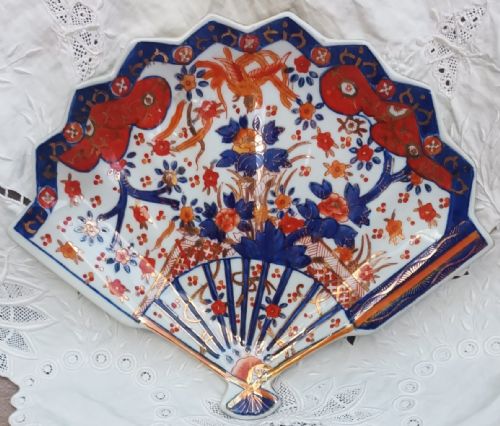
- A style of Japanese porcelain decorated in underglaze blue and overglaze red, green, and gold. This palette appears frequently across seventeenth, eighteenth, and nineteenth-century plates and vases.
- Satsuma
- A type of Japanese earthenware featuring a ivory-craquelure glaze and detailed polychrome enamel painting. It was widely produced during the Meiji period.
- Kutani
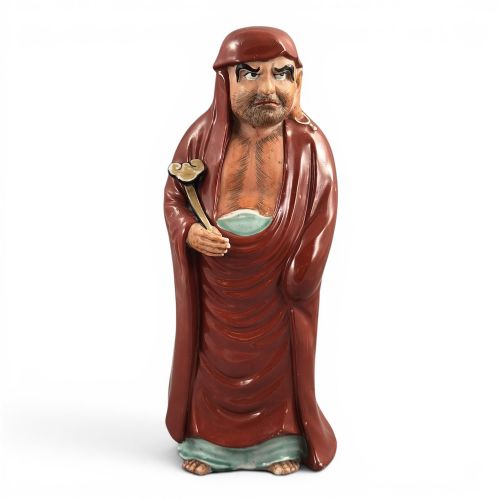
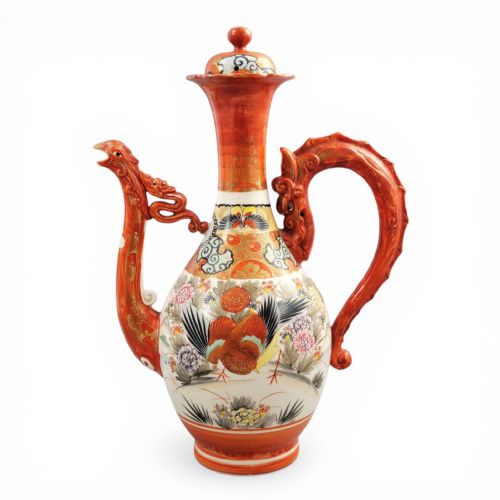
- Japanese porcelain known for its bold colour schemes, often incorporating deep reds and gold leaf. Figures and vessels in this style are well represented in nineteenth-century examples.
- Aka-e
- Red-painted ware, describing Japanese ceramics featuring dominant red overglaze enamels. Early examples date to the seventeenth century.
- Okimono
- A Japanese freestanding ornamental figure designed for display on a shelf or in a tokonoma alcove. These porcelain sculptures depict traditional subjects and figures.
- Mon
- A Japanese heraldic badge or crest used to identify families or clans. They often appear on high-quality Satsuma and Imari pieces.
Japanese Export Ware: Frequently Asked Questions
How do I identify Imari export ware?
Imari export ware is readily recognised by its distinctive palette combining underglaze cobalt blue with rust-red and gold highlights over a white porcelain base.
These patterns typically feature dense floral, geometric, and landscape motifs executed with high precision.
What is the difference between Satsuma and Kutani?
Satsuma wares consist of earthenware bodies covered in a characteristic creamy, crackled glaze that provides a canvas for detailed polychrome and gilt painting.
Kutani works are porcelain pieces traditionally defined by richer, bolder enamel colours such as intense reds, greens, and golds.
How do I date Japanese export porcelain?
Dating relies on stylistic shifts, historical periods such as the Edo or Meiji eras, and the characteristics of the glaze and paste.
Earlier pieces from the seventeenth century often show heavier Arita potting, whilst nineteenth-century Meiji examples display more exuberant decorative schemes.
Where were these export ceramics made?
The pieces were produced in specific ceramic centres across Japan, including Arita, Satsuma, and Kutani, before being shipped through ports for international markets.
Each region developed its own specialised methods of clay preparation, firing, and enamel decoration.