


Cloisonne Enamel Bowl
When you handle a cloisonne enamel bowl, you feel the meticulous weight of metalwork fused with glass wires.
Cloisonne Enamel Bowl
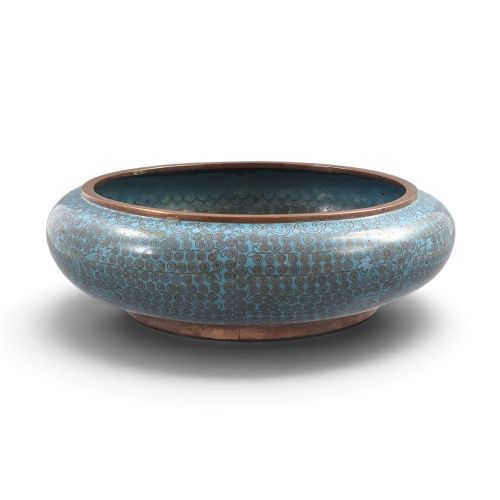
A cloisonne enamel bowl is a vessel formed from metal and decorated with intricate cellular compartments filled with coloured vitreous paste. These pieces range from decorative chargers and jardiniere pots to footed tazzas, scholar's brush washers, and lidded pedestal bowls. The form serves primarily as a decorative display object or a refined container within domestic and scholarly interiors.
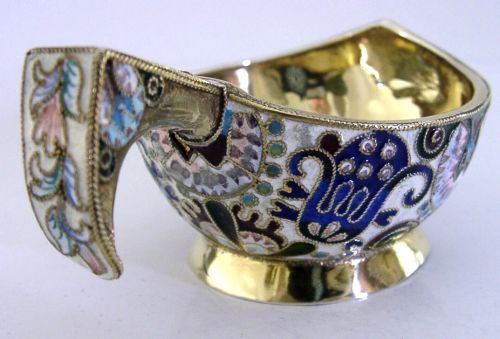
You are most likely to meet pieces originating from 19th-century Japanese workshops, such as those from the Meiji and Edo periods, alongside Chinese pieces from the Qing Dynasty and Imperial Russian silver-gilt items. Japanese examples frequently showcase naturalistic motifs like birds, peonies, and single dragons, whilst Chinese items often display robust bronze or copper structures with classical imperial ornamentation.
The selection includes substantial vessels weighing over a kilogram alongside smaller ashtrays and specialised sugar bowls. These works reflect global aesthetic exchanges of the Victorian era, bringing together Eastern manufacturing traditions and Western collecting tastes.
How they were made
Makers construct a cloisonne enamel bowl by soldering thin flat metal wires, typically copper, bronze, brass, or silver, onto a metallic base to form raised partitions known as cloisons. These individual cells are then carefully packed with coloured glass enamels in powdered form before the entire vessel undergoes firing in a kiln.
Following the initial firing, artisans grind and polish the surface down until the metal wire edges and the hardened glass fuse into a smooth, uniform plane. Many high-grade objects receive multiple firings to fill microscopic shrinkage pits in the enamel, ensuring a durable and lustrous finish across the body.
Alternative variations involve translucent plique-a-jour techniques or specialised totai shippo methods where the base material is removed entirely, leaving only the wire network and enamel shell to catch the light.
What varies in quality
The sophistication of the wirework largely determines the distinction between ordinary production and master craftsmanship. Superior pieces exhibit impossibly fine, uniform cloisons arranged in complex geometric or pictorial patterns without visible solder gaps or distorted cell walls.
The depth, richness, and consistency of the enamel colours also separate the standard items from exceptional examples. Masterpieces achieve a smooth, vitreous saturation across large surfaces, avoiding dull patches, excessive bubbles, or muddy colour blending during the kiln firing process.
The Cloisonne Enamel Bowl Glossary
- Cloisonne
- A decorative metalwork technique where thin wires form raised cells that hold coloured glass enamel. This method creates a stained-glass effect upon a metallic foundation.
- Totai shippo
- A Japanese enamelling variation where the solid backing body is etched away or omitted. This leaves a transparent or semi-translucent shell of enamel and wire.
- Plique-a-jour
- An enamelling technique similar to cloisonne but without a backing metal, allowing light to shine directly through the coloured glass cells. It resembles miniature stained glass.
- Jardiniere
- A large ornamental pot or bowl designed to hold plants or floral arrangements. These vessels frequently feature heavy bronze or copper bases.
- Tazza
- A shallow saucer-like ornamental bowl raised on a pedestal foot. They appear often in matched pairs from nineteenth-century production.
Cloisonne Enamel Bowl: Frequently Asked Questions
How do I clean a cloisonne enamel bowl safely?
Dust the surface gently with a soft, dry cloth to remove everyday particles without abrasion. Avoid harsh chemical cleaners, soaking, or submerging older metal-backed items in water.
Keep the vessel away from direct sunlight and extreme temperature fluctuations to protect the glass enamel and underlying metal joints from stress.
Can I use these bowls for food or water?
Most antique pieces function strictly as decorative objects due to the composition of the enamels and the delicate nature of the wire cells. Introducing moisture or acidic substances can harm vulnerable base metals like copper and brass.
Dry display remains the safest method for preserving the original polish and structural integrity of older vessels.
How do I tell Japanese and Chinese pieces apart?
Japanese items from the Meiji period frequently showcase highly refined, naturalistic depictions of birds, flowers, and solitary dragons with subtle colour gradations. Chinese pieces tend to feature heavier bronze or copper foundations with bolder imperial motifs and distinct archaic styling.
Examining the underside and the interior finish often reveals characteristic grounding and polishing traits unique to each regional workshop tradition.
What does an Edo period designation mean?
The Edo period represents a distinct era in Japanese history spanning before the Meiji restoration, marked by traditional craftsmanship standards. Items from this time carry earlier manufacturing traits and distinct aesthetic sensibilities compared to later export wares.
Recognising these historical markers helps collectors understand the specific developmental timeline of Asian metalwork.