
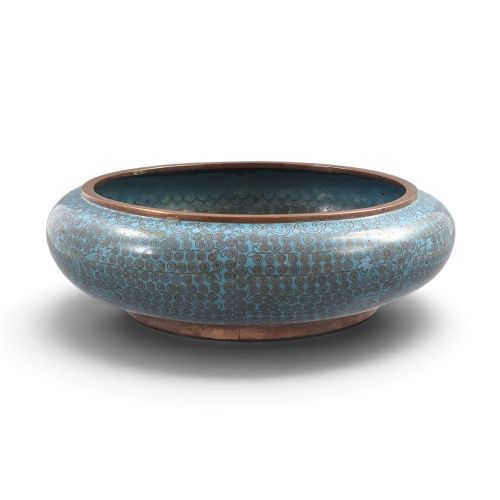


Oriental Cloisonne Bowl
An oriental cloisonne bowl brings vibrant coloured enamel and delicate metalwork into a room.
Oriental Cloisonne Bowl
An oriental cloisonne bowl is a vessel decorated with intricate patterns formed by thin metal wires soldered to a metal base and filled with coloured enamel. The listings show examples spanning the 19th Century, including pieces from the Victorian era, Edo Period, and Qing Dynasty.
Buyers will find various forms on this page, ranging from decorative bowls and large chargers to lidded bowls, brush washers, and jardinieres. These pieces originate from China, Japan, and Siam, reflecting distinct regional styles such as Meiji and Chinoiserie.
The most common pieces to meet on this page are decorative bowls and chargers adorned with traditional motifs like dragons, birds, and peonies. Each item demonstrates the enduring appeal of traditional metal and enamel craftsmanship.
How they were made
The foundation of these bowls relies on metal bases made from copper, brass, bronze, or copper alloy, sometimes accented with silver or jade. Artisans soldered thin brass wire onto these surfaces to create compartmentalised designs, known as cloisons.
Craftsmen filled the resulting cells with coloured enamel pastes before firing the vessels in a kiln. Once cooled, the surface was ground and polished to achieve a smooth finish where the metal wire outlines encircle every segment of colour.
Materials recorded across the inventory include copper, brass, bronze, silver, jade, and copper alloy combined with cloisonne enamel.
What varies in quality
Quality in an oriental cloisonne bowl rests upon the precision of the wirework and the evenness of the enamel filling. Finer examples display remarkably thin, uniform wire lines that form complex, detailed pictorial subjects without distortion or gaps in the fired paste.
The weight and substance of the underlying metal body also distinguish superior pieces, alongside the subtlety of the colour palette and the polish of the finished surface. Signed works or those featuring unusual elements like jade rims or specific bird and dragon iconography often represent the higher end of the range.
The Oriental Cloisonne Bowl Glossary
- Cloisonne enamel
- A technique where metal wires are soldered onto a metal body to create cells that are filled with enamel paste and fired. This method defines the primary aesthetic of every piece on this page.
- Charger
- A large ornamental plate or shallow bowl designed for display rather than dining. These substantial pieces frequently showcase elaborate animal or floral motifs.
- Jardiniere
- A large ornamental pot or planter designed to hold growing plants. They often utilise robust bronze or copper alloy bases to support soil and foliage.
- Meiji Period
- A Japanese historical era lasting from 1868 to 1912, noted in these listings for highly detailed enamel bowls and chargers. Pieces from this time often feature meticulous bird or dragon decoration.
- Qing Dynasty
- The last imperial dynasty of China, spanning from 1644 to 1912. Items from this period on this page include bronze bowls, brush washers, and large jardinieres.
Oriental Cloisonne Bowl: Frequently Asked Questions
How do I clean an oriental cloisonne bowl?
Dust the surface gently with a soft, dry cloth to protect the delicate enamel and wirework. Avoid using abrasive cleaners, harsh chemicals, or soaking the vessel in water.
For stubborn grime, use a slightly damp cloth with mild soap, then dry the piece thoroughly immediately afterwards.
Can I use these bowls for plants?
Certain large vessels listed as jardinieres or planter bowls were originally made to hold plants. However, moisture can potentially harm antique metal and enamel over extended periods.
It is safer to place a separate waterproof liner inside the vessel if you intend to house live plants.
How do I tell Chinese and Japanese cloisonne apart?
Chinese pieces often feature robust bronze or brass bases with deep, rich colour palettes and traditional motifs like dragons or scholar's objects. Japanese items from the Meiji period frequently showcase exceptionally fine wirework and naturalistic subjects such as single birds and peonies.
Examining the weight of the metal and the style of the design usually clarifies the origin.