
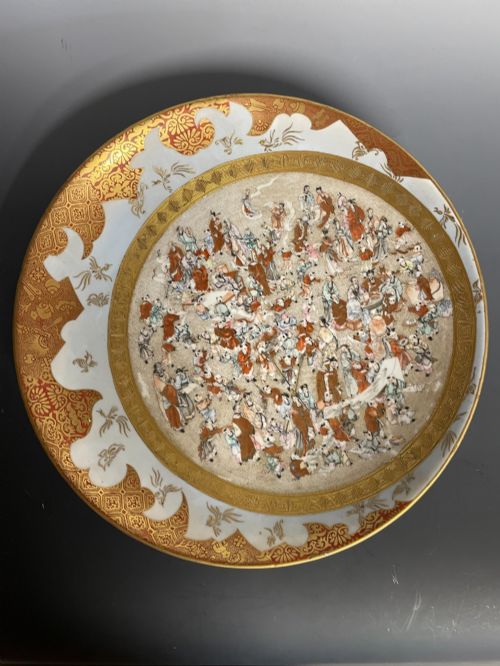
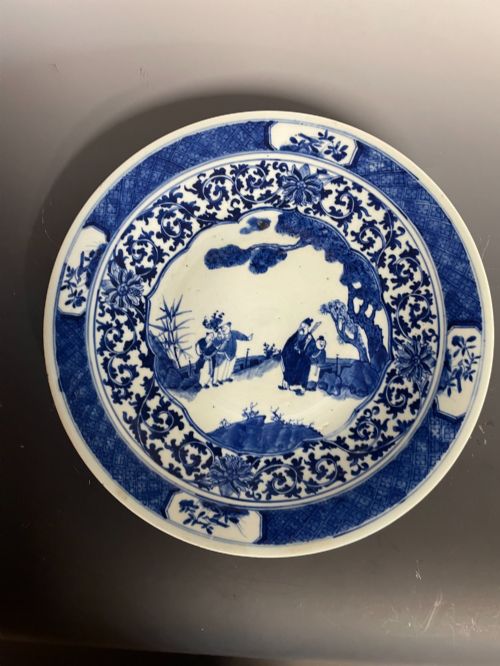


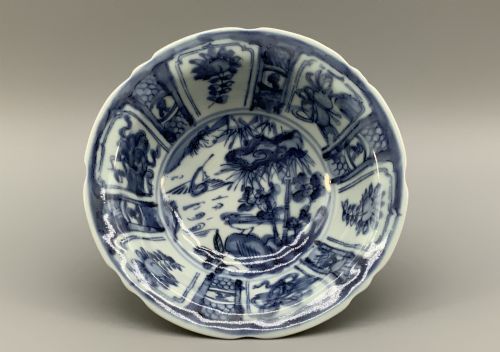
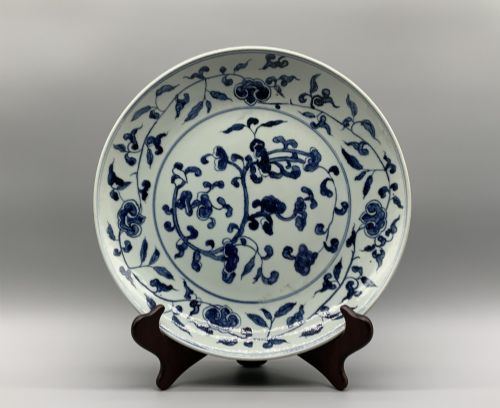



Antique Ceramic Charger Plate
An antique ceramic charger plate brings weight, historic pigment and presence to a wall or table.

What an antique ceramic charger plate is
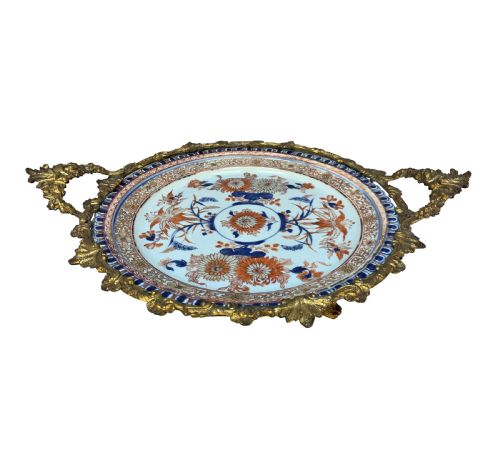
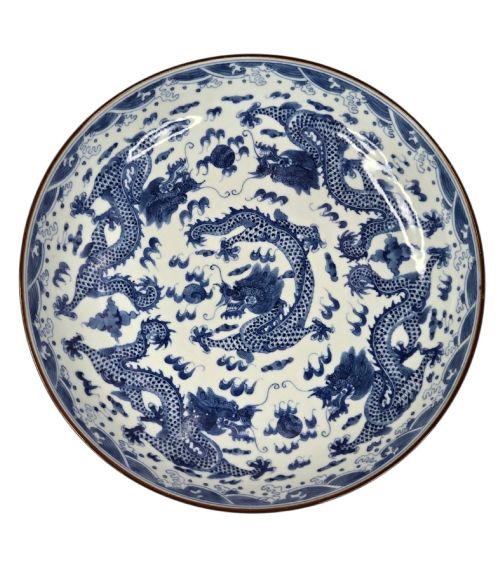
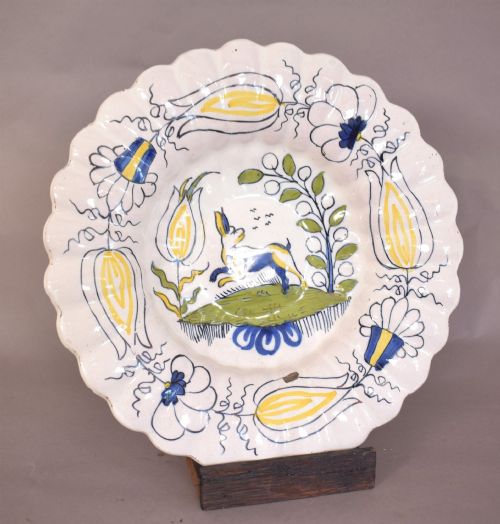
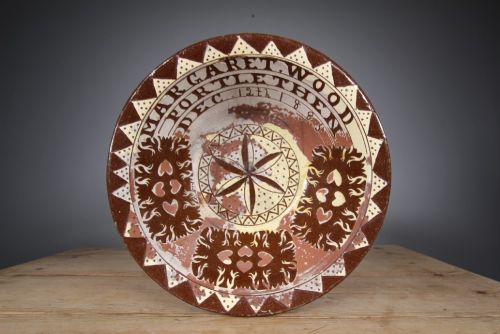
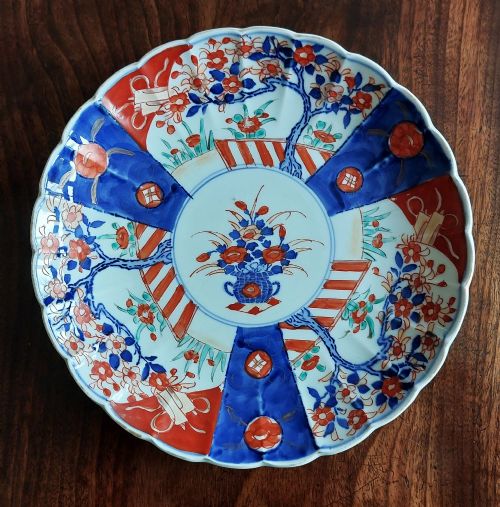
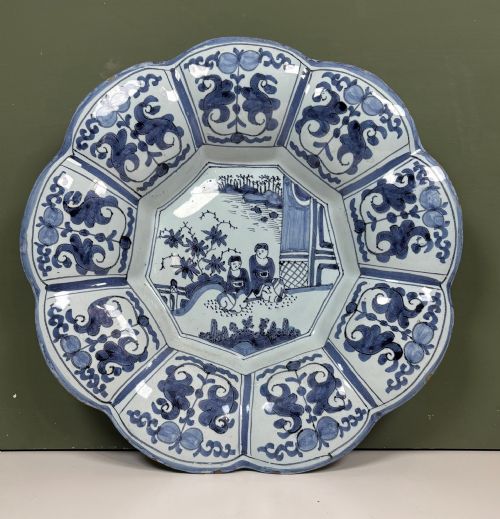
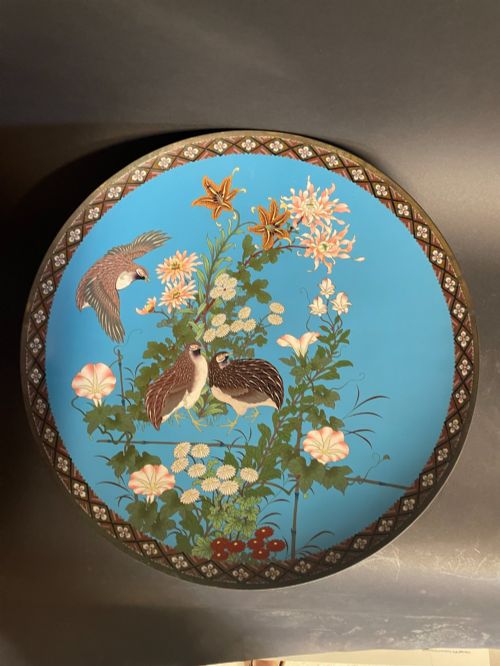
An antique ceramic charger plate is a large decorative or serving dish found across the seventeenth, eighteenth and nineteenth centuries. These pieces appear in saltglazed stoneware, tin-glazed earthenware, ironstone and porcelain.
The versions most likely to meet a buyer on this page are eighteenth century Dutch delftware and English saltglazed examples. Alongside these sit Chinese export porcelain and nineteenth century ironstone pieces.
Makers shaped these broad surfaces for display or grand service, often employing rich cobalt pigment, manganese or polychrome enamel. Their scale and presence set them apart from standard domestic plates.

How they were made
Potters formed these large bases in clay, utilising tin glazes, saltglazes or ironstone body recipes before firing them in kilns. The sheer scale of a charger plate required careful handling to prevent warping during intense heat.
Artisans applied cobalt pigment, grand feu manganese or polychrome enamels directly onto the prepared surfaces. These traditional pigments bonded with the glazes, creating deep, lasting tones across Chinese Swatow ware, delft and oriental-style pieces.
Retail Price Guide 2026
Typical UK retail prices for ceramic charger plate, calculated from the Sellingantiques database of over a million retail prices indexed since 2003. This retail price guide relies exclusively on Sellingantiques data; no external sources or auction records are used, so the figures do not describe the wider market.
Early saltglazed surfaces gained their distinctive texture when workers shovelled ordinary table salt into roaring kiln fires.
What varies in quality
Quality rests in the ambition of the painting and the crispness of the ceramic body. Pieces decorated in rich polychrome or manganese show a painterly hand that elevates them above simpler blue and white wares.
The stability and historic integrity of the glaze dictate the standing of a charger. Saltglazed and tin-glazed surfaces hold varying degrees of gloss and wear, where depth of colour and minimal distortion mark the finer examples.
The Antique Ceramic Charger Plate Glossary
- Charger plate
- A large ornamental or serving dish, substantially wider than a standard dinner plate. These pieces were frequently hung on walls or used as centrepieces on formal tables.
- Tin-glazed earthenware
- Pottery covered in a white, opaque glaze containing tin oxide, which provides a smooth surface for painted decoration. This technique defines traditional delftware production.
- Saltglazed stoneware
- A dense ceramic material fired by throwing common salt into the kiln at peak temperature, creating a pitted, orange-peel texture on the surface. It yields a durable, vitrified body.
- Grand feu
- A ceramic firing technique executed at high temperatures, allowing manganese and other mineral pigments to fuse deeply into the glaze. This method produces stable, vibrant historic colours.
- Polychrome
- Decoration employing multiple distinct colours rather than a single monochrome pigment. On these plates, it typically combines blues, reds, greens and manganese.
Frequently Asked Questions
How were antique charger plates used?
These large vessels served beneath smaller course plates at formal dining tables to catch crumbs or retain heat. Over time, their generous painted surfaces made them natural candidates for wall display.
Wealthy households utilised them to showcase imported porcelain, tin-glazed earthenware or saltglazed stoneware to visiting guests.
How do I hang a charger safely?
Displaying a large plate requires a coated wire hanger that distributes tension evenly across the rim. Avoid spring-loaded grips that apply concentrated pressure to fragile historic edges.
Mount the hanger securely into a wall stud, given the considerable weight of eighteenth-century earthenware and ironstone.
What is the difference between delft and ironstone?
Delftware is a tin-glazed earthenware developed in the seventeenth and eighteenth centuries, known for its softer body and white opaque glaze. It scratches more easily than later ceramics.
Ironstone, emerging in the nineteenth century, is a heavy, vitrified material designed to resist chipping and heavy domestic service.
How do I clean an antique ceramic charger?
Dust these historic surfaces gently with a dry, soft brush rather than using water or chemical cleaners. Moisture can penetrate old crazing lines or fragile earthenware bodies.
Keep them away from direct sunlight and damp environments to protect the integrity of the original glazes and pigments.