



19th Century Meissen Porcelain
These pieces of 19th century meissen porcelain bring together hard-paste porcelain, handpainted enamel birds, and rococo revival figurines that collectors prize for their intricate detail.
19th Century Meissen Porcelain
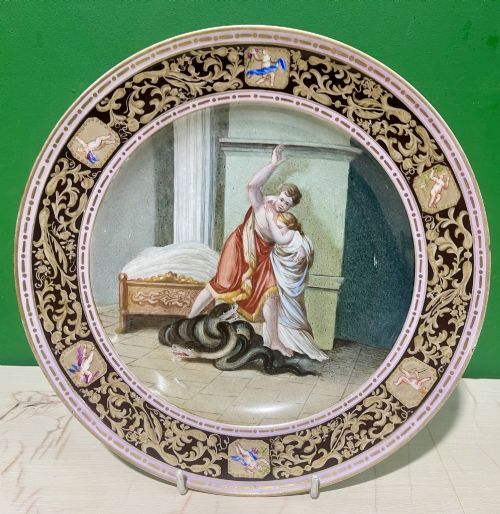
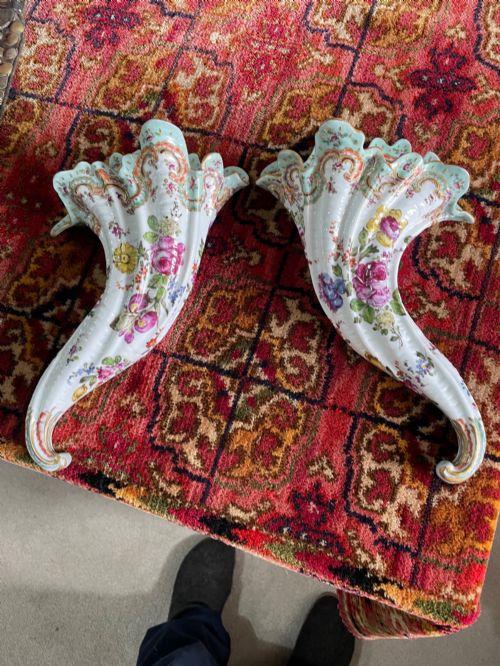
When searching for 19th century meissen porcelain, buyers encounter a diverse selection of hard-paste porcelain objects ranging from figurative groups and birds to tableware and mantel clocks. The items on this page primarily date from the middle to the late nineteenth century, spanning various revivalist styles.
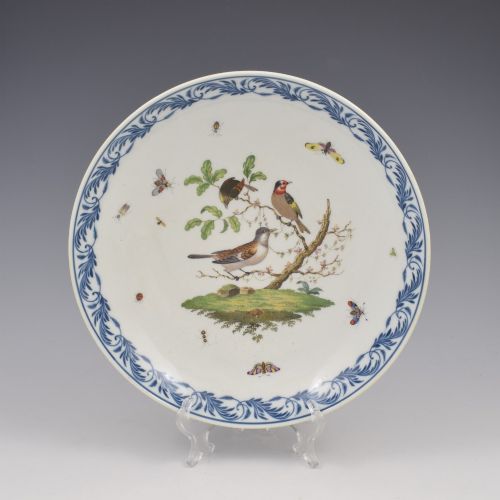
Figurines, candelabra, and ornithological plates dominate the selection available to collectors. These pieces frequently showcase detailed handpainted scenes, botanical motifs, and avian subjects executed in vibrant enamels.
Materials and Manufacture
The objects on this page utilise hard-paste porcelain shaped into complex forms such as parrots, candelabra, and figural groups. Artisans applied coloured enamels and gold leaf by hand to highlight intricate surface details.
Glaze finishes seal the porcelain bodies, providing a smooth, reflective surface that protects the painted decoration. Additional metal mounts in brass or ormolu occasionally complement the porcelain bodies in candelabra and clock garnitures.
19th Century Meissen Porcelain Retail Price Guide 2026
Typical asking prices for 19th century meissen porcelain among the pieces listed under this phrase on Sellingantiques today, from the lower quarter to the upper quarter. They describe what is for sale here now, not the wider market.
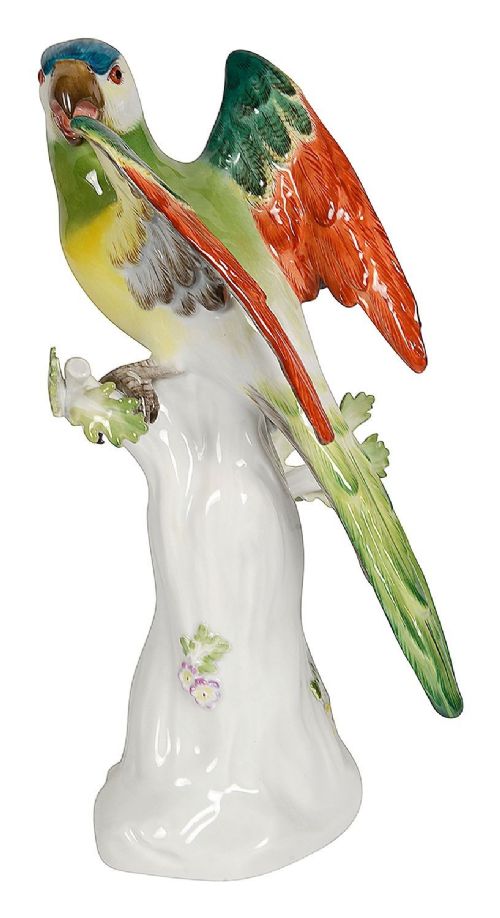
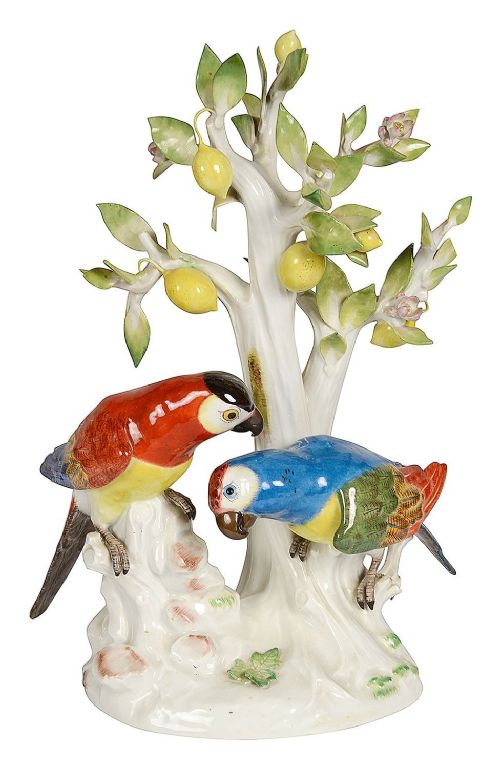
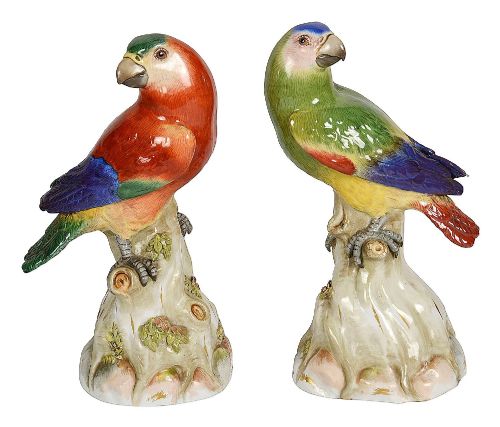
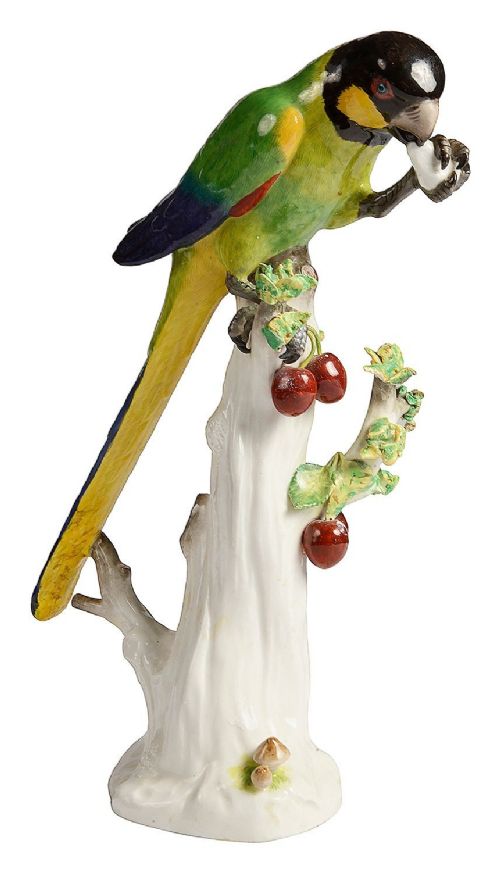
Porcelain parrots sit perched on tree trunks across multiple listings, bringing a surprisingly tropical atmosphere to nineteenth-century mantelpieces.
Factors Determining Quality
Quality in these ceramics rests upon the precision of the modelling and the finesse of the handpainted decoration. Pieces with crisp definition in the porcelain moulding and finely detailed brushwork stand apart from simpler productions.
The complexity of the subject matter, such as multi-figure groups or large scale ornithological sculptures, influences the artistic merit of the piece. Superior examples exhibit careful attention to anatomical proportions and harmonious colour palettes.
Edmé Samson·Helena Wolfsohn
The 19th Century Meissen Porcelain Glossary
- Hard-paste porcelain
- A durable ceramic material fired at high temperatures, composed of kaolin and petuntse. It forms the solid white body characteristic of these works.
- Enamel
- Opaque vitreous material applied to the porcelain surface in various colours. Artisans fire these pigments to fuse them permanently with the glaze.
- Crossed Swords Mark
- The traditional factory symbol used by Meissen to identify its porcelain productions. Collectors look for variations of this mark to help date individual pieces.
- Streublumen
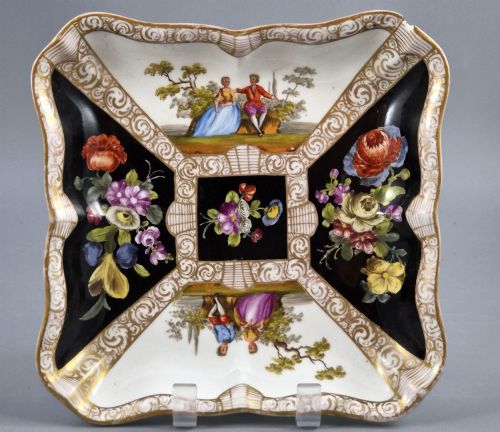
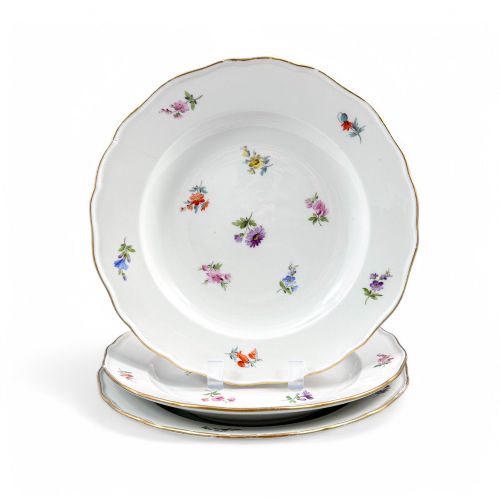
- A decorative motif featuring scattered small floral sprigs painted across the white porcelain surface. This pattern appears frequently on nineteenth-century plates and tableware.
- Rococo Revival
- A nineteenth-century artistic style drawing inspiration from eighteenth-century asymmetrical scrollwork and natural motifs. It appears across many of the figural groups and candelabra in the listings.
19th Century Meissen Porcelain: Frequently Asked Questions
What subjects appear on these figures?
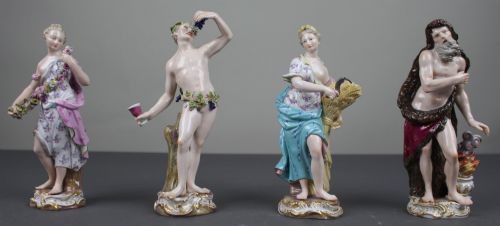
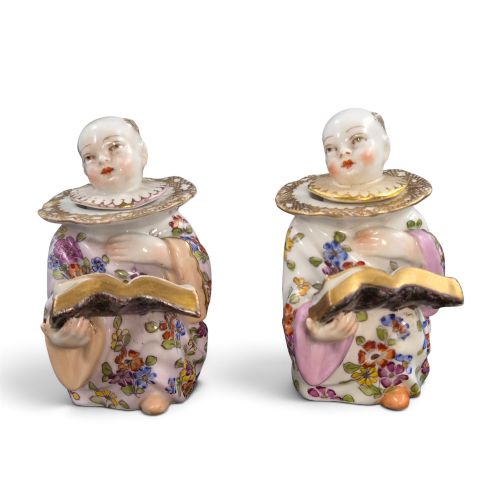
The figurines and sculptural groups depict a wide variety of subjects including allegorical representations of the seasons, romantic scenes, and musicians. Exotic birds such as parrots also feature prominently among the sculptural works.
Other notable forms include mythological representations and decorative figures modelled after earlier designs. These diverse motifs reflect the varied output of the nineteenth-century factories.
How do I identify Meissen marks?
Factory marks typically appear on the underside of the porcelain body beneath the glaze. The crossed swords symbol serves as the primary indicator of Meissen origin, though style variations occurred across different decades.
Associated marks like the AR monogram or studio ciphers can also appear on pieces produced in the Meissen style or decorated by independent Dresden studios.
Where were these items displayed?
Nineteenth-century porcelain figures, clocks, and candelabra served as prominent decorative ornaments within period drawing rooms and parlours. Tableware items such as dessert dishes and reticulated plates were utilised during formal dining occasions.
Larger decorative groupings and garniture sets occupied prominent positions on mantelpieces and side tables. They were intended to showcase the wealth and refined taste of the household.
How should I care for porcelain?
Display these items away from direct sunlight and areas subject to sudden temperature fluctuations to protect the painted enamel and gilding. Dusting should be performed gently with a soft, dry brush.
Avoid using liquid cleaners or submerging pieces with metallic mounts or delicate applied elements in water. Careful handling prevents damage to protruding details like foliage and bird wings.