



Hand Painted Bird Dish
A hand painted bird dish brings vibrant ornithological detail and rich historic porcelain craft straight to the table or cabinet.
What these pieces are
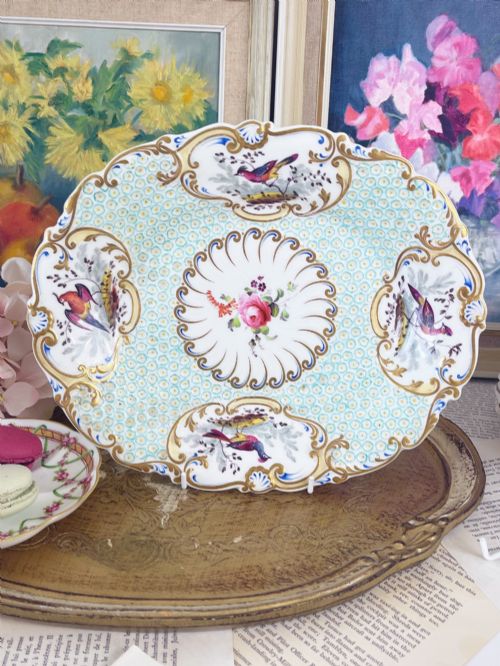
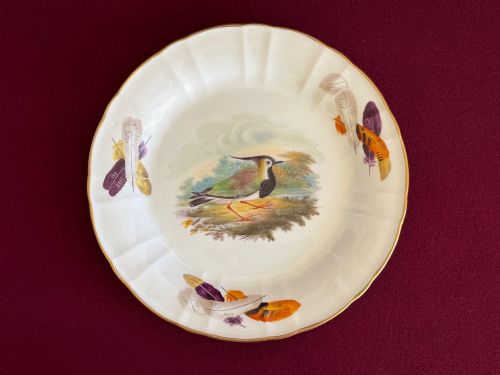
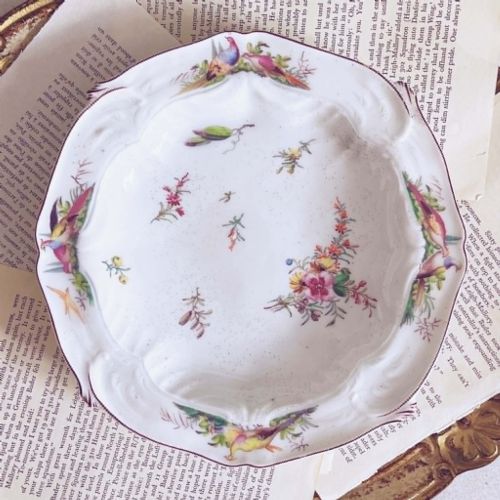
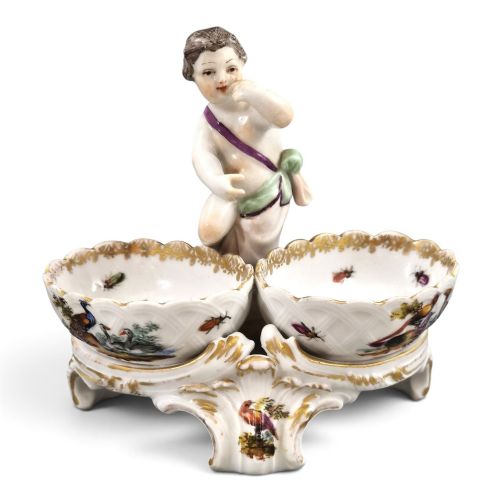
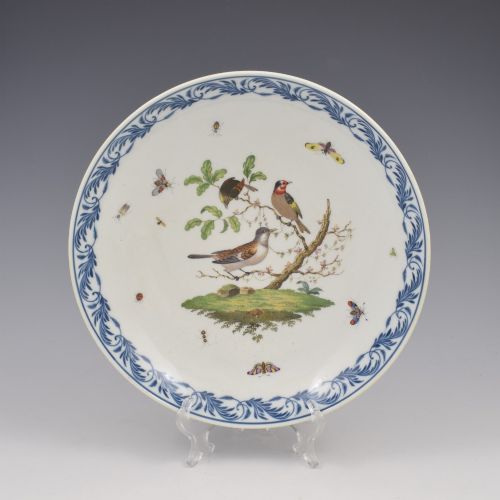
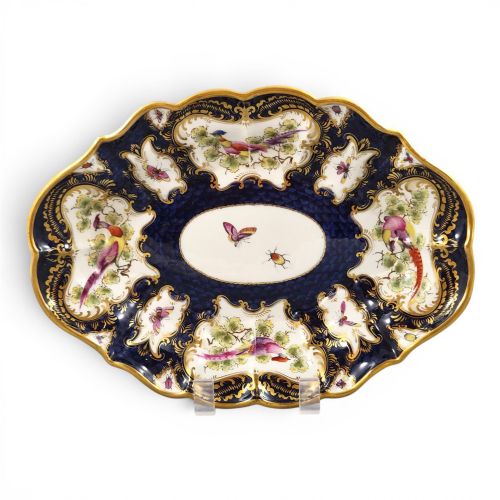
A hand painted bird dish is an antique ceramic serving vessel, cabinet plate, or decorative bowl adorned with detailed avian imagery. When you search for this phrase, you encounter formal dessert plates, large serving platters, and moulded dishes spanning the mid eighteenth century to the early twentieth century. The selection ranges from early English soft-paste porcelain to robust German hard-paste porcelain.
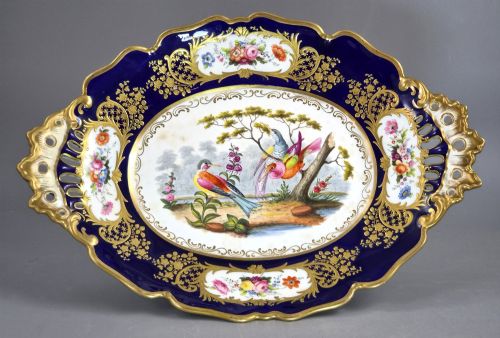
The most common examples on this page are European serving platters and decorative bowls, particularly those originating from Meissen and English factories. These items frequently display classic motifs from the Regency and Victorian eras, alongside ornate Rococo Revival shaping. They bridge the gap between functional tableware and cabinet display art.
How they were made
Potters shaped these vessels using either soft-paste or hard-paste porcelain, often employing moulded techniques to create raised borders or undulating edges. Artisans then applied polychrome enamels by hand to depict plumage and naturalistic backgrounds, occasionally incorporating gold leaf or gilding along the rims.
Factories such as Chelsea, Worcester, and Meissen utilised high-temperature kilns to set the enamel colours and secure the gilded highlights. Skilled painters rendered the birds in meticulous detail, ensuring each feather and branch possesses distinct individual character.
Retail Price Guide 2026
Typical UK retail prices for hand painted bird dish, calculated from the Sellingantiques database of over a million retail prices indexed since 2003. This retail price guide relies exclusively on Sellingantiques data; no external sources or auction records are used, so the figures do not describe the wider market.
Even the tiniest painted finch receives a generous sweep of gold leaf on its porcelain perch.
What varies in quality
The distinction between ordinary and exceptional quality lies in the precision and life of the hand painting. Superior pieces display finely detailed bird plumage and deft brushwork that captures a sense of movement, whereas lesser examples show stiffer, more generic rendering.
The application of the materials also defines the tier of the piece, with rich, intact gilding and well-preserved polychrome enamels elevating the stature of the ceramic. The crispness of the moulded porcelain ground beneath the glaze further indicates the care taken during production.
Chelsea·Flight Barr And Barr·Meissen·Thomas Martin Randall·Worcester
The Hand Painted Bird Dish Glossary
- Soft-paste porcelain
- An early ceramic composition of clay, glass, and ground minerals fired at lower temperatures than hard paste. It produces a warm, slightly creamy body favoured by eighteenth-century English potteries.
- Hard-paste porcelain
- A true porcelain made from kaolin and petuntse fired at very high heat. This creates a dense, bright white, highly durable body commonly used by continental European factories like Meissen.
- Polychrome
- Decoration employing multiple distinct enamel colours. It allows artists to render the varied plumage of birds with realistic hues and vibrant contrast.
- Gilding
- The application of gold leaf or gold paint to ceramic surfaces. It typically accents borders, handles, and moulded rims to enhance the decorative presence of the dish.
- Rococo Revival
- A nineteenth-century stylistic movement that revived the asymmetrical scrolls, shell motifs, and exuberant curves of the eighteenth-century Rococo period.
Frequently Asked Questions
How do I date an antique porcelain bird dish?
Dating relies on examining the porcelain body, glaze characteristics, and factory marks on the underside of the piece. Early examples from the mid-eighteenth century often feature softer bodies and characteristic hand-painted polychrome palettes.
Later Victorian and Regency pieces display different manufacturing techniques and stylistic flourishes, such as Rococo Revival moulding. Comparing the style of the bird painting with known factory periods helps narrow the timeframe further.
Were these dishes meant for food use?
Many of these vessels originated as dessert plates, platters, and serving dishes intended for dining tables. Over time, their delicate hand-painted bird scenes and gilt edges transitioned them into decorative cabinet pieces.
If you choose to use them for serving today, gentle hand washing is essential to protect the historic enamel and gold leaf. Most collectors prefer to display them safely on stands or wall mounts.
What is the difference between soft-paste and hard-paste porcelain?
Soft-paste porcelain is an artificial compound fired at lower temperatures, resulting in a softer texture and a slightly warm glaze tone. It is typical of early English production.
Hard-paste porcelain uses natural minerals fired at extreme heat to produce a vitreous, highly durable white body. European factories like Meissen mastered this durable composition.
How should I display a decorative bird plate?
Displaying these pieces safely involves using sturdy plate stands designed for antique porcelain or professional wall hangers with protective sleeves. Keeping them away from direct, harsh sunlight prevents the polychrome enamels from fading over time.
Grouping platters and bowls together creates a striking cabinet or wall display that highlights the varied plumage styles. Ensure the mounting method takes the weight of the heavier platters properly.