



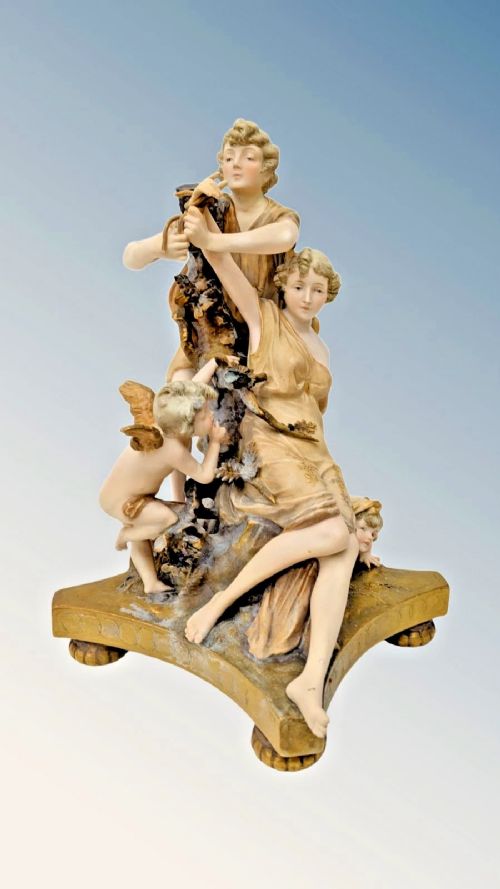


19th Century Porcelain Group
A 19th century porcelain group brings narrative charm and sculptural presence to a room, offering intricate detail and storied domestic scenes.
19th Century Porcelain Group
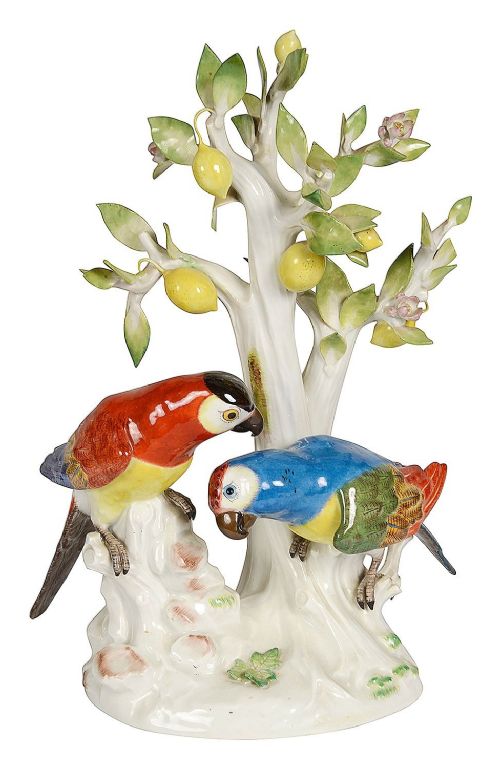
A 19th century porcelain group comprises multi-figure ceramic compositions, ranging from romantic Meissen scenes and classical mythological pairs to Staffordshire animal groups and spill vases. Collectors encounter varied forms spanning German factories, French Paris porcelain workshops, and English potteries.
Makers utilised hard-paste porcelain, soft paste, pearlware, and unglazed biscuit porcelain to model figurative subjects. These pieces capture historical, pastoral, and allegorical narratives through modelled forms.
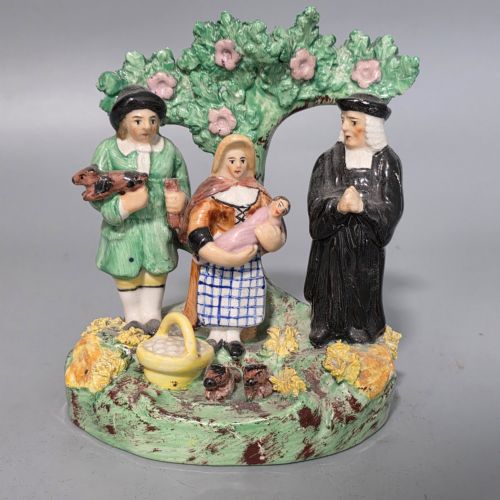
Victorian Staffordshire earthenware figure groups and spill vases provide a robust contrast to delicate continental porcelain figures. Buyers frequently select these sculptural works to anchor a mantelpiece or cabinet display with distinct period character.
Materials and production methods
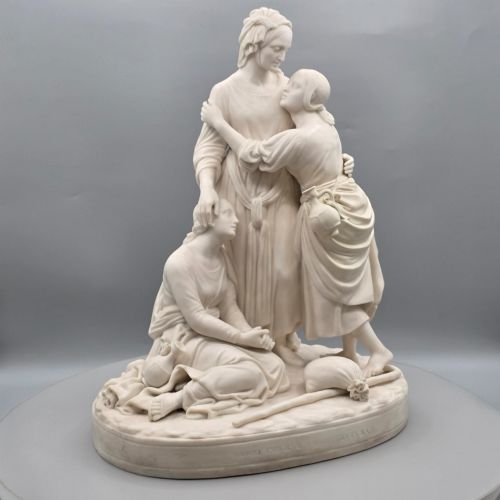
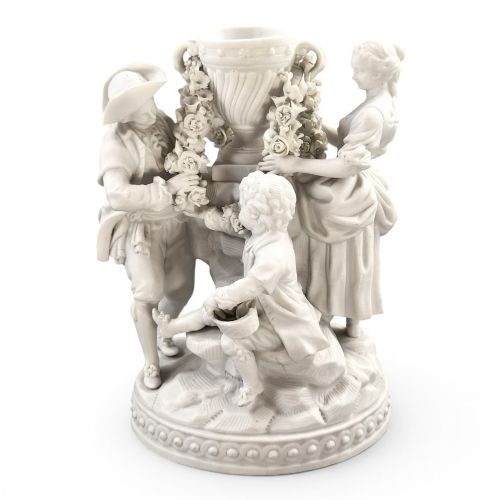
Manufacturers shaped these objects using moulded earthenware, hard-paste porcelain, and parian body, often applying enamel colours and gold leaf highlights. Biscuit porcelain and bisque provided a matte, marble-like finish popular for classical and sculptural groups.
A tiny porcelain dog sits patiently beside a spilled basket of broken eggs, permanently frozen in domestic catastrophe.
Distinctions in quality
Quality rests upon the crispness of the modelling and the precision of the hand-painted enamels. Superior examples retain fine facial expressions, delicate fingers, and intricate botanical details without blurring.
The sophistication of the original design and the reputation of the producing factory or modeller dictate the standing of a group. Factory marks, precise anatomical rendering, and well-preserved gilt or enamel layers separate workshop output from mass production.
Meissen·Minton·Samson Paris·Derby·Copeland
The 19th Century Porcelain Group Glossary
- Biscuit porcelain
- Unglazed porcelain fired once to produce a matte, white, stone-like surface resembling marble. It is also known as bisque.
- Parian
- A fine white unglazed biscuit porcelain developed in the nineteenth century to imitate carved marble. It was frequently utilised for classical and literary figure groups.
- Spill vase
- A hollow ceramic vase designed to hold wooden spills for lighting candles and pipes. These vessels often incorporate animal or human figure groups.
- Pearlware
- A refined earthenware developed by Josiah Wedgwood featuring a faint bluish glaze that pooled in recesses. It bridges the transition between salt-glazed stoneware and creamware.
- Enamel
- Vitreous coloured paints applied over or under the glaze to decorate ceramic surfaces. Artisans fired the pieces multiple times to fix the pigments.
19th Century Porcelain Group: Frequently Asked Questions
What is the difference between porcelain and earthenware groups?
Porcelain groups are made from refined kaolin and petuntse fired at high temperatures, resulting in a vitrified, non-porous body. Earthenware groups, such as Staffordshire pieces, use coarser clay fired at lower temperatures and feature an opaque glaze.
Porcelain allows for sharper details and translucent bodies, while earthenware yields heavier, robust figures with rustic charm. Both materials reflect distinct regional traditions and firing techniques of the period.
How can I identify a Meissen porcelain group?
Examine the base for underglaze blue crossed swords, the principal factory mark utilised by Meissen. Quality Meissen groups display refined modelling, naturalistic posture, and delicate polychrome enamel decoration.
Many nineteenth-century pieces emulate earlier rococo styles or depict classical narratives. Compare the facial expressions and floral appliques against verified factory examples.
Where were Staffordshire figure groups made?
Staffordshire figure groups originated in the Potteries region of England, encompassing towns like Stoke-on-Trent, Hanley, and Burslem. Local potteries produced these figures for domestic mantelpieces.
Makers utilised earthenware bodies, pearlware glazes, and bold enamel colours to depict contemporary events, royalty, animals, and moral tales.
What does parian mean?
Parian refers to a fine-grained unglazed biscuit porcelain introduced in the nineteenth century to resemble carved marble. Manufacturers utilised this white material to render classical sculptures and literary figure groups.
The name derives from Paros, a Greek island renowned for its white marble. Parian groups gained popularity for their smooth texture and suitability for portraiture and narrative scenes.