




German Hard Paste Porcelain
German hard paste porcelain comprises figures, groups and bowls shaped from kaolin and petuntse fired at high temperatures, offering collectors crisp detail and durable glaze.
German hard paste porcelain
German hard paste porcelain encompasses 18th century bowls, 19th century groups and 20th century naturalist figures. These European ceramic works represent the output of historic factories operating across various European territories.
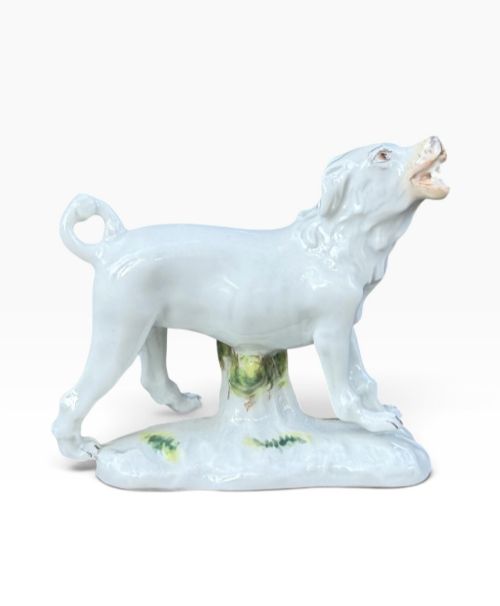
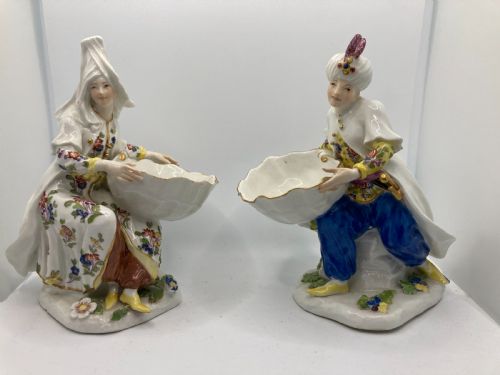
The objects appearing on this page span the Rococo style, the Rococo Revival movement and 20th century naturalist designs. Figures range from mythological subjects to predatory animal groups, accompanied by decorative bowls.
Materials and construction
Potters shaped hard-paste porcelain clay bodies and fired them at exceptionally high temperatures to vitrify the material completely. This technique created a dense, impermeable base that accepted enamel glazes and gold leaf decoration securely.
Makers applied enamel paints and gold leaf over or under the glaze to articulate surface details on figures and bowls. These pigments fused with the ceramic body during subsequent lower temperature kiln firings.
Listings feature hard-paste porcelain objects spanning three centuries, utilising enamel and gold leaf across Rococo, Revival and naturalist styles.
Measures of quality
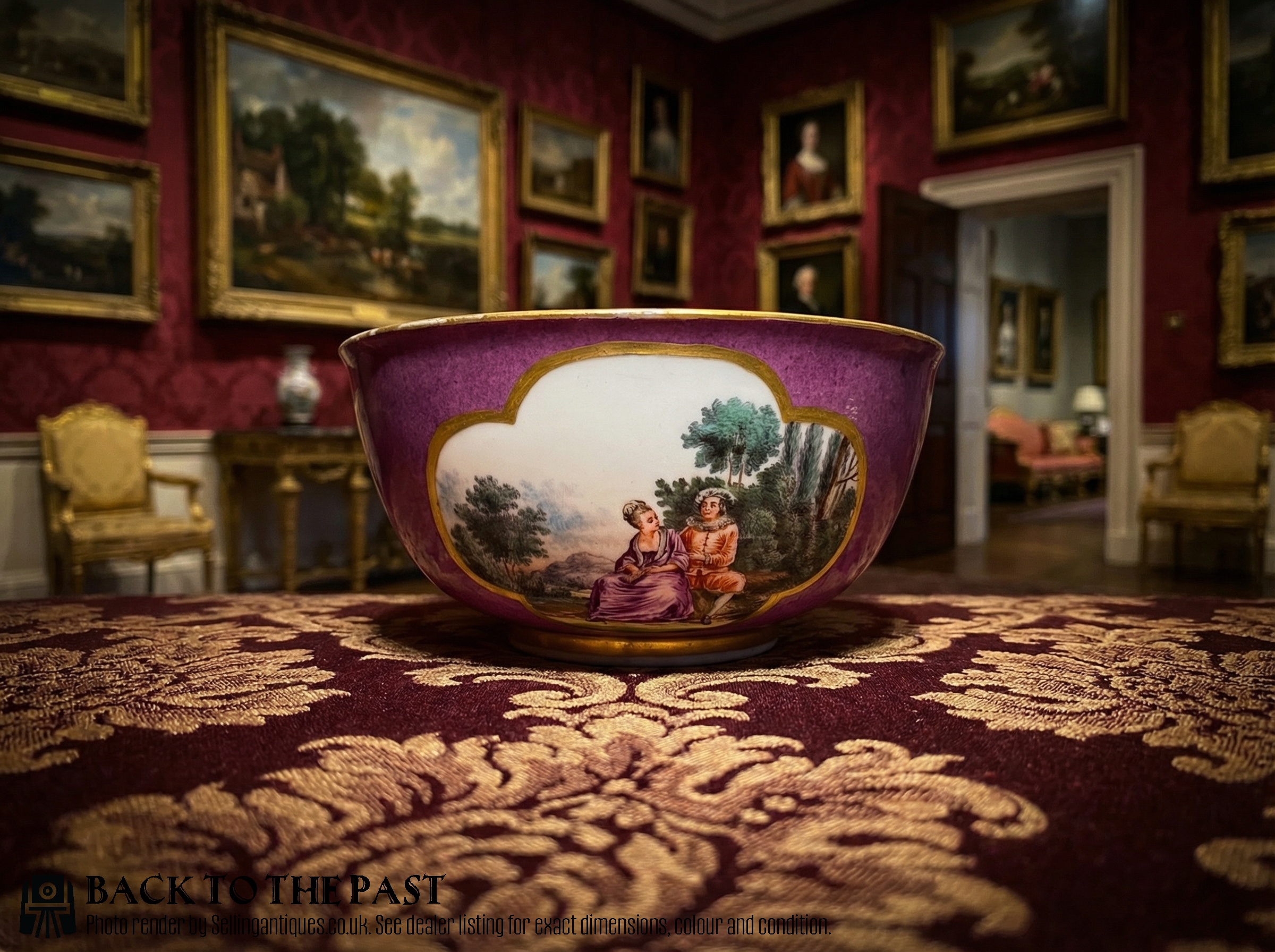
Quality resides in the precision of the modelling and the refinement of the painted surface across figures and bowls. Superior examples demonstrate intricate anatomical detail in subjects like animal groups and mythological figures, alongside finely applied puce grounds and gold leaf.
The ambition of the form distinguishes standard production from exceptional pieces. Multi-figure sculptural groups and complex animal combats require greater technical mastery in both kiln firing and hand-modelling than single decorative vessels.
Meissen
The German Hard Paste Porcelain Glossary
- Hard-paste porcelain
- A true porcelain composed of kaolin and petuntse, fired at high heat to produce a vitrified, translucent body. This ceramic medium resists scratching and holds sharp sculptural edges.
- Enamel
- Vitreous paints applied to the porcelain surface to add colour before being fixed by heat. These pigments provide the polychrome decoration seen on figures and bowls.
- Gold leaf
- Hammered gold beaten into extremely thin sheets and applied to ceramic surfaces for ornamentation. It accentuates rims, bases and decorative highlights.
- Rococo
- An 18th century European style characterised by asymmetry, scrollwork and organic motifs. This aesthetic heavily influences the forms and bases of period figures and vessels.
- Puce
- A brownish-purple enamel colour derived from manganese. It frequently forms the ground colour for 18th century bowls.
Frequently Asked Questions
What is german hard paste porcelain?
German hard paste porcelain refers to durable ceramic objects created from kaolin and petuntse fired at high temperatures. The category includes figures, sculptural groups and bowls.
Production spans the 18th, 19th and 20th centuries, covering styles from Rococo to naturalist representations of animals and mythology.
How do you date these pieces?
Dating relies on stylistic indicators such as the asymmetrical curves of the Rococo period or the naturalism of 20th century designs. Material characteristics and subject matter also provide chronological markers.
Factory output evolved from early 18th century bowls with coloured grounds to complex 19th century mythological groups and mid-20th century wildlife studies.
How were these bowls and figures used?
Decorative bowls functioned as tablewares or display items in wealthy interiors, often featuring coloured grounds like puce. Sculptural figures and groups served as table centrepieces and cabinet ornaments.
These ceramic works demonstrated the owner's status and appreciation for fine European craftsmanship through their intricate modelling and painted decoration.
How should I care for my porcelain?
Protect hard-paste porcelain by placing pieces on stable, level surfaces away from heavy traffic areas. Avoid exposing gold leaf and enamel decorations to harsh cleaning agents.
Dust surfaces gently with a soft, dry brush to maintain the glaze and prevent abrasion to the delicate overglaze painting and gilded highlights.