


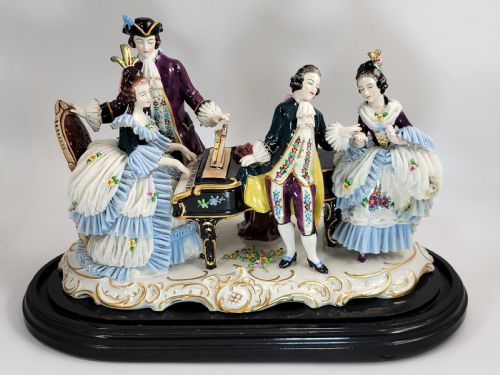


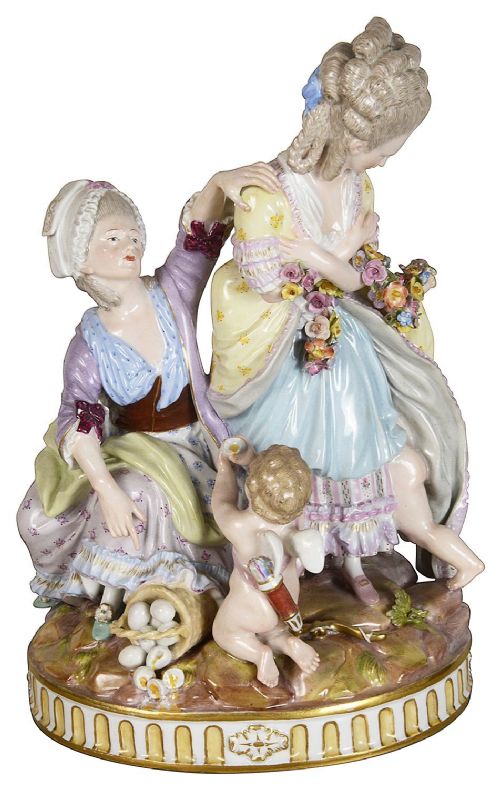


Rococo Style Ceramic Sculpture
These rococo style ceramic sculpture pieces bring exuberant 18th-century theatricality and pastoral charm directly into a modern room.
How they were made
Potters and modellers shaped these pieces using hard-paste porcelain, a dense ceramic body fired at very high temperatures. Artisans then applied polychrome enamel paints and gold leaf to highlight the intricate garments, facial expressions, and natural elements.
Specialised factories employed skilled modellers and painters to construct multi-figure groups in parts, joining the arms, instruments, and delicate accessories before the final glaze and enamel firings.
What varies in quality
Early eighteenth-century originals and high-end nineteenth-century Meissen or Dresden productions exhibit superior anatomical proportions and fluid movement in the drapery compared to later mass-market Continental derivatives.
Listings feature hard-paste porcelain and enamel materials spanning the eighteenth and nineteenth centuries.
Meissen·Samson·Ernst Bohne Söhne·Helena Wolfsohn·Eugene Clauss
The Rococo Style Ceramic Sculpture Glossary
- Hard-paste porcelain
- A durable ceramic material composed of kaolin and petuntse, fired at high temperatures to produce a vitreous, translucent body. This composition allowed European factories to replicate the fine details seen in Chinese porcelain imports.
- Rococo Revival
- A nineteenth-century design movement that reinterpreted the asymmetrical scrolls, shell motifs, and lighthearted pastoral themes of the original eighteenth-century French court style. This aesthetic dominated the Victorian decorative arts seen in many figural groups.
- Enamel
- A glass-based pigment applied to the surface of fired porcelain and fixed in a subsequent low-temperature kiln firing. It provides the vibrant colours found on garments and floral elements.
- Gold leaf
- Extremely thin sheets of beaten gold applied to raised porcelain details or scroll bases for ornamentation. It accentuates the theatrical luxury typical of rococo design.
- Figural group
- A sculptural ceramic composition featuring two or more interacting human figures, often accompanied by animals or musical instruments. These groups tell a narrative story, from romantic trysts to classical myths.
Rococo Style Ceramic Sculpture: Frequently Asked Questions
How do I clean ceramic figures?
Dust these delicate porcelain sculptures gently using a very soft, dry artist brush to prevent catching fragile elements like lace or fingers.
Avoid using water, liquid cleaners, or chemical solvents, as these can damage the hand-painted enamel and rub away delicate gold leaf highlights.
What is hard-paste porcelain?
Hard-paste porcelain is a true ceramic composition fired at extremely high temperatures, resulting in a durable, non-porous, and vitreous body.
European factories developed this recipe to match the strength and translucency of prized imports from East Asia.
How do I identify a Meissen piece?
Meissen pieces often feature intricate modelling of pastoral, musical, or mythological subjects created by renowned sculptors.
While marks vary across periods, the exceptional precision of the hand-painted enamels and crisp porcelain body typically point to this factory.
Are nineteenth-century copies valuable?
Nineteenth-century revival pieces made by established factories command strong interest from collectors for their exceptional craftsmanship and artistic merit.
Factories in Paris and Germany produced high-quality interpretations of earlier styles that stand as accomplished works in their own right.