


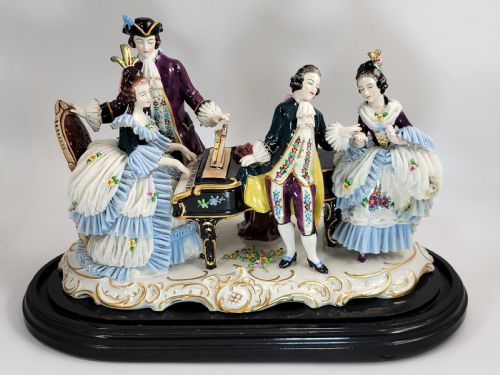


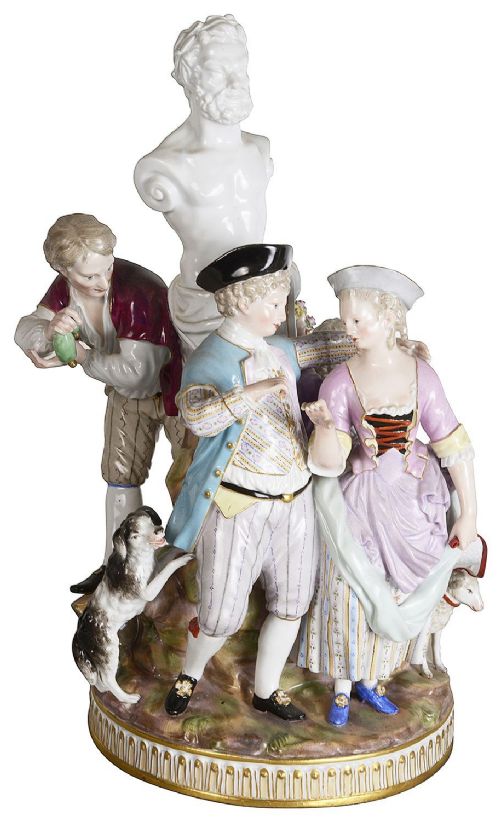


Dresden Porcelain Figure Group
A dresden porcelain figure group brings elaborate pastoral charm and complex multi-figure modeling to a room.
Dresden Porcelain Figure Group
A dresden porcelain figure group gathers multiple modelled figures into a single complex scene, often depicting romantic couples, allegories of the seasons, or musicians in pastoral settings. These sculptural arrangements draw heavily on Rococo Revival and Neoclassical styles, echoing earlier European traditions while production flourished through the nineteenth century.
The pieces listed here span the eighteenth, nineteenth, and early twentieth centuries, with Victorian interpretations and German salon porcelain well represented alongside Meissen and Carl Thieme works. Alongside larger multi-figure groups, the selection includes decorative porcelain figurines, lace figural groups, and centrepiece bowls.
Buyers seeking this phrase encounter elaborate compositions featuring children in gardens, courting couples, and allegorical representations like Summer and Winter. These complex groupings utilise fine detail, from modelled instruments to classical busts and domestic animals.
Assessing Quality and Execution
The application of enamel and gold leaf distinguishes standard production from finer examples, with master painters achieving subtle shading in flesh tones and textiles. The delicacy of applied elements like lace or floral garlands requires exceptional technical control.
The listings demonstrate strong representation from the nineteenth century, alongside eighteenth-century works and twentieth-century pieces spanning up to nineteen-forty.
Bourdois & Bloch Paris·Carl Thieme Dresden·Ernst Bohne Söhne·Volkstedt Porcelain
The Dresden Porcelain Figure Group Glossary
- Hard-paste porcelain
- A vitrified ceramic composed of kaolin and petuntse, fired at high temperatures to produce a dense, impermeable body. This material forms the durable base of traditional European figures.
- Enamel
- Vitreous colour applied to the glazed porcelain surface and fixed by a second, lower temperature firing. These pigments provide the vibrant palette seen on garments and natural elements.
- Rococo Revival
- A nineteenth-century design movement resurrecting the ornate, asymmetrical curves and shell motifs of the eighteenth-century Rococo period. It heavily influences the bases and framing of these figure groups.
- Gilt
- A thin layer of gold applied to the porcelain surface to accent scrollwork, bases, and costume details. It adds a reflective quality to the finished sculpture.
- Figural group
- A sculptural arrangement featuring two or more modelled figures interacting within a unified narrative scene. These pieces demand advanced ceramic engineering to prevent collapse during firing.
Dresden Porcelain Figure Group: Frequently Asked Questions
What is a porcelain figure group?
A porcelain figure group is a modelled ceramic sculpture comprising multiple human or allegorical figures engaged in a shared narrative or setting. These complex pieces often depict musicians, courting couples, or seasonal allegories.
Makers arranged these figures on elaborate bases, frequently incorporating architectural elements, animals, or garden scenery. The composition requires advanced kiln technology to support several interacting forms during high-temperature firing.
How do I care for antique porcelain?
Antique porcelain requires gentle handling away from direct sunlight and areas subject to sudden temperature fluctuations. Dusting should be done carefully with a soft, dry brush to protect delicate painted details and applied elements.
Water and chemical cleaning agents can damage vulnerable enamel and gilt highlights over time. Displaying pieces on stable surfaces prevents accidental knocks to protruding limbs or lace work.
How are different periods distinguished?
Eighteenth-century examples typically display softer paste variations and early neoclassical or rococo modelling styles associated with early European factories. Nineteenth-century revival pieces often feature brighter polychrome enamels and more complex decorative mass production.
Marks on the underside of the base provide definitive clues to the factory and era of production. Stylistic shifts from neoclassical restraint to exuberant Victorian romanticism also help date individual groups.
Where were these groups displayed?
These figures were traditionally placed on dining tables as centrepiece bowls or displayed on mantelpieces and drawing room cabinets. Wealthy households utilised them as conversation pieces that reflected refined European taste.
In contemporary interiors, they serve as focal points on sideboards, open shelving, or dedicated display tables. Their detailed narratives encourage close inspection from multiple angles.