




Meissen Porcelain Figure Group
These meissen porcelain figure group pieces bring eighteenth-century pastoral scenes and theatrical characters into the room with remarkable sculptural presence.
Meissen Porcelain Figure Group
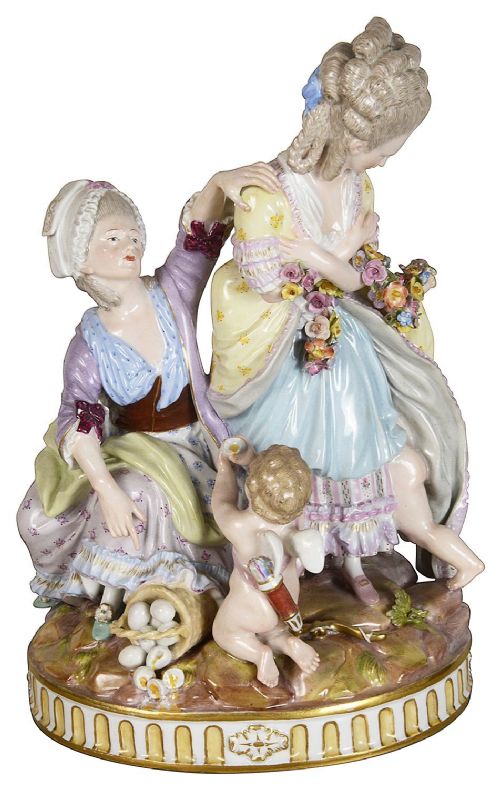
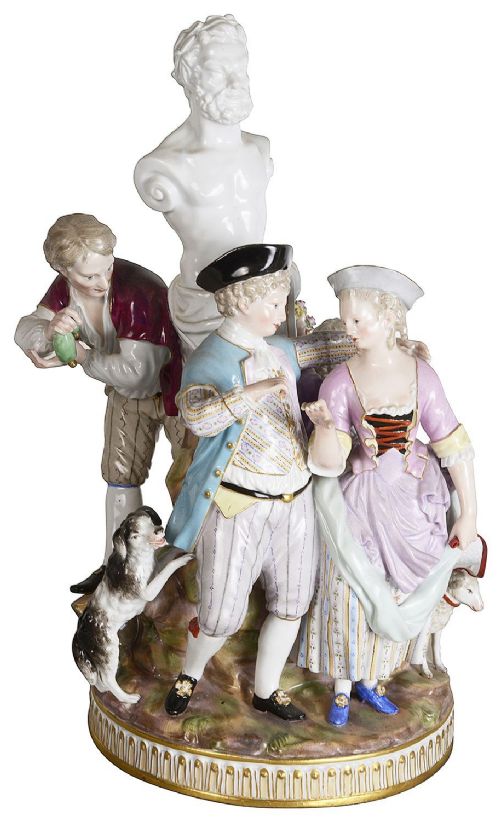
A meissen porcelain figure group captures complex figurative compositions involving multiple figures, animals and architectural or botanical elements. Buyers inspecting this page will find pastoral subjects, theatrical characters from commedia dell'arte and allegorical themes such as the seasons or classical myths.
The material record spans the eighteenth and nineteenth centuries, taking in the Marcolini period around seventeen seventy-five alongside later nineteenth-century interpretations and revival pieces. Forms range from courting couples and gardeners to children with animals and complex subjects like the drunken Silenus.
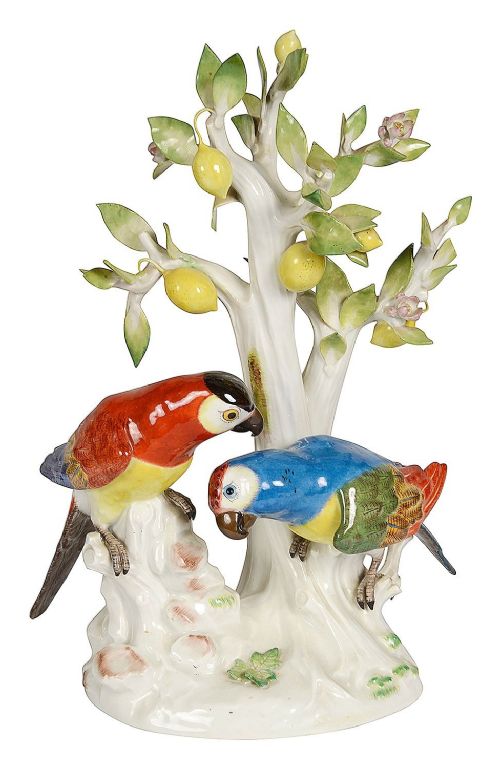
Many examples pair figures with naturalistic settings, from lemon trees to garden balustrades, while others integrate gilt bronze mounts or ormolu wind-mills. These groupings vary from intimate pairs of lovers to larger multi-figure assemblages representing music, harvest and romance.
Materials and construction
Hard-paste porcelain forms the structural foundation of every piece, shaped through intricate multi-part moulding before high-temperature firing. This dense ceramic body supports delicate details such as lace borders, foliage and facial expressions.
Enamel colours and gold leaf applied over or within the glaze bring individual garments and decorative accessories to life. Selected pieces incorporate secondary materials including gilt bronze, wood and straw to mount or frame the ceramic core.
Watch for tiny porcelain dogs peering out from beneath billowing skirts and musicians serenading indifferent sheep.
Distinctions in execution
The refinement of hand-modelling in the figures and the precision of the enamel painting determine the visual success of each group. Earlier eighteenth-century iterations and specific model numbers display sharper facial definition and more fluid drapery than later mass-produced variants.
The integration of secondary elements, such as ormolu mounts or intricate botanical backdrops like lemon trees, distinguishes ambitious compositions from simpler pairs. Surface preservation of the original gilding and polychrome enamel also dictates the aesthetic standing of a piece.
The Meissen Porcelain Figure Group Glossary
- Hard-paste porcelain
- A vitrified ceramic composed of kaolin and petuntse fired at high temperatures. This material creates a durable, translucent body capable of holding sharp sculptural detail.
- Enamel
- Vitreous pigments fused to the porcelain surface during secondary low-temperature firings. It provides the vibrant palette seen on garments, flowers and flesh tones.
- Marcolini period
- The phase of production under the directorship of Count Camillo Marcolini from seventeen seventy-four onwards. Pieces from this era often bear specific star or period marks.
- Ormolu
- Gilt bronze mounts used to elevate and frame porcelain figures. This technique was particularly popular for integrating ceramic groups into decorative domestic objects.
- Figurine
- A small freestanding sculptural representation of a human or animal figure. In these listings, they often form part of a larger multi-character group.
Meissen Porcelain Figure Group: Frequently Asked Questions
How do I spot an eighteenth-century group?
Look for the crispness of the modelling in the faces and hands, alongside the specific soft tones of the early enamel palette. The depth of the paste and the handling of naturalistic elements like foliage offer further clues.
Secondary markers include the style of the base and any impressed or painted factory ciphers underneath the glaze.
What subjects are most common?
Pastoral scenes featuring gardeners, grape pickers and romantic couples dominate the available repertoire. Theatrical figures such as harlequins and allegorical representations of the seasons or elements also appear frequently.
More ambitious compositions depict mythological narratives like the capture of an infant Triton or classical groups with figures and busts.
Where should I display these figures?
Place these delicate groups within secure enclosed cabinetry where they are protected from accidental knocks and dust accumulation. Stable shelving away from direct sunlight preserves the vibrancy of the hand-painted enamels.
Ensure the display surface is entirely level, particularly for multi-part compositions or those mounted in ormolu frames.
How are nineteenth-century pieces different?
Nineteenth-century works often revive earlier rococo or neoclassical styles with heavier moulding and brighter, more uniform enamel application. They frequently revisit popular eighteenth-century models with updated production techniques.
These later interpretations provide an accessible entry point into collecting the factory's output while maintaining the decorative complexity of the originals.