
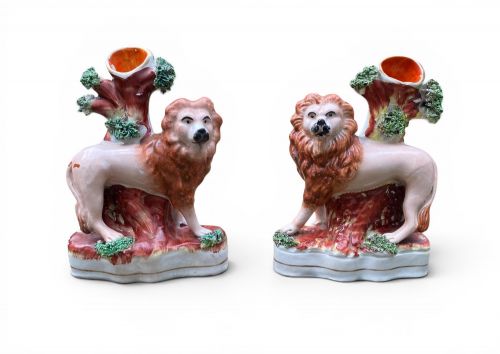

A 2026 Guide by Sellingantiques
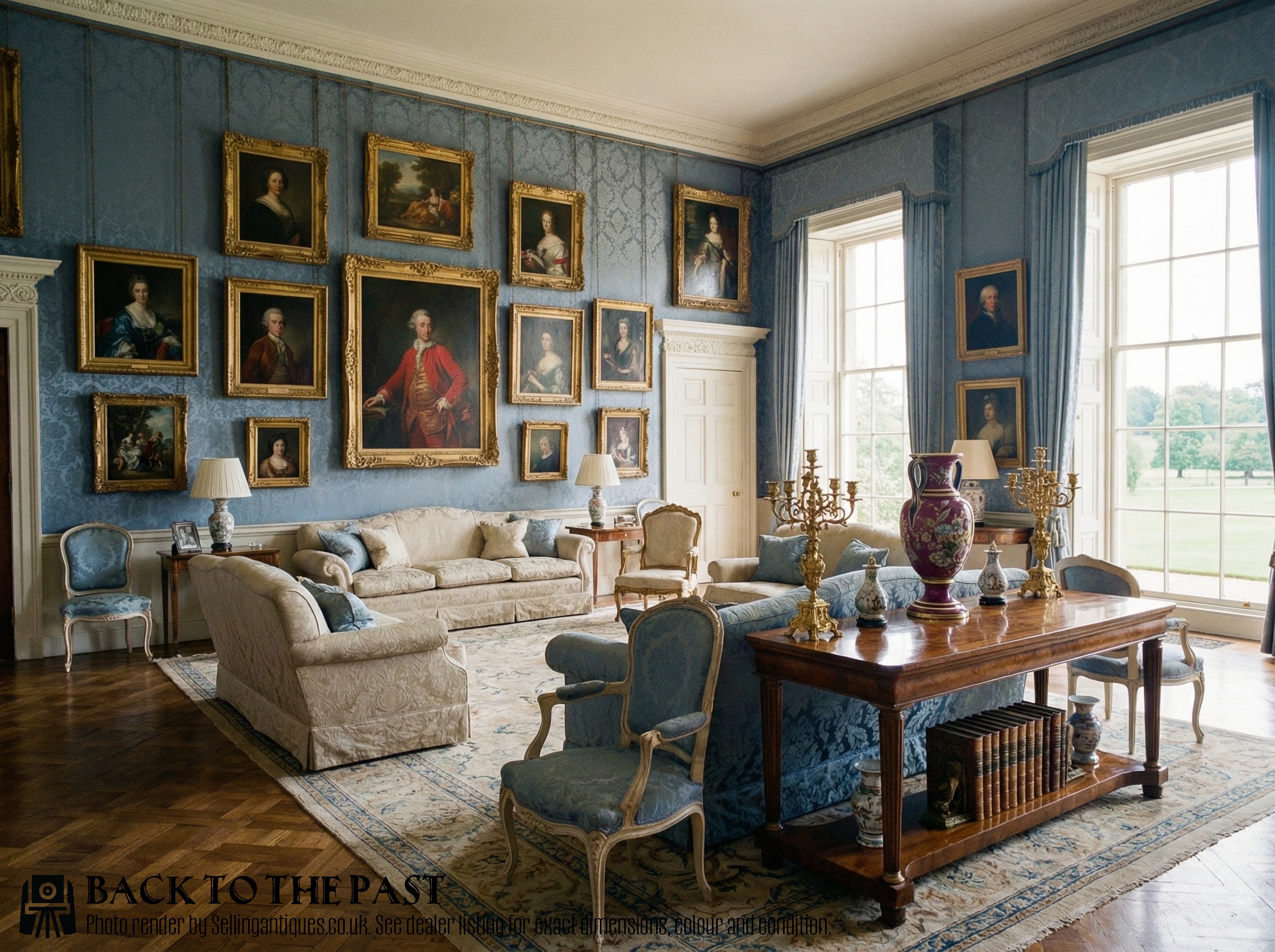
Exceptional Large Staffordshire Porcelaneous Twin Handled Vase, 1860
Priced at £895 from London City Antiques
Factories in the Six Towns churned out these wares by the thousands to supply a growing middle class eager for domestic ornament.
Production of antique Staffordshire vases expanded rapidly in the nineteenth century.
Look at the sheer volume of output from the region. It dominated the English ceramic trade for decades, supplying homes across the country.
Railways meant these fragile goods didn't smash on carts, allowing them to reach coastal ports safely.
Spode turned out refined antique Staffordshire vases during the early nineteenth century. Their pattern books show exact shapes and enamel recipes recorded by the foremen.
Ridgeway also produced large garniture sets. They favoured deep ground colours with painted botanical reserves.
A vast number left the kilns unmarked. The regional trade relied on hundreds of smaller backstreet potteries operating on tight margins.
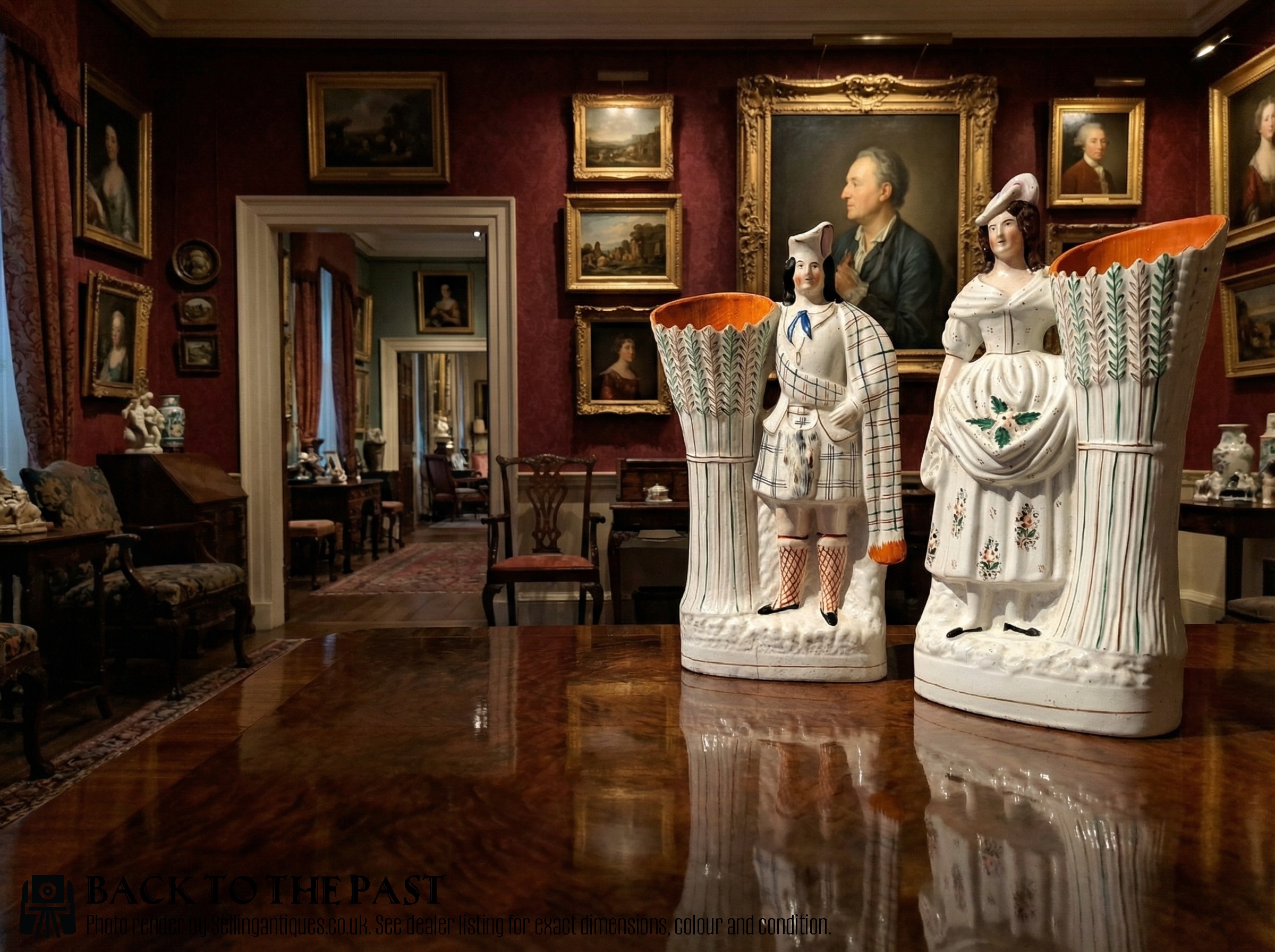
Pair of Antique English Victorian Staffordshire Pottery "Scots Harvesters" Spill Vases, 19th Century
Priced at £395 from Applecross Antiques
The 2026 retail price guide for Antique Staffordshire Vases is drawn from a proprietary archive of over 1.1 million retail prices indexed by Sellingantiques since 2003. This guide relies exclusively on their own internal data; no external sources or auction records are used.
Analysing nearly 25 years of UK antique market history alongside current retail values, the data indicates that typical UK retail prices for Antique Staffordshire Vases range between £200 and £900. Entry-level prices generally fall under £200 and premium examples upwards of £900.
Flat backs appear on many mantelpiece examples. The reverse side stayed plain because you aren't looking at the wall.
Applied floral encrustations are common. Workers pinched small bits of soft clay into detailed petals and stuck them to the main body.
Check the gilding around the rim and handles. It often highlights moulded scrolls.
Slip casting allowed potteries to make complex shapes quickly. Workers poured liquid clay into plaster moulds that absorbed the water, leaving a thin shell.
Press moulding involved pushing flat slabs of clay into a two-piece mould. You can sometimes feel the internal seam where the halves joined.
Transfer printing sped up the decoration process significantly. Engraved copper plates printed the outline, and painters filled the rest in with wash.
"Some factories used local coal dust in the clay mix to aid the firing process. It burned away and left a surprisingly even texture."
"Children often painted the simpler repeating borders. Their small hands were well suited to quick, repetitive brushstrokes."
"You'll find they pack tighter into a single firing if they sit flush against one another. The flat backs on many pieces actually reflect clever kiln management."
Based on almost 25 years of Sellingantiques UK antique market data, Antique Staffordshire Vases appeared 278 times (out of 1,100,000 antiques) which gives it a rarity score of 95/100.
This score measures scarcity within the Sellingantiques archive only and is not a survey of the entire antiques market, so these statistics may not be indicative of the general availability of Antique Staffordshire Vases elsewhere.
Warm water and a mild soap will shift most dust. Do not soak earthenware pieces, as water can seep through crazed glaze and stain the clay body beneath.
Use a soft bottle brush if dirt is stubborn. Harsh chemicals or bleach will strip the overglaze enamels off.
Chipped petals are expected on encrusted wares. Those delicate clay flowers break easily, and finding a pair without some minor losses is unusual.
Most collectors accept this sort of damage as part of the object's history. Just handle them by the main body rather than the decorated front when you move them.
Those are vent holes from the firing process. When a vase is heavily moulded, trapped air expands in the kiln and can blow the piece apart.
The potter pierced the base to let the hot air escape.
Clay warps during the firing process as it loses moisture and shrinks. The heat in nineteenth-century bottle kilns was difficult to control evenly.
If one side of the vase got hotter than the other, it pulled and set on a tilt. It is a common quirk of early mass production.
Please note: This Antique Staffordshire Vases guide and its associated pricing data are provided for general informational purposes only. It does not constitute formal financial, investment, or appraisal advice and should not be relied upon as the sole basis for any commercial activity, purchasing, or sales decisions. Sellingantiques.co.uk accepts no liability for any actions taken in reliance on this information. Always consult with a qualified professional or independent appraiser.
