


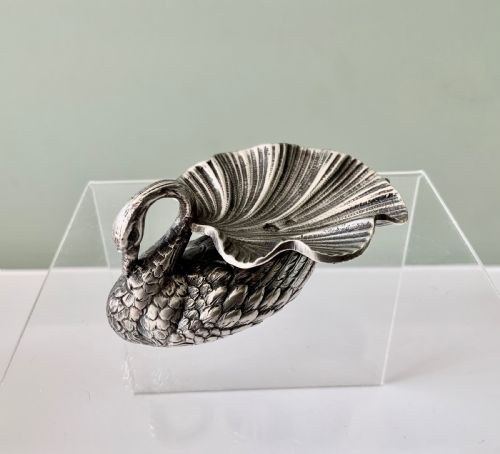


A 2026 Guide by Sellingantiques
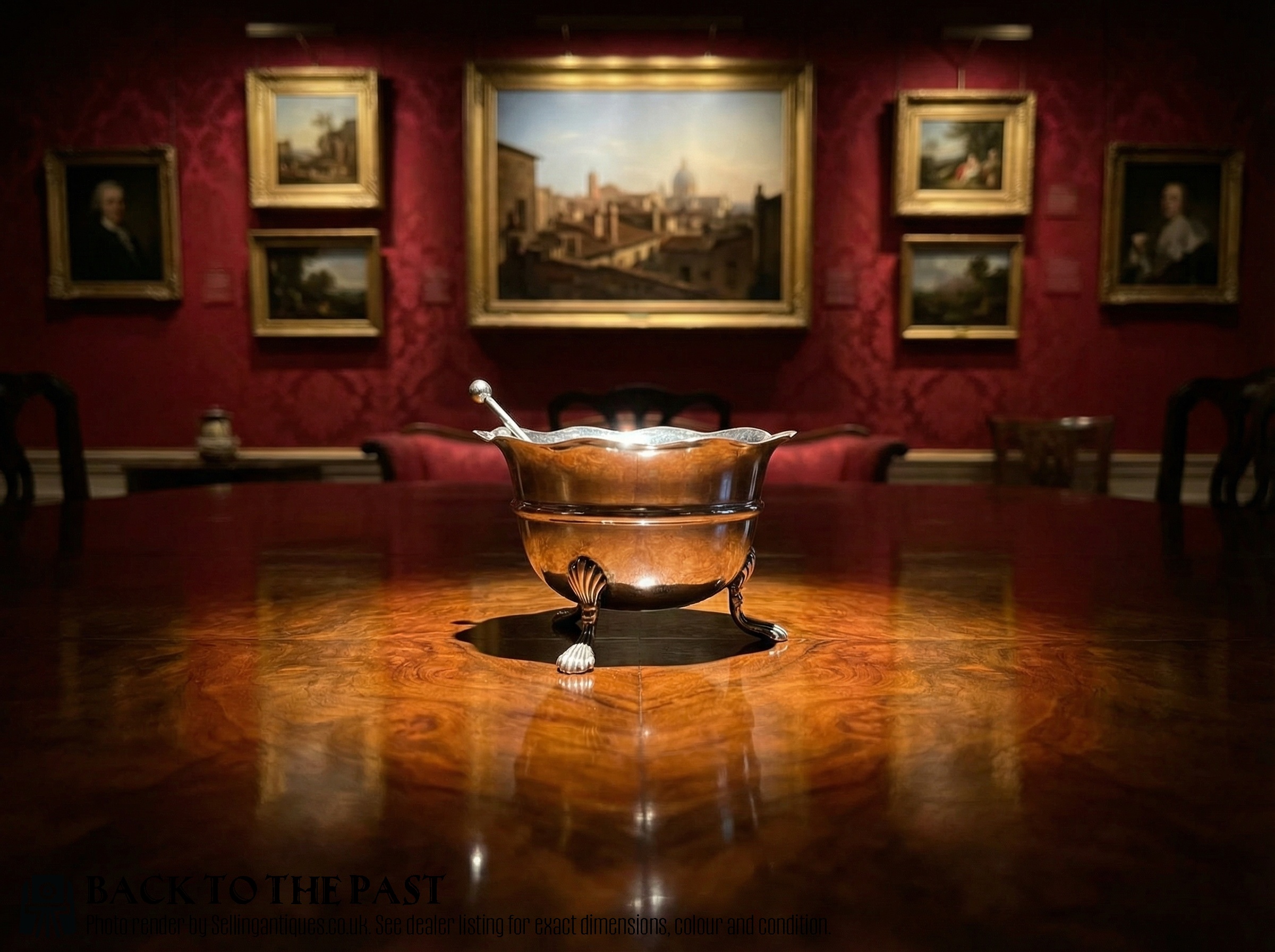
Pair of Antique Silver Salts, Edwardian
Priced at £345 from Rebecca Sarah Antiques
Salt used to be served in a single massive vessel near the host. Changes in dining habits eventually brought smaller individual cellars down the table.
Eighteenth-century hosts often set a small salt cellar between every two guests.
Look for the shift from heavy standing salts to the trencher style. These sat flat on the cloth.
Victorian dining demanded sets of four or six matching cellars. Finding complete original sets is getting harder.
Free-running salt and enclosed shakers made open cellars obsolete by the early twentieth century.
Hester Bateman produced many elegant pierced salt cellars during the late eighteenth century.
Paul Storr supplied heavy Regency examples. His pieces frequently feature elaborate cast borders and classical motifs.
Regional assay offices handled plenty of everyday table silver. You will find solid trencher salts stamped with Exeter or Newcastle marks.

Antique Solid Silver Boat Shaped Table Salts with the Original Blue Glass Liners, 1880
Priced at £345 from Rebecca Sarah Antiques
The 2026 retail price guide for Antique Silver Salt Cellars is drawn from a proprietary archive of over 1.1 million retail prices indexed by Sellingantiques since 2003. This guide relies exclusively on their own internal data; no external sources or auction records are used.
Analysing nearly 25 years of UK antique market history alongside current retail values, the data indicates that typical UK retail prices for Antique Silver Salt Cellars range between £200 and £900. Entry-level prices generally fall under £200 and premium examples upwards of £900.
Three hoof or pad feet commonly support mid-eighteenth-century circular salts.
Check the rims. Gadrooned or beaded edges help stiffen the silver and hide casting marks.
Pierced galleries wrap around many neoclassical frames. These cut-out patterns allowed the bright blue glass liners to show through the silver.
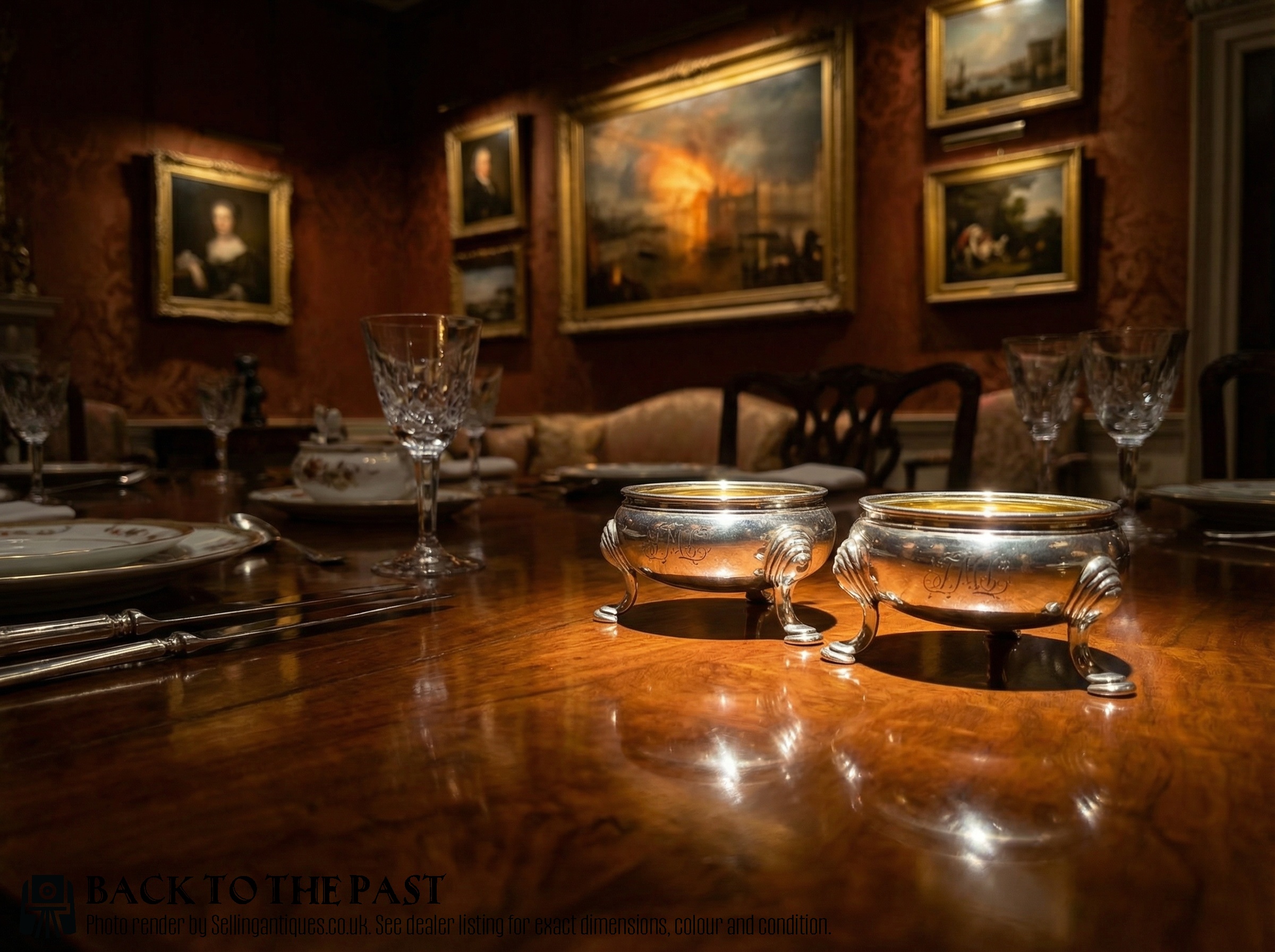
Pair of Antique Georgian Silver Salts 1738 - Edward Wood, Georgian
Priced at £345 from The Silver Cabinet
Early trencher styles were raised from a single sheet of silver. Hammering the metal over an anvil hardened the finished shape.
Casting replaced hammering for heavier Victorian legs and rims. Silversmiths soldered these solid cast parts directly onto the main bowl.
Machine pressing took over in the nineteenth century. Thin sheets stamped out by dies produced lighter cellars for a broader market.
"Small matching spoons often came with the cellars. Finding an original pair of spoons with their cellars adds real historical context to the set."
"Dark blue glass liners masked impurities in early salt. The rich colour made the coarse salt crystals look whiter on the dining table."
"Placing a salt cellar carefully marked social status. Guests sitting close to the host got their own silver vessel."
Based on almost 25 years of Sellingantiques UK antique market data, Antique Silver Salt Cellars appeared 441 times (out of 1,100,000 antiques) which gives it a rarity score of 92/100.
This score measures scarcity within the Sellingantiques archive only and is not a survey of the entire antiques market, so these statistics may not be indicative of the general availability of Antique Silver Salt Cellars elsewhere.
Yes, they lift straight out of the silver frames. Silversmiths designed them this way so servants could wash the glass separately without soaking the silver.
Be gentle if the glass feels stuck. Years of spilled salt and dried polish can act like glue between the glass and the metal gallery. Soak it in warm water rather than forcing it.
Hallmarks wear down based on where the assay office struck them. Marks struck on the base take the brunt of table friction every time someone moves the cellar. Centuries of polishing also rub away the raised silver on the underside.
Marks near the rim survive better. Silversmiths sometimes requested stamps on the side to keep the base flat, and these areas avoid the constant table abrasion.
You can use standard table salt safely if the cellar has a glass liner. The glass provides a solid barrier against the metal.
Never put modern salt straight into an unlined silver bowl unless it has a heavy gilt wash. Raw salt eats into silver and causes deep black pitting over time.
Leaving a spoon resting in a cellar usually does no harm to the spoon itself. The risk comes from the salt residue left inside the bowl.
If damp salt touches the silver spoon bowl for months on end, corrosion will start. It is safer to empty the cellars and wash the spoons after a dinner party.
Please note: This Antique Silver Salt Cellars guide and its associated pricing data are provided for general informational purposes only. It does not constitute formal financial, investment, or appraisal advice and should not be relied upon as the sole basis for any commercial activity, purchasing, or sales decisions. Sellingantiques.co.uk accepts no liability for any actions taken in reliance on this information. Always consult with a qualified professional or independent appraiser.
