
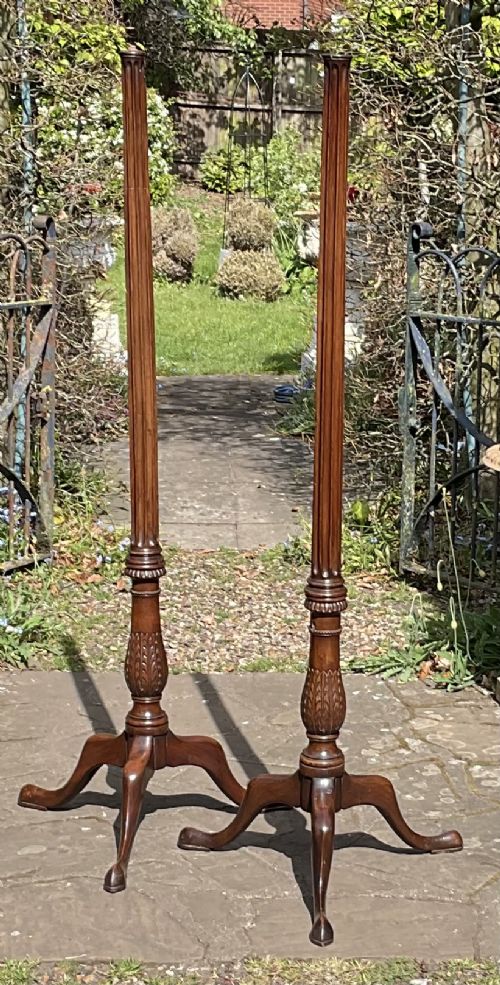


Antique Torcheres
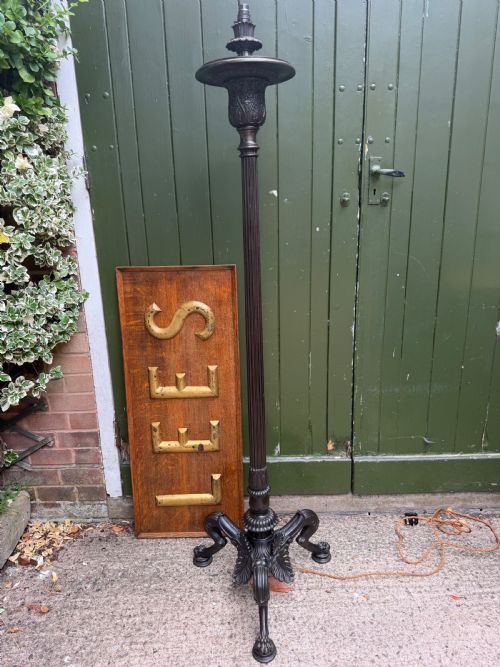
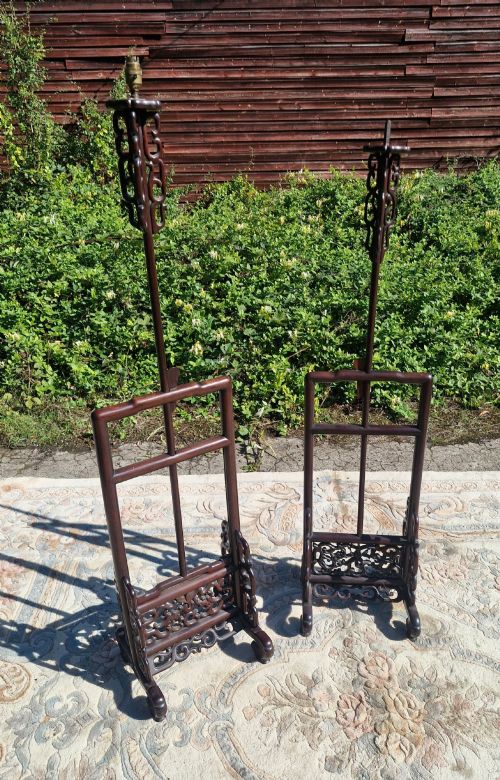
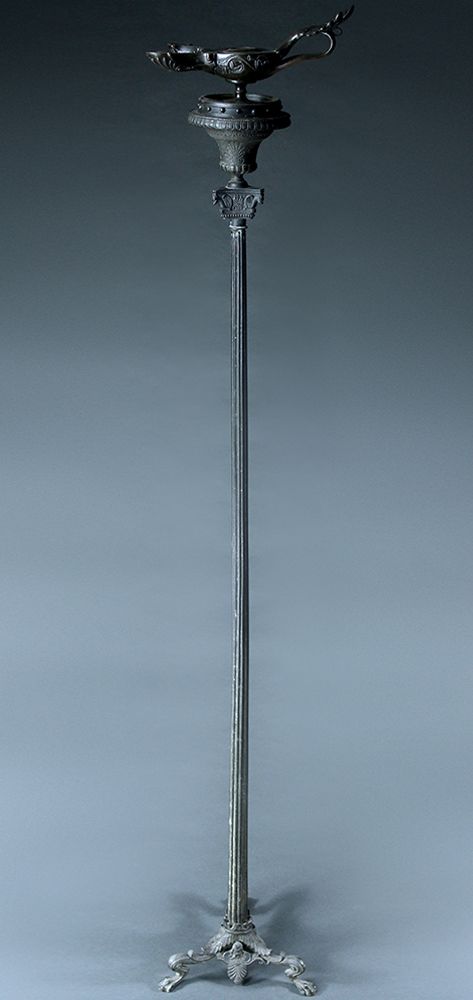
A torchère is a tall stand made to lift a light to head height or above, first for a candle or torch and later, in many cases, wired for electricity.
Antique Torcheres
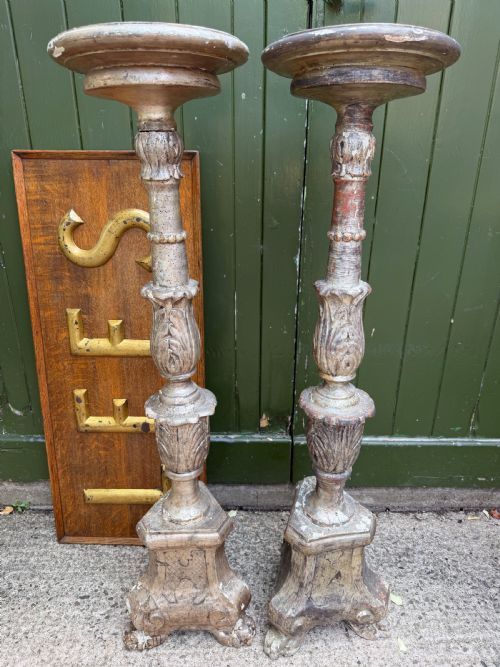
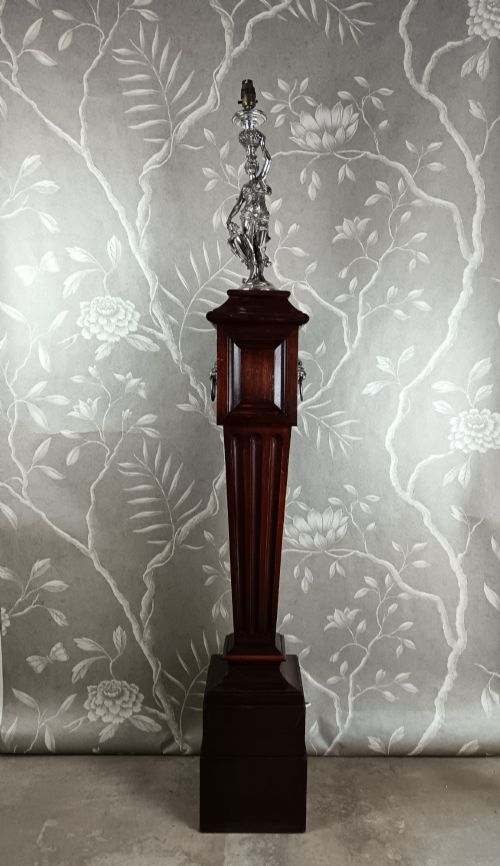
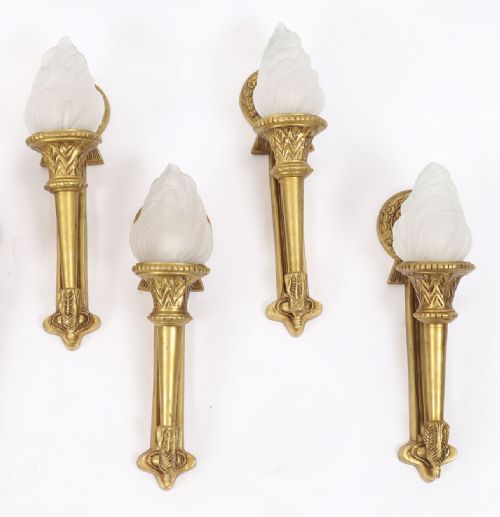
The heading covers a broad family of standing and wall-mounted light fittings rather than one strict form. Floor-standing carved wood and metal stands with a lamp or candle fitting on top sit alongside figural bronze and spelter lamp-bearers, and wall sconces and flame-form wall lights are catalogued under the same word.
The commonest single encounter is a matched pair of floor-standing lights. Pairs run to 29 of 75 titles, and lamps of one description or another account for a comparable share. Only 12 titles actually use the word torcheres; the same objects turn up as standard lamps, floor lamps, wall lights and candle stands.
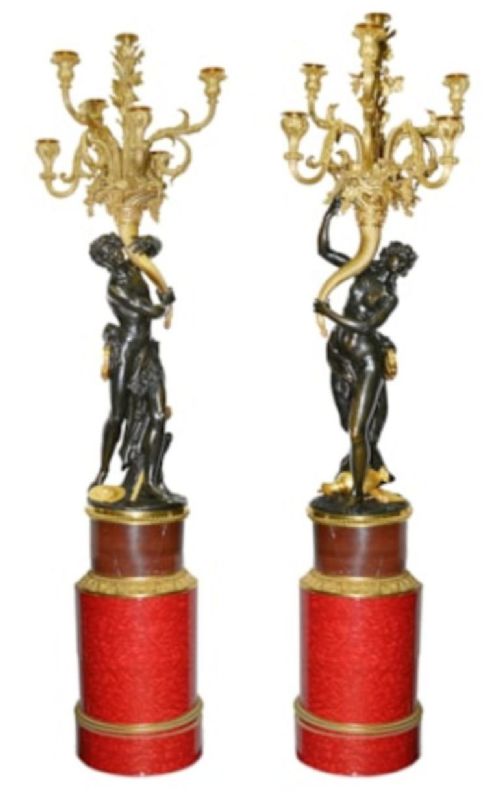
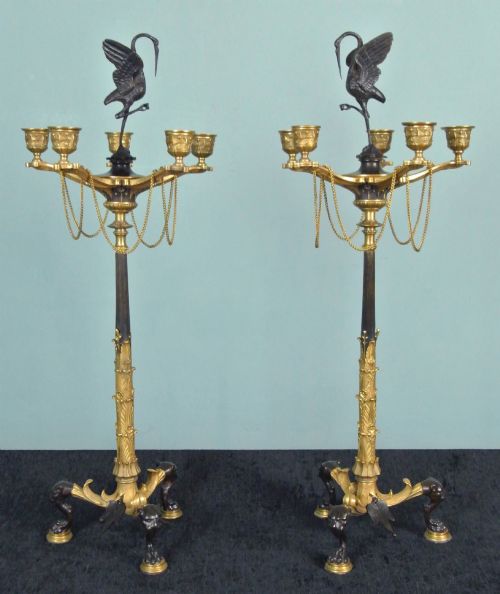
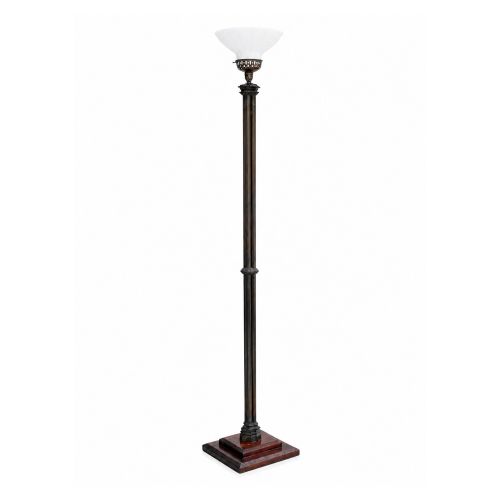
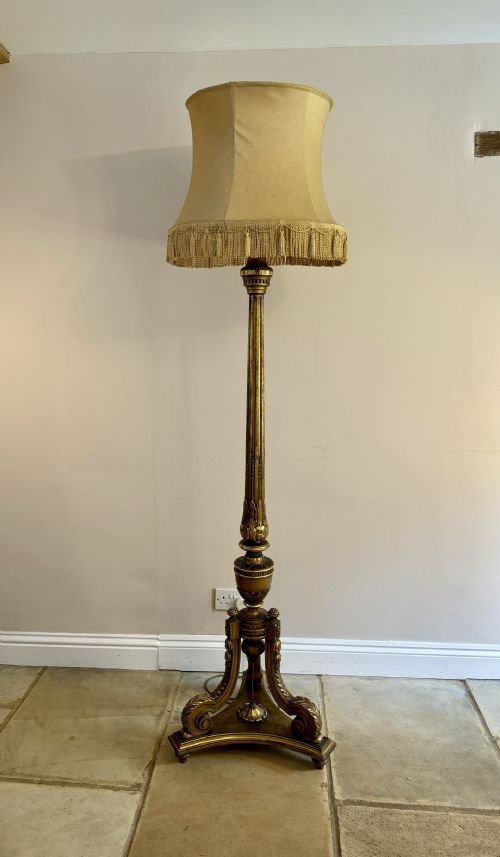
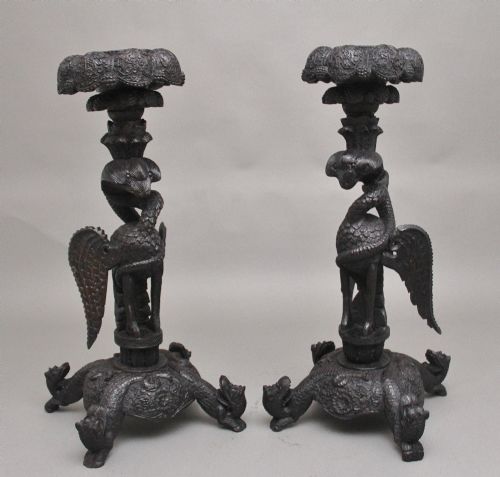
Five groupings run through the listings. Carved wood stands make up roughly a quarter, taking in giltwood, silvered and polychrome finishes, Venetian carved wood and gesso, Gothic carved oak and Anglo-Indian work, with Italian pieces unusually visible for a lighting category. Bronze and spelter figural lamps are about a fifth, cherubs, a mermaid, a blackamoor and named figures on Doric columns. Wall lights and sconces account for about one in six, Art Deco uplighters and chrome standard lamps about one in eight, and a small handful of candelabra and multi-light stands fills out the rest.
The dated field spans 1800 to 1930, with 43 of 75 listings carrying a clean year. The largest single bucket is a vague nineteenth century, so a good share of the dating is a century rather than a date. The 1920s and 1930s together are almost as large. Only three are given as eighteenth century, and several titles describe eighteenth-century style made later, so read that word carefully.
Where The Range Splits
Material sets the broad ladder. Bronze sits at the top, and the tall bronze figural pairs, with stated heights reaching 202cm and seven feet, take the very highest positions. Painted torcheres and wrought iron sit at the bottom. Spelter, cast to imitate bronze, does the same job for less.
Two things then move a piece up within its material. Pairs dominate the upper half of the range, so a title saying pair is doing real work. Scale does the same, with large appearing in 13 titles and the tallest pieces near the top. Art Deco uplighters, a genuine sub-population rather than a stray, sit mostly in the lower and middle.
Among the carved wood, depth of work separates giltwood, silver gilt and Venetian carved-and-gesso examples from plain oak or pine stands. Among the bronzes, figural modelling does it, and titles naming a signature or a sculptor occupy the highest places in the sample.
Antique Torcheres Retail Price Guide 2026
Typical UK retail prices for torcheres, calculated from the Sellingantiques database of over a million retail prices indexed since 2003. This retail price guide relies exclusively on Sellingantiques data; no external sources or auction records are used, so the figures do not describe the wider market.
The top sale of the last year on Sellingantiques was a Venetian carved wood figural torchere, 19th century, sold in February 2026.
The Antique Torcheres Glossary
- Standard lamp
- A floor-standing lamp, used interchangeably with torchere in nine of the titles under this heading.
- Uplighter
- A fitting that throws its light upward, common among the Art Deco chrome examples.
- Converted to electric
- An originally candle or gas fitting since rewired, stated in the title on some listings.
- Sconce
- A wall-mounted light bracket, and the wall-hung branch of the category, from chateau sconces to flame wall lights.
- Spelter
- Zinc alloy cast to imitate bronze, named in several of the figural lamps.
- Polychrome
- Painted in several colours over the carving, seen on the Italian giltwood pieces.
Antique Torcheres: Frequently Asked Questions
Are torcheres usually sold in pairs?
Nearly two in five listings are pairs, 29 of 75, which makes the pair the commonest single encounter under this heading.
Pairs also occupy most of the upper half of the range, so the word carries weight in a title.
What does torchere mean on this site?
It covers standing and wall-mounted light fittings broadly rather than one strict form. Carved wood stands, bronze figural lamp-bearers, sconces and uplighters all appear under it.
Only 12 of 75 titles use the word itself. The same objects are listed as standard lamps, floor lamps, wall lights and candle stands.
How old are most examples?
The dated field runs from 1800 to 1930. The nineteenth century is the centre of gravity, though the largest single bucket is simply "19th Century" rather than a year.
The 1920s and 1930s together come close behind, reflecting the Art Deco fittings and the revival-style giltwood. Edwardian, 1900s and 1910s entries fill the gap between.
Which materials turn up most often?
Bronze appears in 15 titles and carved wood in 13, the two main streams. Giltwood, silvered and polychrome finishes recur across the carved group.
Chrome and Bakelite arrive with the Art Deco end, and wrought iron with the earliest wall sconces.
Do these come already wired for electricity?
Many are described as converted to electric, or sold outright as standard lamps and uplighters.
Others are catalogued as candle stands, the pre-electric form. Several titles offer both readings at once.
How often do torcheres come up for sale?
Forty-seven different dealers have listed under this heading on Sellingantiques, at a rate of roughly seven a year.
The category arrives in ones and twos rather than in runs. Oddities appear once each: a mermaid torch lamp with a rock crystal column, a set of four flaming-torch wall lights, a pair of cast iron gas light candelabras.