

A 2026 Guide by Sellingantiques

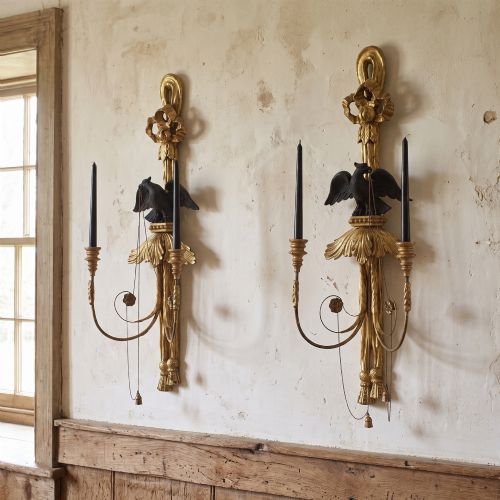
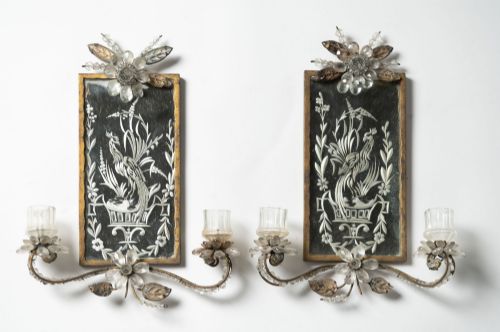
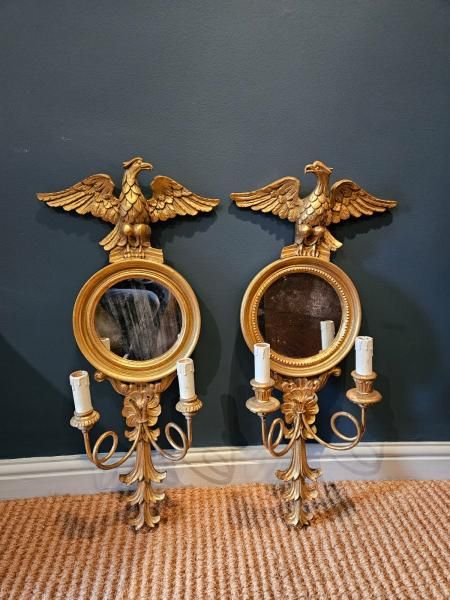
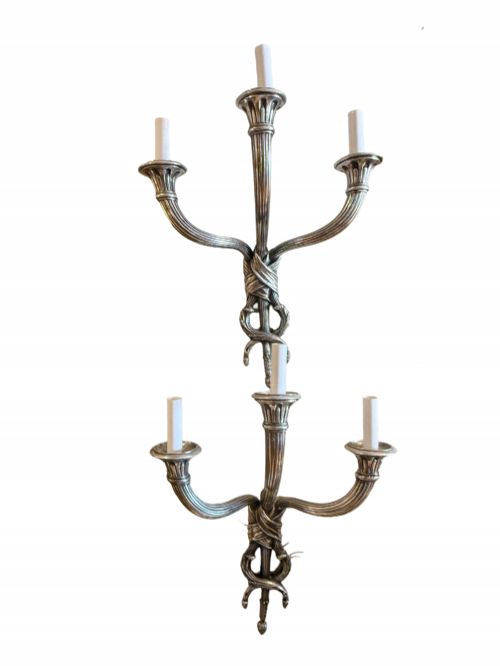
French Pair of Polychrome Twin Arm Wall Lights, 1930
Priced at £895 from O'Keeffe Antiques
Wall lighting shifts radically through the centuries. Early antique sconces were practical iron brackets found in medieval halls.
Look at the seventeenth century for a major change. Silver and brass backplates start acting as reflectors to double the candlelight.
Glass appears later. Eighteenth-century makers cut lead crystal drops to catch and multiply the flickering flames.
Gas lighting changes the form. Mid-nineteenth-century examples have hollow arms and gas taps instead of candle sockets.
Documented names are scarce for early brass wares. Most provincial founders worked anonymously for retail ironmongers.
Robert Adam designed specific wall lights. Matthew Boulton manufactured these neo-classical designs in ormolu during the late eighteenth century.
F. & C. Osler dominated the glass trade. They made cut-crystal antique sconces in Birmingham from the 1830s onwards.
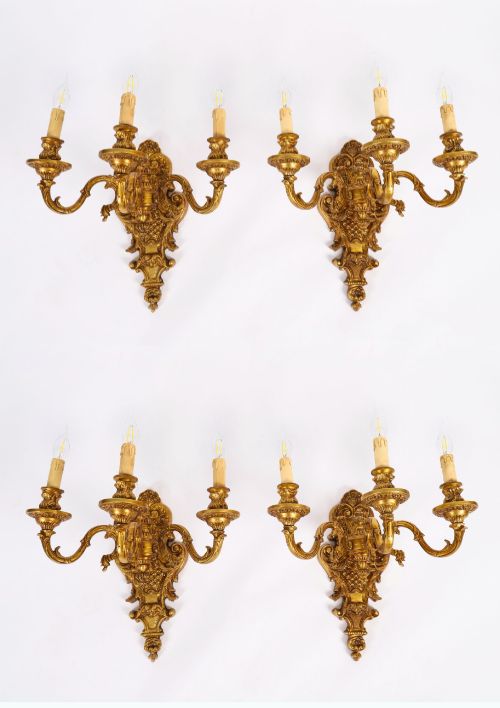
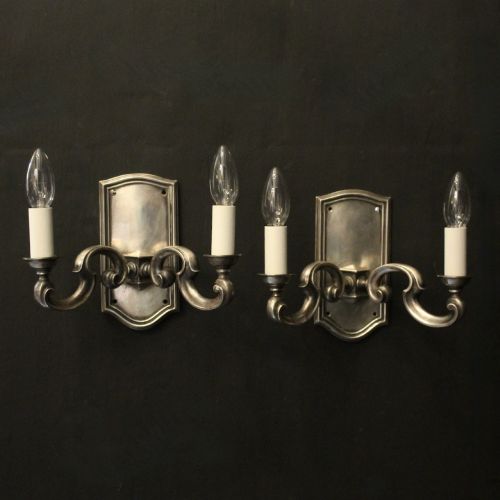
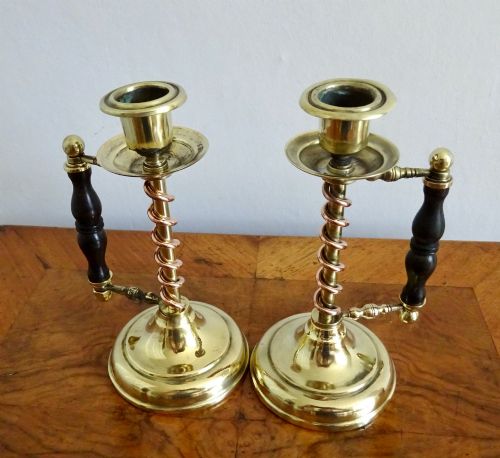
English Set of 4 Twin Arm Brass Antique Wall Lights, 1920
Priced at £1,550 from O'Keeffe Antiques
The 2026 retail price guide for Antique Sconces is drawn from a proprietary archive of over 1.1 million retail prices indexed by Sellingantiques since 2003. This guide relies exclusively on their own internal data; no external sources or auction records are used.
Analysing nearly 25 years of UK antique market history alongside current retail values, the data indicates that typical UK retail prices for Antique Sconces range between £400 and £2,100. Entry-level prices generally fall under £400 and premium examples upwards of £2,100.
The backplate anchors the whole piece. It sits flat against the wall and distributes the weight of the projecting metalwork.
Count the arms. Most domestic antique sconces have two or three branches spreading outwards from the central boss.
Drip pans sit just below the nozzle. These wide saucer shapes catch hot wax before it hits the floorboards below.
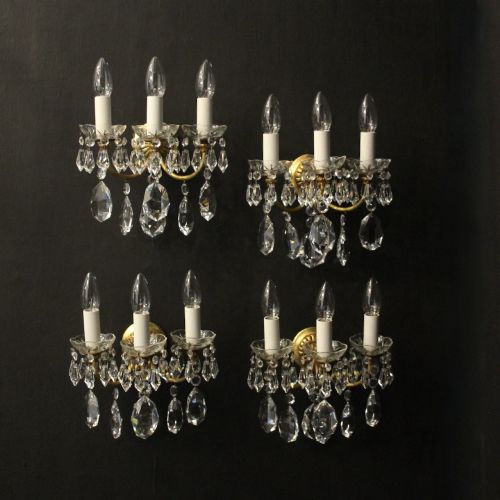
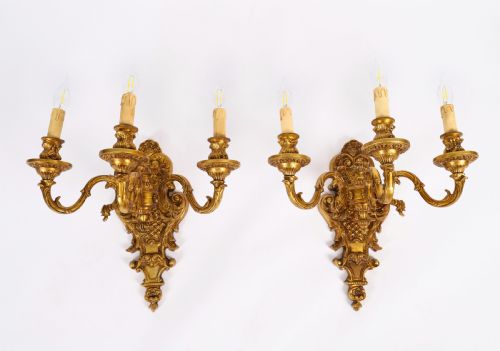
Pair French Triple Arm Gilt Bronze Crystal Wall Lights, Rewired, 19th Century
Priced at £295 from Hodgson Antiques
Sand casting was the standard method for brass. Founders packed damp sand around a wooden pattern to form the mould.
Look at the joinery on wooden versions. Carvers joined sections of limewood with wooden pegs before applying the gesso layers.
Hand-cut threads usually secure the arms. Early makers filed coarse screw threads to bolt the branches onto the backplate.
"They were often sold in large suites. Wealthy homes bought matching sets of ten or twelve for a single drawing room."
"Makers specifically designed the faceted glass drops to move. A slight draught creates a subtle chiming sound."
"The mirrored backplates were functional rather than decorative. A single candle effectively throws the light of two across the room."
Based on almost 25 years of Sellingantiques UK antique market data, Antique Sconces appeared 2430 times (out of 1,100,000 antiques) which gives it a rarity score of 62/100.
This score measures scarcity within the Sellingantiques archive only and is not a survey of the entire antiques market, so these statistics may not be indicative of the general availability of Antique Sconces elsewhere.
Leave the heavy tarnish alone. The dark patina on the recesses gives the casting its depth and shows its age.
Just dust them with a soft brush. If you must clean the highlights, use a mild microcrystalline wax on a soft cloth rather than harsh liquid polish.
Most of them already are. Electricians have been adapting them since the 1920s.
The wiring usually runs up the back. Restorers often use silk-braided flex to blend in.
Wall lights actually help in rooms with low ceilings. They draw the eye outward rather than upward.
Two-arm antique sconces tend to sit closer to the plaster. The branches usually sweep sideways rather than projecting straight out into the space.
Check the projection measurement before buying. Anything under a foot usually clears the sightline of someone walking past a dining table.
The terms get mixed up frequently. A girandole specifically refers to an elaborately cast branched wall light, often featuring a mirrored backplate.
They appear in the mid-eighteenth century. The mirror is the key defining feature, designed to increase the light output for evening entertaining.
Please note: This Antique Sconces guide and its associated pricing data are provided for general informational purposes only. It does not constitute formal financial, investment, or appraisal advice and should not be relied upon as the sole basis for any commercial activity, purchasing, or sales decisions. Sellingantiques.co.uk accepts no liability for any actions taken in reliance on this information. Always consult with a qualified professional or independent appraiser.