

A 2026 Guide by Sellingantiques
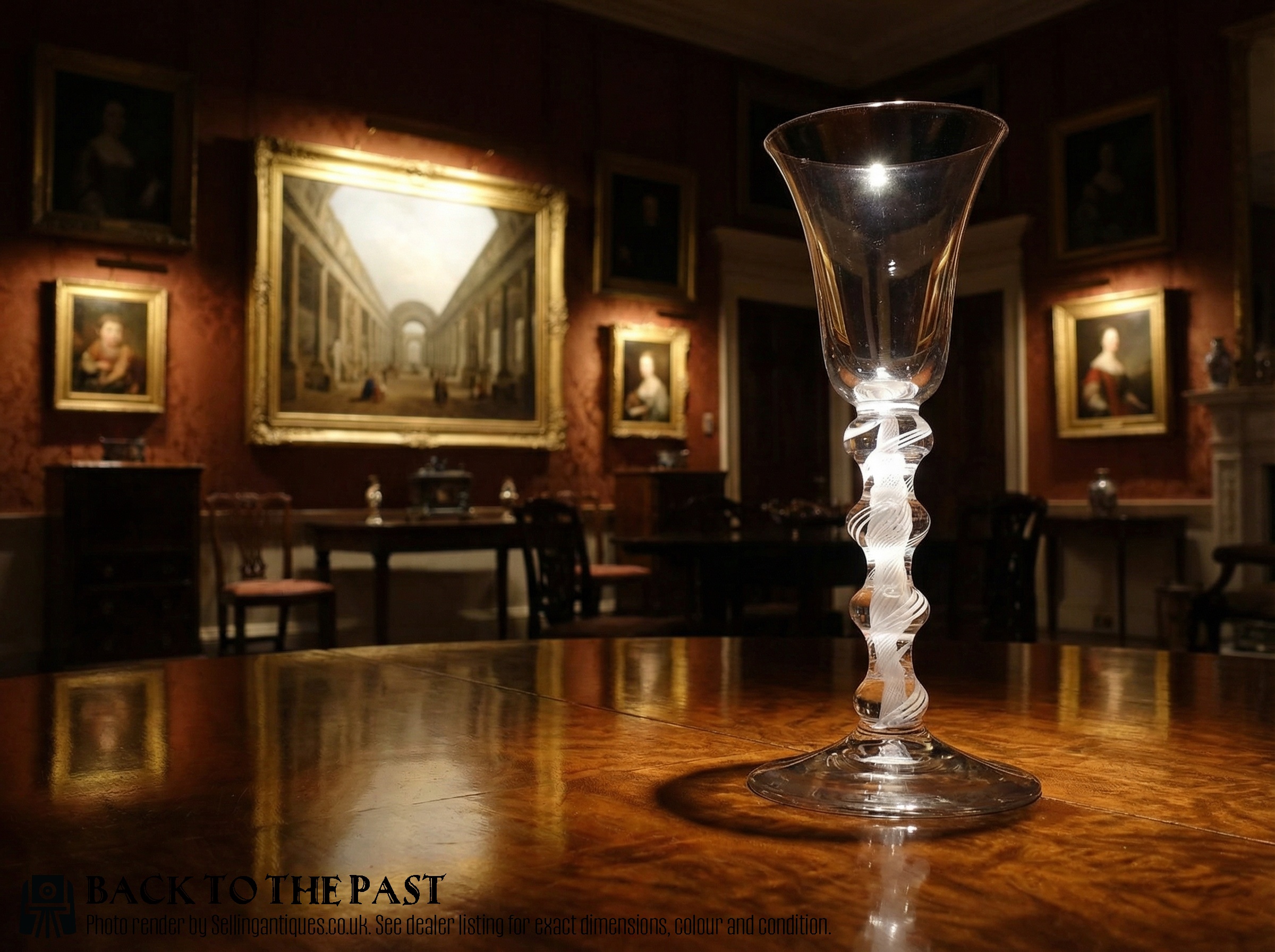
Rare 18th Century Four Knop Opaque Twist Wine Glass C1760, Georgian
Priced at £590 from Exhibit Antiques
Seventeenth-century glasshouses shifted towards heavier forms as drinking habits evolved across the country.
Look closely at the transition from heavy early baluster stems to the much lighter delicate Georgian examples produced decades later.
Drinking practices directly dictated the specific bowl sizes found on antique wine glasses.
Sets of matching stemware became popular in late Georgian society for grand formal dining occasions.
George Ravenscroft successfully introduced lead crystal to the London trade in the late seventeenth century, changing the industry.
Newcastle enamellers like the Beilby family painted intricate coats of arms onto eighteenth-century drinking vessels.
Attributing individual pieces is difficult. Most English antique wine glasses lack signatures, so dealers rely on broader regional glasshouse styles rather than named makers.
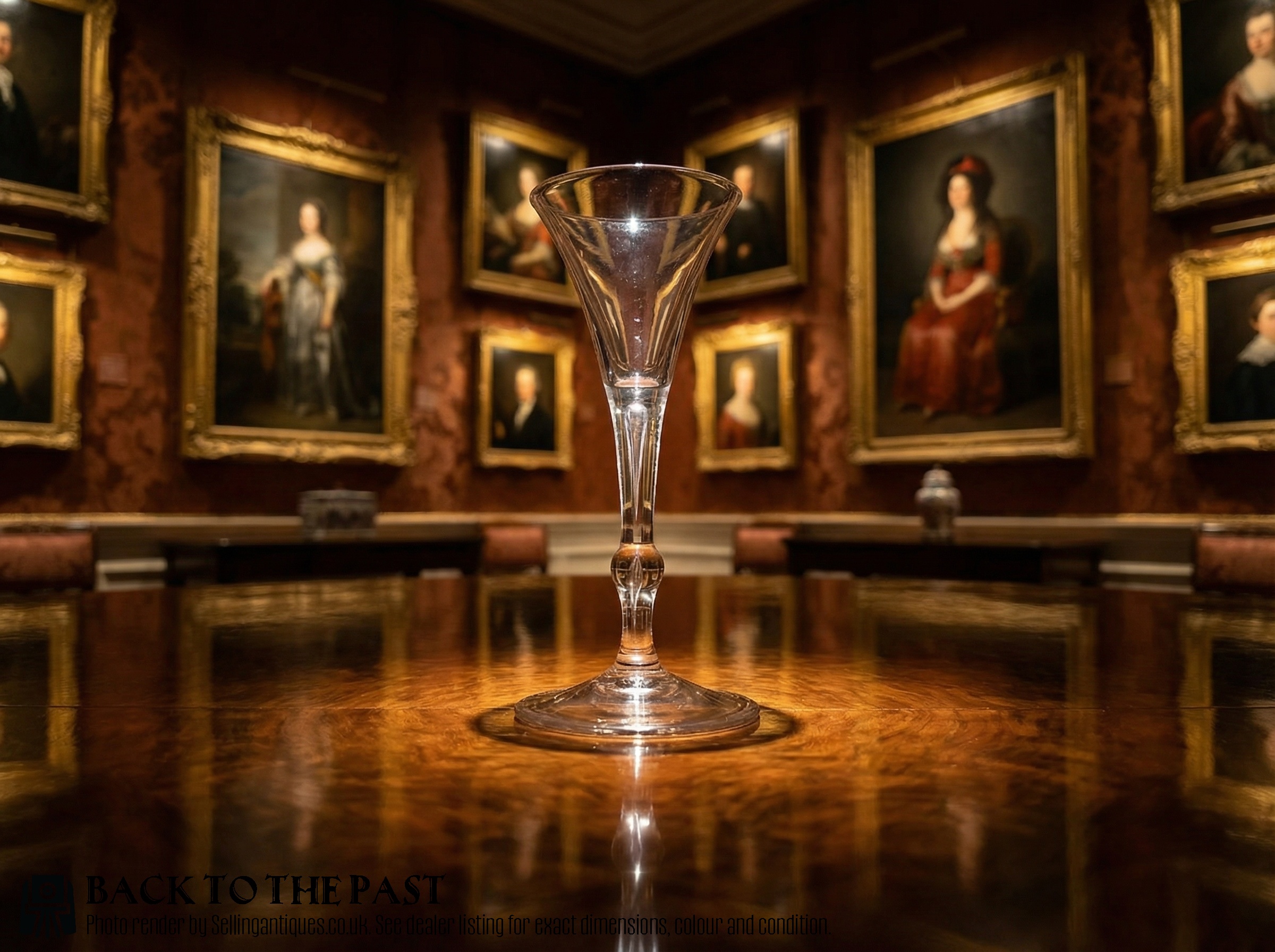
18th Century Slender Balustroid Kit Kat Wine Glass C1740, 18th Century
Priced at £390 from Exhibit Antiques
The 2026 retail price guide for Antique Wine Glasses is drawn from a proprietary archive of over 1.1 million retail prices indexed by Sellingantiques since 2003. This guide relies exclusively on their own internal data; no external sources or auction records are used.
Analysing nearly 25 years of UK antique market history alongside current retail values, the data indicates that typical UK retail prices for Antique Wine Glasses range between £200 and £1,800. Entry-level prices generally fall under £200 and premium examples upwards of £1,800.
Rough pontil marks sit directly under the foot, showing where the glassblower snapped away the working rod.
Examine the bowl profile closely. You'll find forms ranging from simple rounded funnels to tall bells.
Intricate air twists or opaque white enamel threads frequently spiral right down through the centre of the stems on mid-eighteenth century antique wine glasses.
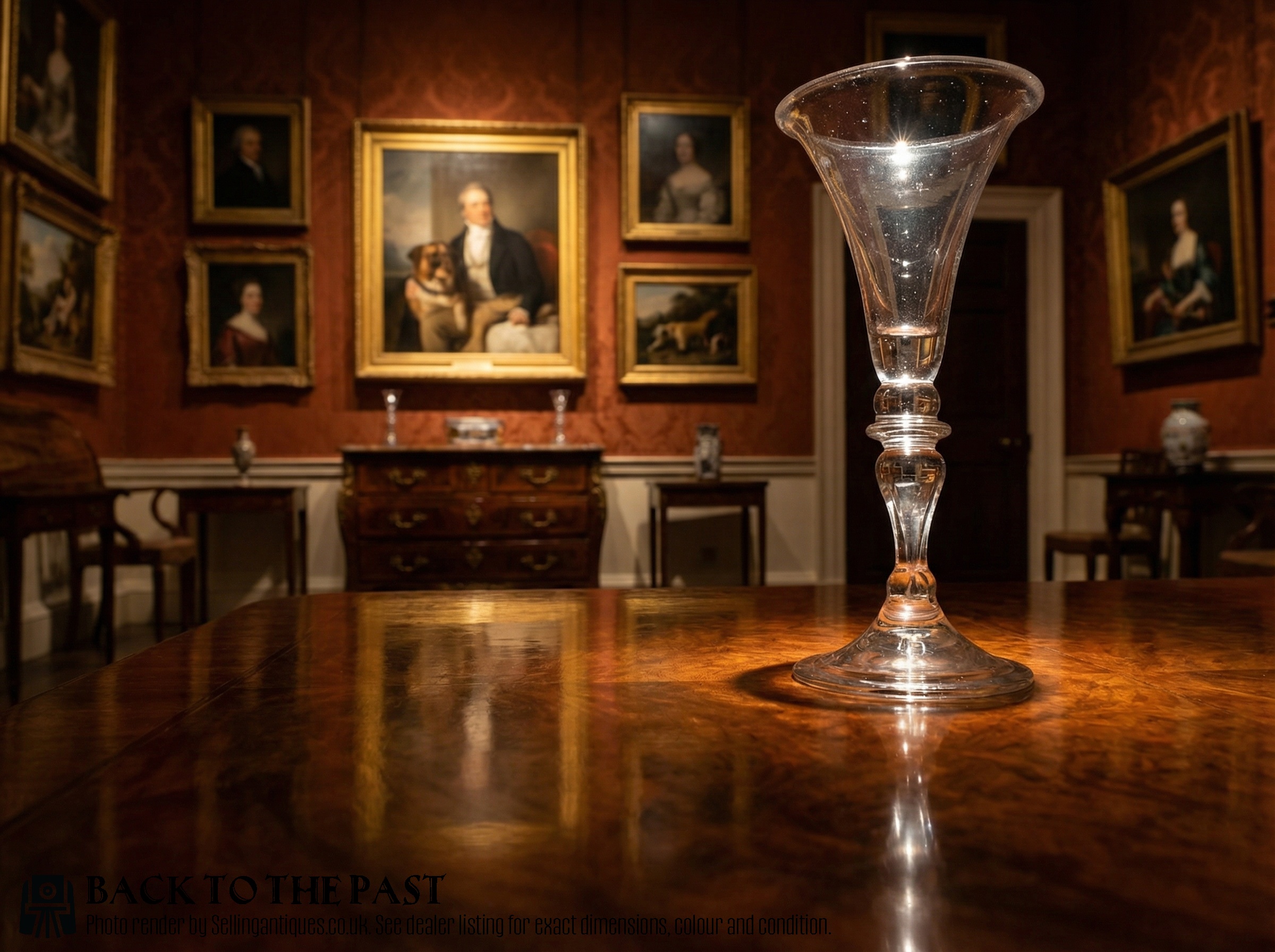
18th Century Antique Georgian Balustroid Wine Glass C1740, Georgian
Priced at £525 from Exhibit Antiques
Glassblowers shaped the bowl, stem, and foot as separate elements. They joined these hot parts together on the bench.
Wheel engraving gradually replaced early diamond-point scratching to add decorative motifs directly onto the bowl surface.
Stems grew noticeably thinner during the later eighteenth century. Glasshouses adapted their designs to use less material after the introduction of new excise duties by weight.
"Tiny variations in the manufacturing process mean no two hand-drawn stem twists ever match."
"Toastmaster glasses feature deceptively thick bowls. This illusion allowed the host to consume less wine while appearing to match their guests drink for drink during long banquets."
"Firing glasses possess heavy flat feet. Tavern drinkers used them to loudly slam on the table in unison after a toast."
Based on almost 25 years of Sellingantiques UK antique market data, Antique Wine Glasses appeared 13472 times (out of 1,100,000 antiques) which gives it a rarity score of 7/100.
This score measures scarcity within the Sellingantiques archive only and is not a survey of the entire antiques market, so these statistics may not be indicative of the general availability of Antique Wine Glasses elsewhere.
Wash them gently by hand in lukewarm water. Line the sink bowl with a soft towel to protect the foot.
Never use a dishwasher. The harsh heat causes permanent clouding known as sickness.
Wine was stronger and served in smaller measures during the eighteenth century. Diners emptied their glasses quickly and servants refilled them from a decanter.
Modern habits favour large pours to let the wine breathe. Early drinking culture focused on frequent toasts instead.
A folded foot is a very common feature on eighteenth-century glasses. It provided extra strength where the glass struck the table. You see it frequently on tavern pieces.
Glassmakers did drop the practice towards the end of the century. Some nineteenth-century glasshouses revived the technique for specific retro designs.
Coloured glass was an expensive luxury item. Glasshouses produced green tones by adding copper or iron oxide to the melt. Roemers often featured green glass to mask the cloudy appearance of early white wines.
Clear lead glass dominated the English market. Coloured stems from that period turn up less often and usually point to continental origins.
Please note: This Antique Wine Glasses guide and its associated pricing data are provided for general informational purposes only. It does not constitute formal financial, investment, or appraisal advice and should not be relied upon as the sole basis for any commercial activity, purchasing, or sales decisions. Sellingantiques.co.uk accepts no liability for any actions taken in reliance on this information. Always consult with a qualified professional or independent appraiser.
