


A 2026 Guide by Sellingantiques

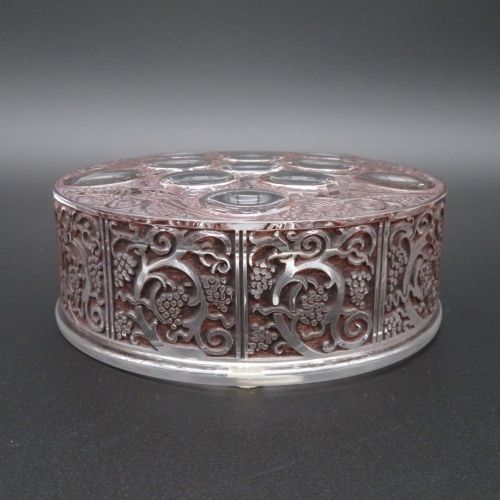
Lovely Edwardian Cranberry Glass Jar – Circa 1905, 1900
Priced at £125 from Kingsdown Antiques
Early examples held medicines or dry goods on shop shelves.
Look at the preserving boom in the nineteenth century. Home canning demanded a durable seal to stop food spoiling.
Most antique glass jars survived because households reused them year after year for autumn harvests.
Grocers often kept large display vessels on the counter to tempt buyers with loose sweets and biscuits.
John Mason patented his zinc screw cap in 1858. Dozens of glasshouses then produced jars bearing his name well into the twentieth century.
Kilner Brothers operated in Yorkshire from the 1840s. They made vast quantities of storage vessels with their distinctive spring-clip closures.
Ball Brothers began making fruit jars in New York during the 1880s. Their embossed script logo changed slightly every few years.

Pair of Antique Tincture Bottles, English, Glass Apothecary Jars, Georgian, 1800, Georgian
Priced at £325 from London Fine Antiques
The 2026 retail price guide for Antique Glass Jars is drawn from a proprietary archive of over 1.1 million retail prices indexed by Sellingantiques since 2003. This guide relies exclusively on their own internal data; no external sources or auction records are used.
Analysing nearly 25 years of UK antique market history alongside current retail values, the data indicates that typical UK retail prices for Antique Glass Jars range between £200 and £1,600. Entry-level prices generally fall under £200 and premium examples upwards of £1,600.
Embossed lettering runs across the side or base. This names the maker, the patented closure or the retailer.
Feel the side seams. They stop below the lip on hand-finished pieces.
Pontil marks sit on the base of earlier blown examples, leaving a rough circular scar where the glassmaker snapped the iron rod away.
Free-blown utility vessels lack uniform shapes. Workers relied on simple wooden paddles and gravity to form the body.
Two-piece iron moulds came next. A blower forced hot glass into the metal cavity, leaving distinct vertical seams down the sides of the jar.
Automatic bottle machines eventually took over. They dropped molten gobs into continuous moulds, creating identical antique glass jars with seams running right over the top lip.
"Coloured glass served a practical purpose. Amber and dark green shades blocked UV light to stop sensitive contents from degrading on the shelf."
"Many large sweetshop displays sat at an angle. The slanted neck made it much easier for the shopkeeper to scoop out hard-boiled sweets."
"Small bubbles trapped in the walls are known as seeds. They add genuine character and show the glass was mixed by hand in small batches."
Based on almost 25 years of Sellingantiques UK antique market data, Antique Glass Jars appeared 4218 times (out of 1,100,000 antiques) which gives it a rarity score of 43/100.
This score measures scarcity within the Sellingantiques archive only and is not a survey of the entire antiques market, so these statistics may not be indicative of the general availability of Antique Glass Jars elsewhere.
Big display jars sat in grocers and sweet shops. Shopkeepers bought loose goods in bulk and needed a clean, dry way to show them off to customers.
Chemists also used substantial carboys in their windows. They filled them with coloured water rather than stock, drawing the eye of people passing in the street.
The rubber ring sat on the glass rim. A glass lid went on top, and the metal bail wire pulled everything down tight.
You heated the filled jar in a water bath. The heat forced air out, and as it cooled down, a vacuum formed inside. That vacuum kept the lid held down tight, sealing the food away from airborne bacteria until winter.
Glassmakers often added manganese to the batch. They used it to counteract the natural green tint caused by iron impurities in the sand, aiming for clear glass.
When exposed to the sun for long periods, the manganese reacts. It slowly turns the glass a light purple or amethyst shade over decades.
Those numbers are usually mould marks. When a factory ran multiple iron moulds on a production line, they numbered each one.
If a specific jar came off the line with a flaw, the foreman checked the base. The number told him exactly which mould needed repairing or replacing, saving him from checking the whole line.
Please note: This Antique Glass Jars guide and its associated pricing data are provided for general informational purposes only. It does not constitute formal financial, investment, or appraisal advice and should not be relied upon as the sole basis for any commercial activity, purchasing, or sales decisions. Sellingantiques.co.uk accepts no liability for any actions taken in reliance on this information. Always consult with a qualified professional or independent appraiser.
