
A 2026 Guide by Sellingantiques
Dining habits shifted heavily in the eighteenth century. Presenting dessert became a theatrical display.
Antique glass comports lifted the choice fruits and sweet treats away from crowded table surfaces.
Early versions often sat in the centre of tall pyramids of lesser glass plates.
Pressing technology arrived during the nineteenth century, opening up production to a wider domestic market.
Identifying specific makers of early antique glass comports is difficult. Much of the trade operated anonymously across Stourbridge and Newcastle.
Sowerby of Gateshead dominated the pressed glass market during the late Victorian era.
George Davidson also operated nearby, churning out thousands of coloured slag glass examples from the 1880s onwards.
The 2026 retail price guide for Antique Glass Comports is drawn from a proprietary archive of over 1.1 million retail prices indexed by Sellingantiques since 2003. This guide relies exclusively on their own internal data; no external sources or auction records are used.
Analysing nearly 25 years of UK antique market history alongside current retail values, the data indicates that typical UK retail prices for Antique Glass Comports range between £200 and £700. Entry-level prices generally fall under £200 and premium examples upwards of £700.
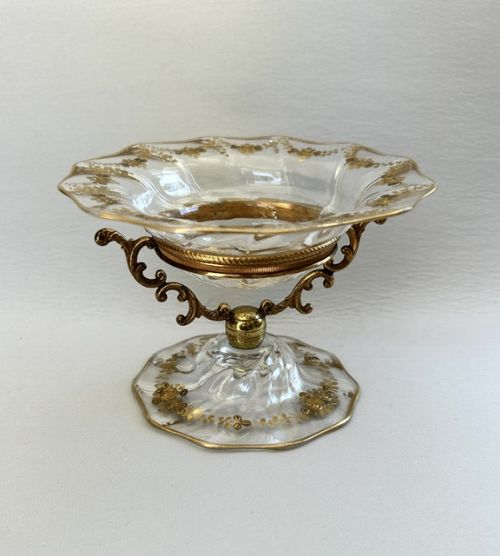
Look at the bowl shape first. They usually feature a shallow, wide basin with either a gallery or everted rim.
Central stems range from simple plain columns to complex faceted knops and heavy balusters.
A domed or flat circular foot provides necessary stability for the heavy structure above.
Free-blowing requires constant rotation of the pipe. The maker shapes the hot gather using basic wooden tools.
Wheel engraving takes serious skill. A craftsman holds the cooled bowl against spinning copper discs to cut shallow patterns.
Pressing involves dropping molten glass into an iron mould. A plunger then drives down to force the shape.
"Catching the candlelight was an active design choice. The deep cutting scattered reflections across the dining room."
"Many pieces double up well for modern serving tasks. A wide bowl works just as well for salads today."
"Some pressed examples ring clearly when tapped. This mimics the acoustic qualities of older cut lead crystal."
Based on almost 25 years of Sellingantiques UK antique market data, Antique Glass Comports appeared 113 times (out of 1,100,000 antiques) which gives it a rarity score of 98/100.
This score measures scarcity within the Sellingantiques archive only and is not a survey of the entire antiques market, so these statistics may not be indicative of the general availability of Antique Glass Comports elsewhere.
Wash them by hand in lukewarm water using a soft bristled brush. A mild washing-up liquid helps shift surface dirt without attacking the glass.
Never put them in a modern dishwasher. The aggressive salts and high heat will permanently cloud the surface and can easily crack old lead glass.
Free-blown pieces often vary slightly in height and width. The maker relied on eye and experience rather than strict mechanical templates. They worked quickly while the material remained hot and pliable.
Matching pairs were usually made on the same day by the same team. Even then, minor discrepancies in the stem length or bowl width are standard.
Shallow bowls presented dry sweetmeats or arranged fruit.
Deeper bowls typically held wet desserts like syllabubs or jellies. The higher sides kept sticky liquids contained safely above the table cloth.
That scar is the pontil mark. It happens when the maker snaps the glass off the solid iron rod used to hold the piece during shaping.
Some makers ground this mark smooth, leaving a polished depression. Others left it rough.
If it affects stability, a small felt pad under the rim of the foot helps it sit flat.
Please note: This Antique Glass Comports guide and its associated pricing data are provided for general informational purposes only. It does not constitute formal financial, investment, or appraisal advice and should not be relied upon as the sole basis for any commercial activity, purchasing, or sales decisions. Sellingantiques.co.uk accepts no liability for any actions taken in reliance on this information. Always consult with a qualified professional or independent appraiser.
