


A 2026 Guide by Sellingantiques

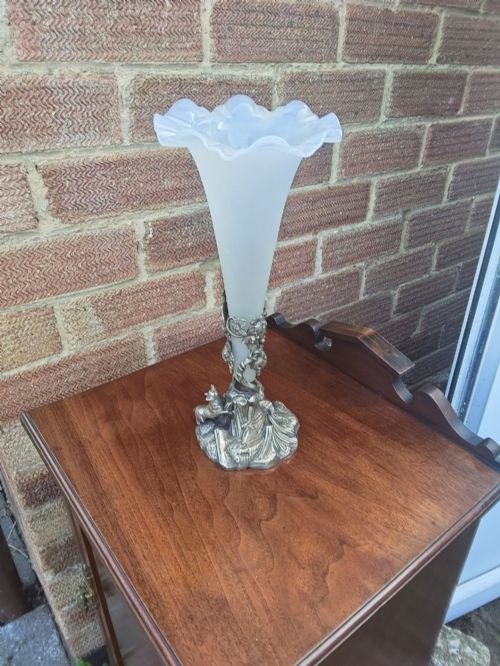
Antique English Victorian "Art Nouveau" Green Glass Epergne, 19th Century
Priced at £695 from Applecross Antiques
Dining practices shifted in the eighteenth century. People started placing an antique epergne in the middle of the table as a focal point.
French courts introduced the style first. English silversmiths quickly adopted the form for wealthy clients hosting large banquets.
Look at the way dining evolved into service à la russe. Centrepieces remained on the table throughout the meal while servants brought individual courses.
Victorian households later demanded smaller versions. Mass production techniques allowed middle-class families to own glass and silver-plated varieties.
Paul de Lamerie produced highly decorated silver epergnes in London during the mid-eighteenth century. His work features heavy rococo casting.
Matthew Boulton made prominent silver and Sheffield plate centrepieces in Birmingham. His workshops supplied large numbers to the domestic market.
Thomas Pitts specialised in these structures. He supplied pierced silver baskets and branches to retail silversmiths across London.
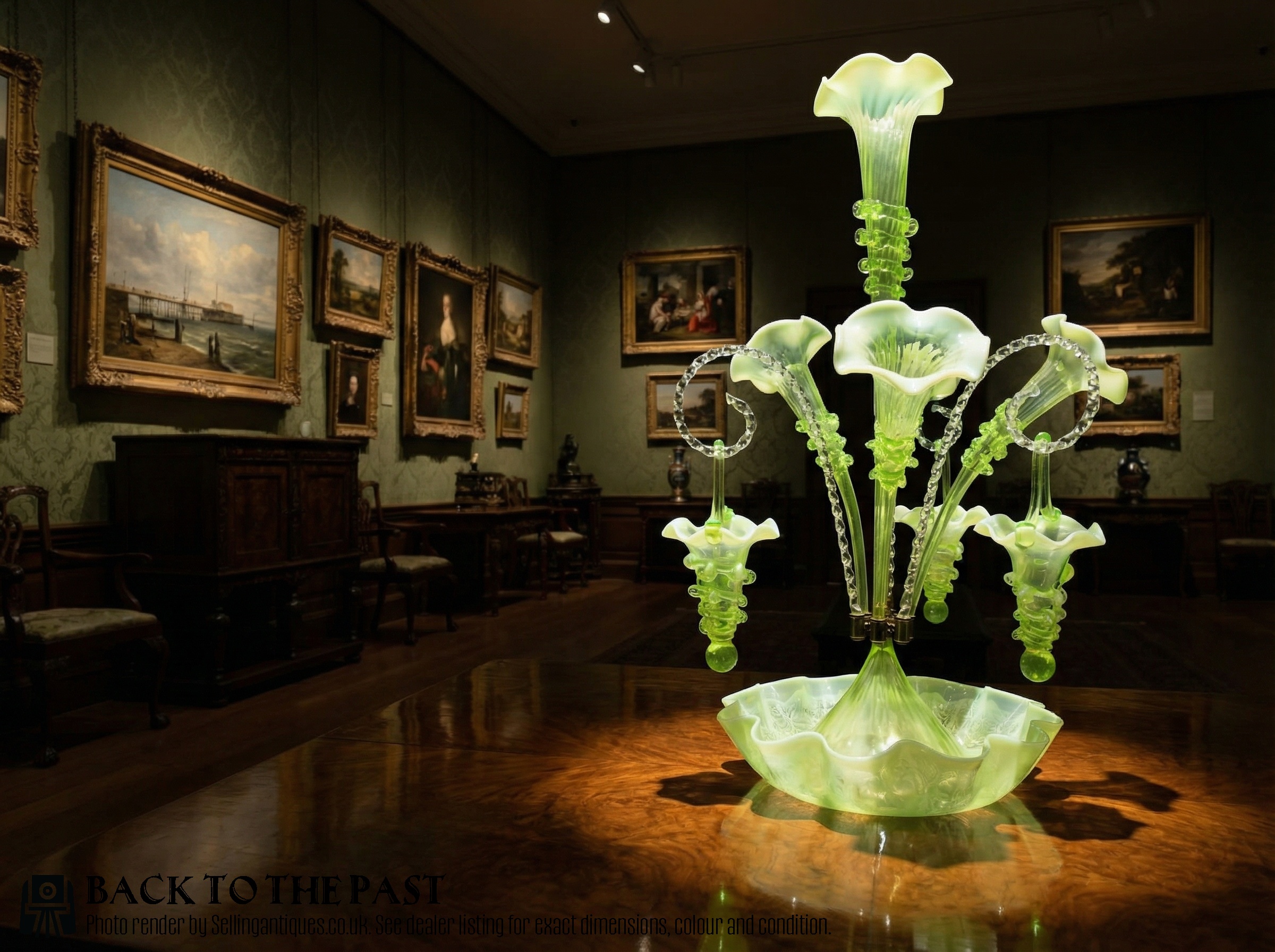
Antique English Victorian Green Glass Epergne, 19th Century
Priced at £995 from Applecross Antiques
The 2026 retail price guide for Antique Epergnes is drawn from a proprietary archive of over 1.1 million retail prices indexed by Sellingantiques since 2003. This guide relies exclusively on their own internal data; no external sources or auction records are used.
Analysing nearly 25 years of UK antique market history alongside current retail values, the data indicates that typical UK retail prices for Antique Epergnes range between £300 and £2,000. Entry-level prices generally fall under £300 and premium examples upwards of £2,000.
Central baskets dominate the structure. Wide bowls holding fruit or flowers just above the sightline of seated guests.
Detachable arms slot into the main column. You can remove them to clean the piece or change the display layout.
Smaller side dishes match the central bowl. Hanging baskets or fixed saucers sit on the extended branches to hold sweetmeats.
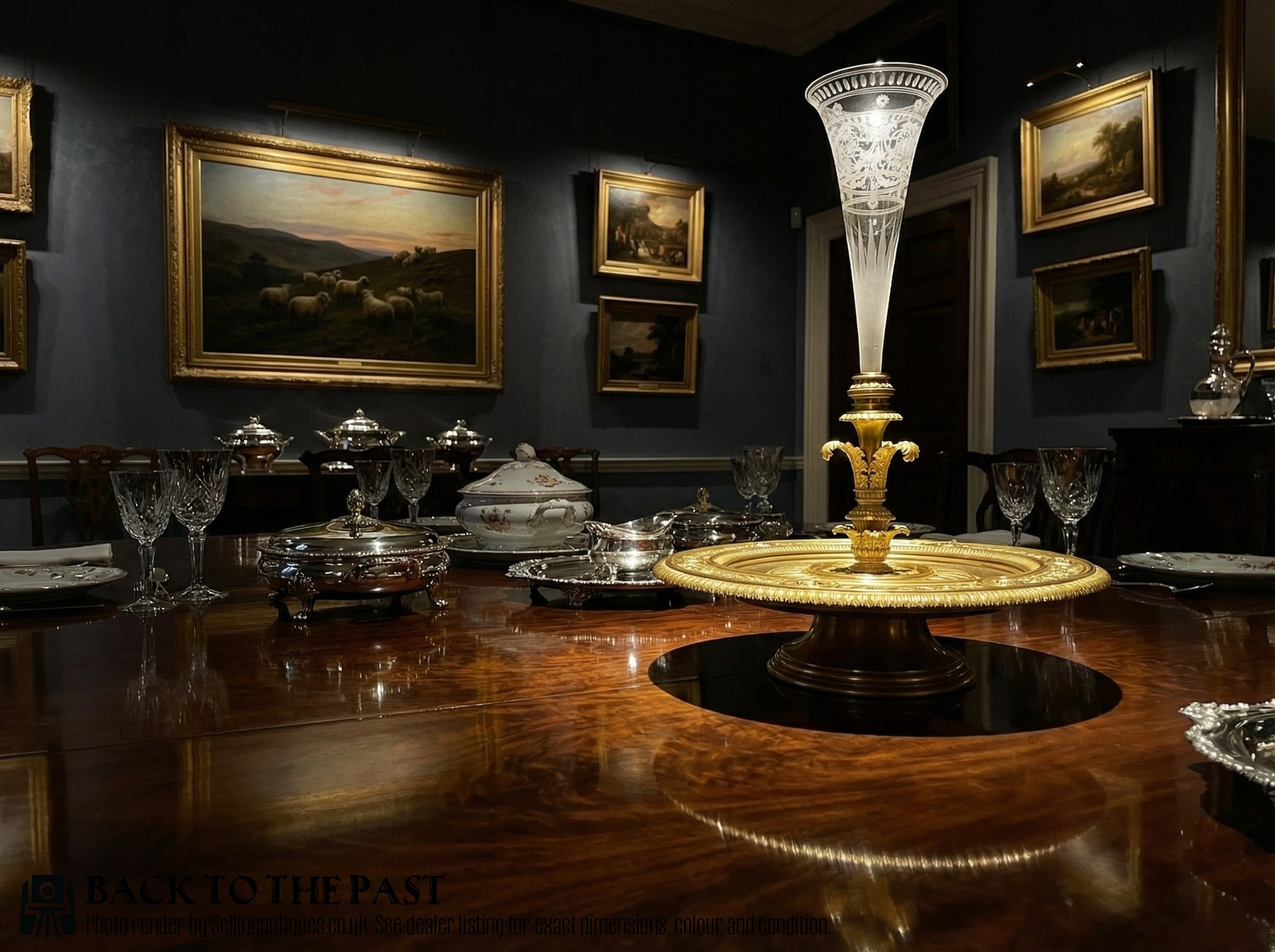
19th Century Gilt Bronze Epergne Centrepiece., 19th Century
Priced at £1,100 from William Rand Antiques
Early silversmiths cast the main column in sections. They soldered these parts together to build a rigid central support.
Piercing required steady handwork. Craftsmen used a fine saw to cut geometric or floral voids out of sheet silver.
Glassmakers blew the bowls into wooden moulds. They then cut the rims and bases on a wheel to fit the metal rings precisely.
"Some branches feature reversible fittings. You can turn them upwards to hold candles instead of glass dishes."
"Georgian examples often break down for storage. The entire structure unscrews into flat components that fit inside a custom wooden box."
"The name comes from the French word for saving. It allowed hosts to save space by combining multiple serving dishes into a single vertical stand."
Based on almost 25 years of Sellingantiques UK antique market data, Antique Epergnes appeared 339 times (out of 1,100,000 antiques) which gives it a rarity score of 93/100.
This score measures scarcity within the Sellingantiques archive only and is not a survey of the entire antiques market, so these statistics may not be indicative of the general availability of Antique Epergnes elsewhere.
Wash them by hand in warm soapy water. A soft cloth removes most dust and sticky sugar residue without scratching the surface.
Avoid sudden temperature changes. Hot water can crack old blown glass instantly. Let the bowls air dry on a thick towel before returning them to the frame.
Most standard frames left the workshop with an even number of branches to maintain symmetry. A three-arm configuration usually means a piece broke off or went missing over the years.
Look closely at the central column. Empty sockets or plugged holes will tell you if an arm once sat there.
A silversmith can often realign bent arms using gentle leverage and heat. Sterling silver takes manipulation better than plated base metals.
Do not try to bend them back yourself. The metal work hardens over time and snaps under uneven pressure.
A slight movement is normal. Glass shrinks as it cools during making, so the bowls rarely match the metal rings precisely.
Antique dealers often use small bits of felt or baize to pad the ring. This stops the glass rattling and prevents the silver from scratching the base.
Do not force a tight bowl into a frame. Changes in room temperature cause the metal to contract and shatter the glass.
Please note: This Antique Epergnes guide and its associated pricing data are provided for general informational purposes only. It does not constitute formal financial, investment, or appraisal advice and should not be relied upon as the sole basis for any commercial activity, purchasing, or sales decisions. Sellingantiques.co.uk accepts no liability for any actions taken in reliance on this information. Always consult with a qualified professional or independent appraiser.
