
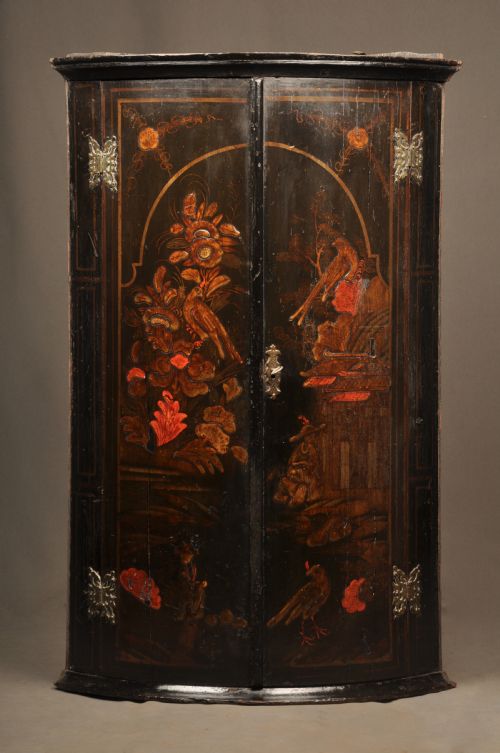



A 2026 Guide by Sellingantiques
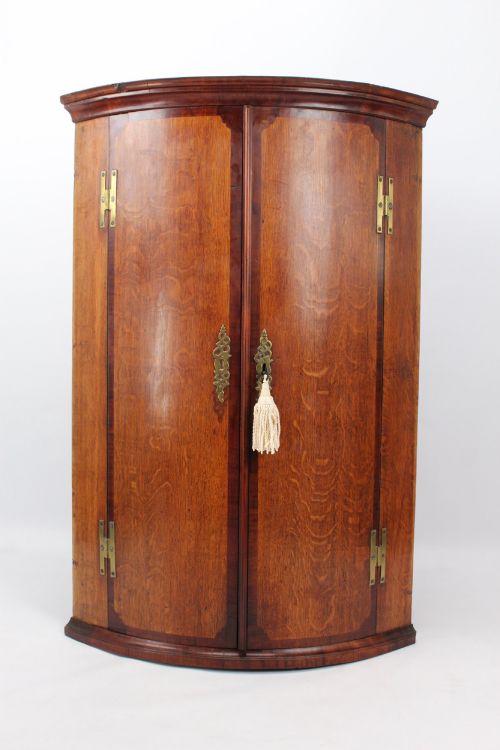
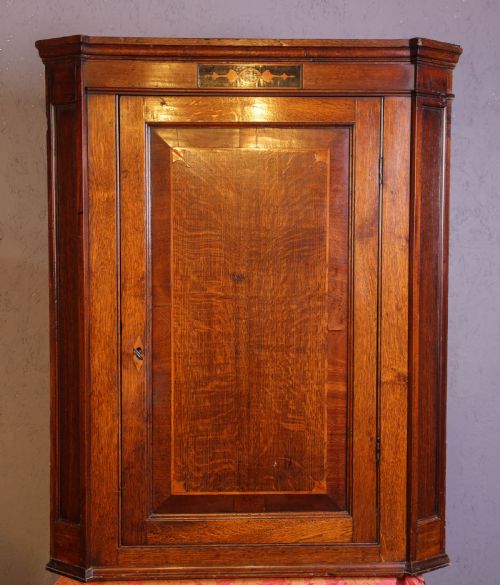
Antique Oak Corner Cupboard with Decorative Detailing Including Inlays., 18th Century
Priced at £495 from A and B Antiques
Antique corner cupboards often began as permanent fixtures built directly into seventeenth-century panelling before evolving into freestanding furniture.
Look for two distinct types. Hanging cupboards sat at eye level, while floor-standing models filled the entire vertical space of the corner.
Georgian households used them to secure imported tea and sugar.
Rural joiners continued making traditional oak variations long after city workshops shifted to imported mahogany.
Demand peaked in the late eighteenth century when displaying porcelain became a major domestic focus.
Identifying specific workshops is difficult. Most surviving examples bear no maker's stamp or trade label.
Provincial cabinetmakers across the Midlands and Wales produced vast numbers of these units for local merchant families.
Read the construction details instead of hunting for names. Regional variations in cornice profiles often pinpoint the origin better than any archive.
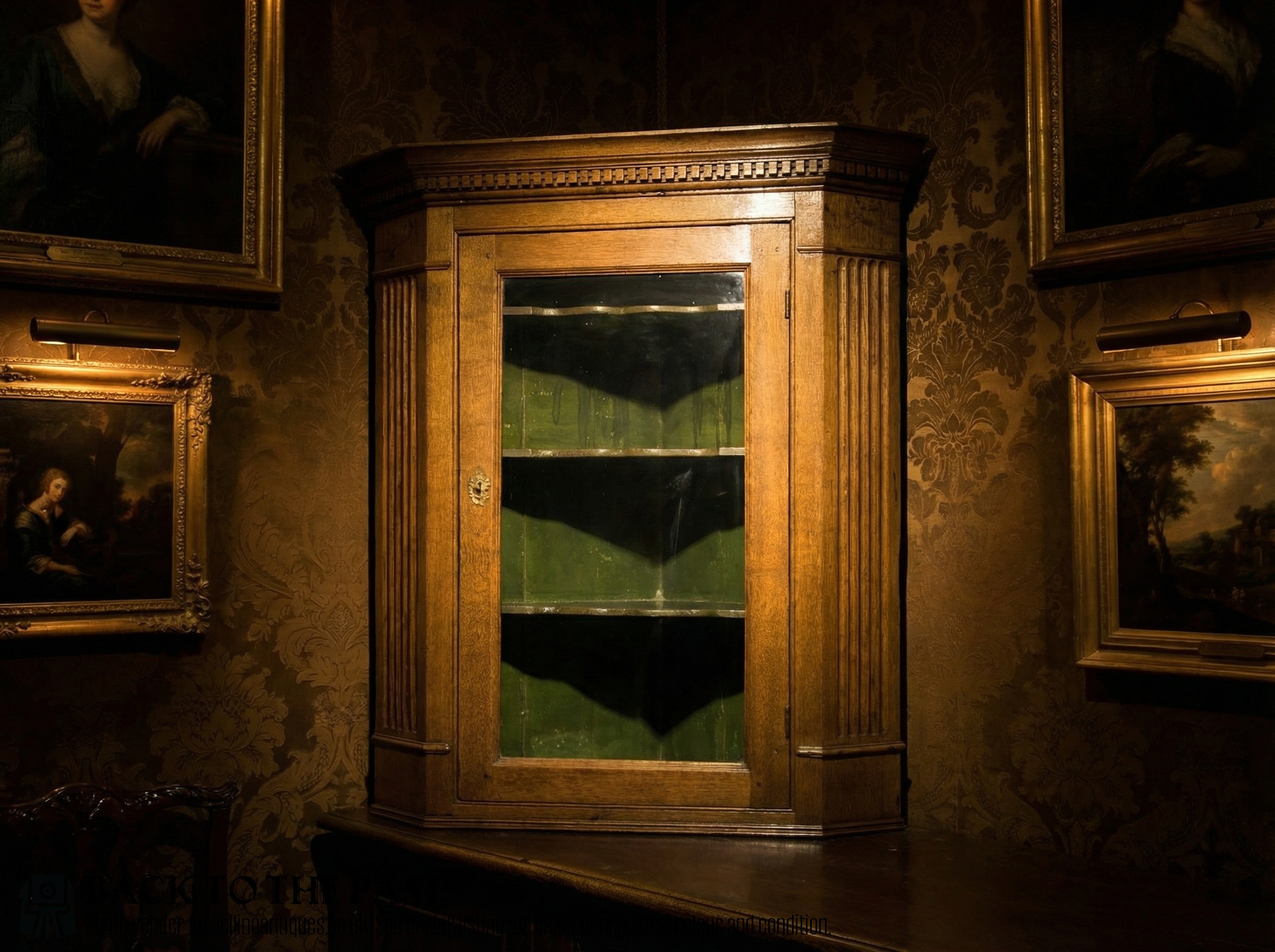
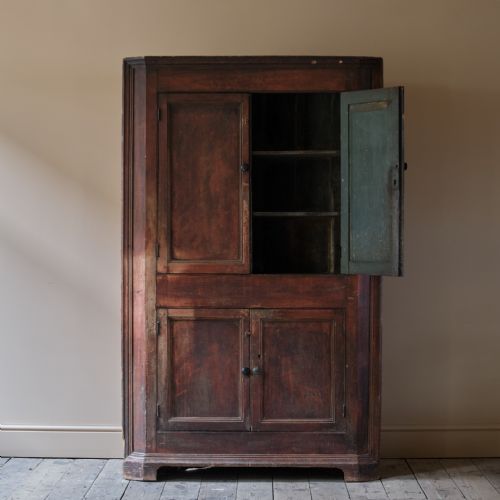
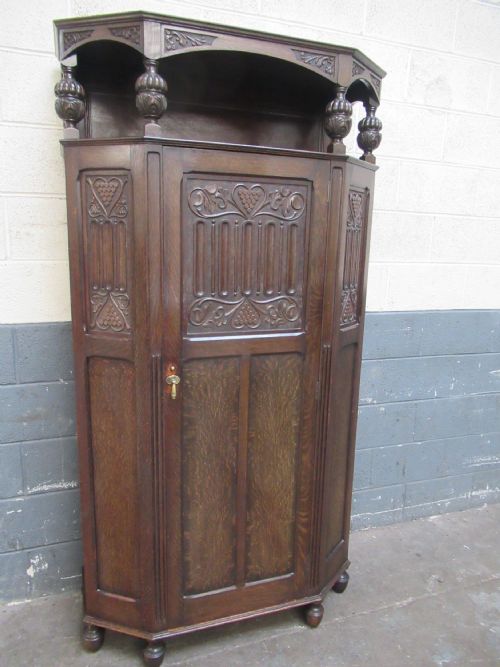
Welsh Oak Corner Cupboard Circa 1780, 18th Century
Priced at £490 from WelshAntiques
The 2026 retail price guide for Antique Corner Cupboards is drawn from a proprietary archive of over 1.1 million retail prices indexed by Sellingantiques since 2003. This guide relies exclusively on their own internal data; no external sources or auction records are used.
Analysing nearly 25 years of UK antique market history alongside current retail values, the data indicates that typical UK retail prices for Antique Corner Cupboards range between £400 and £1,900. Entry-level prices generally fall under £400 and premium examples upwards of £1,900.
Bowed or flat fronts dictate the overall shape of an antique corner cupboard.
Open the doors to find scalloped shelves, designed with curved cut-outs to display teacups and plates efficiently.
Glazed upper sections feature wooden glazing bars dividing the glass into small panes, often in geometric patterns.
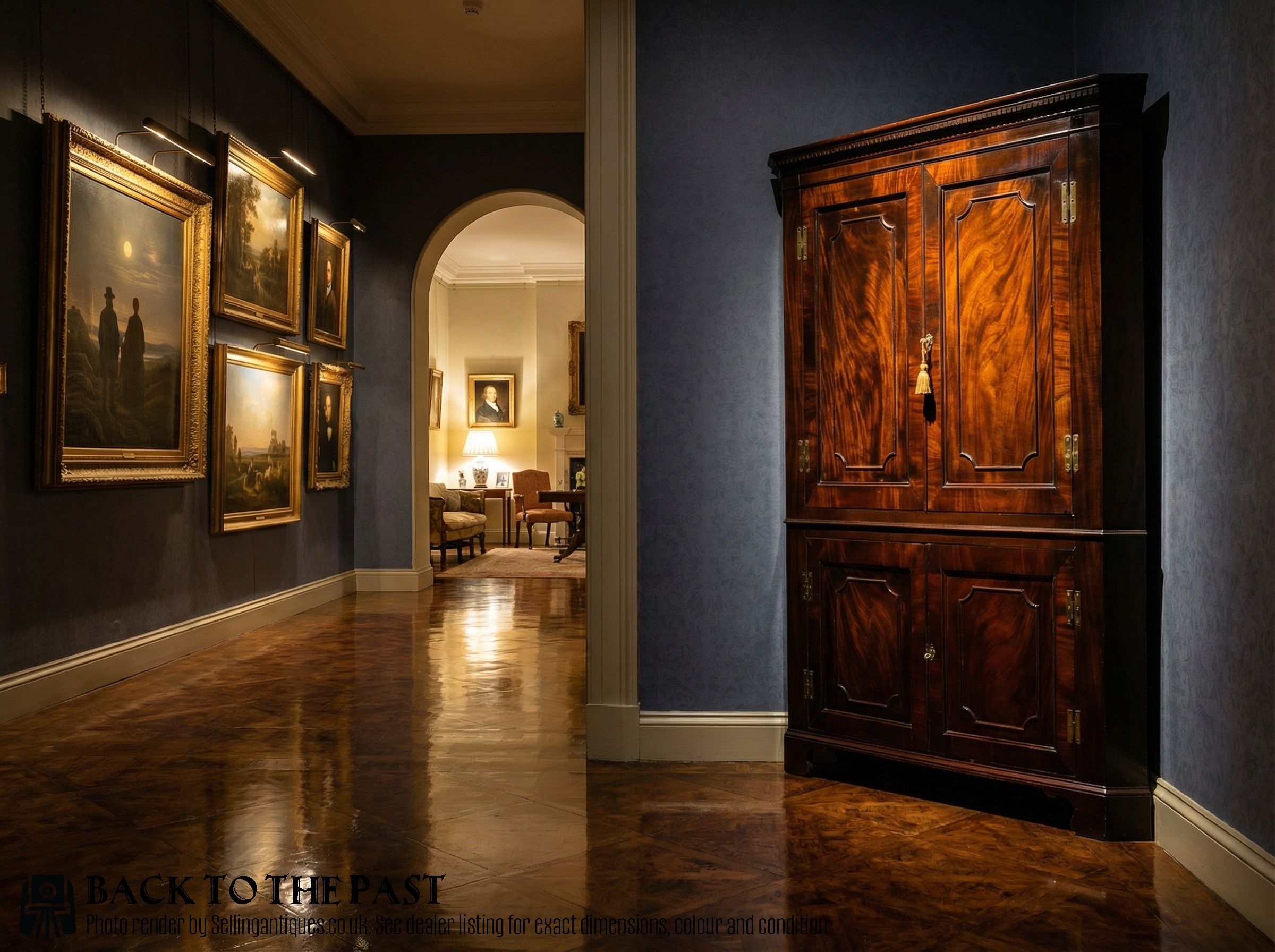
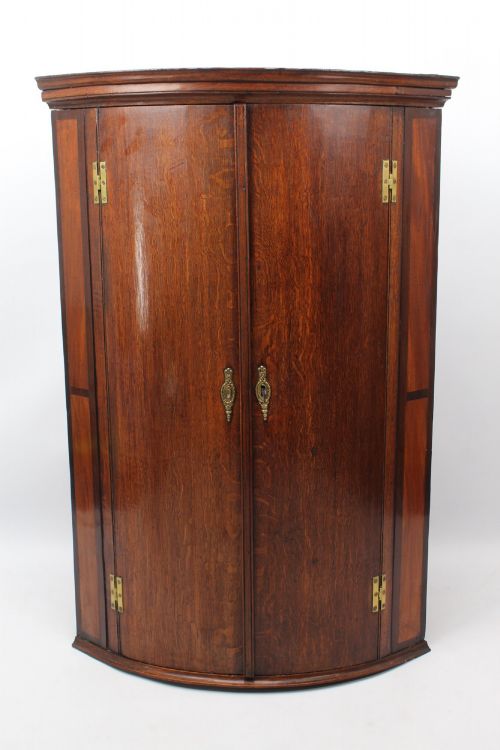
George III Mahogany Corner Cupboard C.1770., 1750
Priced at £1,985 from Roy Precious - Antiques & Fine Art
Early joints relied on simple wooden pegs driven through mortise and tenon frames.
Inspect the door panels. Flat fielded panels gradually gave way to complex mahogany veneers laid over curved pine cores.
Cabinetmakers later introduced blind tracery and intricate crossbanding to break up large expanses of solid timber on the facade.
"Many floor-standing models are actually two separate sections. The top lifts cleanly off the base for easier transport up narrow stairs."
"Look for small wooden spoon racks built directly into the side panels of the interior shelving."
"Some examples feature secret compartments hidden behind the decorative frieze just below the main cornice."
Based on almost 25 years of Sellingantiques UK antique market data, Antique Corner Cupboards appeared 4070 times (out of 1,100,000 antiques) which gives it a rarity score of 44/100.
This score measures scarcity within the Sellingantiques archive only and is not a survey of the entire antiques market, so these statistics may not be indicative of the general availability of Antique Corner Cupboards elsewhere.
Most antique hanging cupboards retain their original brass hanging plates on the back. You need to secure these directly into masonry or structural wall studs rather than modern plasterboard.
A wooden French cleat system offers a secure alternative. By attaching a hidden wooden wedge to both the wall and the cupboard, the weight distributes evenly across the whole backboard.
Antique floorboards sagged and settled over the years, and makers built cupboards to sit on those uneven surfaces. Your modern dining room floor is likely flat, causing the piece to rock.
You can address this simply. Slip thin wooden shims or folded card under the feet until the unit sits plumb. Never plane the legs down or alter the base to match a modern floor.
Once levelled, use a discreet brass bracket at the top to tie the cornice back to the wall. This stops heavy glass doors pulling the whole unit forward when opened.
A barrel back is a curved interior found in higher quality corner cupboards. Instead of flat boards meeting at an angle, the rear forms a smooth semi-circle.
Makers often painted these to display ceramics clearly.
Many provincial units have fixed shelves let directly into grooves in the side panels. You cannot move these without breaking the structural integrity of the carcase.
Some sophisticated town-made cupboards feature adjustable shelving. Look for vertical wooden racks with small notches resting inside the corners. If you see these, you can reposition the cross-supports to change the shelf height.
If yours are fixed, consider using small wire plate stands. These lift saucers to the back, filling the visual void without altering the antique.
Please note: This Antique Corner Cupboards guide and its associated pricing data are provided for general informational purposes only. It does not constitute formal financial, investment, or appraisal advice and should not be relied upon as the sole basis for any commercial activity, purchasing, or sales decisions. Sellingantiques.co.uk accepts no liability for any actions taken in reliance on this information. Always consult with a qualified professional or independent appraiser.
