
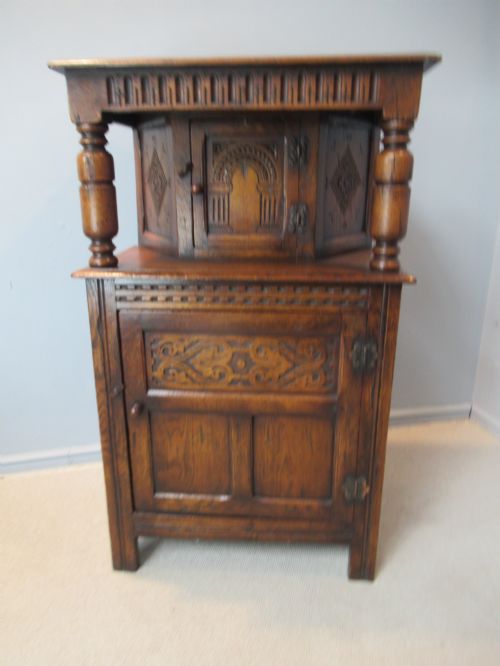

A 2026 Guide by Sellingantiques
Welsh farming communities relied heavily on these during the eighteenth and nineteenth centuries.
Look at the surviving antique cheese cupboards to understand dairy scale. Small holdings needed a single ventilated section, while large farms used massive multi-door units.
Constant airflow was the main requirement for curing cheese rounds indoors.
Regional names vary. You often hear them called caws cwpwrdd in Wales, where the tradition of building them held on longest.
Village carpenters built most of these rather than named cabinet makers. The trade was local and practical.
Estate workshops sometimes produced standard patterns for their tenant farms. Identifying individual makers is rare.
Construction details tie antique cheese cupboards to specific valleys rather than documented workshops.
The 2026 retail price guide for Antique Cheese Cupboards is drawn from a proprietary archive of over 1.1 million retail prices indexed by Sellingantiques since 2003. This guide relies exclusively on their own internal data; no external sources or auction records are used.
Analysing nearly 25 years of UK antique market history alongside current retail values, the data indicates that typical UK retail prices for Antique Cheese Cupboards range between £1,700 and £3,400. Entry-level prices generally fall under £1,700 and premium examples upwards of £3,400.
Spindle doors define the classic form. Turned wooden rods set into frames let air in but keep mice out.
Solid lower sections often provided standard storage below the ventilated curing racks.
Thick, deep shelves held heavy rows of drying truckles across the span.
Early construction relied on heavy mortise and tenon joints held by wooden pegs. They needed to support immense weight.
Turned details on the spindles got simpler as time went on.
Later nineteenth-century examples often use wire mesh instead of wooden slats for ventilation.
"The spacing between spindles was carefully calculated. It allowed maximum draught while remaining too narrow for rodents to squeeze through."
"Many retain faint outlines on the shelves where generations of rounds were turned during curing."
"Some examples break down into two pieces. This made moving them through narrow farmhouse doors much easier."
Based on almost 25 years of Sellingantiques UK antique market data, Antique Cheese Cupboards appeared 98 times (out of 1,100,000 antiques) which gives it a rarity score of 98/100.
This score measures scarcity within the Sellingantiques archive only and is not a survey of the entire antiques market, so these statistics may not be indicative of the general availability of Antique Cheese Cupboards elsewhere.
They are substantial pieces of furniture. A solid oak antique cheese cupboard built to hold dairy produce was framed with thick timber sections that add significant bulk.
You need at least two strong people to move a standard sized one. The two-part examples are easier to manage, but the base sections remain incredibly heavy on their own.
Most surviving examples lost their original dairy scent decades ago. They've spent the last century sitting in hallways or living rooms rather than working farms.
The timber breathes well because of the ventilated doors. Unless a piece has been stored in a damp outbuilding recently, it just smells like old wood and wax polish.
The shelves are almost always fixed in place. The builders housed them directly into the side panels to provide structural rigidity.
Adjustable supports couldn't handle the sheer weight of the produce.
These cupboards were built for stone dairy floors that were rarely flat. They handle uneven surfaces quite well due to their heavy frame construction.
You can pack under the feet with wooden shims to level the carcase. Getting it level is important to ensure the doors hang properly and the latches align.
Please note: This Antique Cheese Cupboards guide and its associated pricing data are provided for general informational purposes only. It does not constitute formal financial, investment, or appraisal advice and should not be relied upon as the sole basis for any commercial activity, purchasing, or sales decisions. Sellingantiques.co.uk accepts no liability for any actions taken in reliance on this information. Always consult with a qualified professional or independent appraiser.
