
Antique Trunks
A lidded box for storing or moving things: linen and clothes chests for the house, and bound or covered trunks made to travel by coach, ship or campaign.
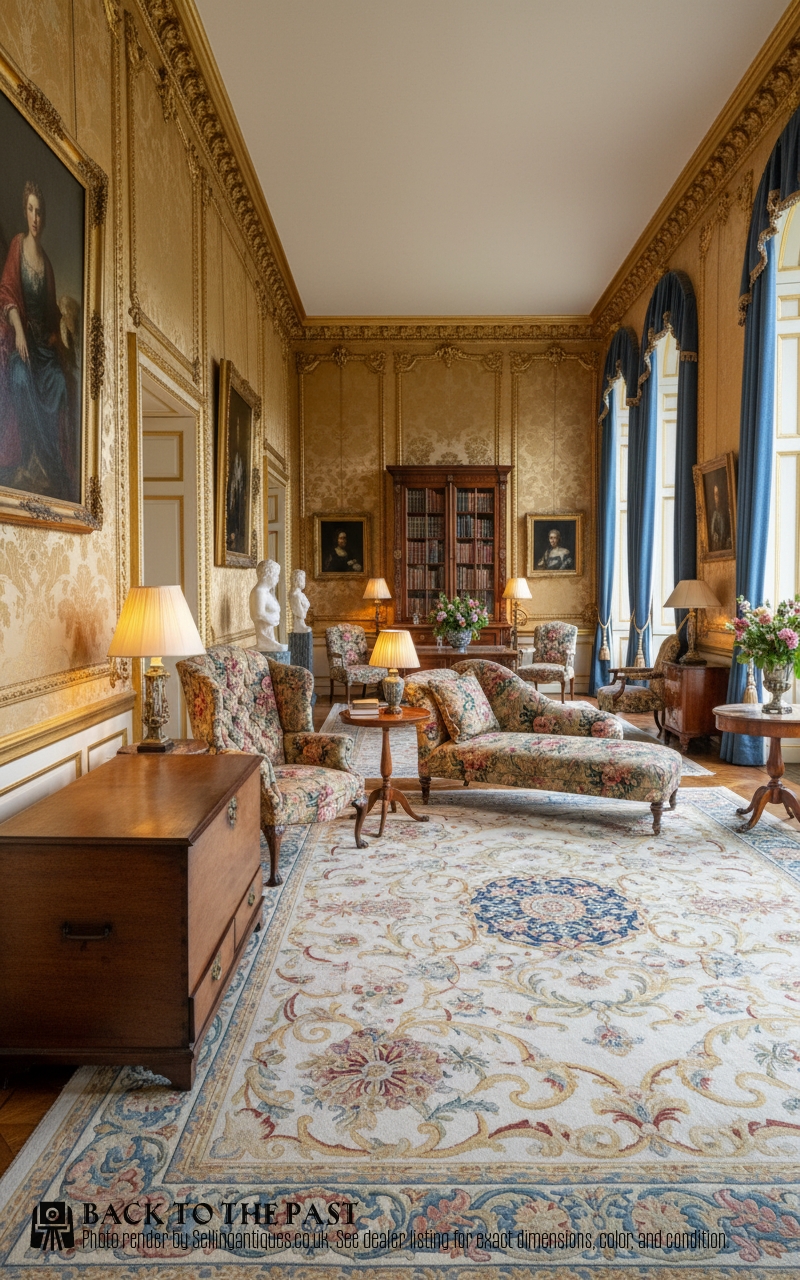
Antique Trunks
The heading covers two poles. At one end, country furniture chests in oak, elm and pine, the standard storage before drawers and wardrobes were common. At the other, portable luggage in camphor wood, leather, canvas and metal. The word trunk gets used across both.
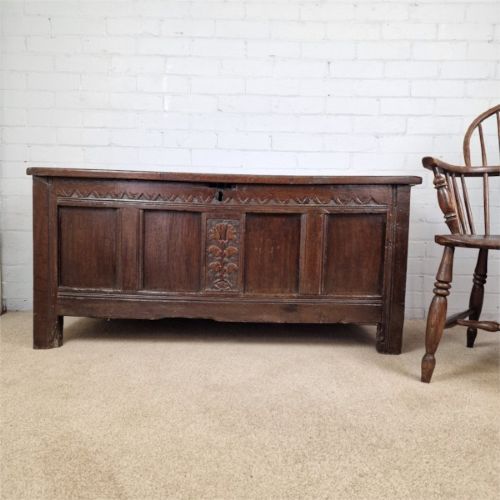
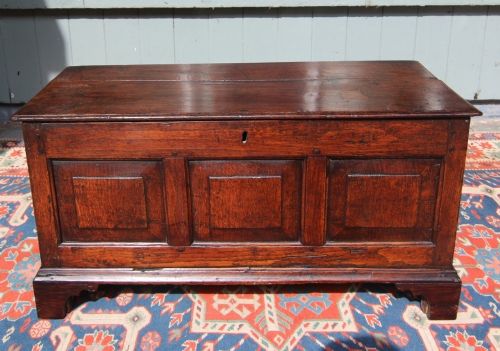
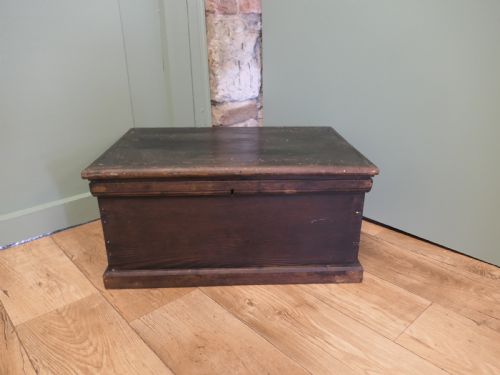
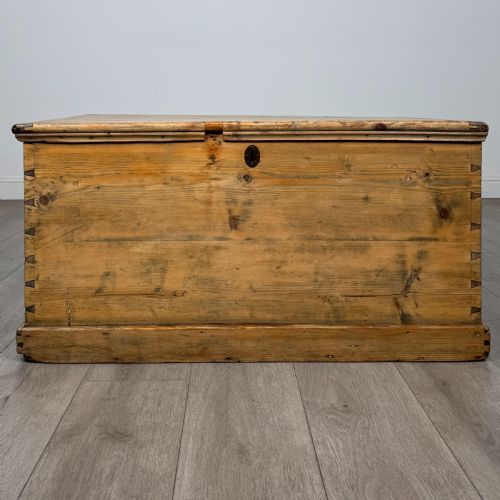
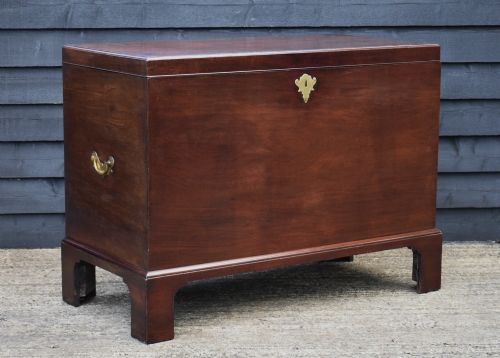
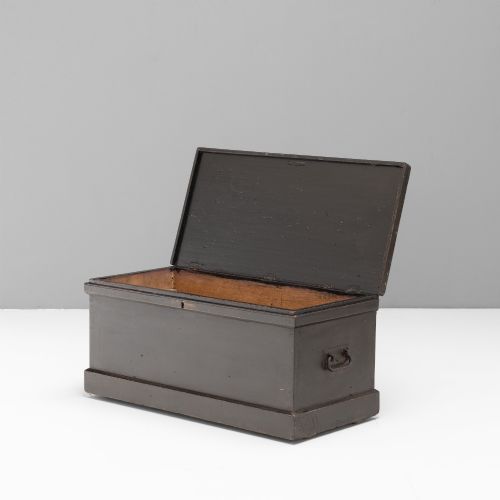
The form that dominates is a wooden rectangular chest with a hinged lid. Chest appears in around a third of titles, oak in a fifth, pine in a seventh. Lids are flat or domed, and edges are often strapped in brass, iron or wooden banding.
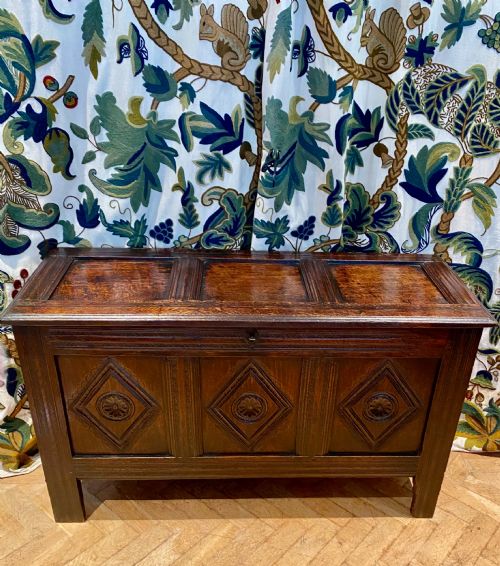
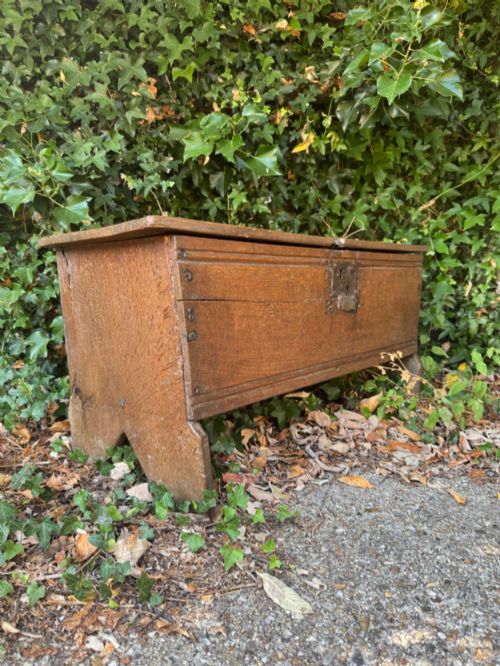
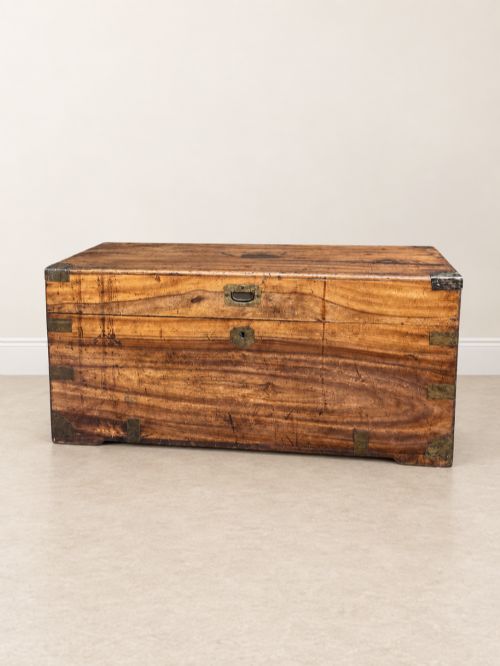
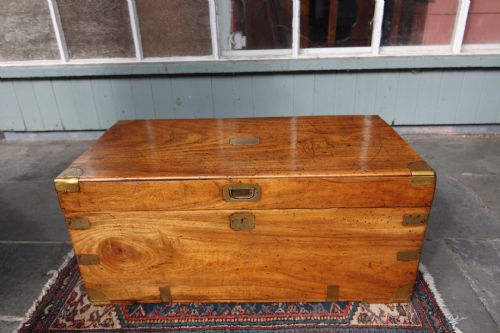
Two named types are more numerous than the rest: the English oak coffer, boarded or joined and panelled, sometimes carved; and the camphor-wood campaign trunk with brass fittings, made for military and colonial travel. Pine and elm blanket boxes make up a similar slice, many painted. Behind those sit leather, canvas and hide travelling luggage, then Chinese, Indian, teak and Zanzibar chests, which turn up steadily but thinly.
Dating is loose. Dealer dates run from 1670 to 1950, but only about a third of listings carry a clean year; the rest sit under labels like 19th Century, Victorian or Georgian. A small handful are labelled 16th Century. Carved or painted dates appear in the samples, from the late 1500s through to the 1890s. Sizes run from doll's and miniature campaign trunks to pieces stated at over a metre wide. About 211 come to market in a year on Sellingantiques, listed by 259 different dealers.
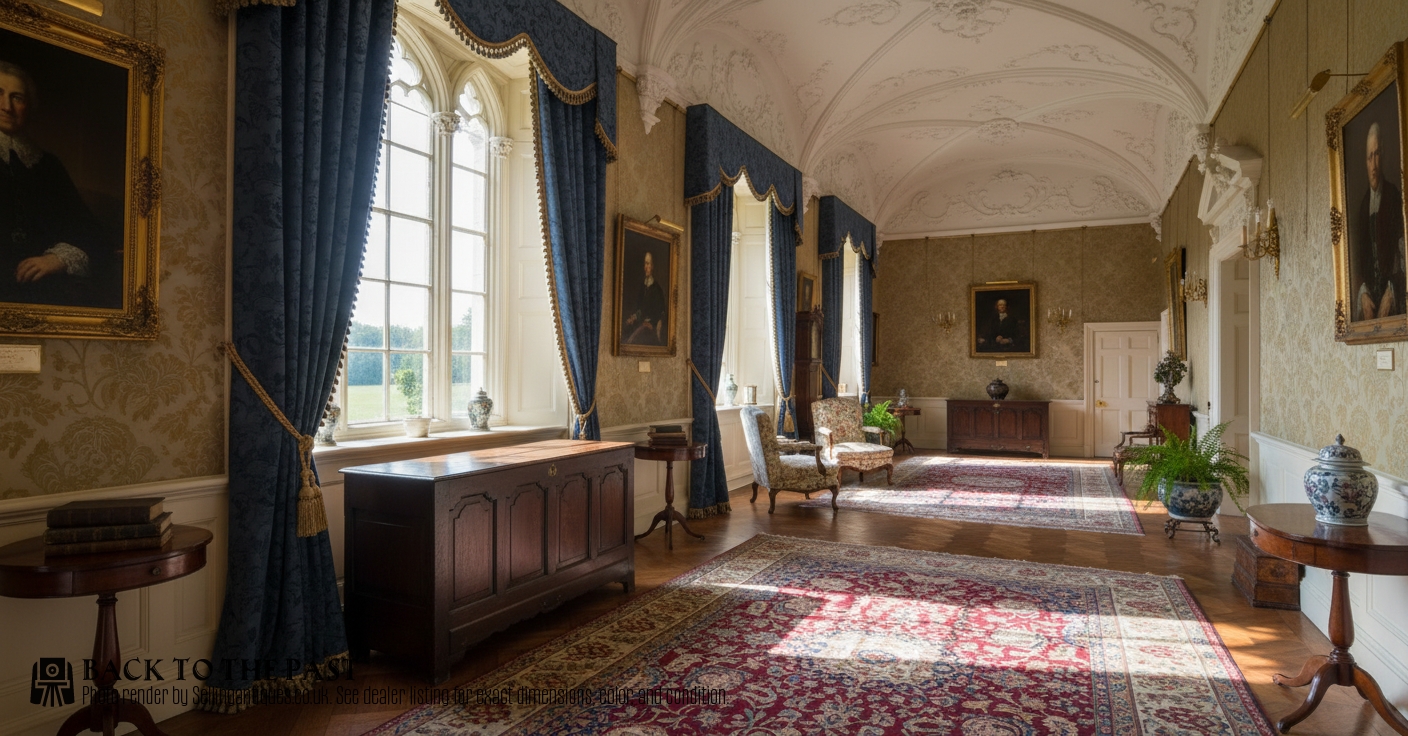
Where The Range Splits
Construction sets the first divide. Joined and panelled coffers sit at the upper end of the sampled range; six-plank and boarded chests, made from flat boards nailed together, sit lower. Timber pushes the same way, with oak, walnut, mahogany and teak above pine, and painted metal trunks at the bottom.
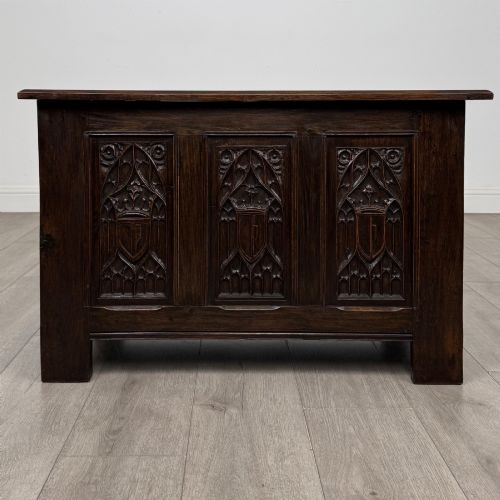
Decoration and metalwork account for much of the rest. Heavily carved oak and dated painted Scandinavian chests cluster high. On luggage, brass-bound camphor and studded leather sit well above plain covered examples, and a bound edge is the difference between a box and a piece made to survive a voyage.
Declared age lifts things too: 16th and 17th century oak at the top, 1920s and 1930s luggage and Victorian pine at the foot. So does a name in the title, whether a region such as Welsh, Dorset or Yorkshire, a named officer, or a named luggage firm. Those concentrate above the middle.
Antique Trunks Retail Price Guide 2026
Typical UK retail prices for trunks, calculated from the Sellingantiques database of over a million retail prices indexed since 2003. This retail price guide relies exclusively on Sellingantiques data; no external sources or auction records are used, so the figures do not describe the wider market.
One-offs from the archive: a deer-skin coaching trunk, a pony-skin chest, an aluminium steamer trunk and a vellum portmanteau.
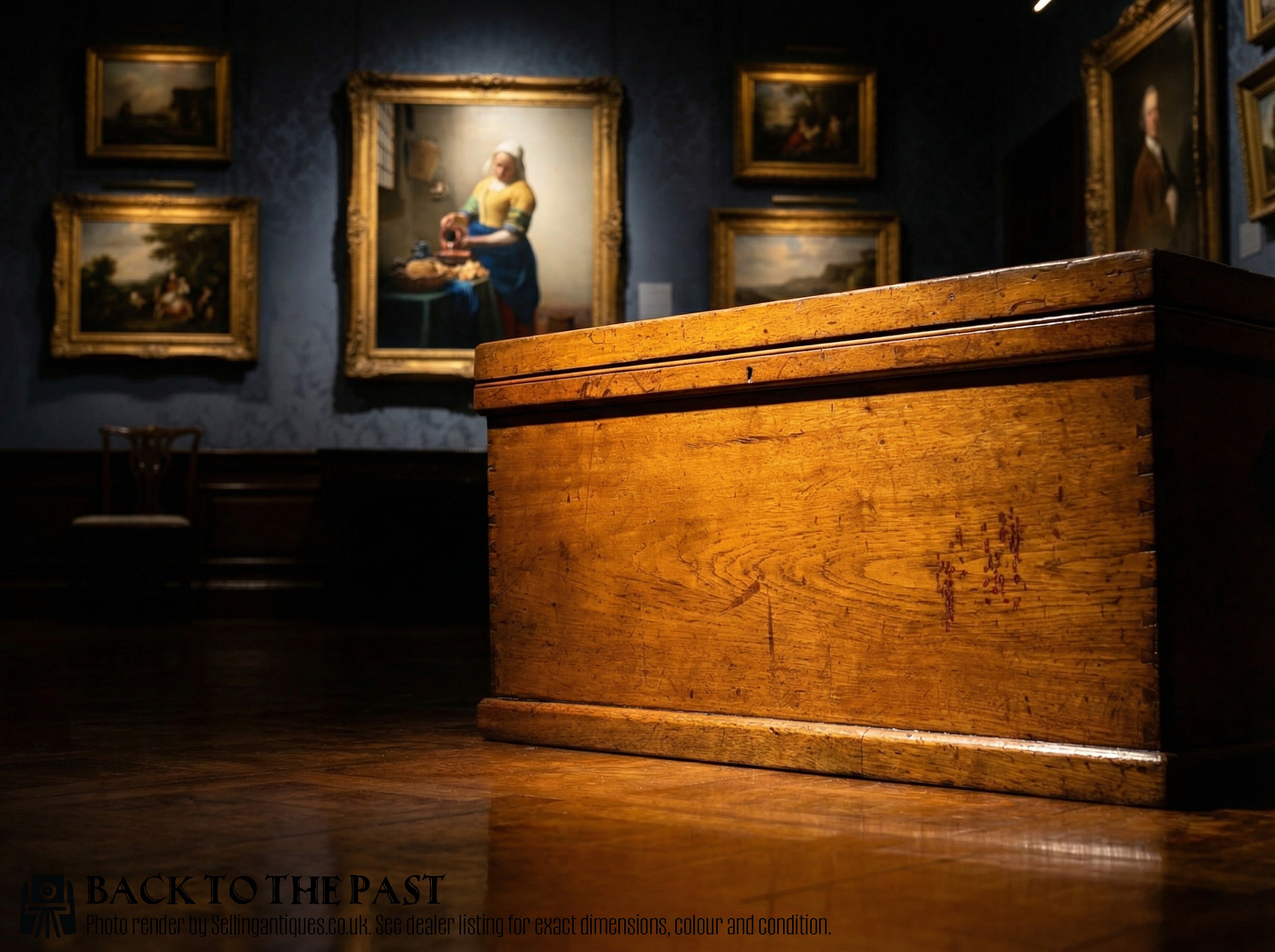
The Antique Trunks Glossary
- Coffer
- An early lidded chest, usually oak, either boarded or joined and panelled. The single most used type word in this category after chest itself.
- Mule chest
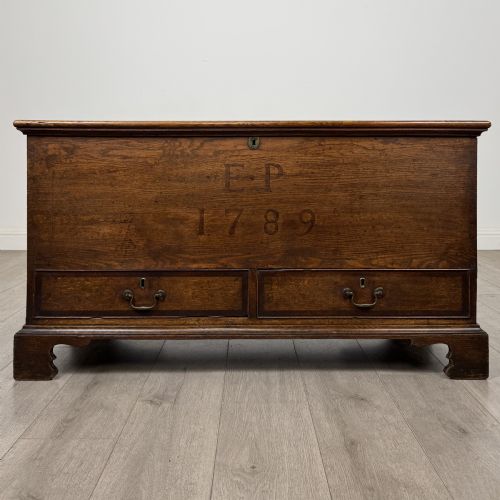
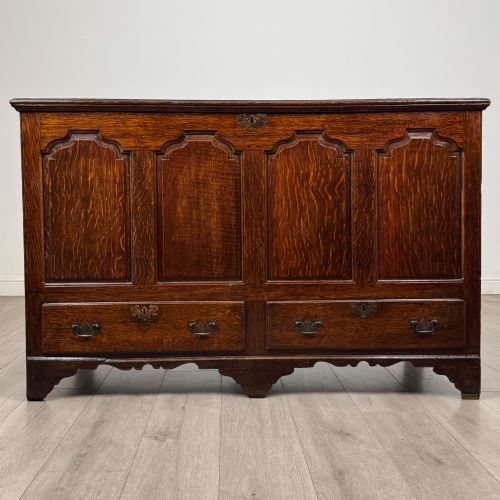
- A chest with one or more drawers built in below the box section, so it stores and holds like a chest of drawers.
- Blanket box
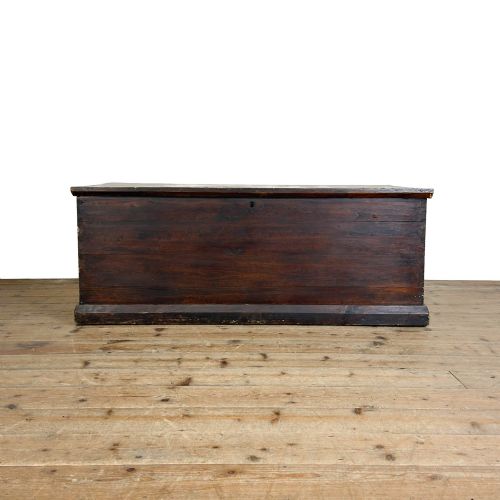
- A domestic storage chest, most often pine or elm, and frequently painted.
- Six plank
- Boarded construction from six boards rather than joined and panelled framing. It reads as simpler and earlier-looking than joinery.
- Campaign trunk
- Portable military travelling trunk, commonly camphor wood with brass fittings and bound corners. Camphor wood is aromatic, named in titles under three spellings.
- Coffer bach
- Welsh term for a small chest, spelled coffer bach or coffor bach, usually described as miniature. Kist turns up occasionally as a regional word for chest.
Antique Trunks: Frequently Asked Questions
What is the difference between a coffer and a trunk?
In these listings a coffer is a chest of furniture: oak, boarded or panelled, made to stand in a house and hold linen or valuables. Coffer appears in 357 titles.
Trunk is used more loosely, and covers the travelling side as well - bound, covered and domed boxes made for coach, ship and campaign use. Plenty of dealers use trunk for both.
Why is camphor wood so common on campaign trunks?
Camphor is the most distinctive timber in the category, named in 310 titles across three spellings. It sits almost always on campaign or military trunks rather than on domestic chests.
Those trunks are commonly brass bound, and brass-bound camphor sits well above plain examples in the range. Camphor and campaign appear together in the same title dozens of times.
How old are most of these?
The dealer-entered dates run from 1670 to 1950, but only 698 of 2,003 listings carry a clean year. The largest labels are 19th Century and Victorian, both broad.
18th and 17th Century labels follow, and a small handful of pieces are called 16th Century. Tighter decade labels such as 1920s, 1900s and 1880s are thinner on the ground.
Are painted chests part of this category?
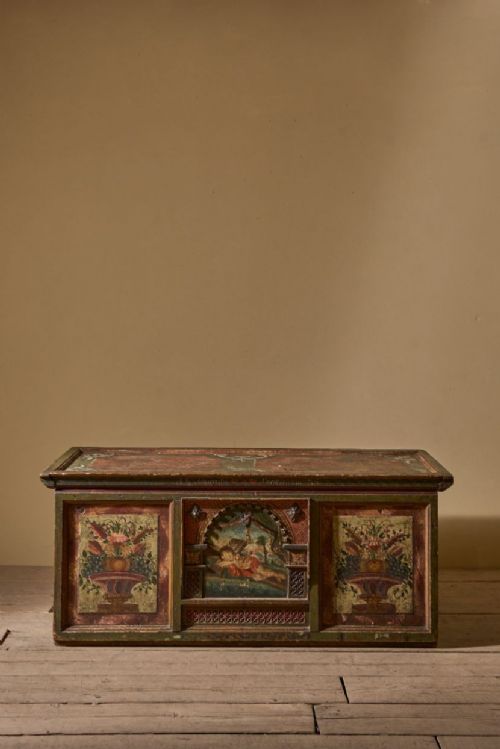
Yes. Painted appears in 115 titles, mostly on pine and elm blanket boxes, with dated painted Scandinavian chests among them.
The dated painted examples cluster high in the sampled range. Pairs of Swedish-painted boxes have come through as well.
Do Asian and colonial chests turn up?
They do, steadily but in small numbers. Chinese appears in 84 titles, Indian in 60 and teak in 85.
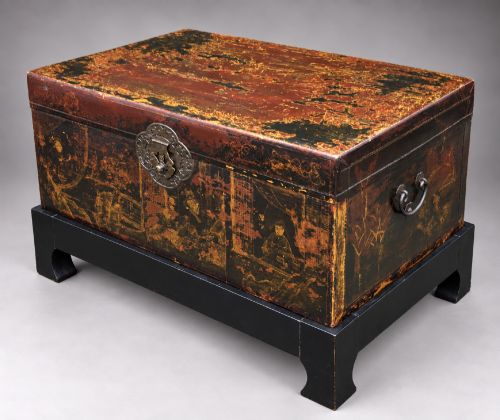
The samples also carry Zanzibar chests, Anglo-Indian and Anglo-Chinese trunks, Hoshiarpur and Bareilly work, Syrian mother-of-pearl inlay and a Portuguese colonial chest.
What are the more unusual forms?
Coverings account for several of them: a deer-skin coaching trunk, a pony-skin chest, a pigskin carriage trunk, a round hide coffer and a kilim-covered pine trunk.
Metal and vellum show up too, including an aluminium steamer trunk, a set of three tin trunks and a vellum portmanteau. Scale varies as widely, from a doll's banded trunk to a teak and iron dowry chest called monumentally large.