
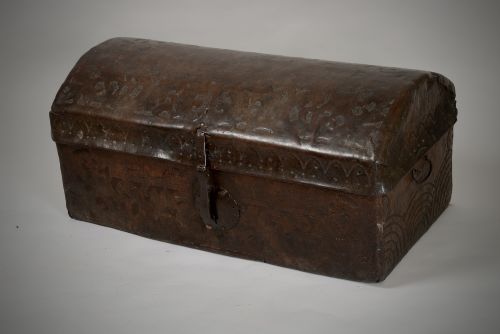


A 2026 Guide by Sellingantiques
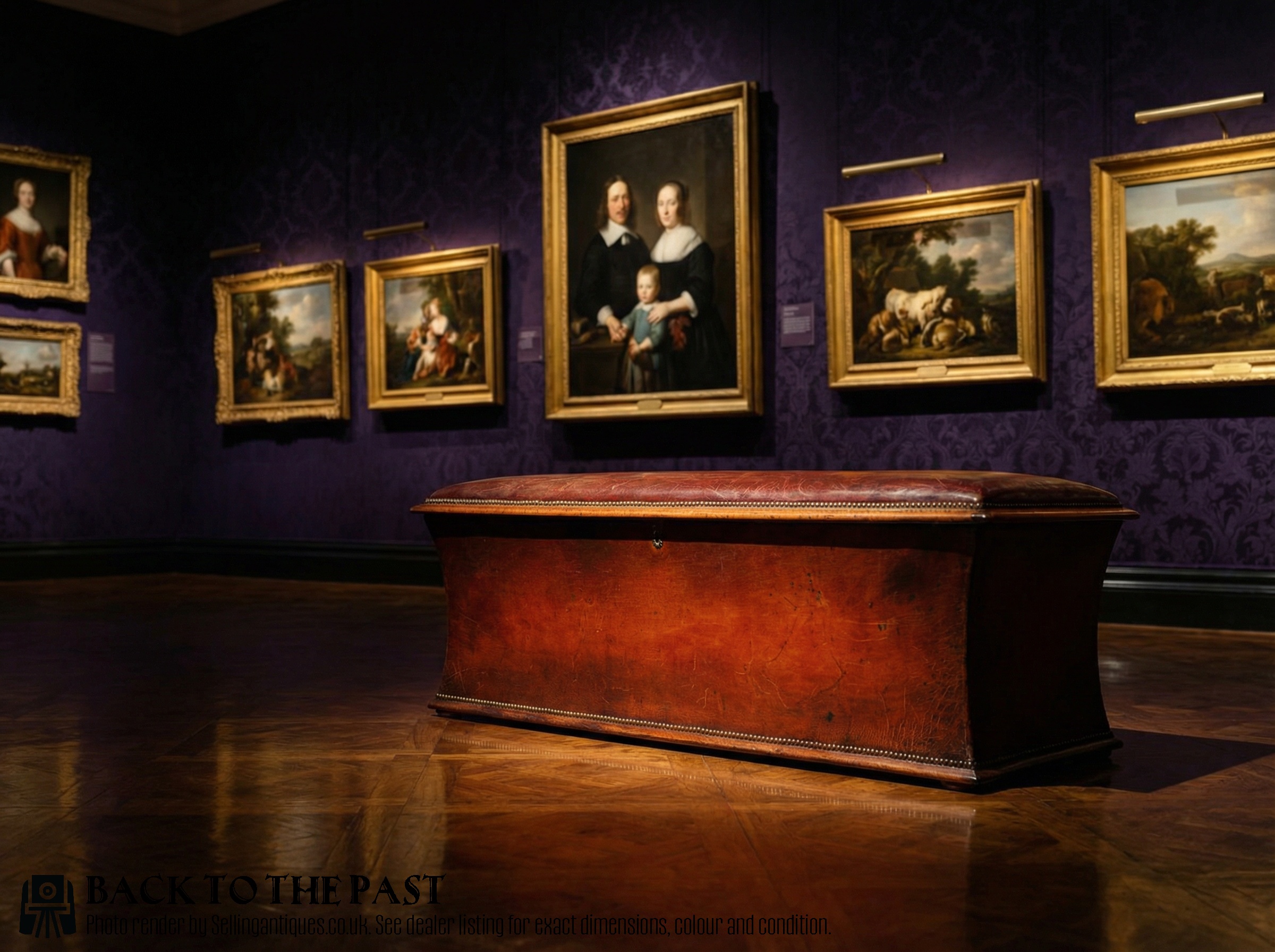
Large Victorian Mahogany Leather Ottoman, Victorian
Priced at £1,950 from Hingstons of Wilton
Stagecoach travel created the early demand. Passengers needed something robust to survive being strapped to an exposed roof in all weathers.
Look at the broader transport shift to railways. Train guards stacked luggage differently, forcing makers to flatten the lids on later antique leather chests.
Most wealthy households required sets of graduated sizes. Servants nested them together in the attics between seasonal trips to town.
Sea voyages dictated much of their development. Salt spray meant the exterior skin had to repel moisture to save the linens inside.
Richard Clements traded in St Paul's Churchyard during the mid-eighteenth century. His surviving paper labels sometimes appear pasted inside the lids of early domed examples.
Provincial towns supported their own leatherworkers. A saddle maker often turned his hand to covering a wooden box supplied by the local carpenter.
Bryant and Son operated from Ludgate Hill in the Georgian period. Documented pieces by them show close-set brass nailing forming geometric patterns.
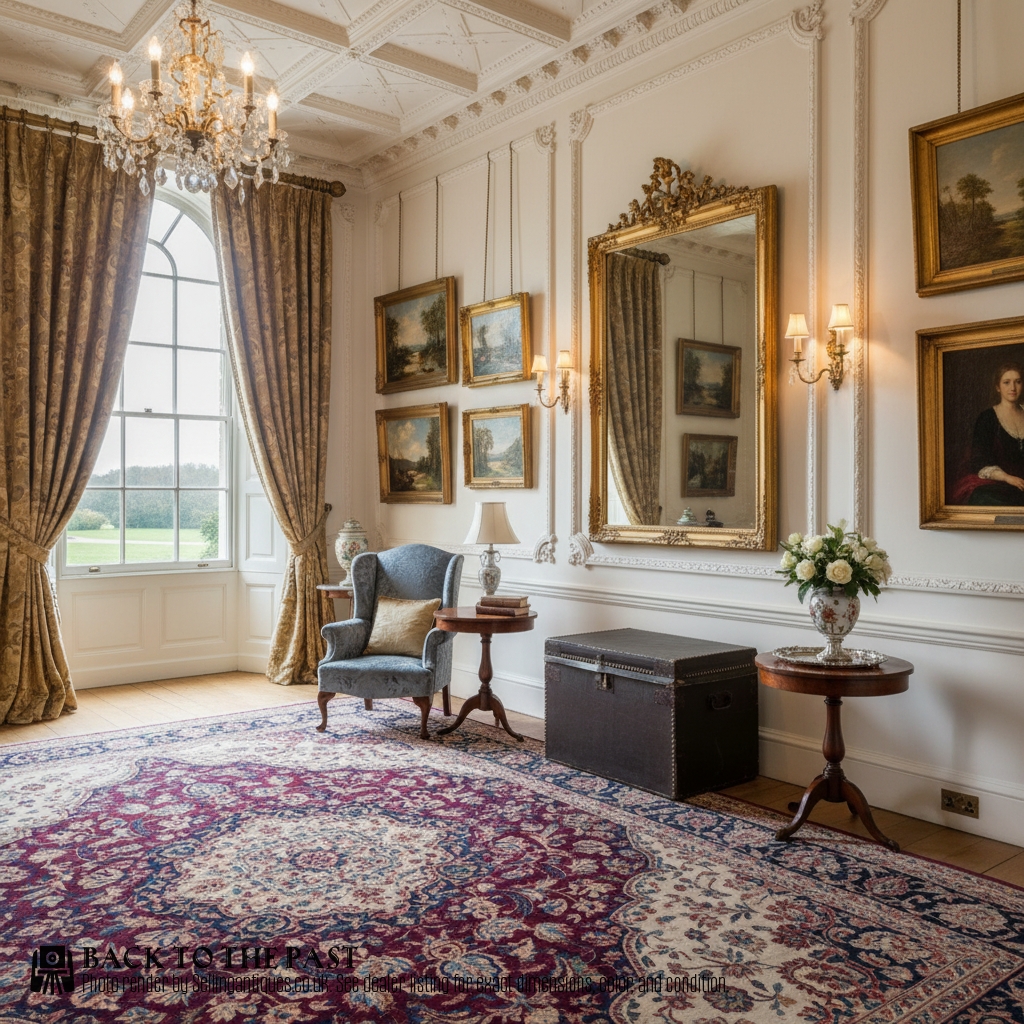
A W Insall Original Small Travelling Campaign Trunk, 19th Century
Priced at £295 from Pareglio & Ayres Antiques Interiors
The 2026 retail price guide for Antique Leather Chests is drawn from a proprietary archive of over 1.1 million retail prices indexed by Sellingantiques since 2003. This guide relies exclusively on their own internal data; no external sources or auction records are used.
Analysing nearly 25 years of UK antique market history alongside current retail values, the data indicates that typical UK retail prices for Antique Leather Chests range between £500 and £3,200. Entry-level prices generally fall under £500 and premium examples upwards of £3,200.
Side carrying handles are almost universal on antique leather chests. Smiths forged heavy iron loops to take the strain of a fully loaded trunk.
Iron hasps and staples secure the front drop. Some carry an integrated brass escutcheon covering a simple ward lock.
Domed lids feature heavily on early examples. This curve sheds rainwater effectively when left outside the carriage.
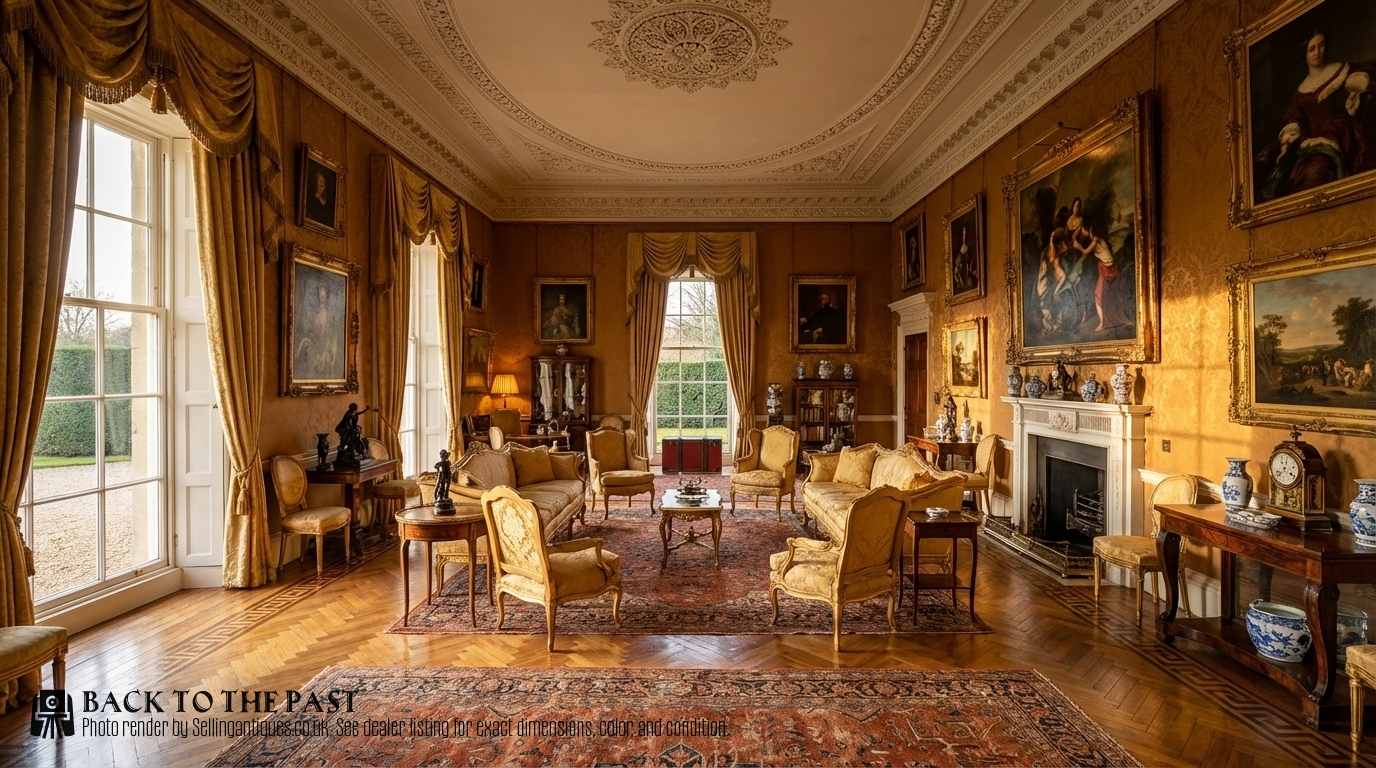
Purpose Made Leather Travel Trunk Strong Box, 19th Century
Priced at £300 from Elmgarden
Box joinery started out basic. The softwood boards were usually just nailed or pegged together before the hide hid the crude joints.
Craftsmen applied the hide dripping wet. As it dried out in the workshop, it shrank tight around the timber to form a rigid shell.
Nailing patterns evolved from simple structural lines. Later makers spent time hammering out elaborate initials and swirling motifs to identify the owner at a glance.
"Many retain their original maker's labels. These block-printed trade cards are miniature works of Georgian graphic design pasted right under the lid."
"The brass nailing acted as a primitive waterproofing system. Closely packed tacks create a tight seal at the seams where water might otherwise get in."
"You find secret compartments in some of them. False bottoms drop away to reveal shallow spaces for documents."
Based on almost 25 years of Sellingantiques UK antique market data, Antique Leather Chests appeared 17150 times (out of 1,100,000 antiques) which gives it a rarity score of 3/100.
This score measures scarcity within the Sellingantiques archive only and is not a survey of the entire antiques market, so these statistics may not be indicative of the general availability of Antique Leather Chests elsewhere.
Brush off the loose dust with a soft bristle brush first. You want to get the grit out of the crevices around the brass tacks before applying any treatment.
Rub a good quality microcrystalline wax into the hide using a clean cotton cloth. Let it sit for ten minutes before buffing it off gently. Avoid liquid leather feeds because they can loosen the ancient hide glue holding everything together.
Finding exact matches is difficult. Eighteenth-century blacksmiths forged these parts by hand, so the dimensions of the backing plates and the curve of the loops vary wildly from one chest to another.
You can sometimes source rough matches from specialist antique hardware dealers. The alternative is having a local blacksmith forge new loops to fit the surviving mounts.
The lining offered a clean barrier. Bare softwood splinters easily and resin sometimes bleeds from the knots.
Pasting down heavy paper or canvas stopped the rough timber snagging delicate silk garments.
Airing them out works best. Prop the lid open in a dry room for a few weeks to let the trapped moisture evaporate.
Keep the chest away from direct radiators or sunlight while it airs. Rapid temperature changes will dry the hide out too fast and cause the surface to split.
Some dealers put a bowl of dry bicarbonate of soda inside the closed chest for a week to absorb lingering odours.
Please note: This Antique Leather Chests guide and its associated pricing data are provided for general informational purposes only. It does not constitute formal financial, investment, or appraisal advice and should not be relied upon as the sole basis for any commercial activity, purchasing, or sales decisions. Sellingantiques.co.uk accepts no liability for any actions taken in reliance on this information. Always consult with a qualified professional or independent appraiser.
