





A 2026 Guide by Sellingantiques
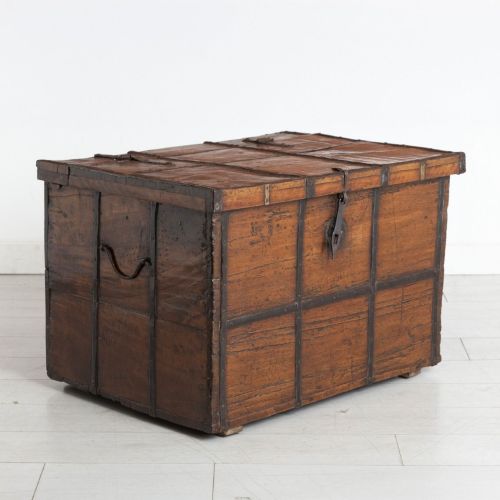
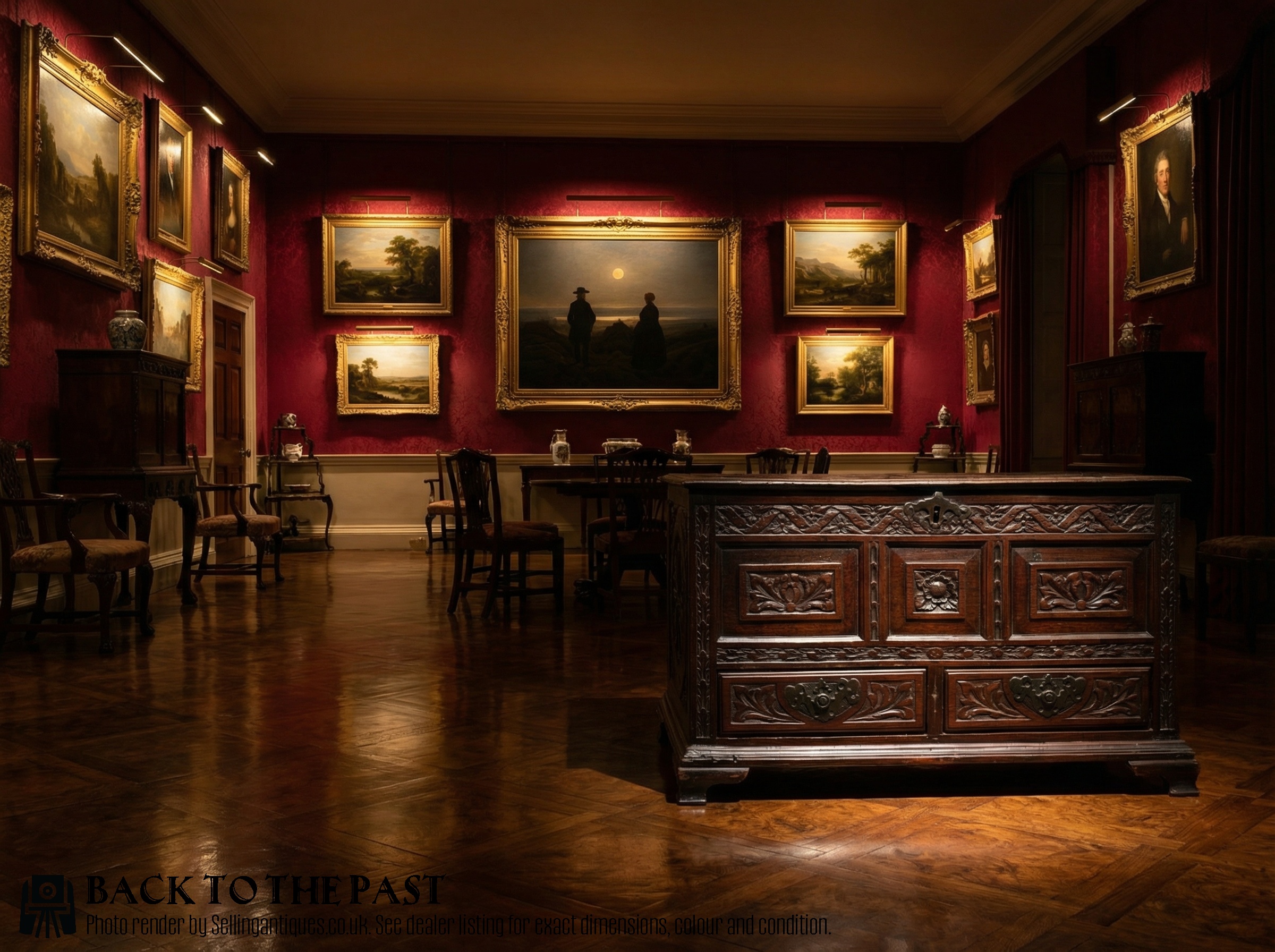
C17th Oak Coffer, 17th Century
Priced at £1,295 from Fernyhough Antiques Ltd
Early examples served as mobile luggage for households constantly on the move.
Look at the evolution from rough-hewn medieval storage to decorated domestic pieces.
Antique coffers sat at the foot of beds or lined the walls of great halls.
Solid construction meant they doubled as seating or rudimentary tables when space was tight.
Individual craftsmen rarely signed these everyday items, so you won't find a maker's mark.
Identify regional workshops through distinct carving styles, like specific foliage patterns found in West Country work.
Joiners guilds controlled production tightly in major towns, dictating how frames were assembled and pinned.
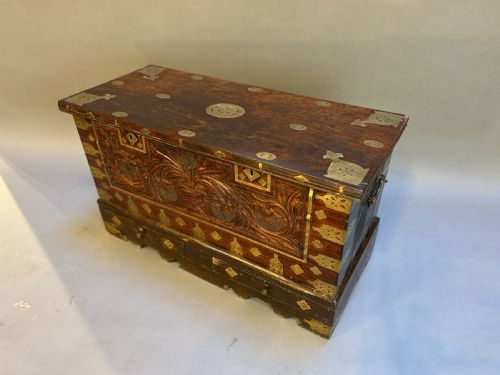
Tudor-period Welsh Oak Carved Chest or Coffer, Circa 1560, 16th Century
Priced at £5,300 from WelshAntiques
The 2026 retail price guide for Antique Coffers is drawn from a proprietary archive of over 1.1 million retail prices indexed by Sellingantiques since 2003. This guide relies exclusively on their own internal data; no external sources or auction records are used.
Analysing nearly 25 years of UK antique market history alongside current retail values, the data indicates that typical UK retail prices for Antique Coffers range between £500 and £1,800. Entry-level prices generally fall under £500 and premium examples upwards of £1,800.
Panel and frame construction allowed the wood to expand and contract without splitting.
Lift the lid to find a small internal till fixed to one end.
Carved front panels often feature linenfold patterns or repeating geometric arches.
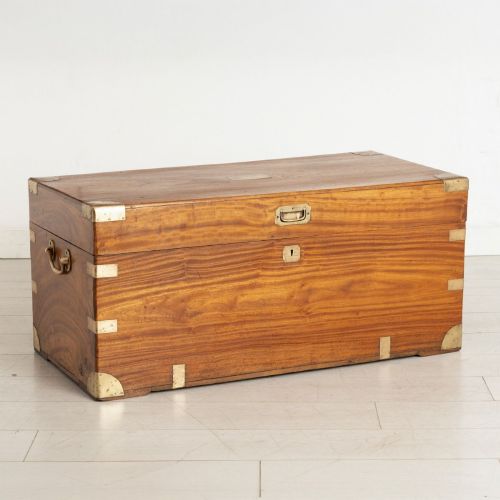
Georgian Coffer Bach, Georgian
Priced at £480 from The Ark Stores
Six boards simply nailed or pegged together formed the earliest crude versions.
Mortise and tenon joints arrived later and changed how antique coffers were built.
Wooden pegs driven through these joints held the frame tight without needing expensive iron nails.
"Some early surviving ones spent centuries tucked safely away in church vestries holding parish records."
"Regional carvers often incorporated specific local flowers into their individual panel designs."
"Heavy lids often rest on angled iron pin hinges hidden neatly inside the back rails."
Based on almost 25 years of Sellingantiques UK antique market data, Antique Coffers appeared 6945 times (out of 1,100,000 antiques) which gives it a rarity score of 25/100.
This score measures scarcity within the Sellingantiques archive only and is not a survey of the entire antiques market, so these statistics may not be indicative of the general availability of Antique Coffers elsewhere.
The small internal compartment kept candles safe from mice and damp. Wax was an essential light source during the winter months.
People also used these compartments to store loose coins. They keep tiny items from getting lost among heavy folded blankets.
Distinct carving styles help identify regional workshops. Intricate floral motifs often point to the West Country, where local joiners developed specific foliage patterns.
Most chests with these repeating floral panels date to the late seventeenth century. The style dominated provincial trade during that period.
You can sometimes identify the exact town if the flower matches local parish carvings.
They work well in the centre of a room. Flat lids offer a stable surface for trays and books.
Just remember they are built from solid timber and hold a lot of weight. Moving them to vacuum underneath takes some effort.
A large overhang is standard on boarded variations. Extra timber protected the joints from rain when they were moved outside.
Joined frames usually have lids that sit closer to the carcase. If a joined frame has a huge overhang, it's likely a later replacement cut from old floorboards.
Please note: This Antique Coffers guide and its associated pricing data are provided for general informational purposes only. It does not constitute formal financial, investment, or appraisal advice and should not be relied upon as the sole basis for any commercial activity, purchasing, or sales decisions. Sellingantiques.co.uk accepts no liability for any actions taken in reliance on this information. Always consult with a qualified professional or independent appraiser.
