
Antique Waterfall Bookcases
A free-standing open bookcase whose shelves step forward and down, each deeper than the one above, made for drawing rooms and small rooms rather than the library wall.

Antique Waterfall Bookcases
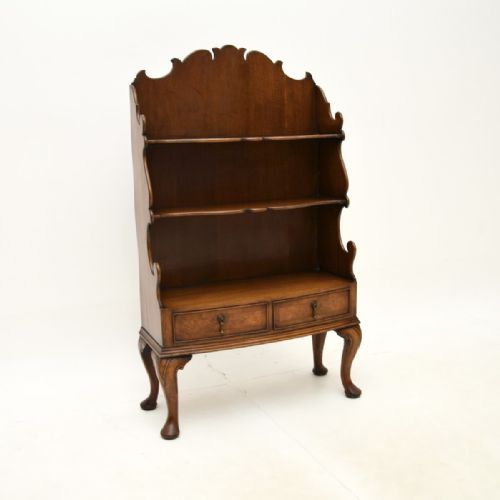
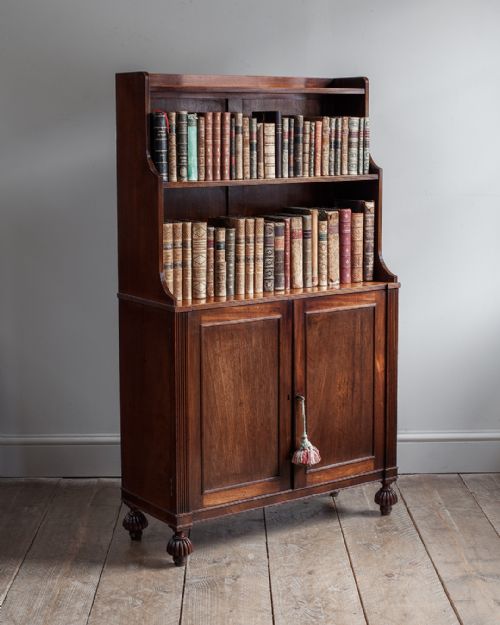
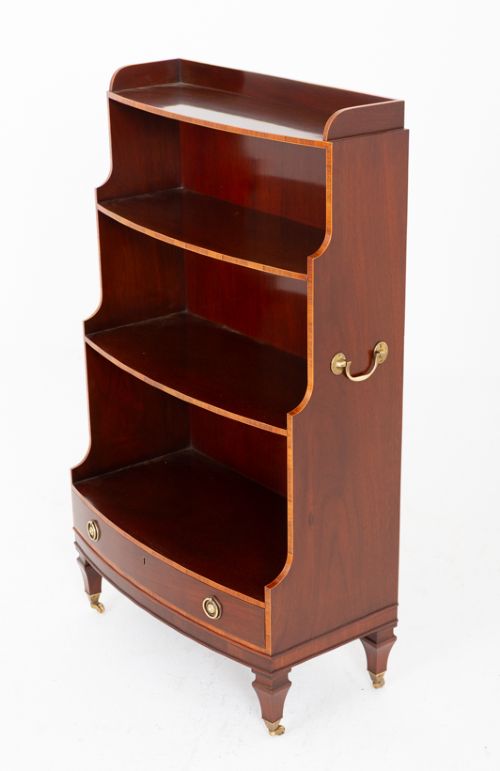
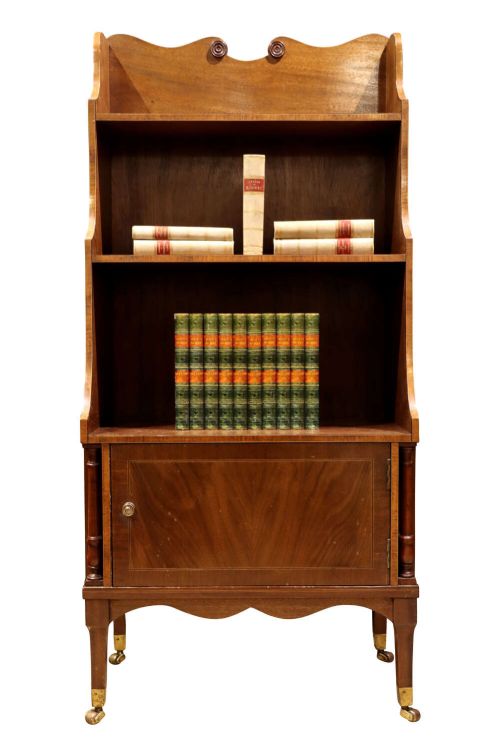
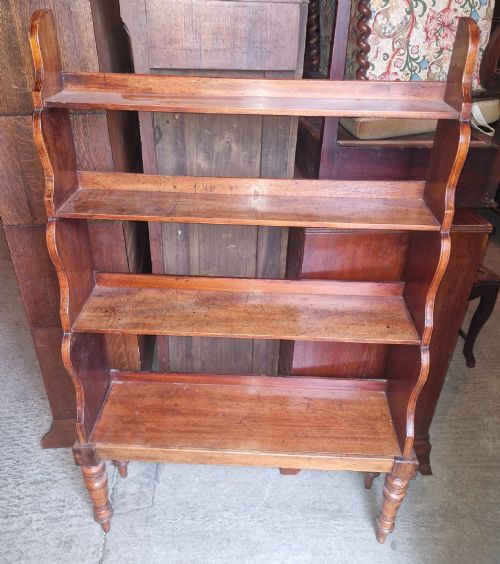
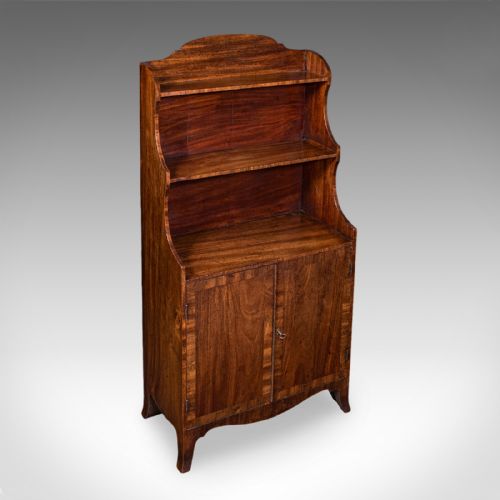
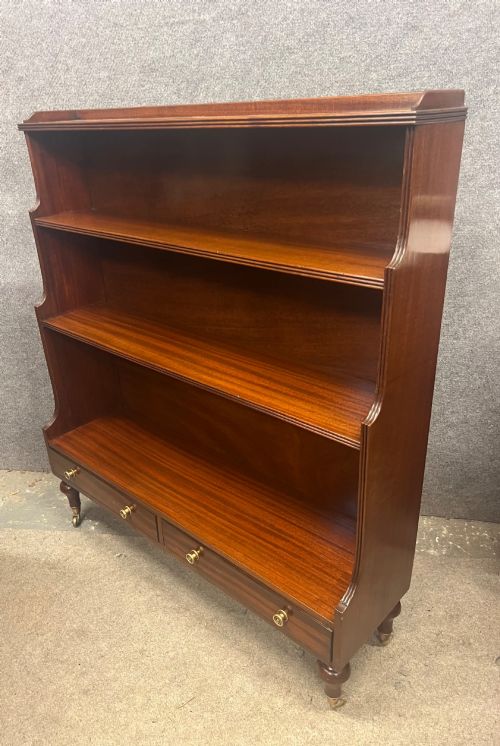
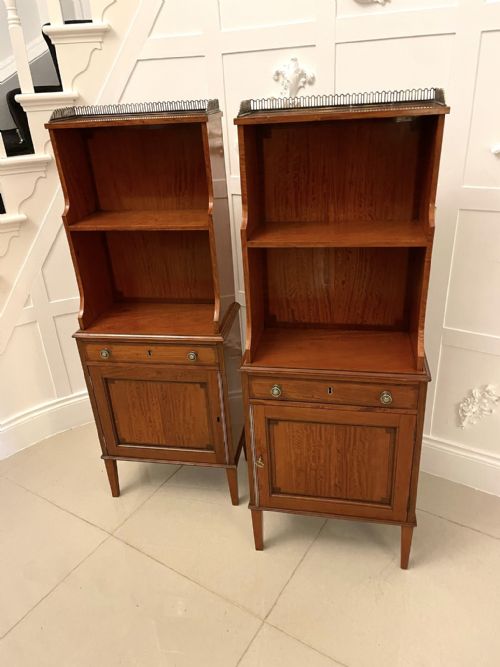
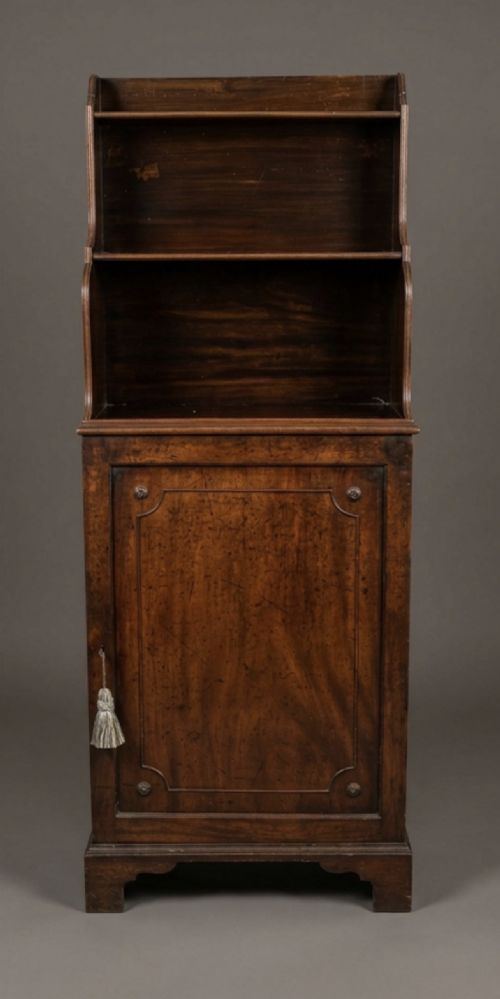
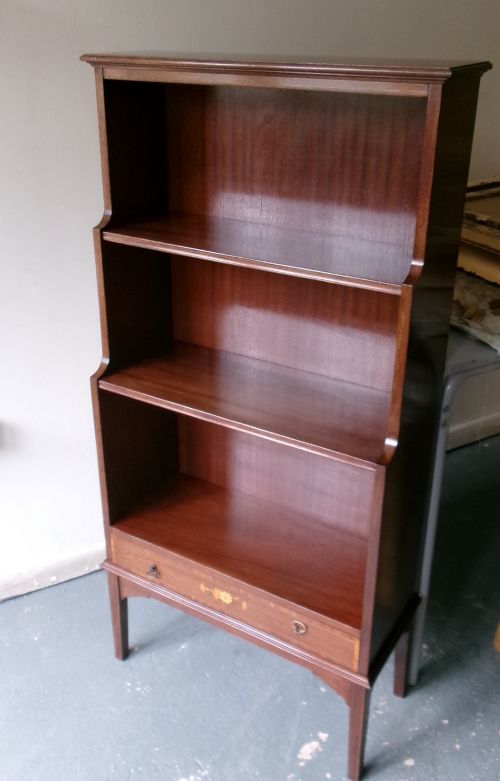
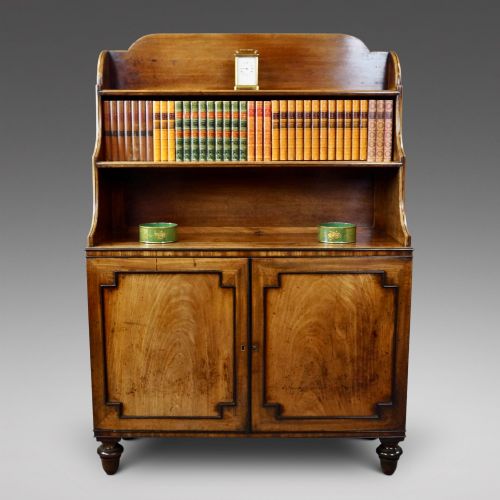
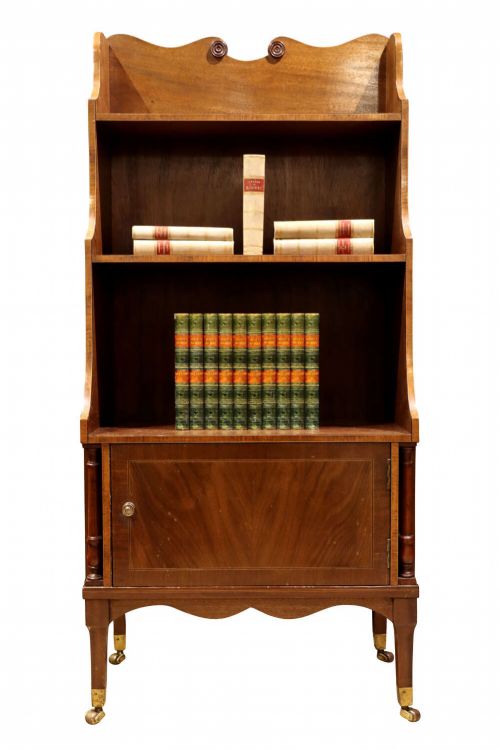
The name describes the profile. Shelves are graduated, each one deeper and often taller than the one above, so the front cascades from a shallow top tier to a deep bottom one. The form settled in Britain in the late 18th and early 19th centuries, when private libraries spread and people wanted small movable bookcases for rooms other than the library.
The version you're most likely to meet is a single open mahogany example of four to six graduated shelves, described as Regency or Regency-style. Mahogany carries more than half of all titles on Sellingantiques, with oak a distant second and pine third. Open shelves dominate; glazing is all but absent from this category.
Small size is a recurring selling point, with dwarf, neat proportions and small proportions turning up throughout, and the small ones sit at both ends of the range rather than only the cheap end. A significant minority stand on a cupboard, drawer or chiffonier base instead of plain feet. The largest sampled pieces run to six tiers and around 185cm tall.
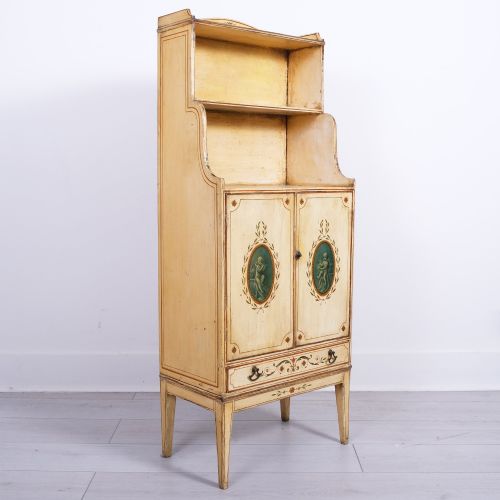
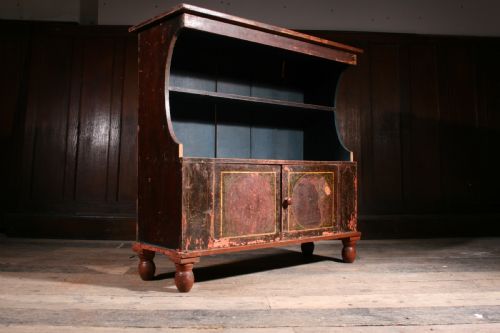
Four groups account for most of what's listed: Regency and Georgian mahogany open examples, roughly a third to a half of the archive; Edwardian and early 20th-century mahogany revivals, about a quarter to a third; oak pieces largely dated between 1900 and 1930; and a smaller run of painted, grained and scrumbled pine. Pairs are uncommon but real. Dating is loose, and the largest single label in the dated field is a century-wide 19th Century, so reign words are the dealer's opinion rather than a fixed date.
What Sets Them Apart
Timber does most of the work. Rosewood, satinwood and figured or flame mahogany sit in the upper part of the range, while oak and plain pine concentrate at the bottom. Odd timbers turn up once or twice across the whole archive: yew, fruitwood, burr walnut, and a teak Anglo-Indian pair.
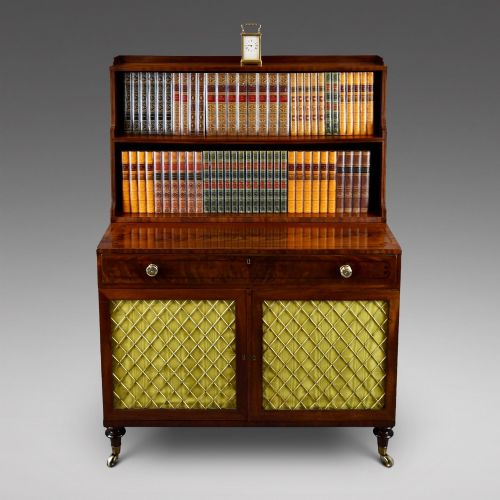
Stated period pulls in the same direction. Regency, George III, George IV and William IV attributions cluster above the Edwardian, 1920s and 1930s revivals, which gather low. Decorative work reinforces it, with brass inlay, marquetry, satinwood crossbanding and boxwood or ebony stringing all appearing in the upper part of the range.
Two other things lift a piece. Pairs sit well above singles, and they take a disproportionate share of the top. Within the painted group, original paint or an original grained finish sits far above plain painted pine. Imitation timber is part of the tradition, not a later cheat: simulated rosewood and faux coromandel both occur.
Antique Waterfall Bookcases Retail Price Guide 2026
Typical UK retail prices for waterfall bookcases, calculated from the Sellingantiques database of over a million retail prices indexed since 2003. This retail price guide relies exclusively on Sellingantiques data; no external sources or auction records are used, so the figures do not describe the wider market.
About thirty-three waterfall bookcases are listed on Sellingantiques each year, and 121 different dealers have handled one.
The Antique Waterfall Bookcases Glossary
- Waterfall
- Shelves stepping forward and down, each deeper than the one above, giving the cascading front the name describes.
- Open bookcase
- No doors or glazing to the shelves. It's the commonest configuration in this category by a wide margin.
- Dwarf
- A low bookcase, usually waist height or under. The word recurs across listings, often alongside neat or small proportions.
- Cupboard base
- An enclosed cupboard or drawer beneath the open shelves. A chiffonier bookcase is the same idea with a small cupboard below.
- Crossbanding and stringing
- Crossbanding is a border of contrasting veneer laid across the grain; stringing is fine inlaid line work, in boxwood or ebony.
- Scrumbled
- A decorative grained paint finish, seen on country pine examples. Simulated or faux describes one timber painted or grained to imitate another.
Antique Waterfall Bookcases: Frequently Asked Questions
How many come up for sale each year?
About 33 waterfall bookcases come to market on Sellingantiques in a year, and 121 different dealers have listed one.
That spread matters. It's a form almost any general furniture dealer will handle, rather than the preserve of a few specialists.
Which timber is most common?
Mahogany, and by a long way. It carries 178 of 319 titles, with oak second at 37 and pine third at 17.
Everything else is scarce. Rosewood appears in a handful of titles, and satinwood, burr walnut, fruitwood, yew and teak each turn up only once or twice in the whole sample.
Are waterfall bookcases usually glazed?
No. Open shelves dominate, and only one sampled title mentions glazed doors at all.
Where a piece is enclosed, it tends to be at the bottom rather than the front: a cupboard, drawer or chiffonier base under the open tiers.
What do the Regency and Georgian labels mean here?
They're dealer descriptions, and they overlap. Regency appears in 79 titles while the dated field records 45 Regency entries, and George III, George IV and William IV between them account for another 21 titles.
The dated field runs 1800 to 1960, with 110 of the 319 listings carrying a clean year. The rest rely on reign or century labels, and the largest single bucket is the century-wide 19th Century.
Treat a reign word as an opinion about period, not a fixed date.
Do pairs turn up?
They do, in 22 titles. Sampled pairs include mahogany, oak, walnut, pine, satinwood and teak.
They sit well above single examples and occupy a disproportionate share of the top of the range.
Are there unusual variants of the form?
A few one-offs appear in the samples: a hanging version, a tabletop one, a double-sided example, a writing-desk hybrid, a Canterbury variant and a breakfront pair.
Revival pieces are more regular. Nine titles use the word, mostly on Edwardian through to 1930s mahogany made in an earlier taste.