It was listed by Regent Antiques. Sold pieces stay on Sellingantiques as a record of what has passed through, and the next one is rarely far away.
Regent Antiques has dated this piece to the 19th Century.
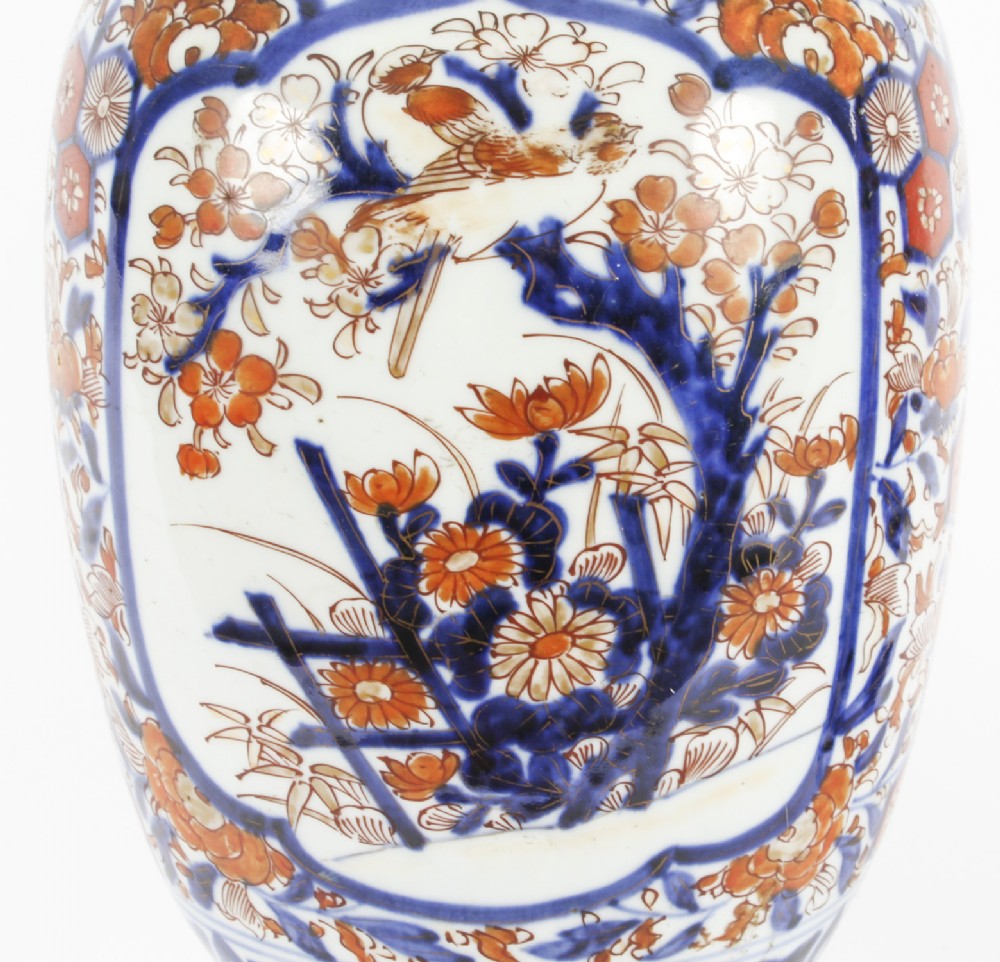
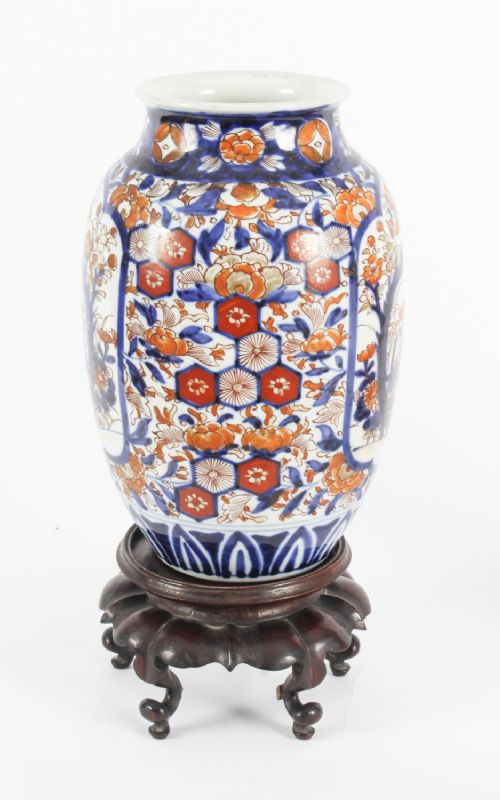
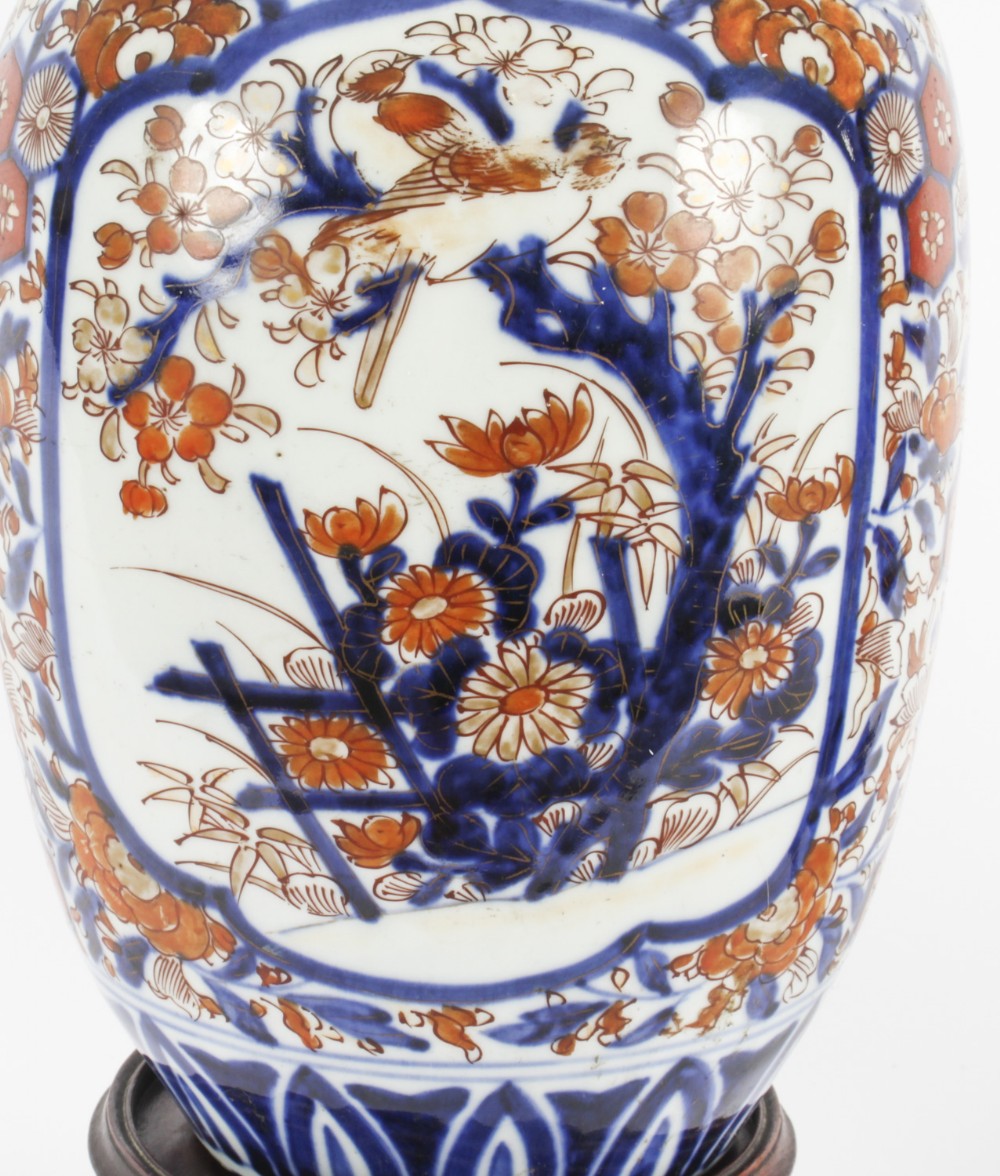
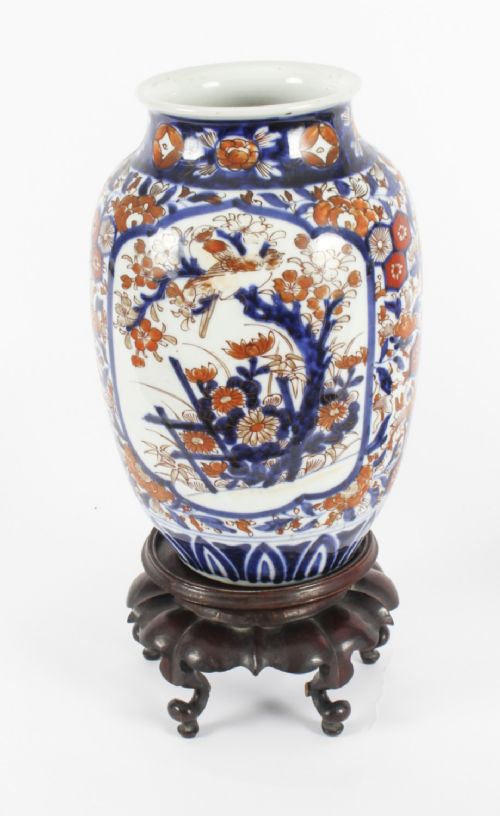
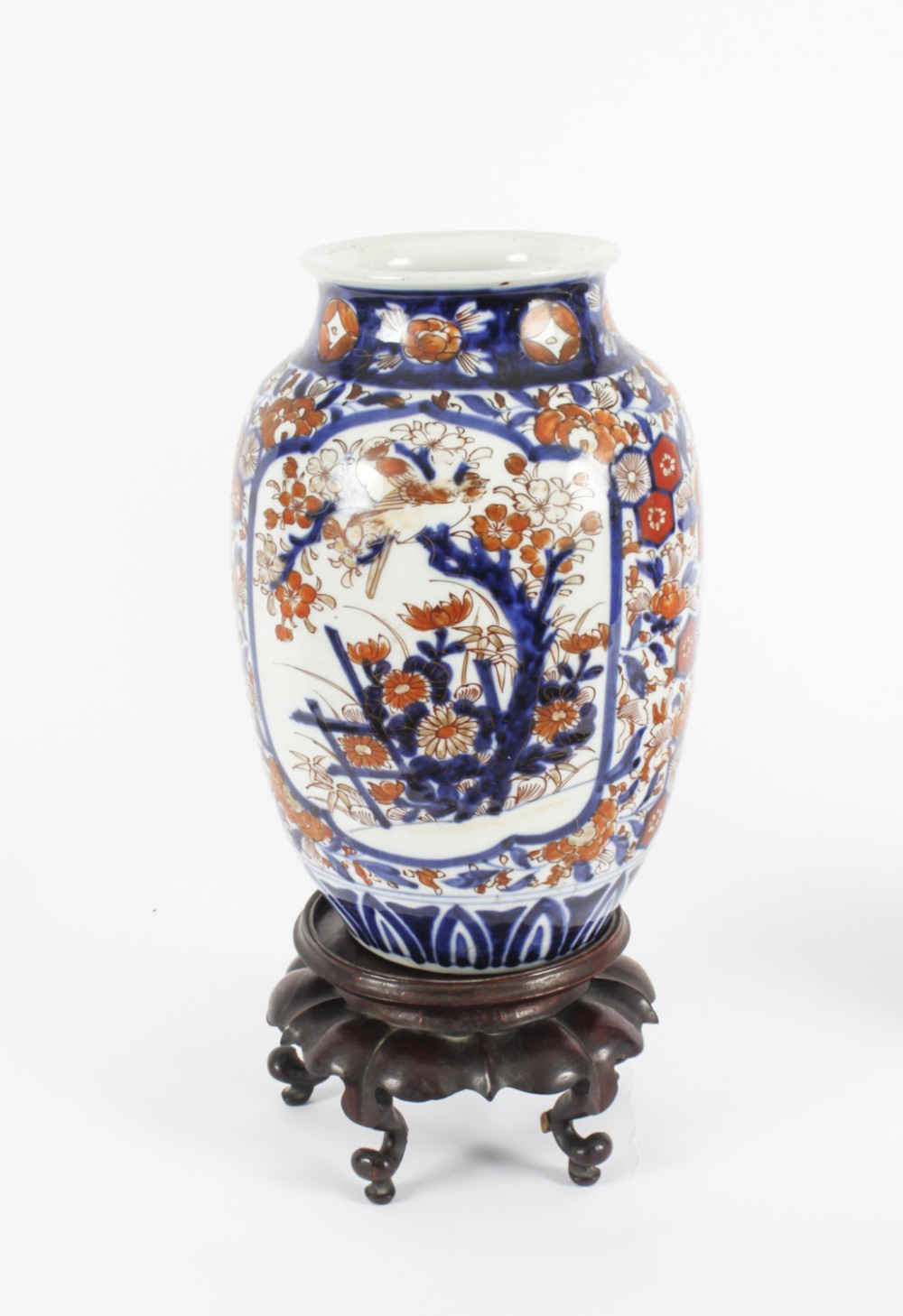
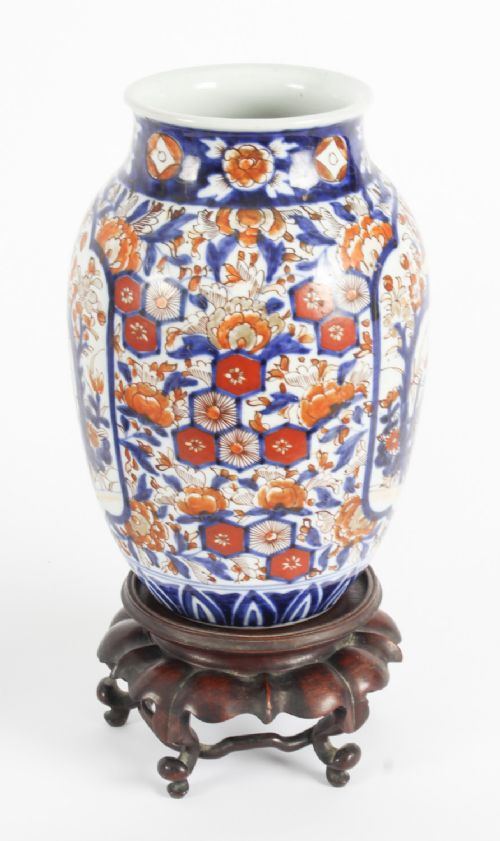
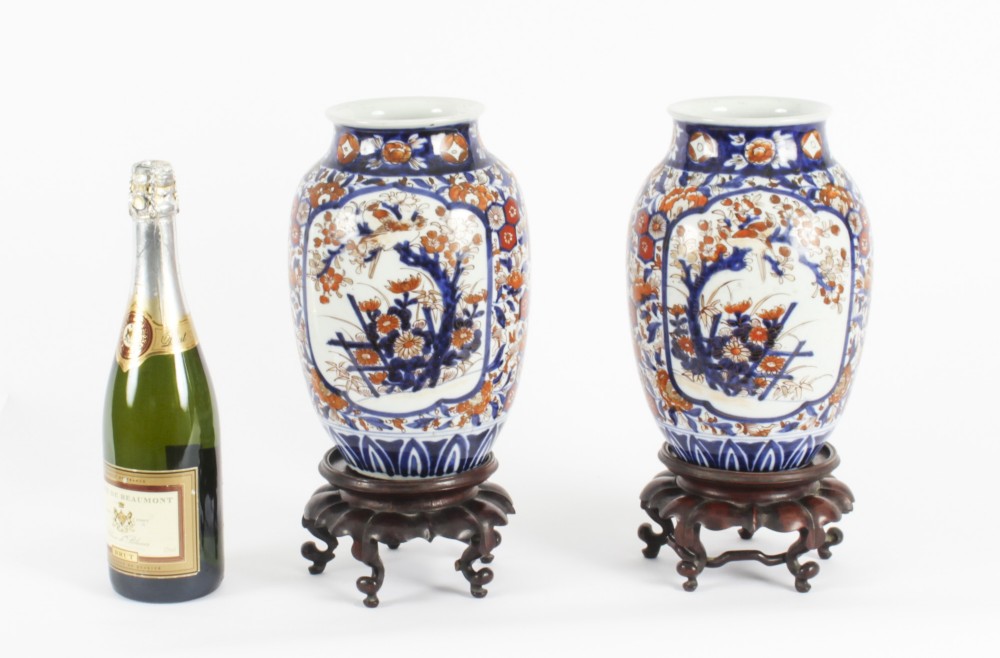
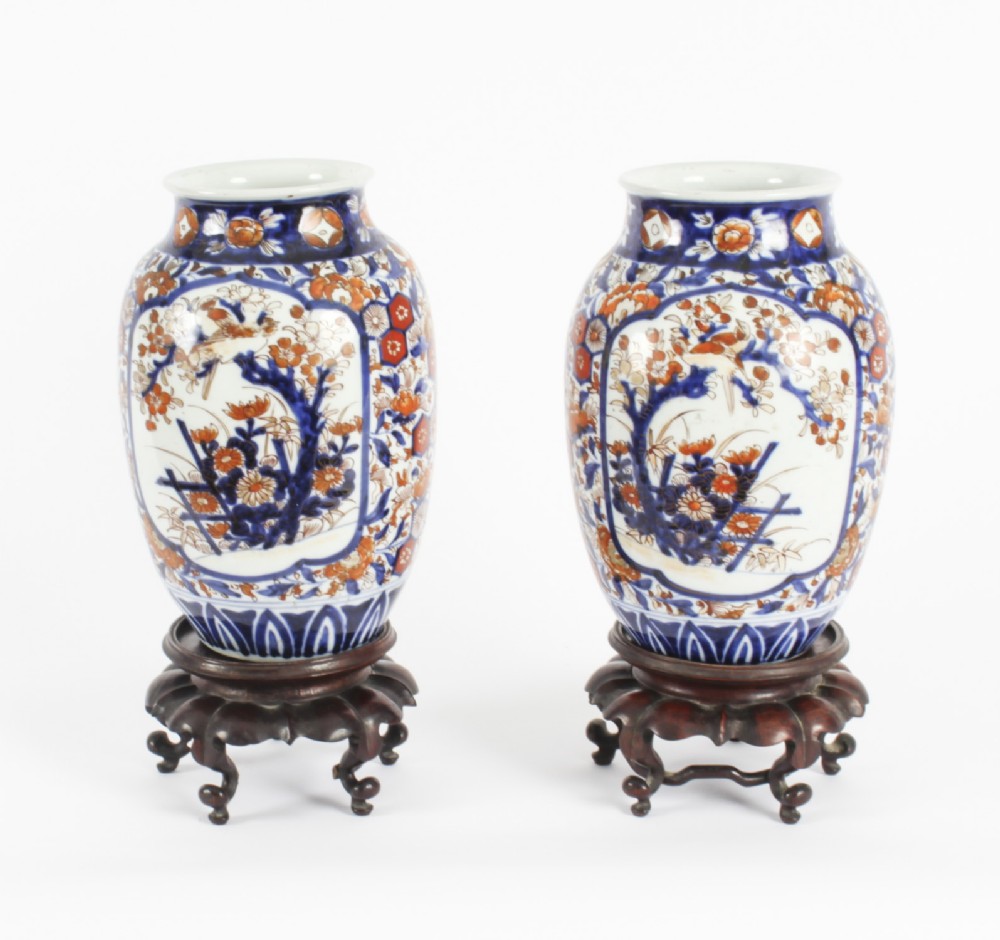
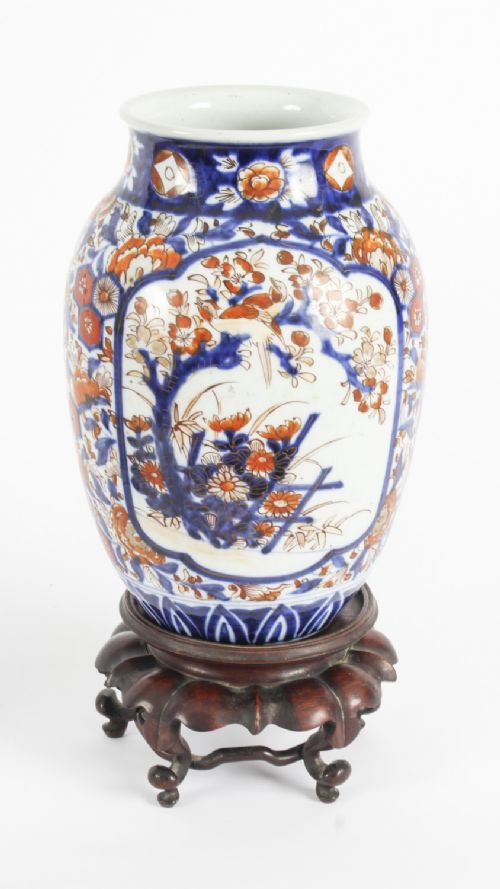
They have a dense chrysanthemum floral design and large panels featuring lotus flowers, trees and birds surrounded by hexagon patterns with flowers.
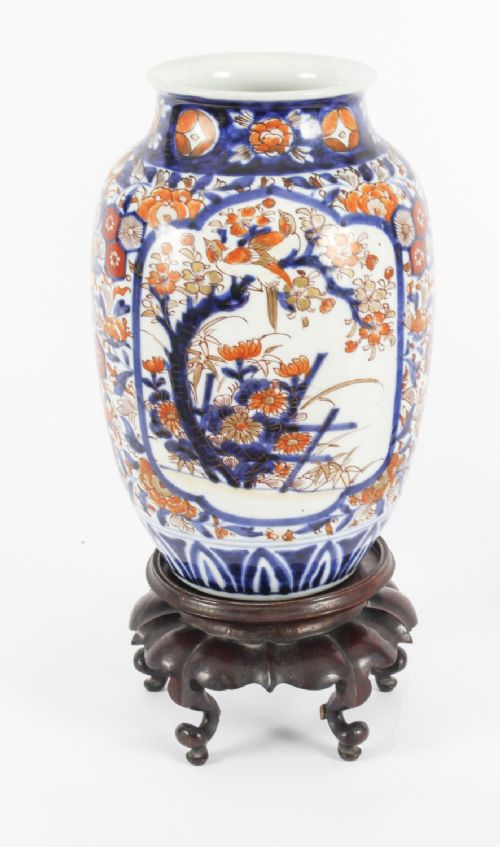
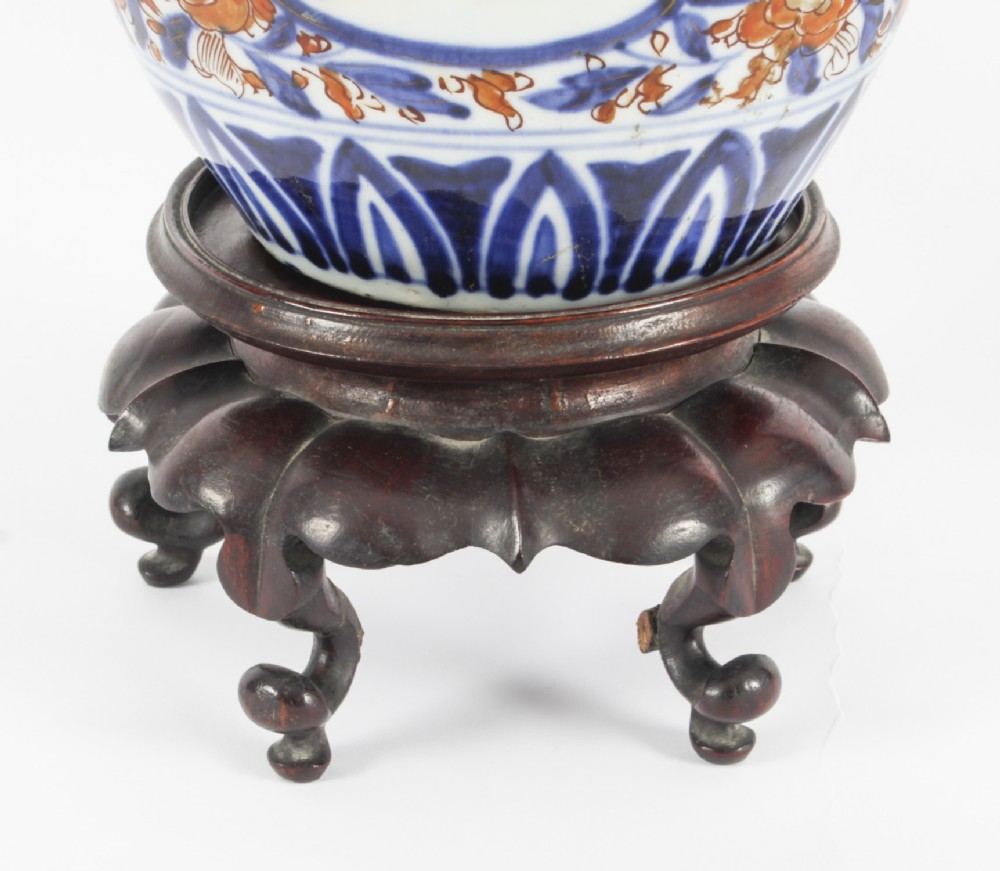
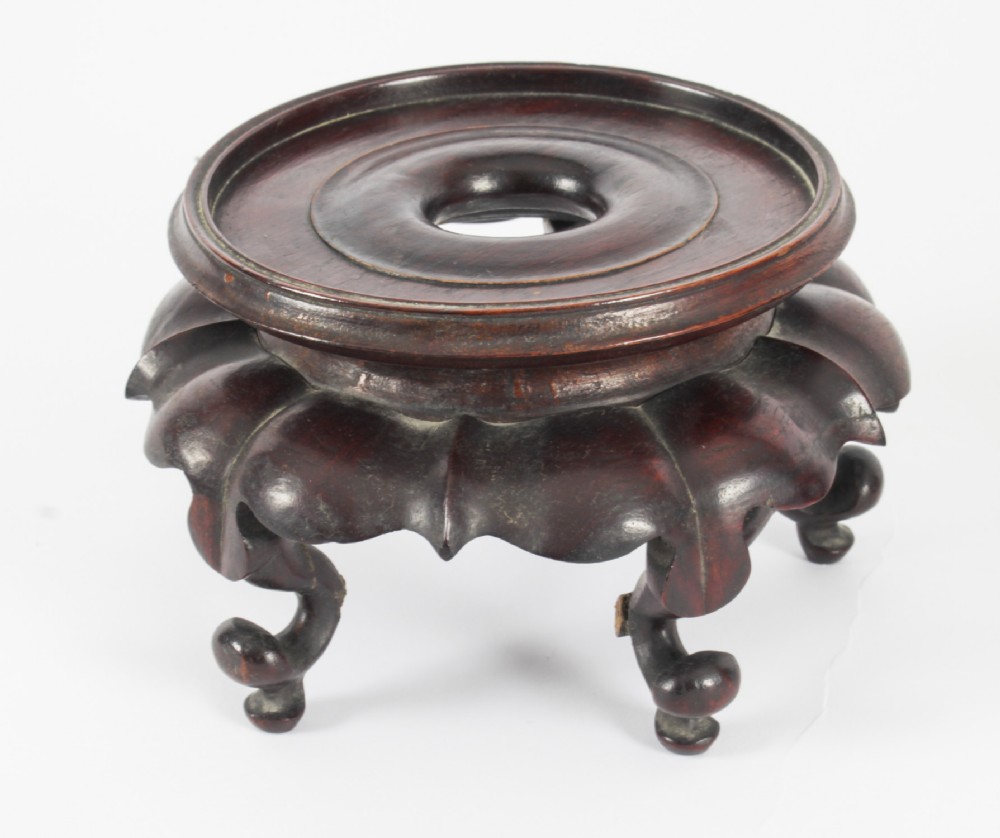
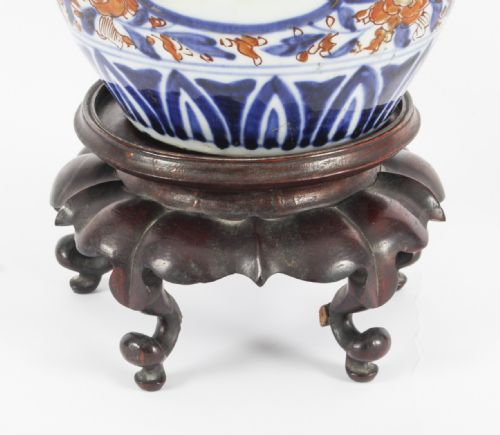
The vases sit on a pair of dark hardwood carved and pierced stands.
Add a touch of elegance to a special place in your home with these fabulous Japanese Imari porcelain vases.
Condition:
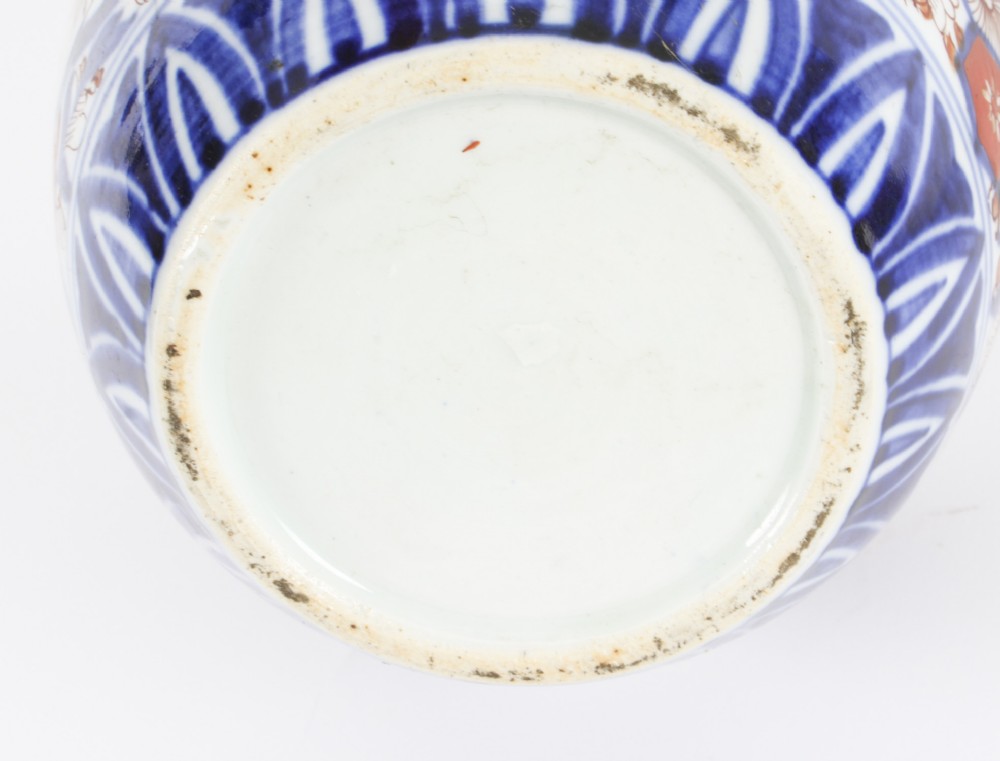
In excellent condition.
Please see photos for confirmation.
Dimensions in cm:
Height 26 x Width 19 x Depth 19
Dimensions in inches:
Height 10 inches x Width 7 inches x Depth 7 inches
Japanese Imari Porcelain
was the European collectors' name for Japanese porcelain wares made in the town of Arita, in the former Hizen Province, northwestern Kyushu, and exported from the port of Imari, Saga, specifically for the European export trade. In Japanese, these porcelains are known as Arita-yaki (???).
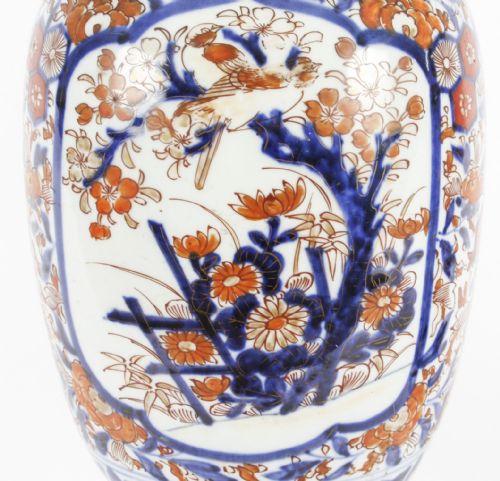
The Ko-Imari and Iro-Nabeshima usually have painted decor of underglaze blue and iron red painted on a white ground. The porcelain has a gritty texture on the bases, where it is not covered by glaze. Subject matter is of foliage and flowers. Enamel colors other than blue and red are used in the Kakiemon porcelain.
Imari was simply the trans-shipment port for Arita wares. The kilns at Arita formed the heart of the Japanese porcelain industry, which developed in the 17th century, after the porcelain clay was discovered in 1616 by an immigrant Korean potter Yi Sam-pyeong (1579–1655). Yi Sam-pyeong was kidnapped with his family(180 persons) after the Japanese invasion in Korea in 1598. After the discovery, Arita kilns introduced Korean style overglazing technique and refined designs from the political chaos china, where the Chinese kilns at Ching-te-Chen were damaged and New Qing dynasty government stopped trade in 1656-1684. First, blue-and-white porcelain made at Arita, imitating Chinese designs, was also widely exported to Europe through the Dutch East India Company, but "Imari porcelain" connotes Arita wares more specifically designed to catch the European taste.
Our reference: A2201
Regent Antiques has dated this piece to the 19th Century.
We specialise in english and continental furniture, silver, porcelain and decorative items.
You can view the stock and full dealer information on the Regent Antiques Profile Page
Regent Antiques is a registered member of LAPADA CINOA
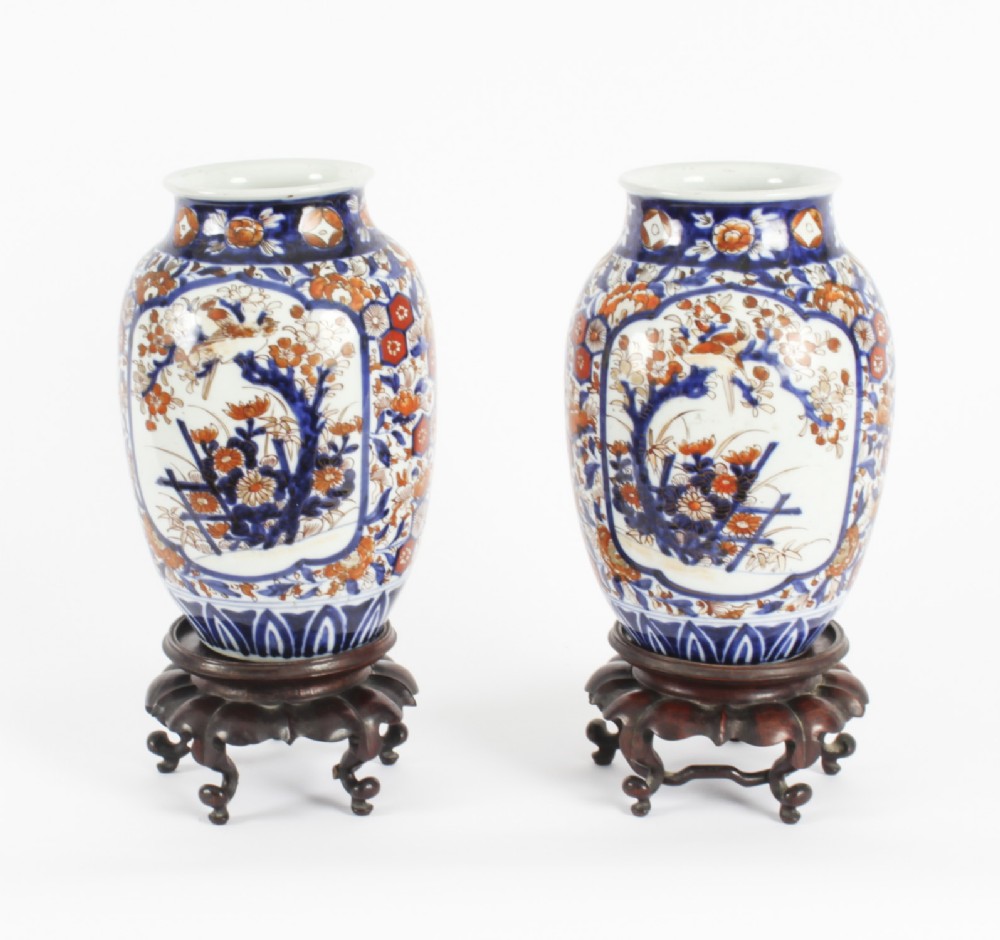
Antique Pair Japanese Imari Porcelain Vases on Stands C. 1870 19th C.