28,357  PAGES BROWSED TODAY PAGES TODAY • 105 ANTIQUES UPLOADED TODAYNEW ARRIVALS
GIFTS
105 ITEMS ADDED TODAY
Sort Order
Items Per Page
Antiques dealer?
Join as a Seller
Browse Categories
Sort order
Items per page
sold SA765400
Sorry, but this item has been sold.
Regent Antiques

Regent Antiques

Sellingantiques Verified Since Sep 2016
Browse dealers 639 items
  • About Us
    We specialise in english and continental furniture, silver, porcelain and decorative items.
  • Trade Associations
    Regent Antiques is a registered member of LAPADA  CINOA
Id #SA765400
SHARE
SAVE

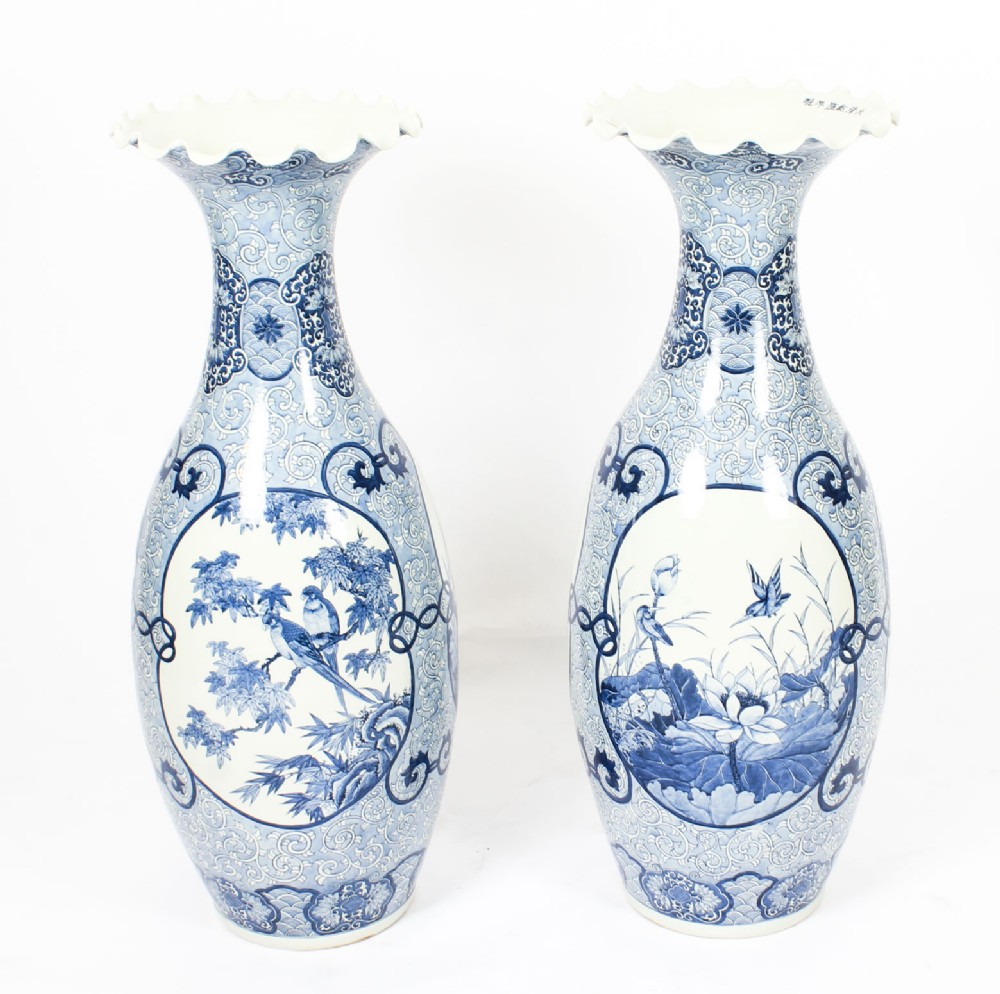
Antique Pair Japanese Meiiji Imari Blue & White Arita Porcelain Temple Vases 19c

19th century
Sold 20 March 2023 · Regent Antiques
This “Antique Pair Japanese Meiiji Imari Blue & White Arita Porcelain Temple Vases 19c ” found a buyer.

It was listed by Regent Antiques. Sold pieces stay on Sellingantiques as a record of what has passed through, and the next one is rarely far away.

Description

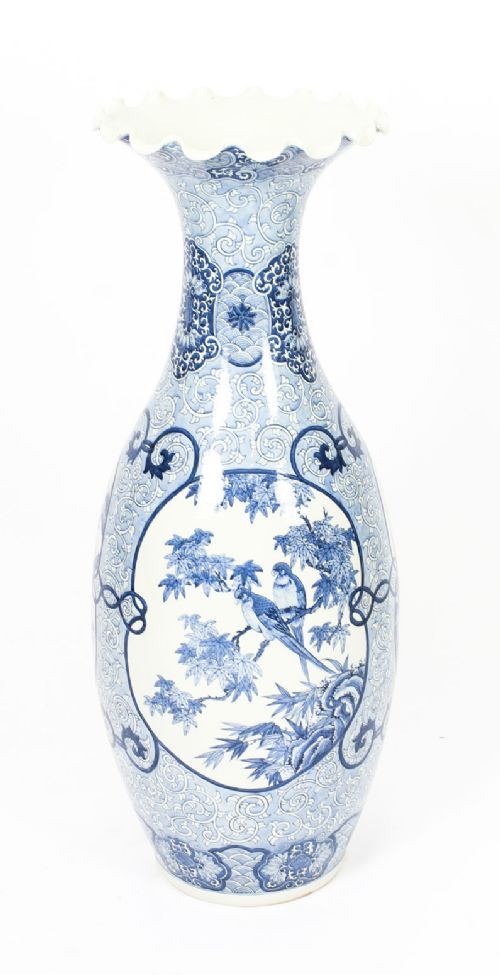
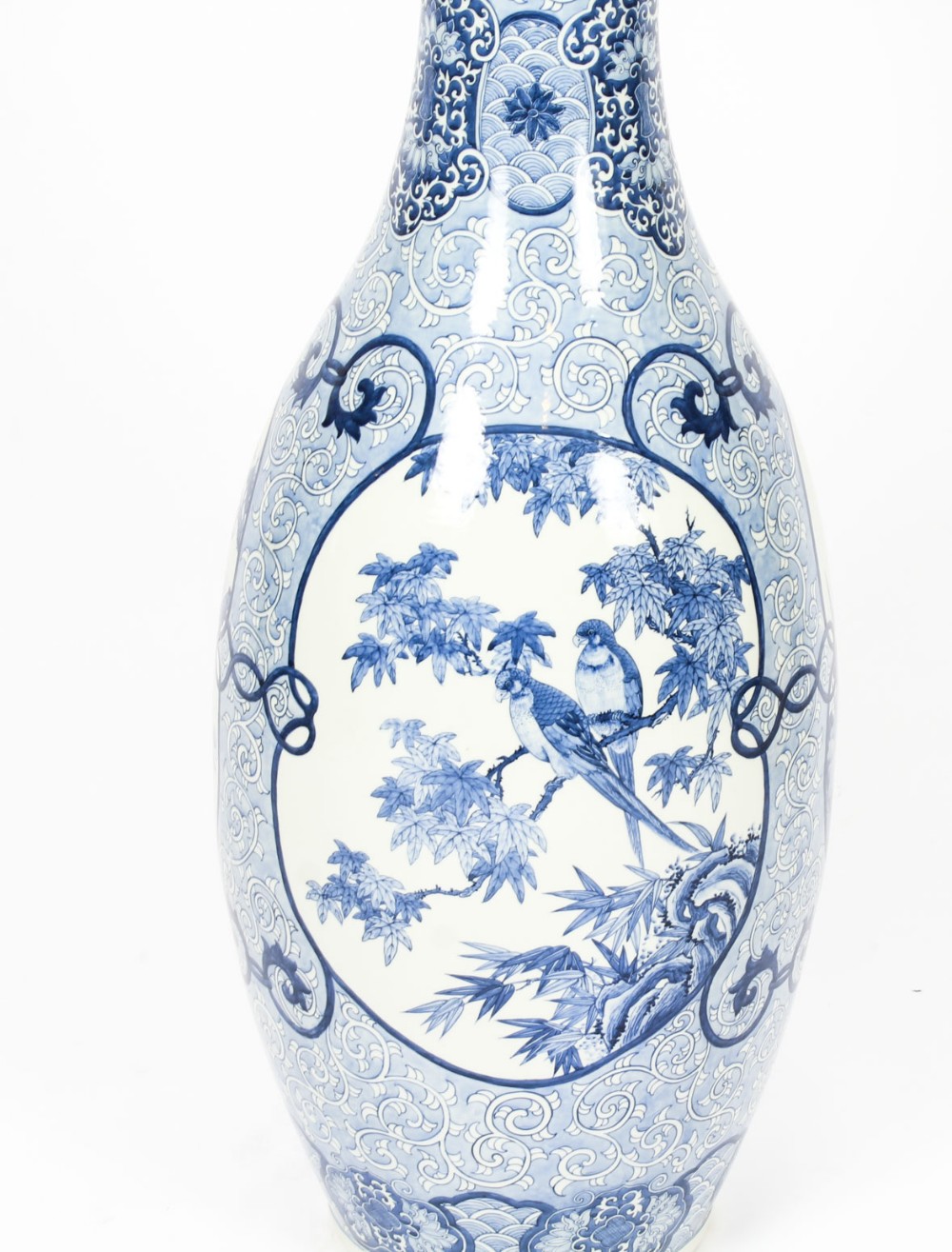
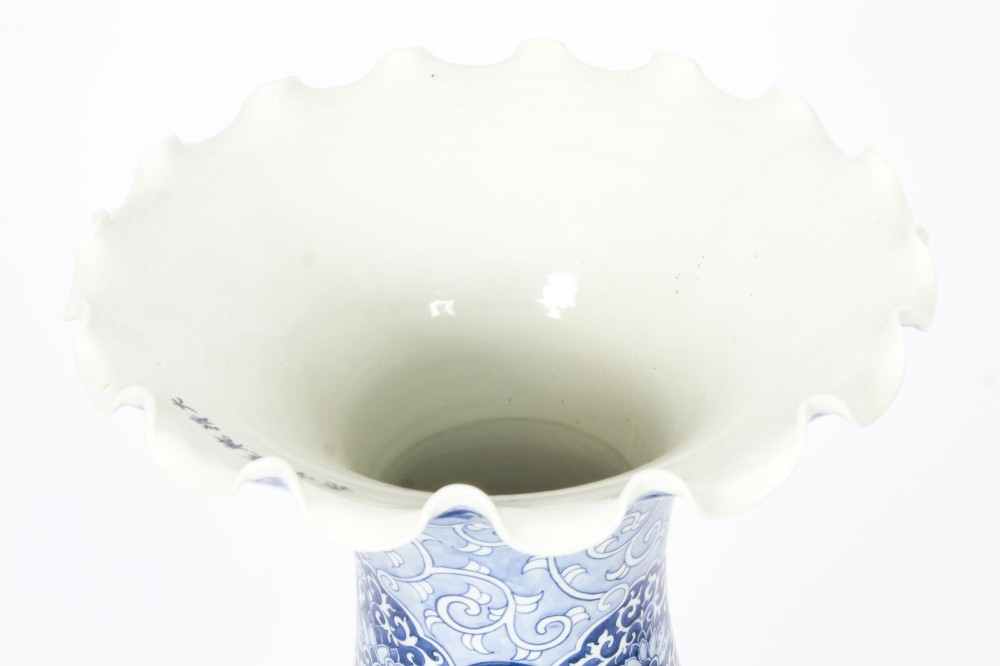
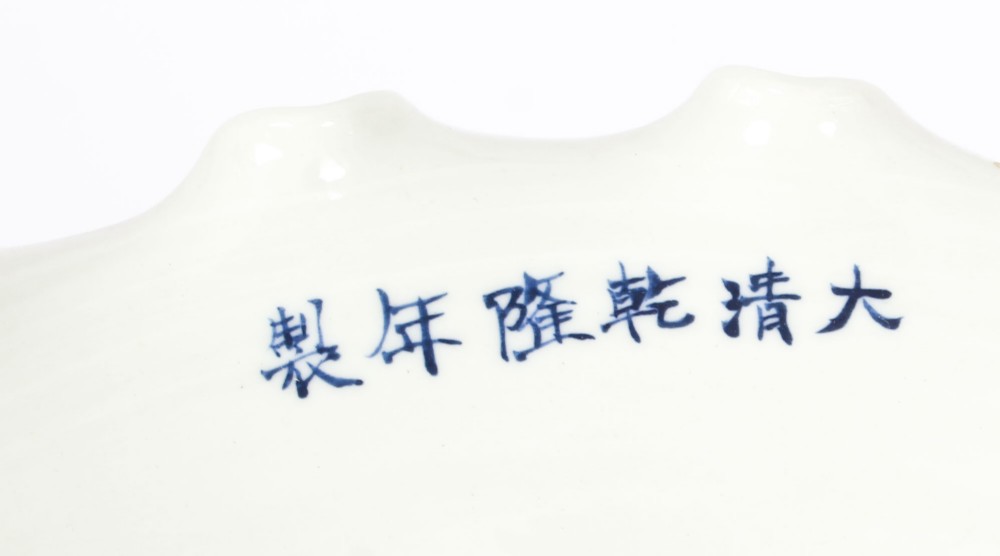
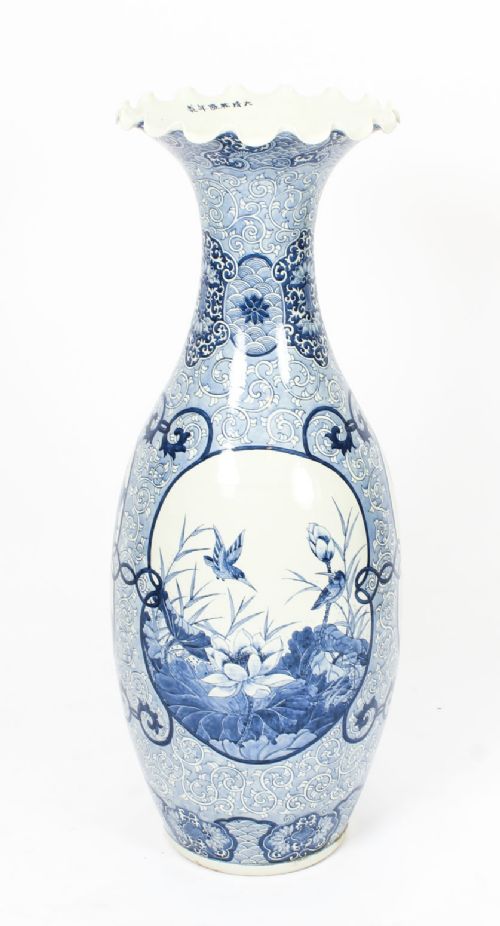
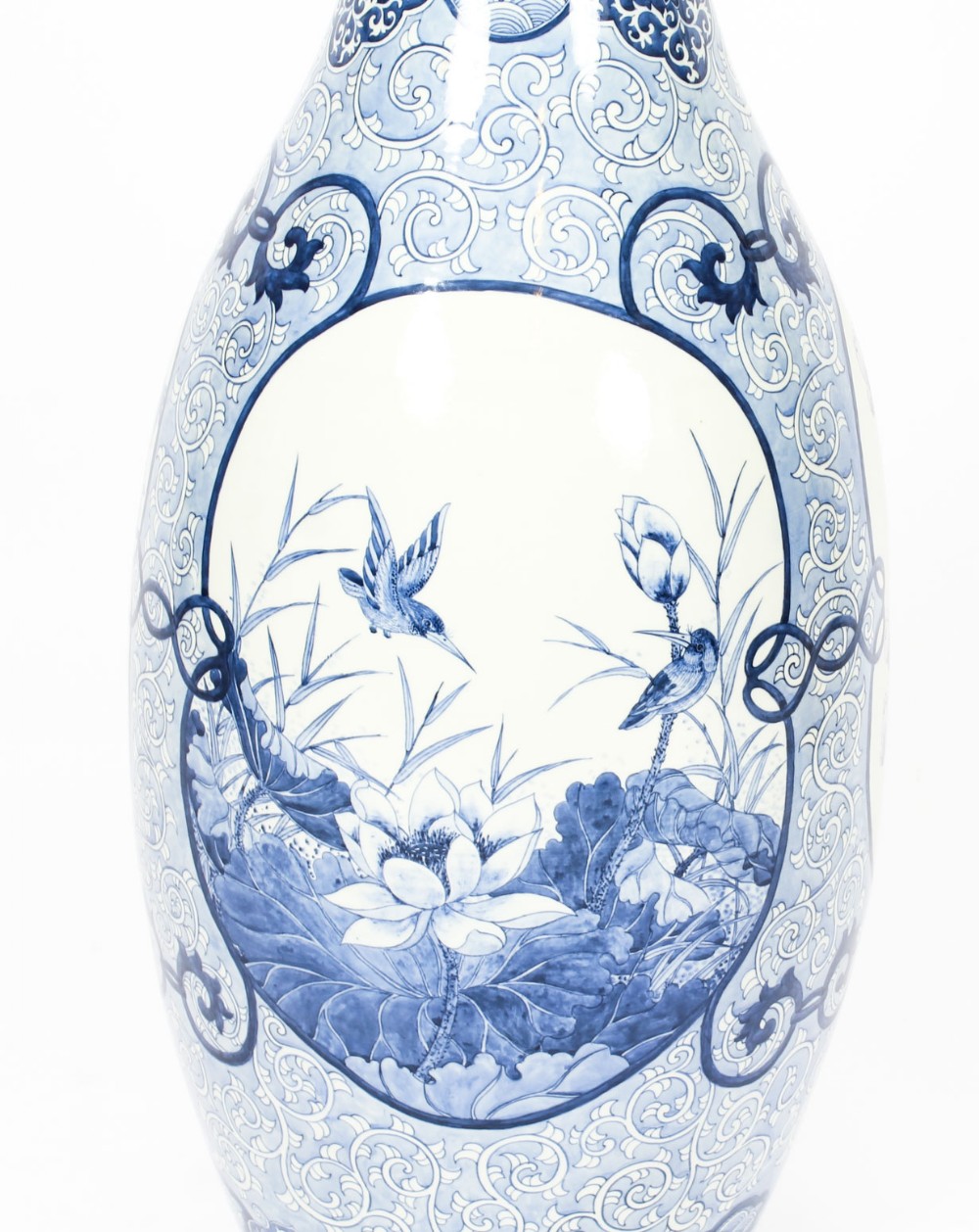
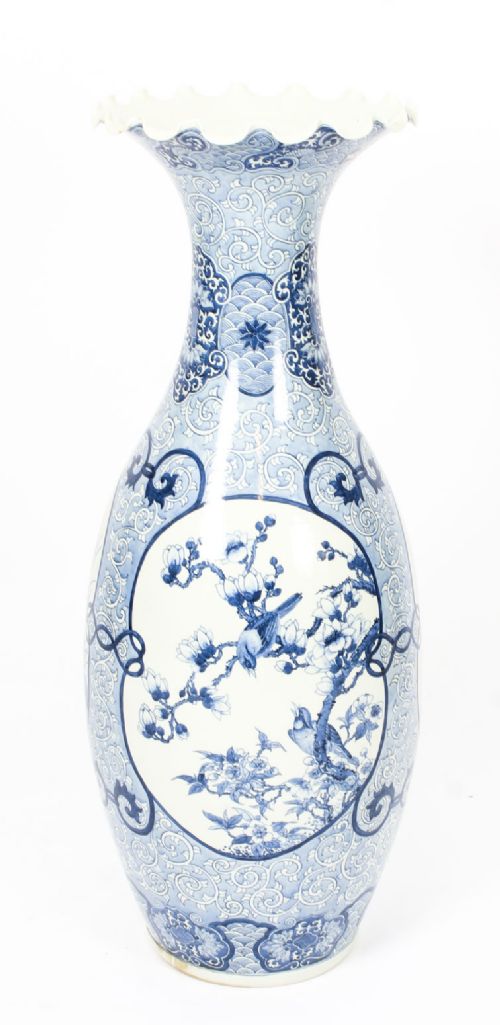
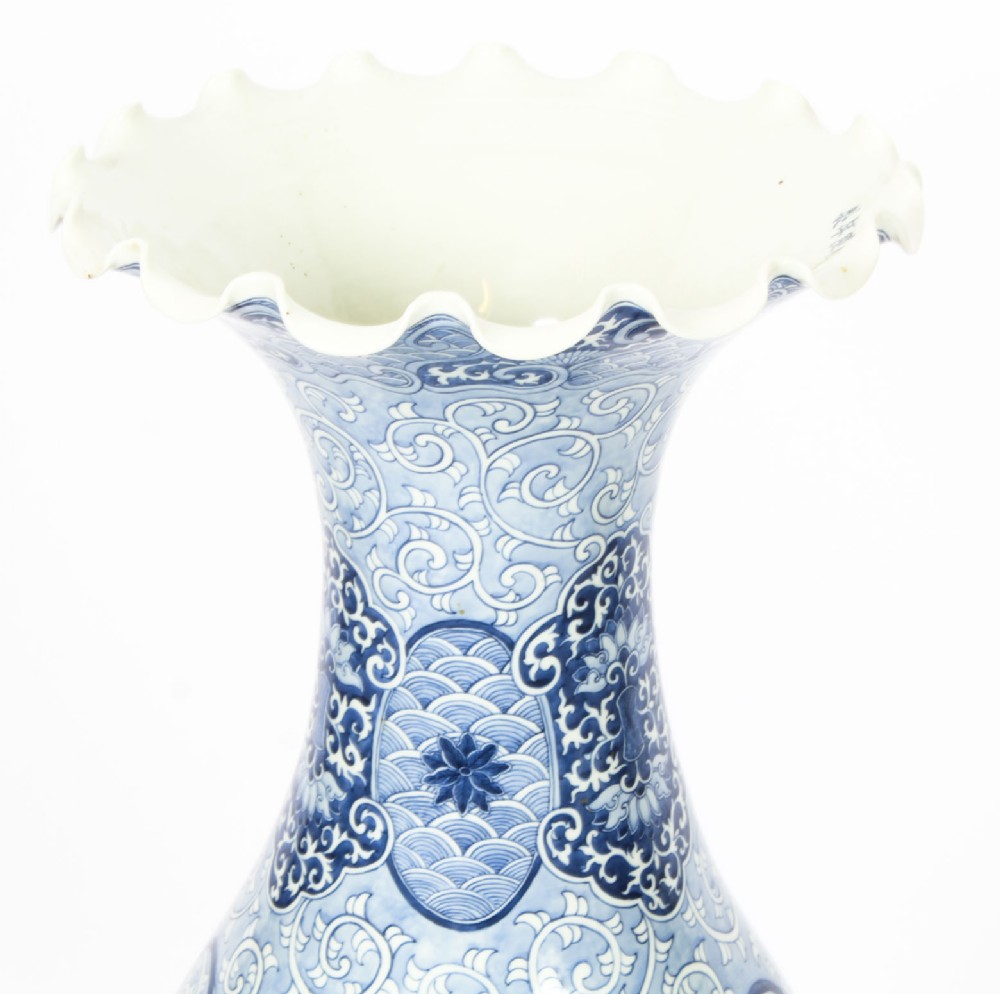
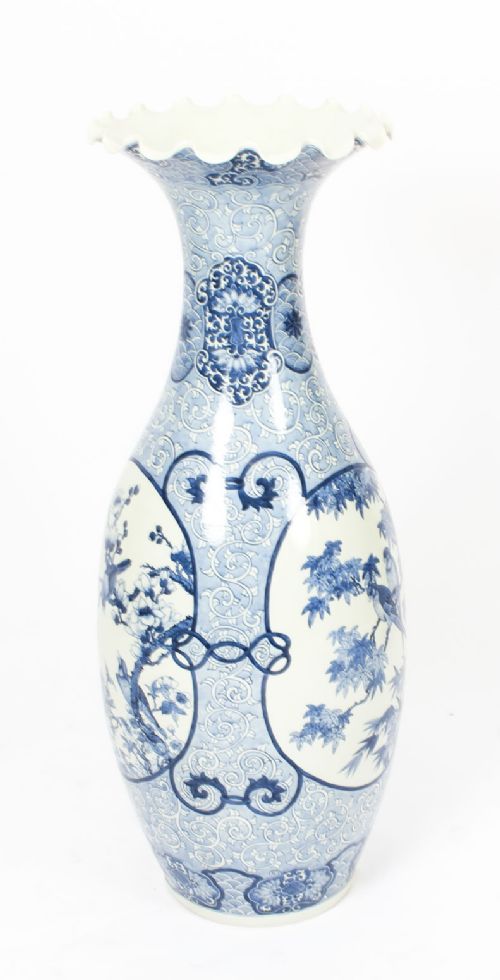
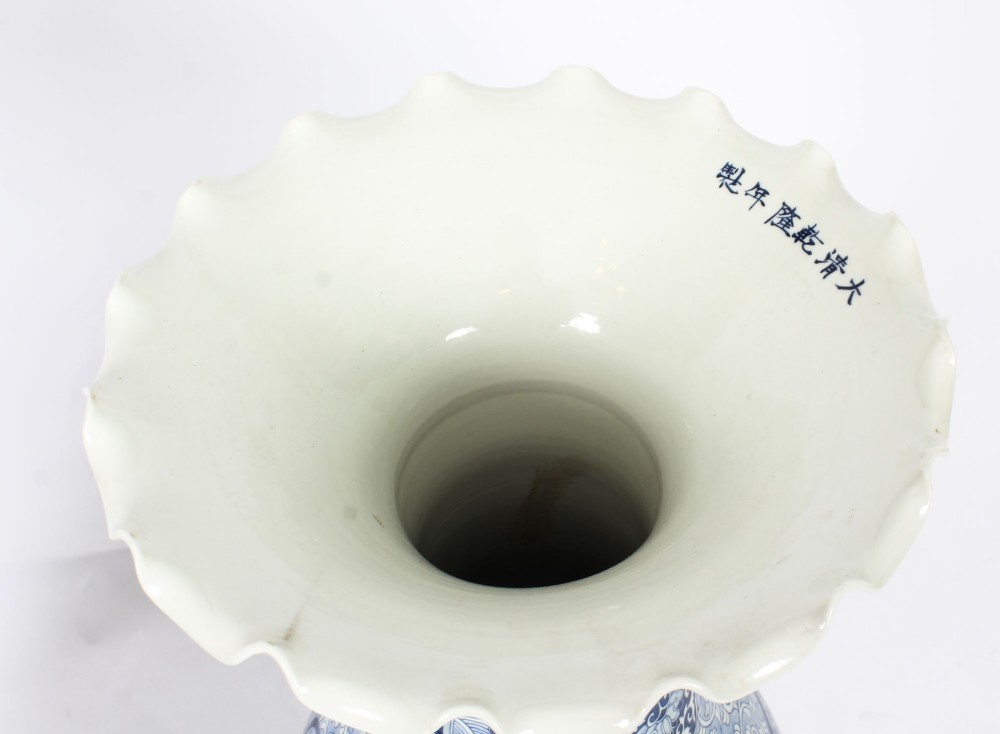
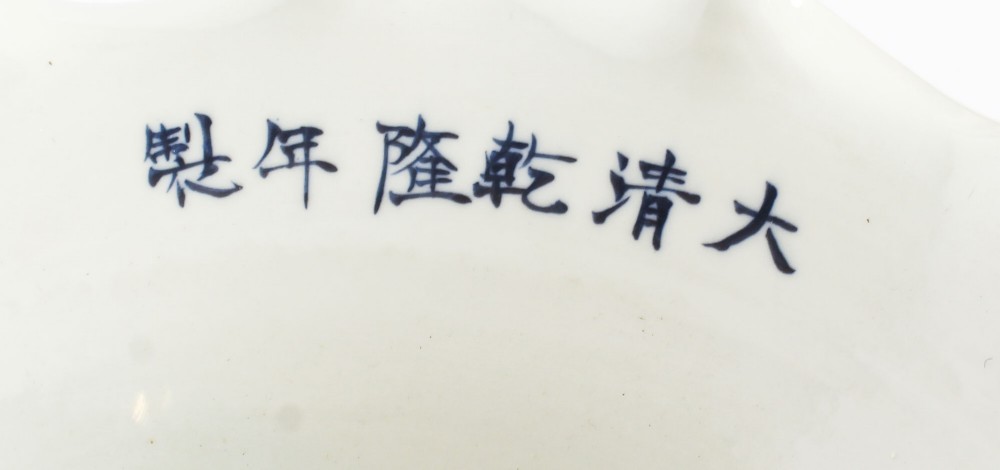
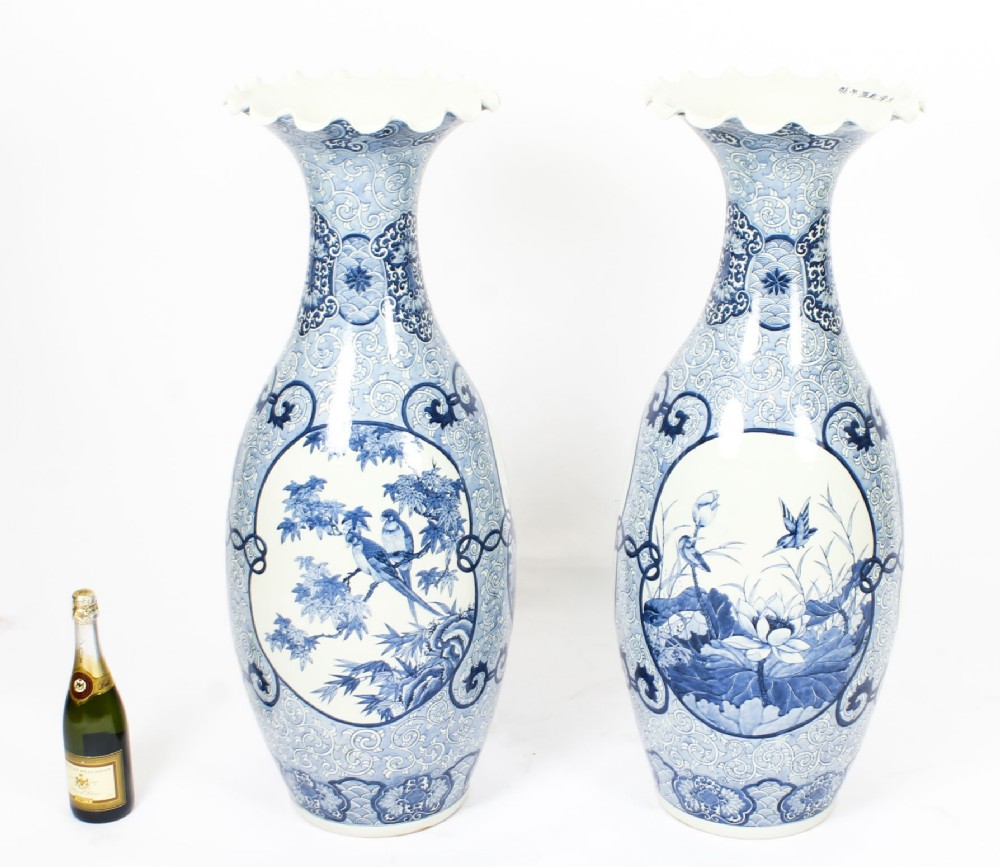
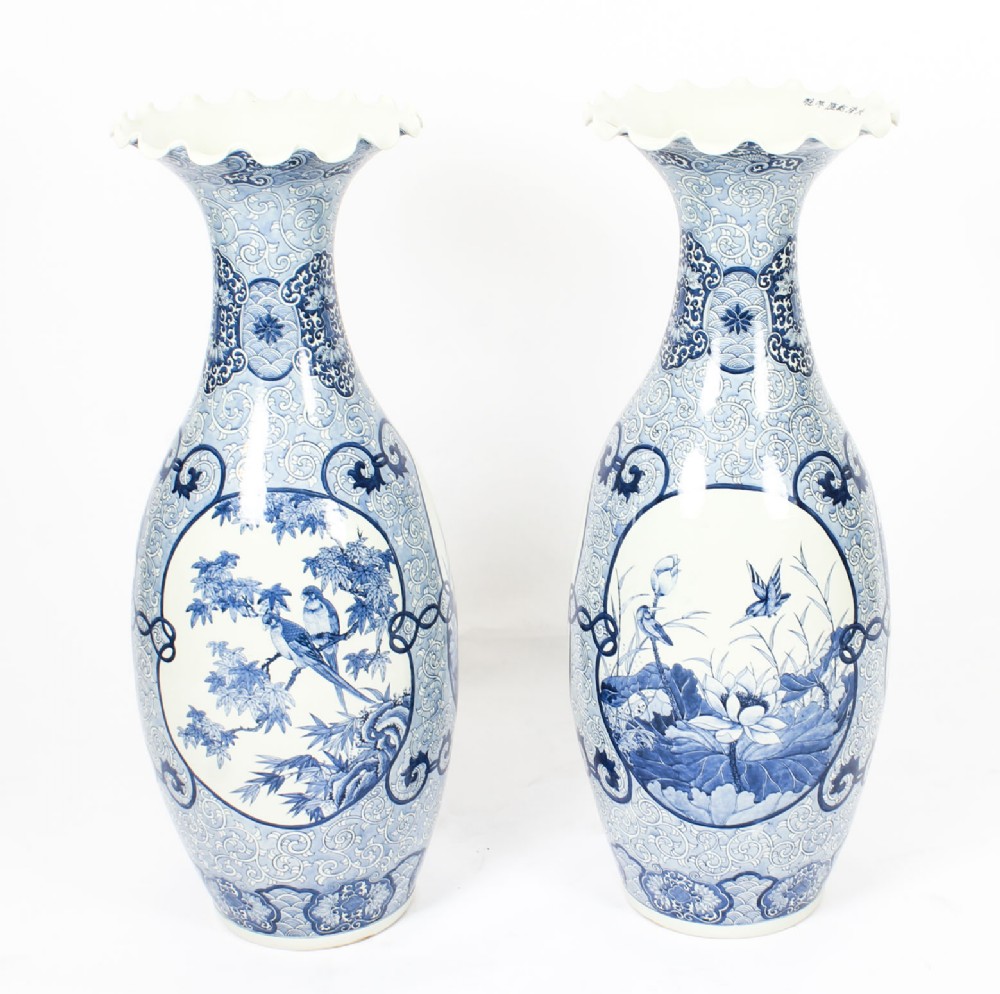
A stunning pair of monumental Meiji period Japanese Imari Arita Yaki blue and white porcelain temple vases signed with six character mark to both inner rims, circa 1890 in date.

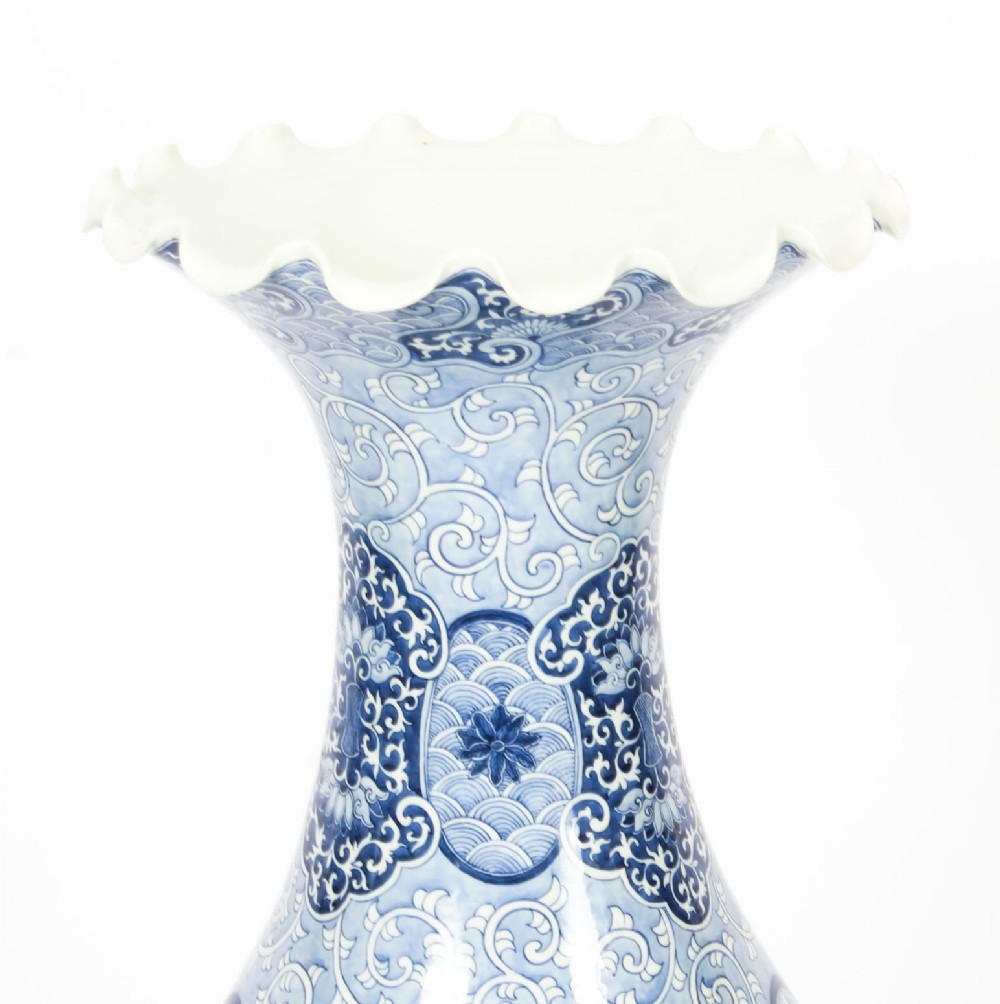
Of ovoid form, they feature a wide flaring and ribonned rims.

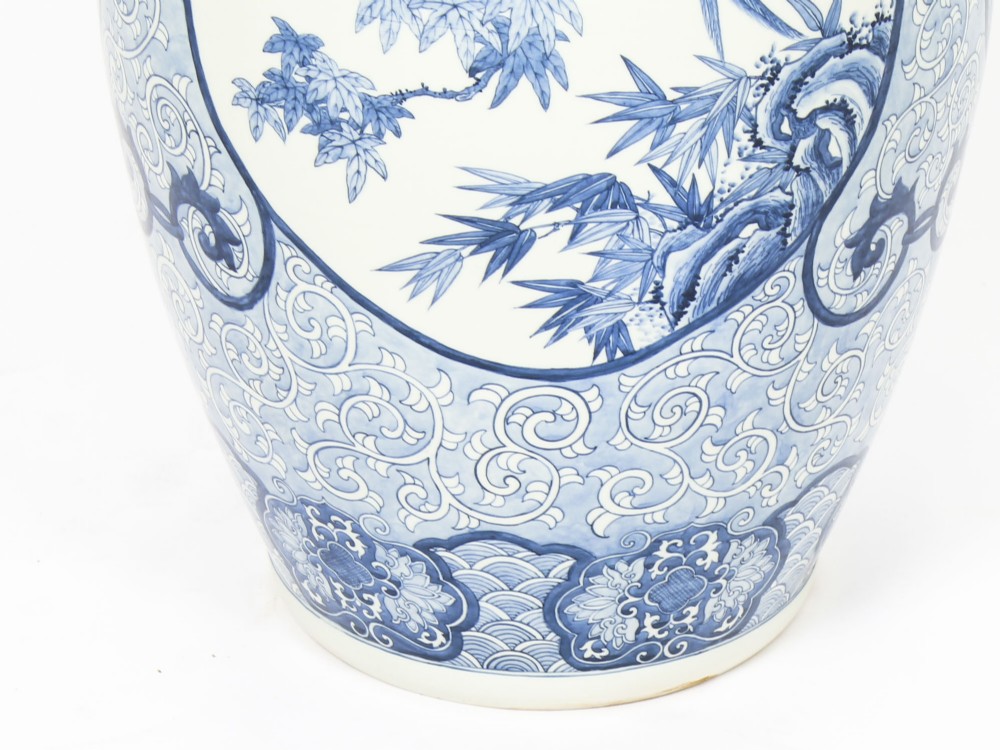
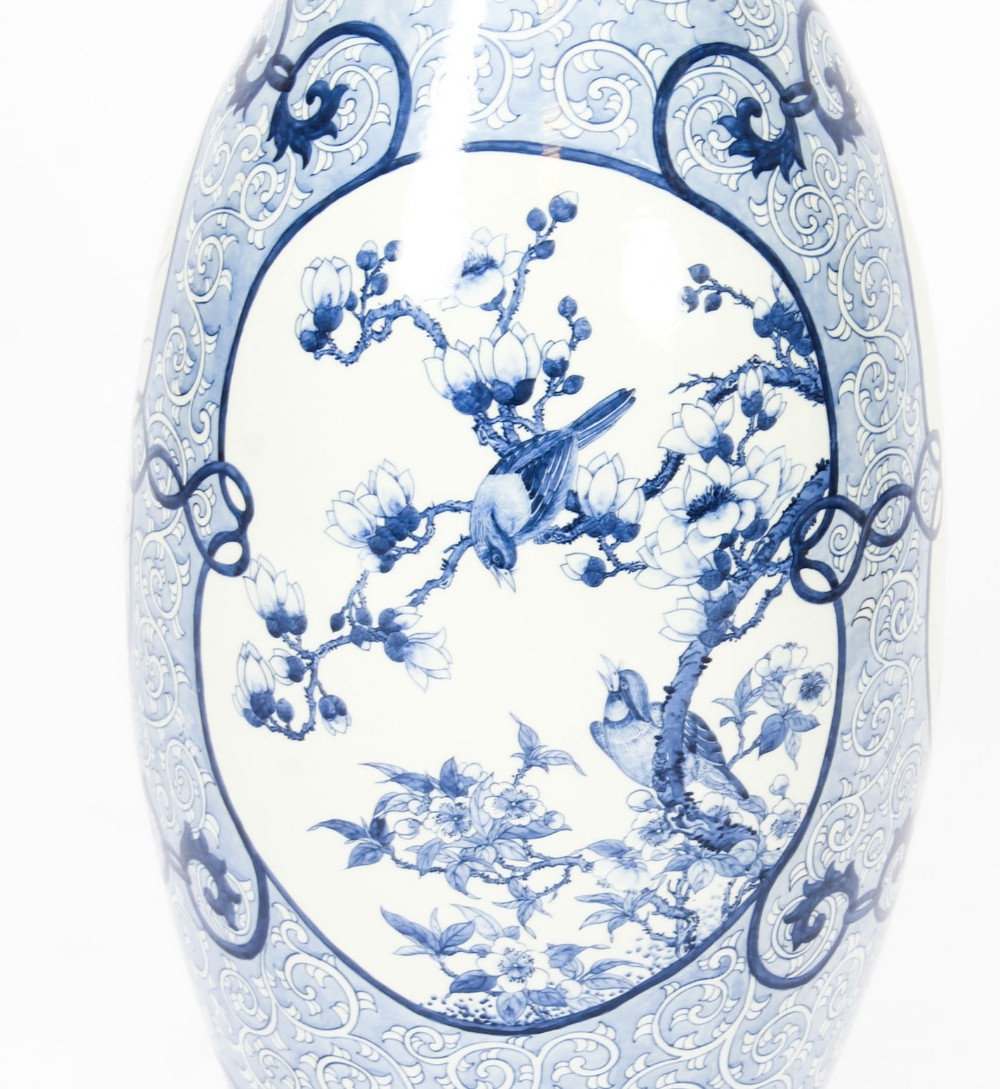
The body is beautifully hand-painted with an integrate design in lovely shades of underglaze cobalt blue with two centre panels, one with birds in a flowering tree and the other with flying birds with lotus.

Instil a certain elegance to a special place in your home with these fabulous vases.

Condition:

In excellent condition, with no chips, cracks or signs of repair, please see photos for confirmation.

Dimensions in cm:

Height 95 x Width 33 x Depth 33

Dimensions in inches:

Height 37.4 x Width 13.0 x Depth 13.0

Arita ware is a broad term for Japanese porcelain made in the area around the town of Arita, in the former Hizen Province, northwestern Kyushu island. This was the area where the great majority of early Japanese porcelain, especially Japanese export porcelain, was made.

In English usage "Arita ware" was traditionally used for the export wares in blue and white porcelain, mostly copying Chinese styles. The wares with added overglaze colours were called Imari ware or (a sub-group) Kakiemon. It is now recognized that the same kilns often made more than one of these types, and "Arita ware" is more often used as a term for all of them.

According to tradition, the Korean potter Yi Sam-pyeong d. 1655 or Kanagae Sanbee is often considered the father of Arita ware porcelain. This narrative is however disputed by many historians. He is nevertheless honoured in Sueyama Shrine as the founder.

The first porcelain made in Japan followed the discovery of porcelain clay near Arita near the end of the 16th century. A number of kilns opened up in the area, and a considerable variety of styles were made, the Japanese export porcelain destined for Europe often using Western shapes and Chinese decoration. Early wares used underglaze blue decoration, but by the mid-17th century, Arita was in the forefront as Japan developed overglaze "enamelled" decoration in a range of bright colours.

Between the second half of the 17th century and the first half of the 18th century, they were extensively exported to Europe, travelling initially from Arita's port of Imari, Saga to the Dutch East India Company's outpost at Nagasaki. The type called kin-rande was especially popular and is therefore known in the West also as Imari ware. This typically is decorated in underglaze blue, then with red, gold, black for outlines, and sometimes other colours, added in overglaze. In the most characteristic floral designs, most of the surface is coloured, with "a tendency to overdecoration that leads to fussiness". The style was so successful that Chinese and European producers began to copy it.

Nabeshima ware was an Arita product, with overglaze decoration of very high quality, produced for the Nabeshima Lords of the Saga Domain from the late 17th century into the 19th, with the first half of the 18th century considered the finest period. It was never exported at the time. Kakiemon is a term that generates further confusion, being the name of a family, one or more kilns, and a brightly-coloured overglaze style broadly imitating Chinese wares. The style originated with the family, whose kilns were the main producers of it, but other kilns also made it, and the Kakiemon kilns made other styles. It was also widely imitated in Europe, and sometimes in China.

Our reference: 09359a

Date of Manufacture

Regent Antiques has dated this piece to the 19th Century.

Physical Dimensions
Height
95cm (37.40")
Width
33cm (12.99")
Depth
33cm (12.99")
Reference Numbers
Sellingantiques Reference
SA765400
Dealers Internal Reference
09359a
Antique Pair Japanese Meiiji Imari Blue & White Arita Porcelain Temple Vases 19C
Detail view 1Detail view 2Detail view 3Detail view 4Detail view 5Detail view 6Detail view 7Detail view 8Detail view 9Detail view 10Detail view 11Detail view 12Detail view 13Detail view 14Detail view 15Detail view 16
SOLD6+ MONTHS AGO
1 / 17
19th Century · SA765400
Antique Pair Japanese Meiiji Imari Blue & White Arita Porcelain Temple Vases 19c
Sorry, but this item has been sold.
Description
A stunning pair of monumental Meiji period Japanese Imari Arita Yaki blue and white porcelain temple vases signed with six character mark to both inner rims, circa 1890 in date.

Of ovoid form, they feature a wide flaring and ribonned rims.

The body is beautifully hand-painted with an integrate design in lovely shades of underglaze cobalt blue with two centre panels, one with birds in a flowering tree and the other with flying birds with lotus.

Instil a certain elegance to a special place in your home with these fabulous vases.

Condition:

In excellent condition, with no chips, cracks or signs of repair, please see photos for confirmation.

Dimensions in cm:

Height 95 x Width 33 x Depth 33

Dimensions in inches:

Height 37.4 x Width 13.0 x Depth 13.0

Arita ware is a broad term for Japanese porcelain made in the area around the town of Arita, in the former Hizen Province, northwestern Kyushu island. This was the area where the great majority of early Japanese porcelain, especially Japanese export porcelain, was made.

In English usage "Arita ware" was traditionally used for the export wares in blue and white porcelain, mostly copying Chinese styles. The wares with added overglaze colours were called Imari ware or (a sub-group) Kakiemon. It is now recognized that the same kilns often made more than one of these types, and "Arita ware" is more often used as a term for all of them.

According to tradition, the Korean potter Yi Sam-pyeong d. 1655 or Kanagae Sanbee is often considered the father of Arita ware porcelain. This narrative is however disputed by many historians. He is nevertheless honoured in Sueyama Shrine as the founder.

The first porcelain made in Japan followed the discovery of porcelain clay near Arita near the end of the 16th century. A number of kilns opened up in the area, and a considerable variety of styles were made, the Japanese export porcelain destined for Europe often using Western shapes and Chinese decoration. Early wares used underglaze blue decoration, but by the mid-17th century, Arita was in the forefront as Japan developed overglaze "enamelled" decoration in a range of bright colours.

Between the second half of the 17th century and the first half of the 18th century, they were extensively exported to Europe, travelling initially from Arita's port of Imari, Saga to the Dutch East India Company's outpost at Nagasaki. The type called kin-rande was especially popular and is therefore known in the West also as Imari ware. This typically is decorated in underglaze blue, then with red, gold, black for outlines, and sometimes other colours, added in overglaze. In the most characteristic floral designs, most of the surface is coloured, with "a tendency to overdecoration that leads to fussiness". The style was so successful that Chinese and European producers began to copy it.

Nabeshima ware was an Arita product, with overglaze decoration of very high quality, produced for the Nabeshima Lords of the Saga Domain from the late 17th century into the 19th, with the first half of the 18th century considered the finest period. It was never exported at the time. Kakiemon is a term that generates further confusion, being the name of a family, one or more kilns, and a brightly-coloured overglaze style broadly imitating Chinese wares. The style originated with the family, whose kilns were the main producers of it, but other kilns also made it, and the Kakiemon kilns made other styles. It was also widely imitated in Europe, and sometimes in China.

Our reference: 09359a
Date19th Century
Height95cm (37.40")
Width33cm (12.99")
Depth33cm (12.99")
ReferenceSA765400
Dealer's reference09359a
Regent Antiques
Regent AntiquesSellingantiques verified since Sep 2016

We specialise in english and continental furniture, silver, porcelain and decorative items.

Member of LAPADA CINOA

SHARE
SAVE
Archive I Antique Pair Japanese Meiiji Imari Blue & White Arita Porcelain Temple Vases 19C
SOLD6+ MONTHS AGO

Antique Pair Japanese Meiiji Imari Blue & White Arita Porcelain Temple Vases 19c

Archive II Antique Pair Japanese Meiiji Imari Blue & White Arita Porcelain Temple Vases 19C
 View II
Archive III Antique Pair Japanese Meiiji Imari Blue & White Arita Porcelain Temple Vases 19C
 View III
Archive IV Antique Pair Japanese Meiiji Imari Blue & White Arita Porcelain Temple Vases 19C
 View IV
Archive V Antique Pair Japanese Meiiji Imari Blue & White Arita Porcelain Temple Vases 19C
 View V
Archive VI Antique Pair Japanese Meiiji Imari Blue & White Arita Porcelain Temple Vases 19C
 View VI
Archive VII Antique Pair Japanese Meiiji Imari Blue & White Arita Porcelain Temple Vases 19C
 View VII
Archive VIII Antique Pair Japanese Meiiji Imari Blue & White Arita Porcelain Temple Vases 19C
 View VIII
Archive IX Antique Pair Japanese Meiiji Imari Blue & White Arita Porcelain Temple Vases 19C
 View IX
Archive X Antique Pair Japanese Meiiji Imari Blue & White Arita Porcelain Temple Vases 19C
 View X
Archive XI Antique Pair Japanese Meiiji Imari Blue & White Arita Porcelain Temple Vases 19C
 View XI
Archive XII Antique Pair Japanese Meiiji Imari Blue & White Arita Porcelain Temple Vases 19C
 View XII
Archive XIII Antique Pair Japanese Meiiji Imari Blue & White Arita Porcelain Temple Vases 19C
 View XIII
Archive XIV Antique Pair Japanese Meiiji Imari Blue & White Arita Porcelain Temple Vases 19C
 View XIV
Archive XV Antique Pair Japanese Meiiji Imari Blue & White Arita Porcelain Temple Vases 19C
 View XV
Archive XVI Antique Pair Japanese Meiiji Imari Blue & White Arita Porcelain Temple Vases 19C
 View XVI
Archive XVII Antique Pair Japanese Meiiji Imari Blue & White Arita Porcelain Temple Vases 19C
 View XVII
Enlarged Archival View
Location
Manor Warehouse
318 Green Lanes
London
N4 1BX
United Kingdom
Verified Since Sep 2016
Items For Sale 639
Items Sold 2,756
Regent Antiques
Regent Antiques
Verified Since Sep 2016
View Dealer Info
Location: Manor Warehouse, 318 Green Lanes, London, N4 1BX, United Kingdom
Verified
Sep 2016
For Sale
639
Sold
2,756
Antique Pair Japanese Meiiji Imari Blue & White Arita Porcelain Temple Vases 19C
Ref: SA765400
Antique Pair Japanese Meiiji Imari Blue & White Arita Porcelain Temple Vases 19C
Detail View 1
Detail View 2
Detail View 3
Detail View 4
Detail View 5
Detail View 6
Detail View 7
Detail View 8
Detail View 9
Detail View 10
Detail View 11
Detail View 12
Detail View 13
Detail View 14
Detail View 15
Detail View 16
Archival Detail
Every single antique dealer on our platform is individually approved by our internal team. We verify their professional trade history, ethical standards, and photographic quality to ensure a secure, high-standard buying environment. Upon joining, every dealer agrees to a strict 9-point code of conduct. While issues can occasionally arise, our dealers typically resolve them swiftly and directly with the buyer. In fact, since our founding in 2002, Sellingantiques has only had to step in to help resolve an issue on roughly five occasions—a true testament to the quality of our dealers and their dedication to your happiness.
Our dealers are highly experienced in packing and shipping fragile, high-value antiques. Because you are in direct contact with the dealer, you will be able to easily go through all available shipping and insurance options together to ensure your item arrives safely.
Antiques are the ultimate green purchase. By choosing historical pieces over newly manufactured goods, you completely eliminate the carbon footprint of modern mass production while preserving exceptional, timeless craftsmanship.
Written by Sellingantiques from the dealer’s photographs and listing
  • Period19th century
  • SizeH 95 cm (37 in) x W 33 cm (13 in) x D 33 cm (13 in)
items
Add keywords to the filter
Price
£100
£250000
Era
Period
Style
Material
Origin
Stock Location
Recently Added
Online Payments
Categories