7,084  PAGES BROWSED TODAY PAGES TODAY 0  ANTIQUES UPLOADED TODAY NEW ARRIVALS
ID #SA1208839
FOR SALE
£1,750
Email
Save
A 17th Century Ottery St. Mary, Exeter Joined Oak Chest from the Same Workshop in Which Thomas Dennis Apprenticed, 1687
Rob Hall Antiques
for sale €2,048     $2,223
£1,750

Rob Hall Antiques

Sellingantiques Verified Since Aug 2025
View Dealers Stock Page
Relevant Links
Id #SA1208839
PDF SHARE
SAVE

A 17th Century Ottery St. Mary, Exeter Joined Oak Chest from the Same Workshop in Which Thomas Dennis Apprenticed, 1687

17th century
Description

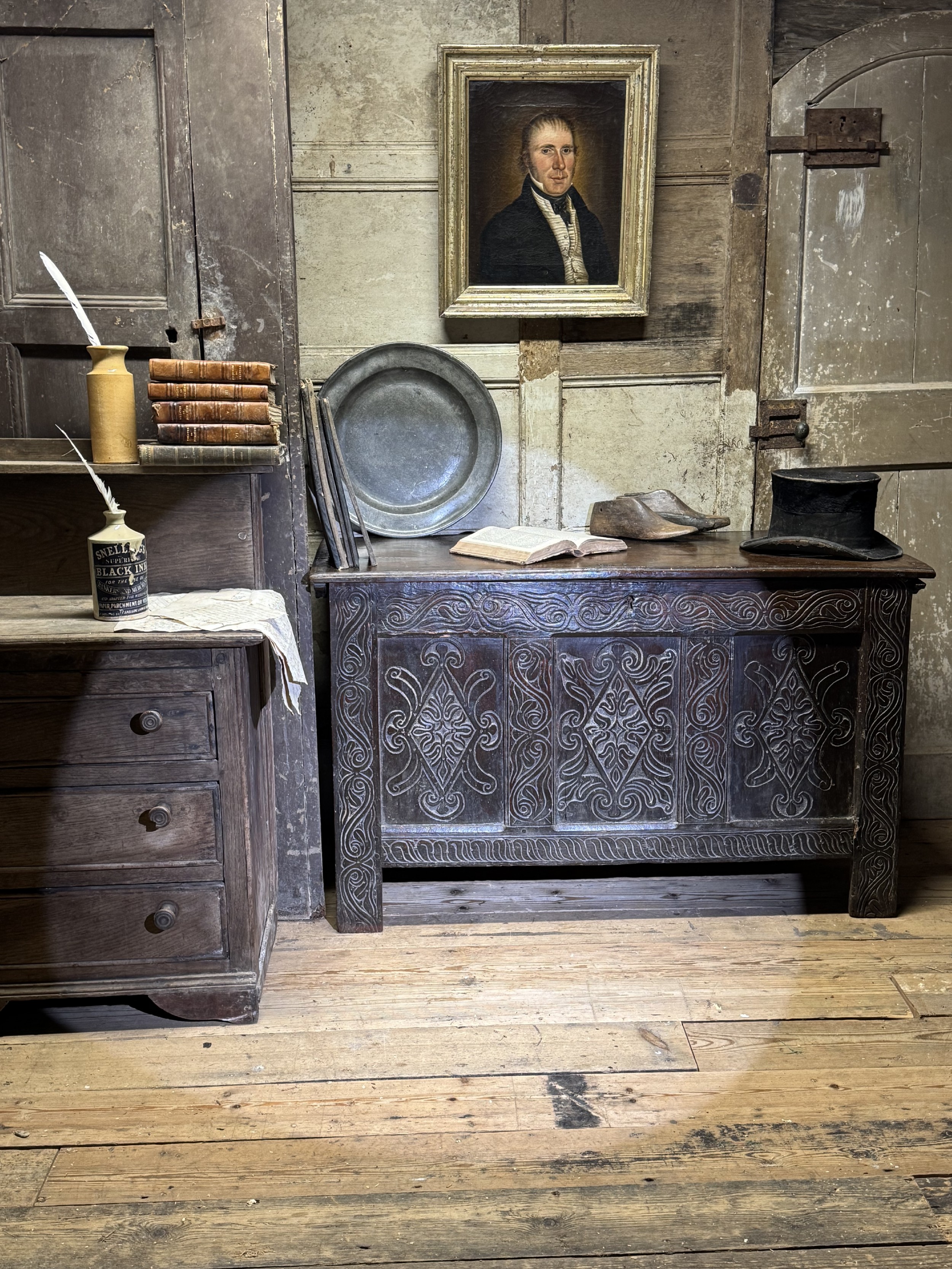
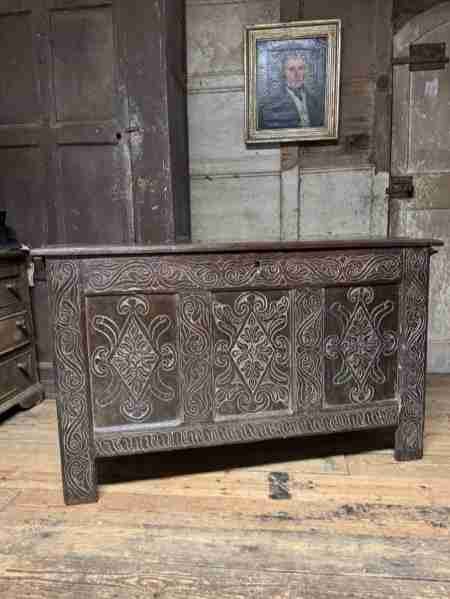
An undocumented and very good example of a west country joined oak chest from Ottery St. Mary, Exeter, Devon highly likely to have been constructed in the workshop in which Thomas Dennis was an apprentice. Thomas Dennis, alongisde William Searle, emigrated to New England, America in 1663 and went on to become one of the foremost furniture makers of the period.
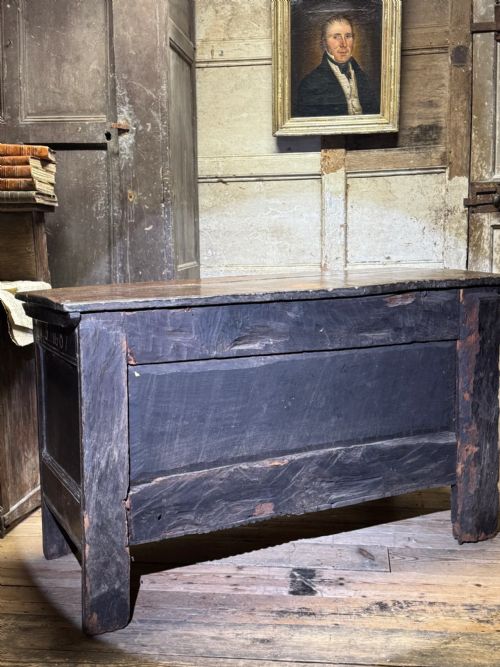
The features seen in this chest continued to appear in Dennis' work in New England, and wide research has taken place around the workshop where Dennis was an apprentice. The significant features of the chest undoubtedly point to its origins in the Exeter workshop. In fact whilst referred to as the Exeter workshop more recent research supports the location of the workshop as Ottery St Mary, outside Exeter, Devon.
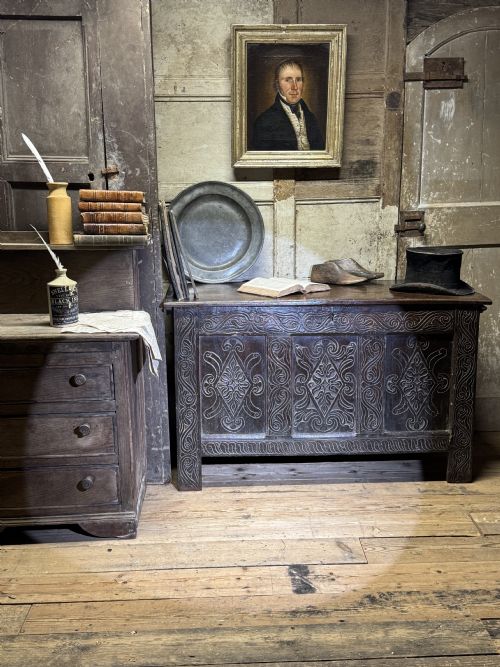
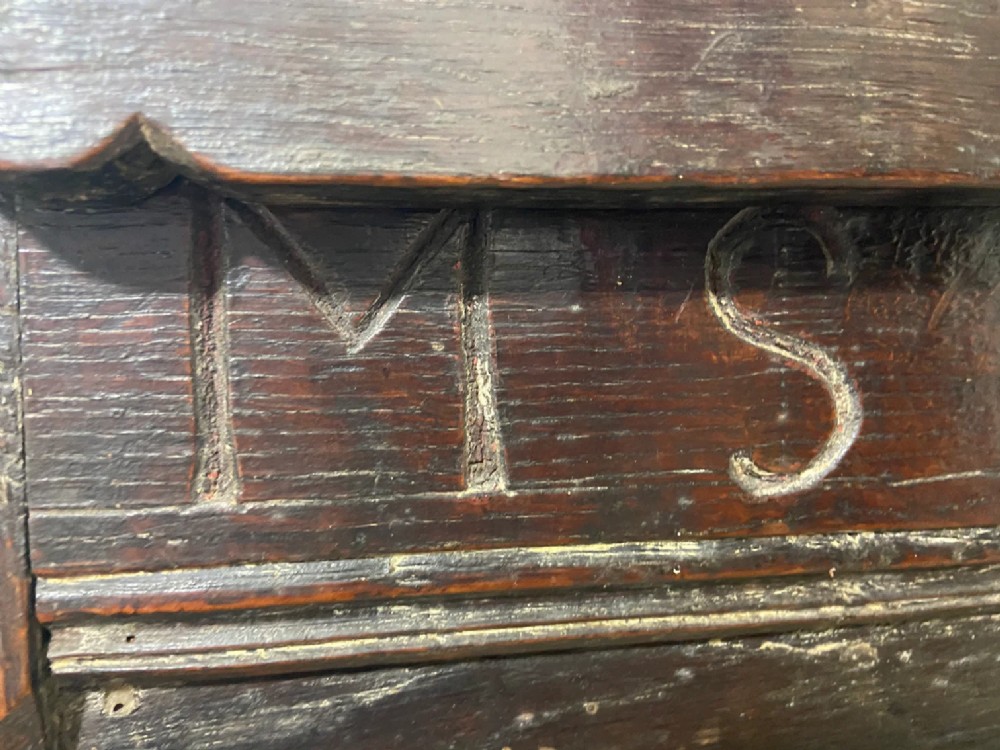
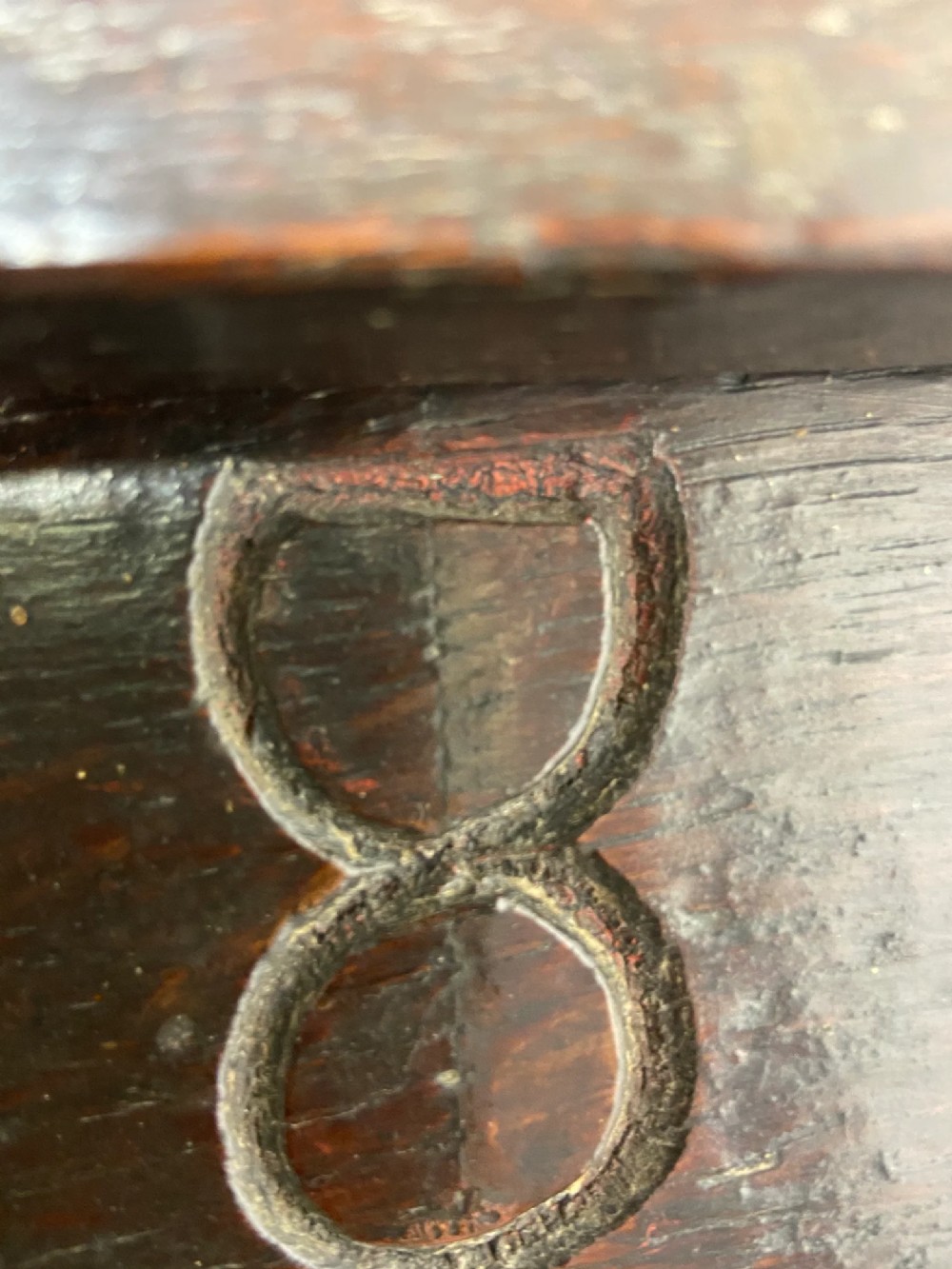
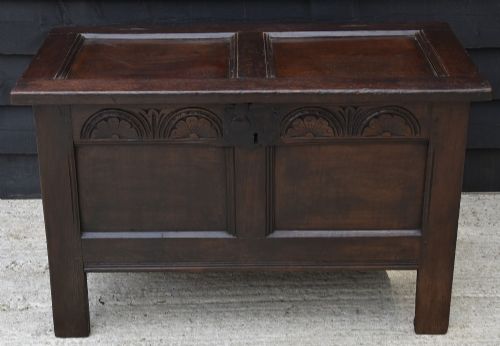
The chest is of good colour and retains signs of the original polychrome - including within the carved date, which is unusual.

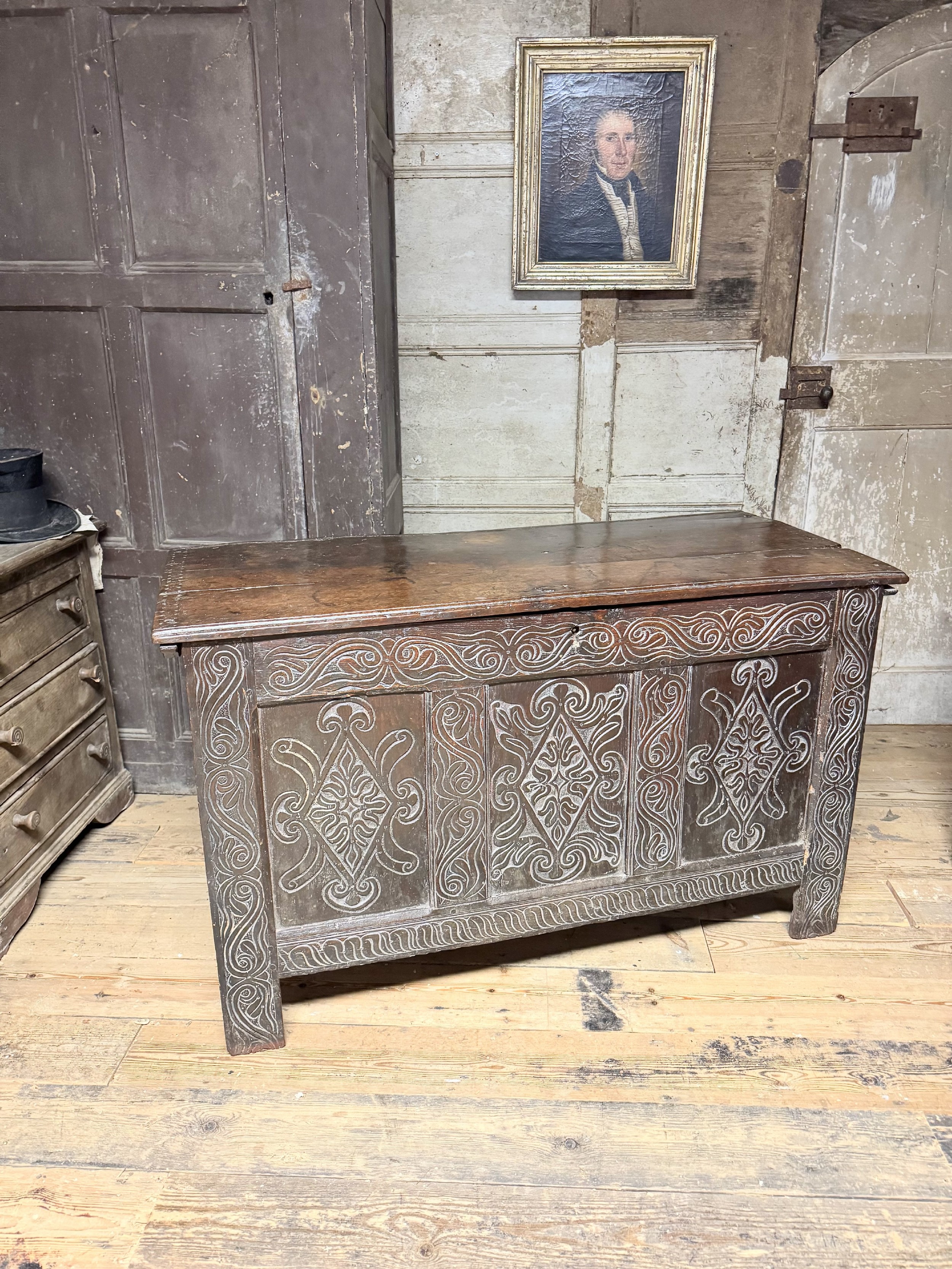
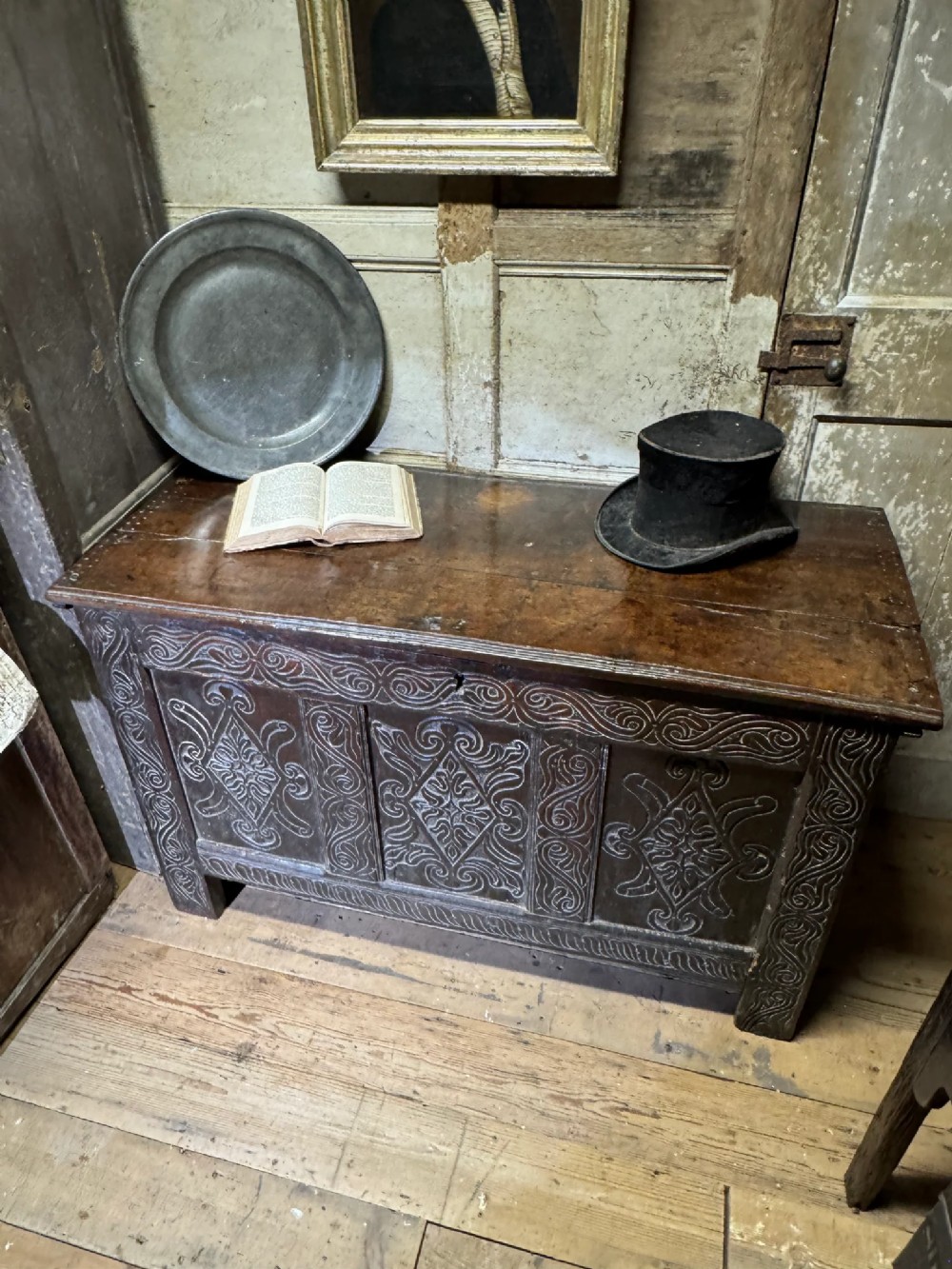
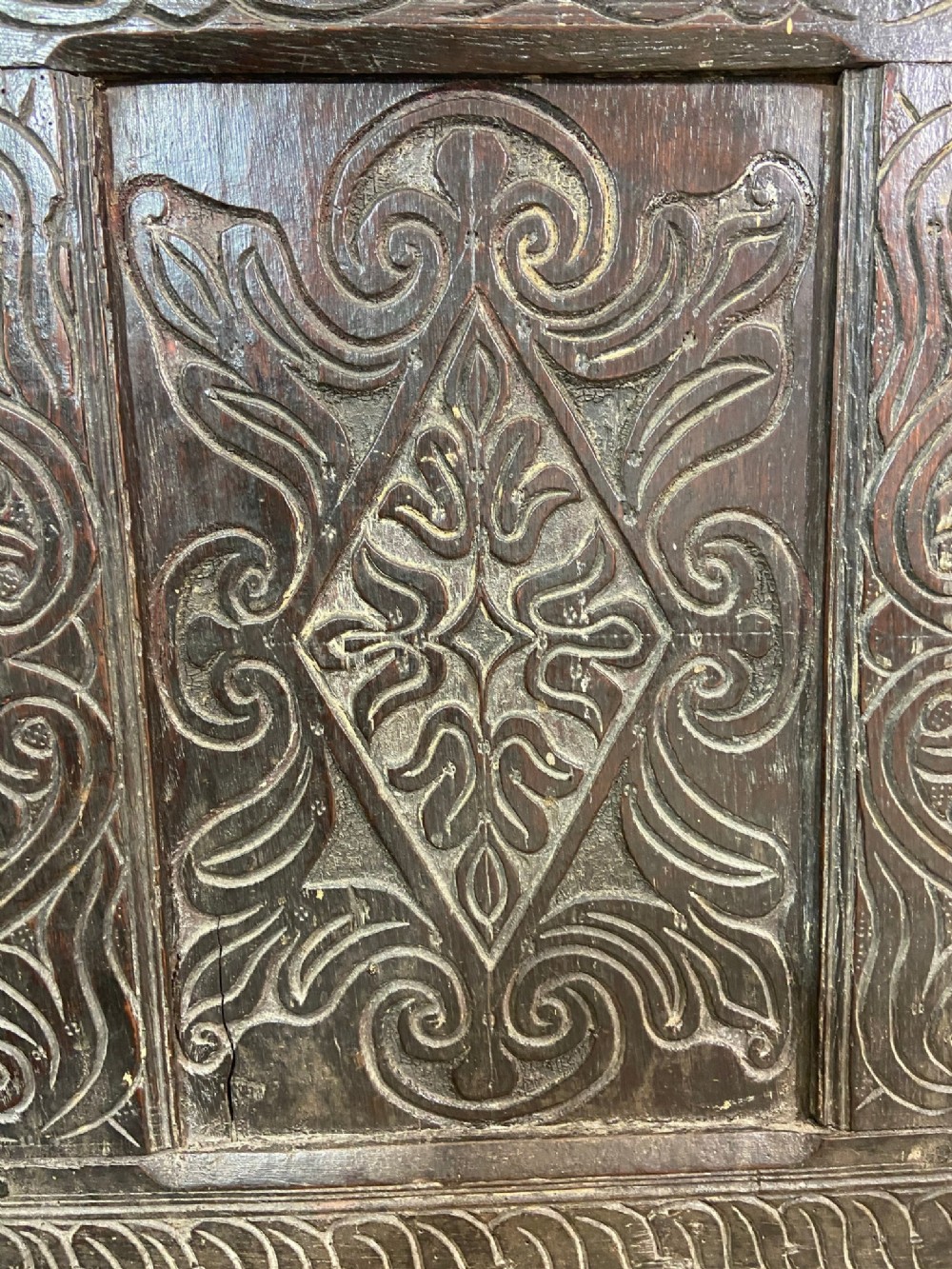
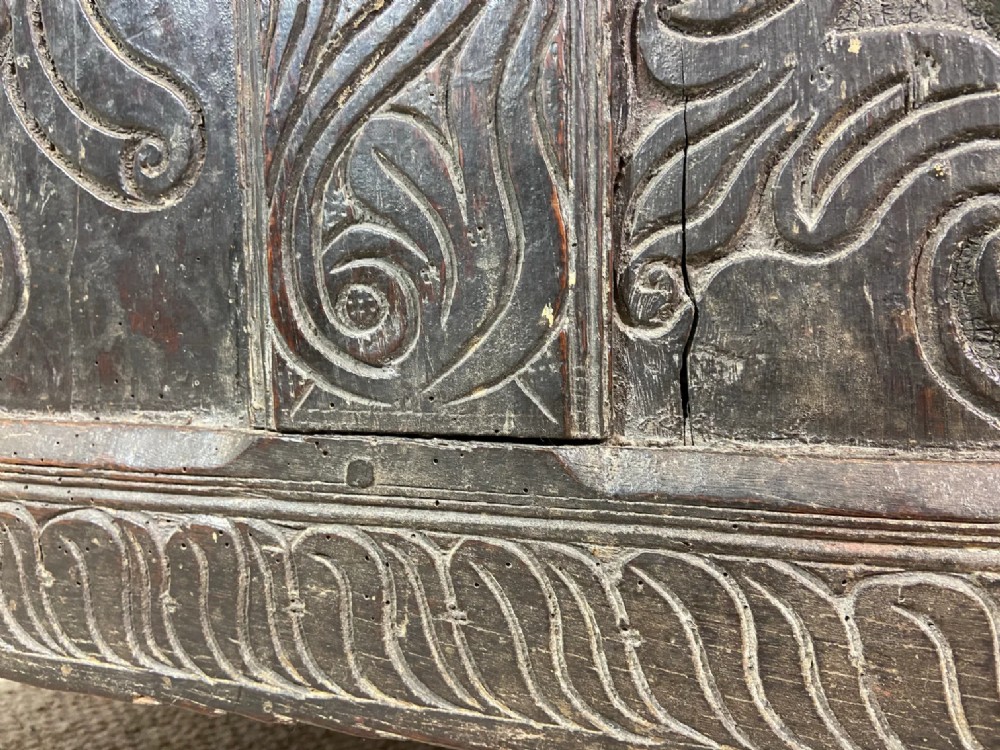
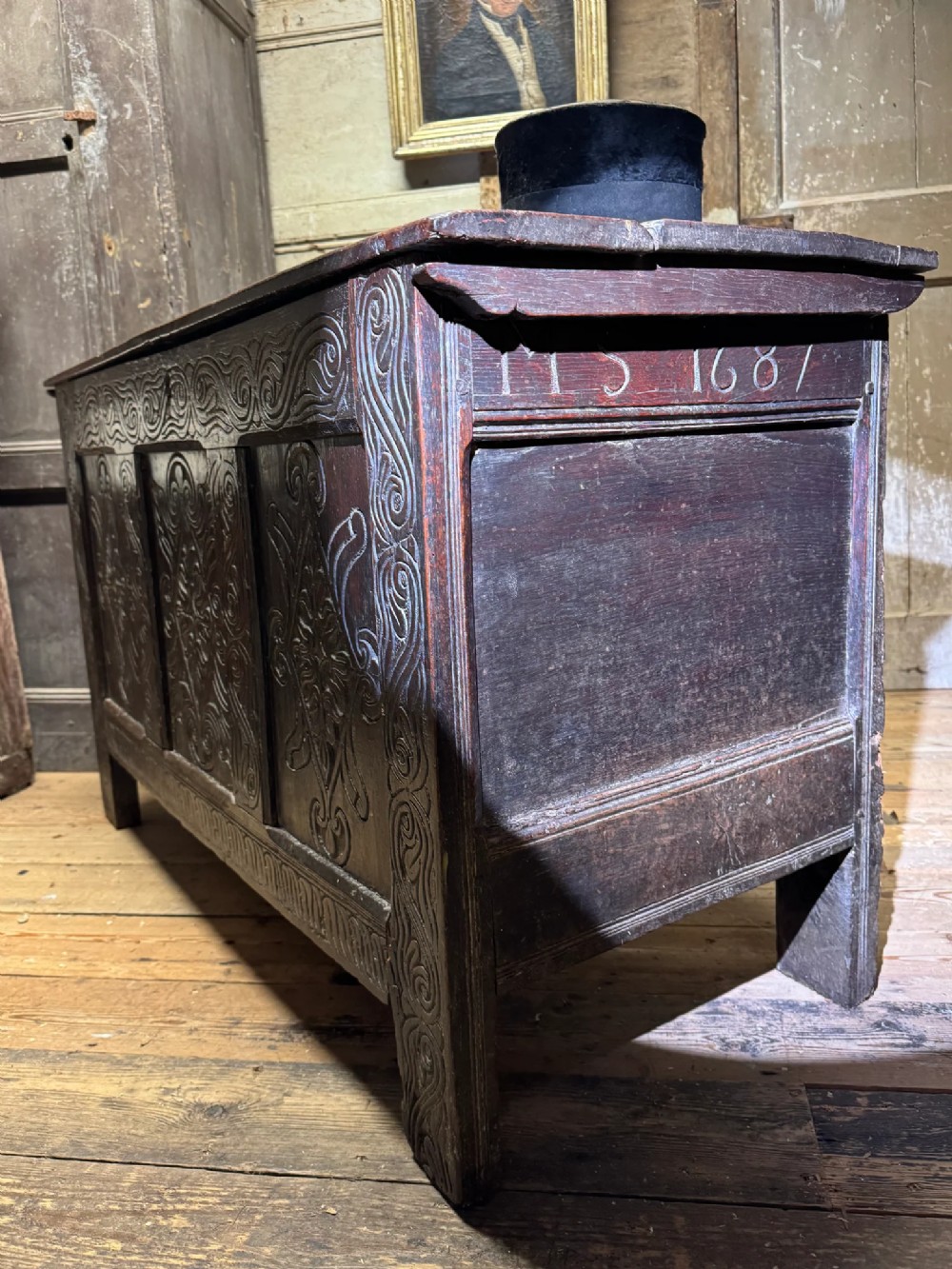
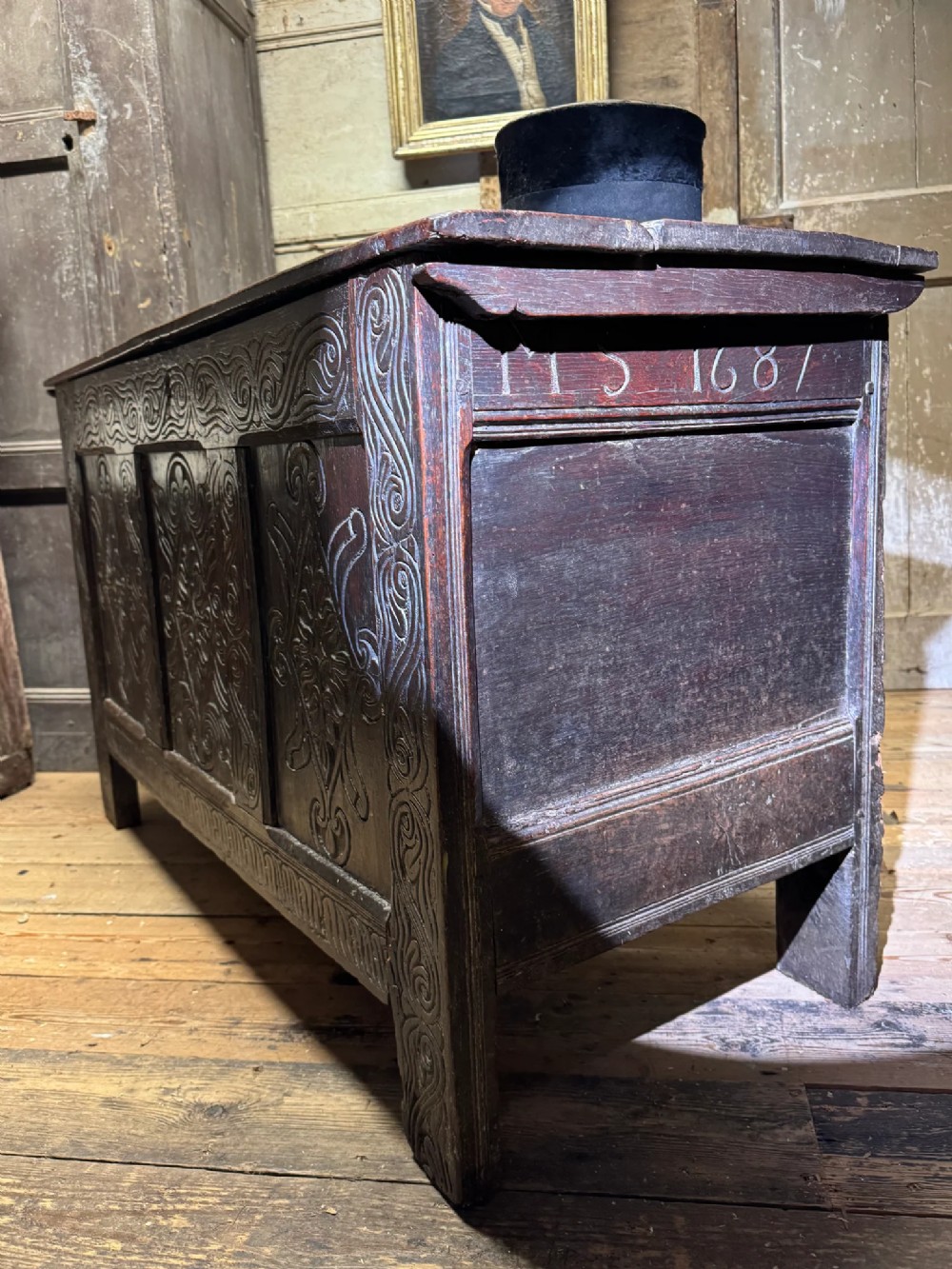
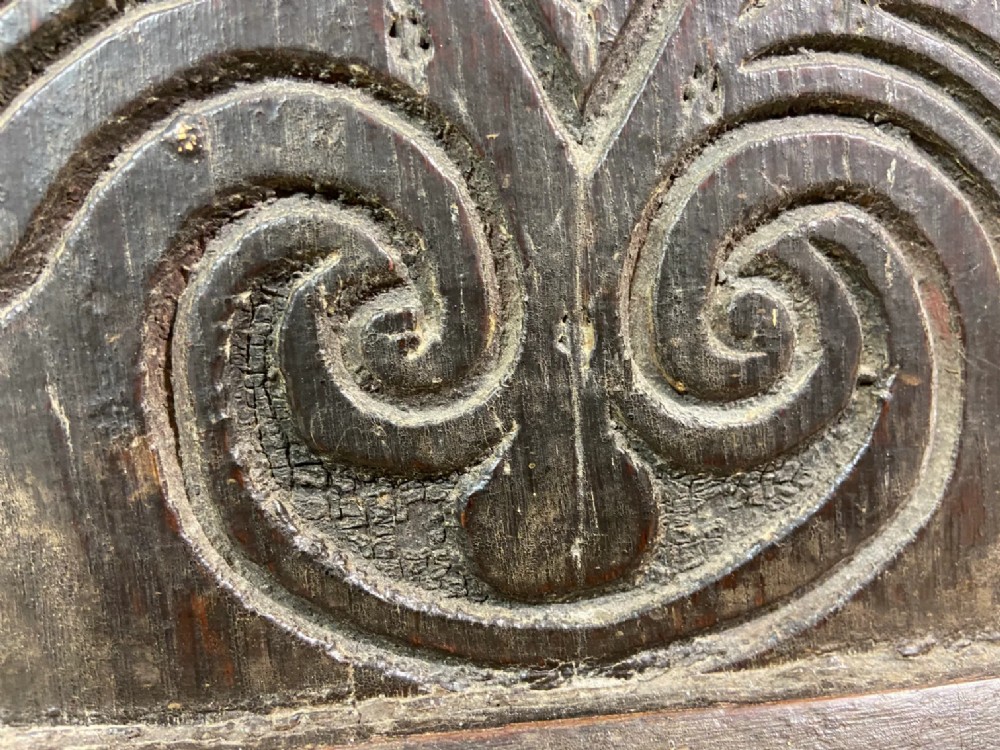
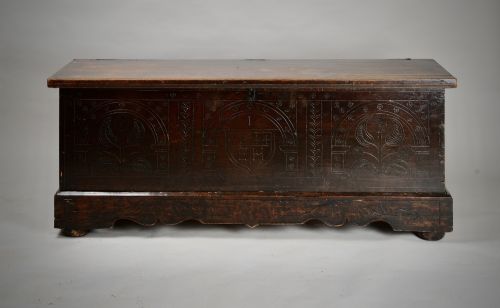
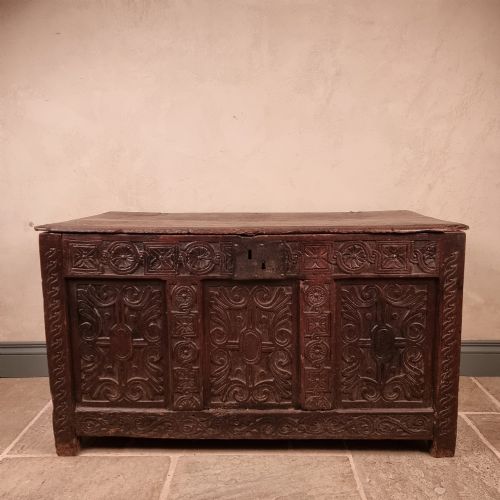
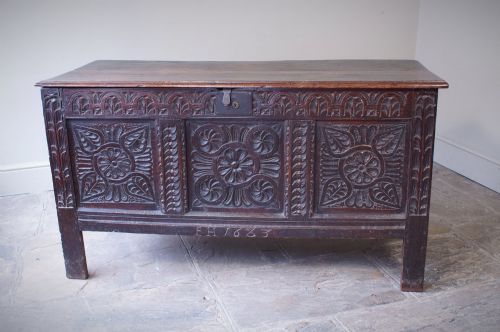
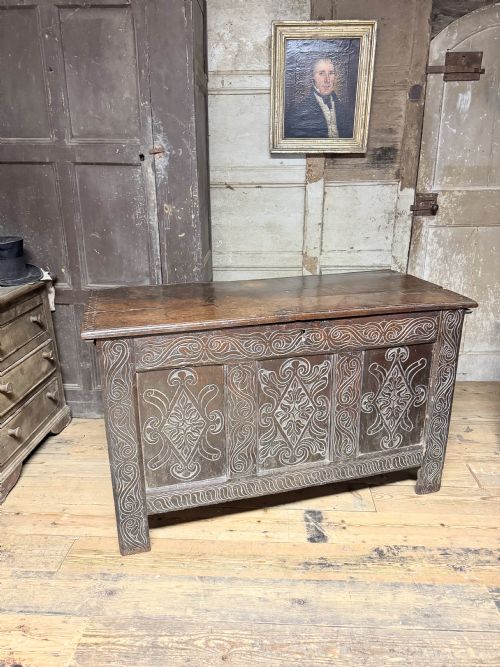
The lid of two boards with run-moulded long edges and dog-tooth punched-decorated ends The chest is a triple panelled chest. There is S scroll work, typical of Devon to the top rail and foliage emerging from the lozenges on the left and right front panel. A running leaf and stem is carved to the bottom rail, with double S scroll work to the muntins.
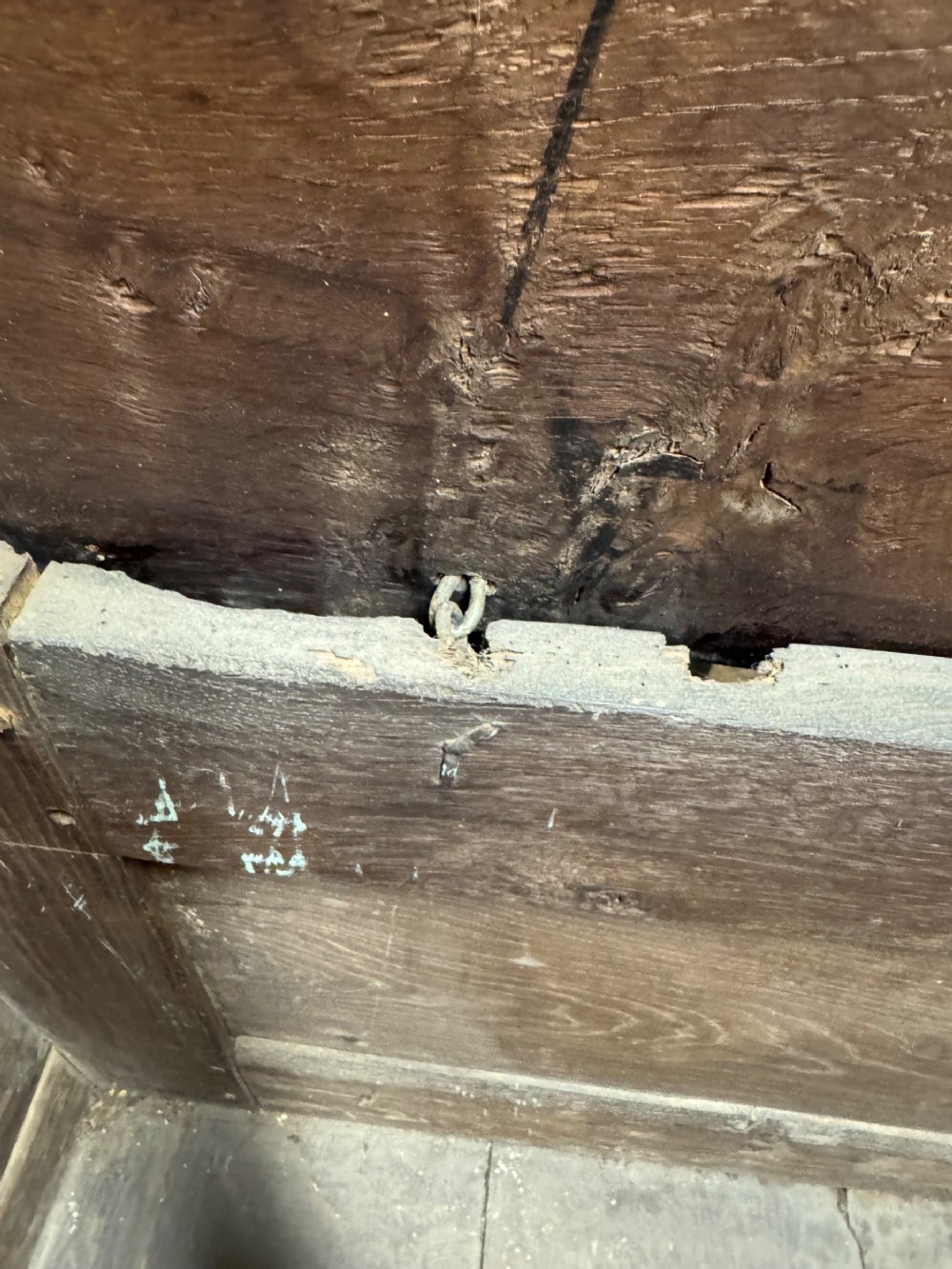
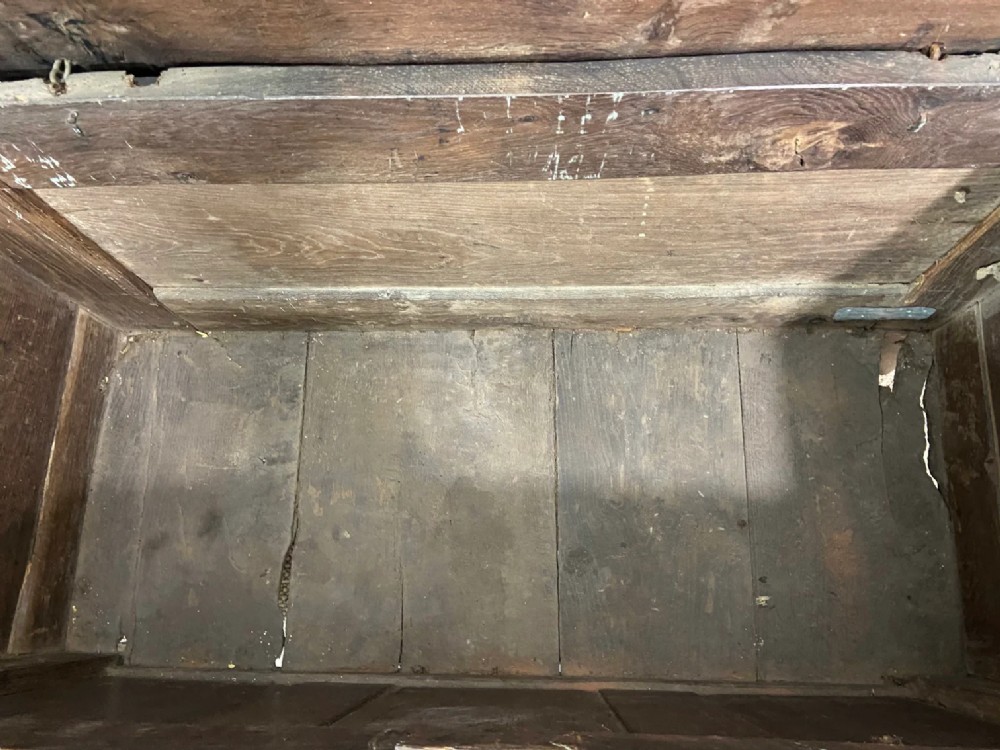
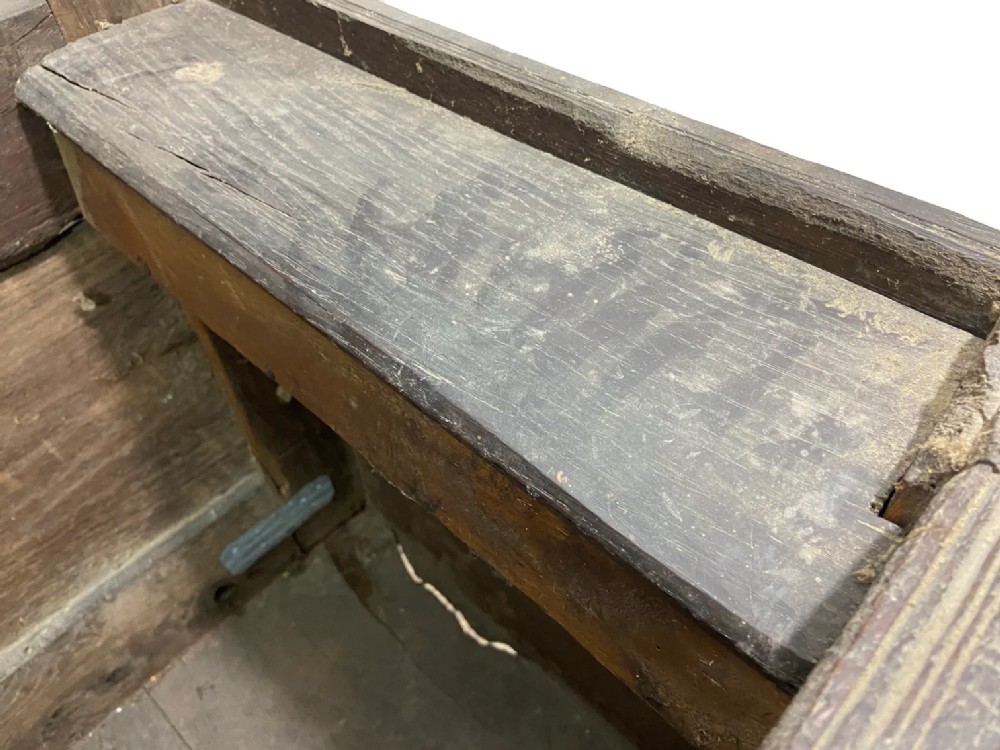
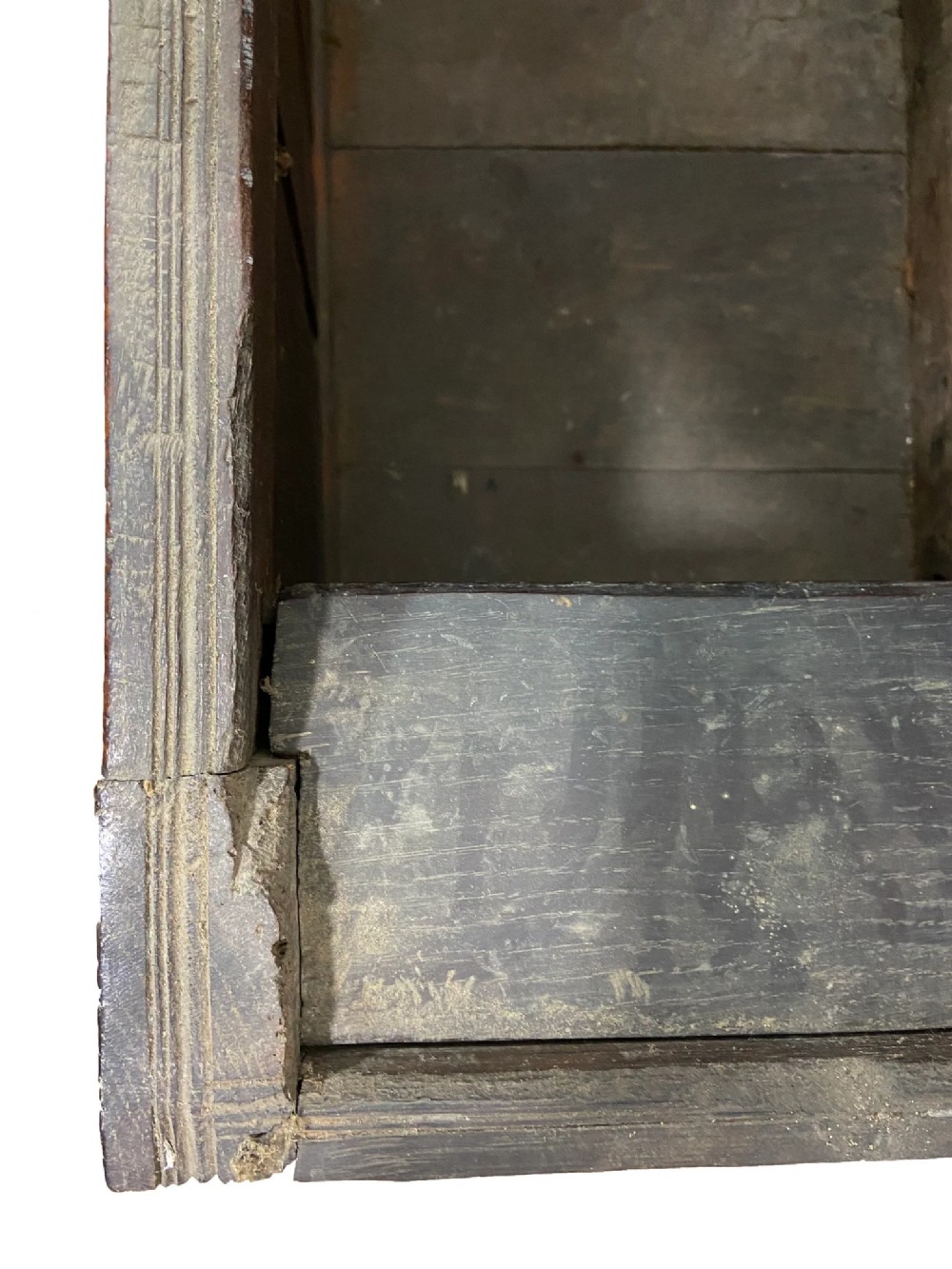
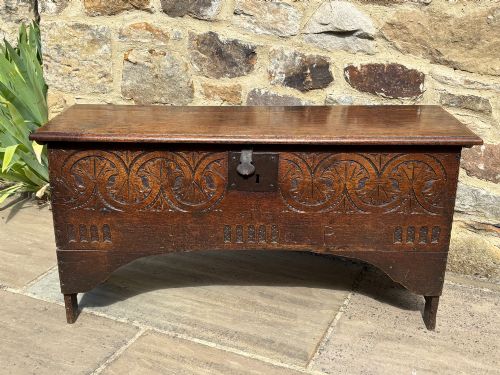
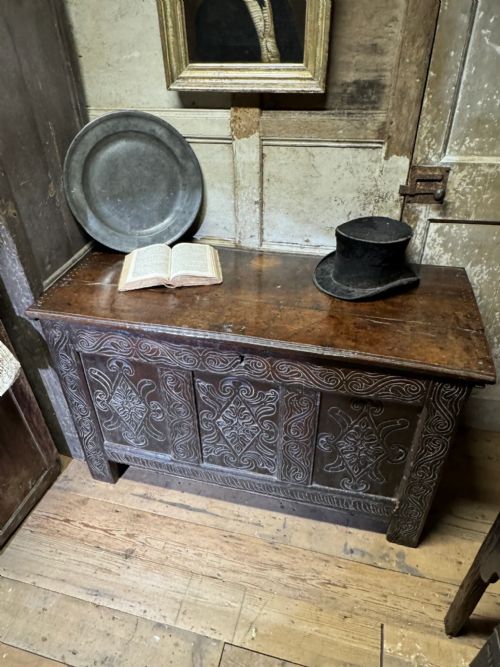
The characteristic Dennis workshop features are present with the distinctive and cleats with notches and ogee bracket scroll, the V-V ogee moudling and the sloping till (or candle box) - a particlaur feature of Dennis chests.
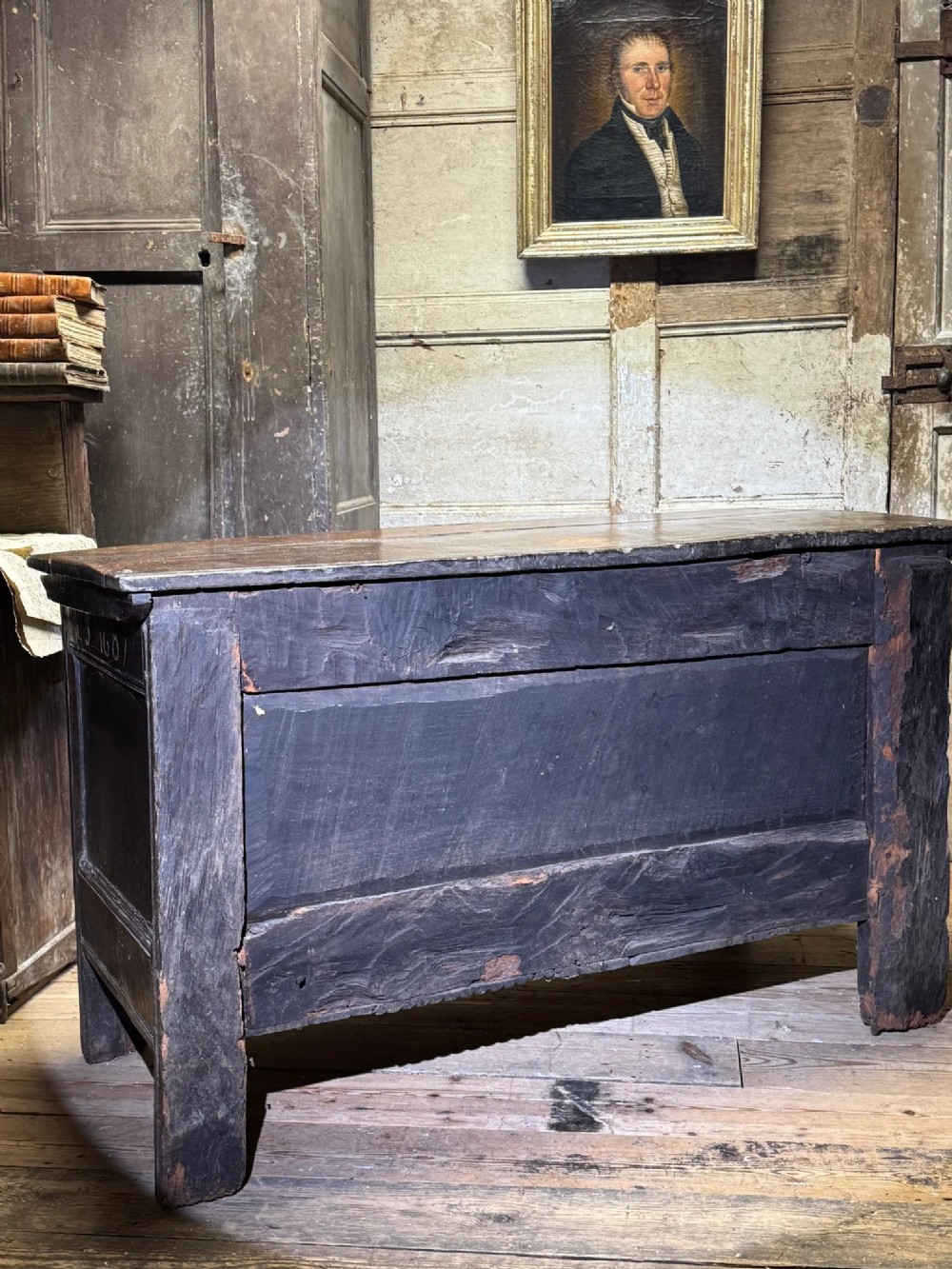
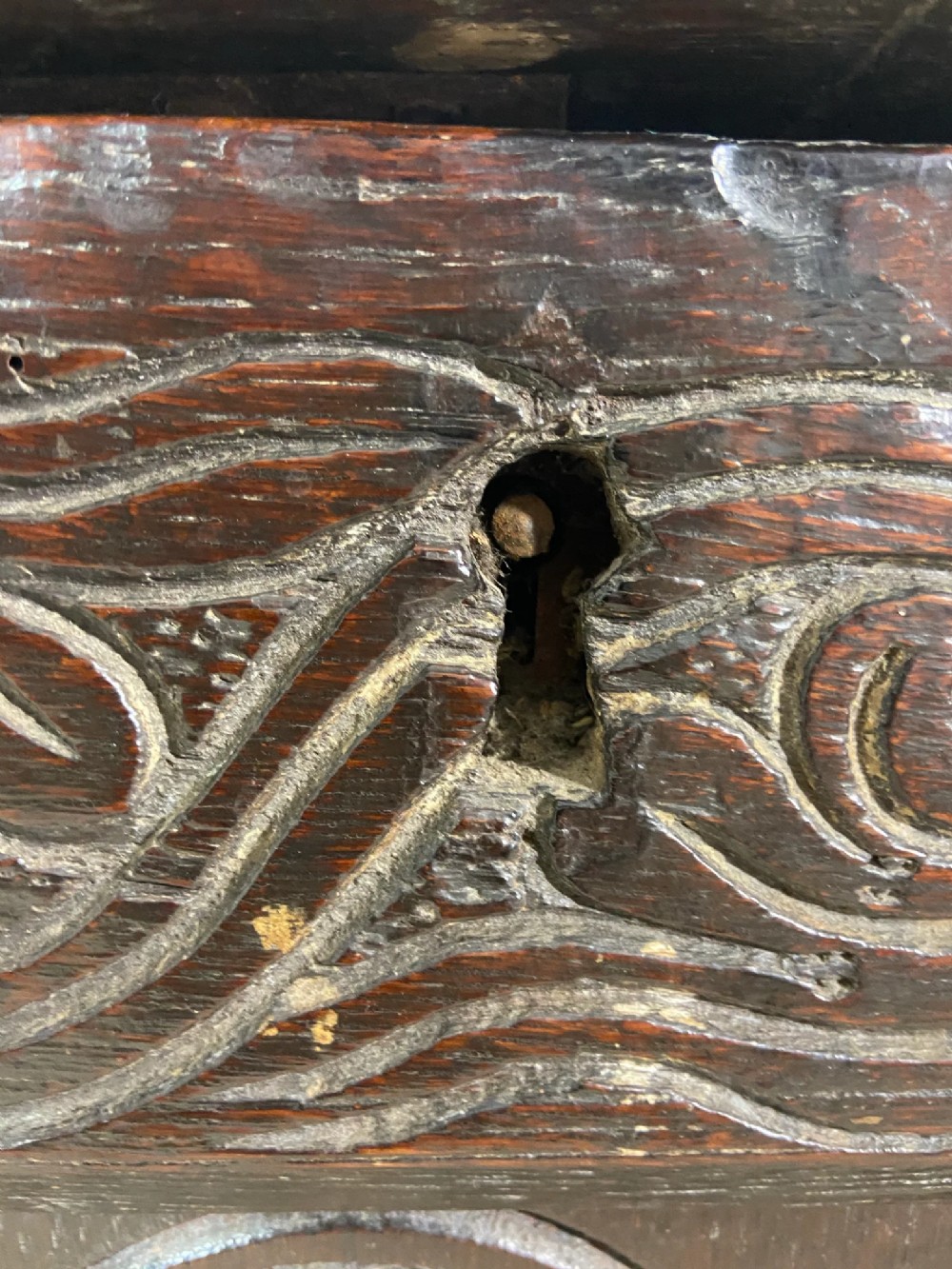
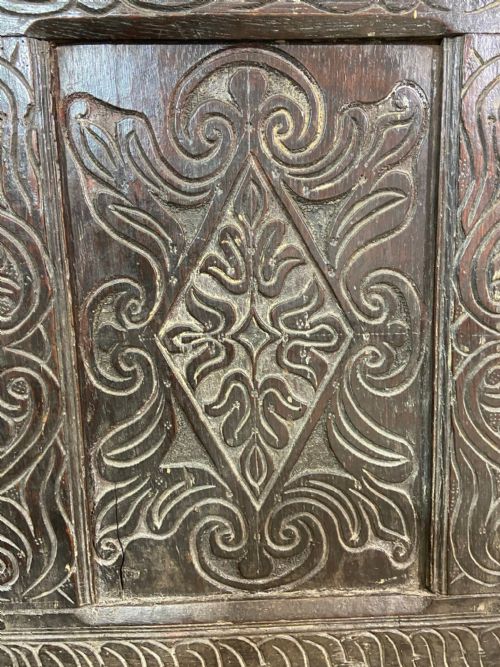
The incised initials to the right, MS 1687, denote the owners initials and date the chest was made. Two other known examples also have the flattening to the top of the 8 in the carving and at least one has traces of the original paint in the carving as with this chest. The date is undoubtedly correct and in keeping with three other chests which have previoulsy been exhibited having similar dates and clearly by the same artisan - their features being so similar, to have been by a different artisan is to defy belief.
The originality of the chest throughout is delightful and it has come to the market for the first time in some time this week, having previously been in private hands.

Measuring: 117cm wide, 51 cm deep and 69 cm high

Exeter, England, 1687

Physical Dimensions
Height
69cm (27.17")
Width
117cm (46.06")
Depth
51cm (20.08")
Declaration

Rob Hall Antiques has dated this 17th Century Oak Coffer to the 17th Century.

Reference Numbers
Sellingantiques Reference
SA1208839
Description
An undocumented and very good example of a west country joined oak chest from Ottery St.
Mary, Exeter, Devon highly likely to have been constructed in the workshop in which Thomas Dennis was an apprentice.
Rob Hall Antiques

Thomas Dennis, alongisde William Searle, emigrated to New England, America in 1663 and went on to become one of the foremost furniture makers of the period.

fig 1. A 17th-century joined oak coffer featuring three carved lozenge panels and decorative carved stiles.
fig 1. A 17th Century Ottery St. Mary, Exeter Joined Oak Chest from the Same Workshop in Which Thomas Dennis Apprenticed, 1687

The features seen in this chest continued to appear in Dennis' work in New England, and wide research has taken place around the workshop where Dennis was an apprentice. The significant features of the chest undoubtedly point to its origins in the Exeter workshop. In fact whilst referred to as the Exeter workshop more recent research supports the location of the workshop as Ottery St Mary, outside Exeter, Devon.

fig 2. A 17th-century joined oak coffer featuring three carved lozenge panels and decorative carved stiles.
fig 2. A 17th Century Ottery St. Mary, Exeter Joined Oak Chest from the Same Workshop in Which Thomas Dennis Apprenticed, 1687

The chest is of good colour and retains signs of the original polychrome - including within the carved date, which is unusual.

The lid of two boards with run-moulded long edges and dog-tooth punched-decorated ends The chest is a triple panelled chest. There is S scroll work, typical of Devon to the top rail and foliage emerging from the lozenges on the left and right front panel. A running leaf and stem is carved to the bottom rail, with double S scroll work to the muntins.

fig 3. A 17th-century joined oak coffer featuring three carved lozenge panels and decorative carved stiles.
fig 3. A 17th Century Ottery St. Mary, Exeter Joined Oak Chest from the Same Workshop in Which Thomas Dennis Apprenticed, 1687

The characteristic Dennis workshop features are present with the distinctive and cleats with notches and ogee bracket scroll, the V-V ogee moudling and the sloping till (or candle box) - a particlaur feature of Dennis chests.

fig 4. A 17th-century joined oak coffer featuring three carved lozenge panels and decorative carved stiles.
fig 4. A 17th Century Ottery St. Mary, Exeter Joined Oak Chest from the Same Workshop in Which Thomas Dennis Apprenticed, 1687

The incised initials to the right, MS 1687, denote the owners initials and date the chest was made. Two other known examples also have the flattening to the top of the 8 in the carving and at least one has traces of the original paint in the carving as with this chest. The date is undoubtedly correct and in keeping with three other chests which have previoulsy been exhibited having similar dates and clearly by the same artisan - their features being so similar, to have been by a different artisan is to defy belief.

fig 5. A 17th-century joined oak coffer featuring three carved lozenge panels and decorative carved stiles.
fig 5. A 17th Century Ottery St. Mary, Exeter Joined Oak Chest from the Same Workshop in Which Thomas Dennis Apprenticed, 1687

The originality of the chest throughout is delightful and it has come to the market for the first time in some time this week, having previously been in private hands.

Measuring: 117cm wide, 51 cm deep and 69 cm high

Exeter, England, 1687

Height
69cm (27.17")
Width
117cm (46.06")
Depth
51cm (20.08")
Date of Manufacture

Rob Hall Antiques has dated this 17th Century Oak Coffer to the 17th Century.

Reference Numbers
Sellingantiques Ref
SA1208839
Rob Hall Antiques
Sellingantiques verified Since Aug 2025
Dealer Profile

You can view the stock and full dealer information on the Rob Hall Antiques Profile Page
Relevant Links
PDF SHARE
SAVE
A 17th-century joined oak coffer featuring three carved lozenge panels and decorative carved stiles.
1 / 17
Archive I A 17th-century joined oak coffer featuring three carved lozenge panels and decorative carved stiles.

A 17TH CENTURY OTTERY ST. MARY, EXETER JOINED OAK CHEST FROM THE SAME WORKSHOP IN WHICH THOMAS DENNIS APPRENTICED, 1687

Archive II A 17th-century joined oak coffer featuring three carved lozenge panels and decorative carved stiles. View II
Archive III A 17th-century joined oak coffer featuring three carved lozenge panels and decorative carved stiles. View III
Archive IV A 17th-century joined oak coffer featuring three carved lozenge panels and decorative carved stiles. View IV
Archive V A 17th-century joined oak coffer featuring three carved lozenge panels and decorative carved stiles. View V
Archive VI A 17th-century joined oak coffer featuring three carved lozenge panels and decorative carved stiles. View VI
Archive VII A 17th-century joined oak coffer featuring three carved lozenge panels and decorative carved stiles. View VII
Archive VIII A 17th-century joined oak coffer featuring three carved lozenge panels and decorative carved stiles. View VIII
Archive IX A 17th-century joined oak coffer featuring three carved lozenge panels and decorative carved stiles. View IX
Archive X A 17th-century joined oak coffer featuring three carved lozenge panels and decorative carved stiles. View X
Archive XI A 17th-century joined oak coffer featuring three carved lozenge panels and decorative carved stiles. View XI
Archive XII A 17th-century joined oak coffer featuring three carved lozenge panels and decorative carved stiles. View XII
Archive XIII A 17th-century joined oak coffer featuring three carved lozenge panels and decorative carved stiles. View XIII
Archive XIV A 17th-century joined oak coffer featuring three carved lozenge panels and decorative carved stiles. View XIV
Archive XV A 17th-century joined oak coffer featuring three carved lozenge panels and decorative carved stiles. View XV
Archive XVI A 17th-century joined oak coffer featuring three carved lozenge panels and decorative carved stiles. View XVI
Archive XVII A 17th-century joined oak coffer featuring three carved lozenge panels and decorative carved stiles. View XVII
FURTHER BROWSING

Visitors also looked at these ⇣

Enlarged Archival View
Telephone 07858 820345
Location
Northamptonshire
United Kingdom
Verified Since Aug 2025
Items For Sale 46
Items Sold 24
Rob Hall Antiques
Verified Since Aug 2025
View Dealer Info
Location: Northamptonshire, United Kingdom
Verified
Aug 2025
For Sale
46
Sold
24
A 17th-century joined oak coffer featuring three carved lozenge panels and decorative carved stiles.
A 17TH CENTURY OTTERY ST. MARY, EXETER JOINED OAK CHEST FROM THE SAME WORKSHOP IN WHICH THOMAS DENNIS APPRENTICED, 1687
Ref: SA1208839
A 17th-century joined oak coffer featuring three carved lozenge panels and decorative carved stiles.
Detail View 1
Detail View 2
Detail View 3
Detail View 4
Detail View 5
Detail View 6
Detail View 7
Detail View 8
Detail View 9
Detail View 10
Detail View 11
Detail View 12
Detail View 13
Detail View 14
Detail View 15
Detail View 16
Archival Detail
Every single antique dealer on our platform is individually approved by our internal team. We verify their professional trade history, ethical standards, and photographic quality to ensure a secure, high-standard buying environment. Upon joining, every dealer agrees to a strict 9-point code of conduct. While issues can occasionally arise, our dealers typically resolve them swiftly and directly with the buyer. In fact, since our founding in 2002, Sellingantiques has only had to step in to help resolve an issue on roughly five occasions—a true testament to the quality of our dealers and their dedication to your happiness.
Our dealers are highly experienced in packing and shipping fragile, high-value antiques. Because you are in direct contact with the dealer, you will be able to easily go through all available shipping and insurance options together to ensure your item arrives safely.
Antiques are the ultimate green purchase. By choosing historical pieces over newly manufactured goods, you completely eliminate the carbon footprint of modern mass production while preserving exceptional, timeless craftsmanship.

A joined oak coffer is a timber storage chest constructed using mortise and tenon joinery secured with wooden pegs, typical of 17th-century English woodwork.

Craftsmen built joined chests using quarter-sawn oak frames fitted with floating carved panels, held together with wooden pegs without metal screws or modern adhesives.

Authentic 17th-century pieces feature hand-planed surfaces, irregular peg placement, oxidisation around original iron lock plates, and distinct regional carving motifs executed with hand gouges.

A period oak chest works well positioned in an entryway, placed at the foot of a bed, or used as a focal storage piece in a living room to add historic textural contrast.

Maintain antique oak by keeping it away from direct heat sources, dusting regularly with a soft cloth, and applying beeswax polish sparingly once or twice a year.
items
Add keywords to the filter
Price
£100
£250000
Era
Movements
Material
Origin
Stock Location
Freshness
Online Payments
Categories